





| Product Name | Commercial Hatchery Candling Station | ||||||||||||||||||||||||
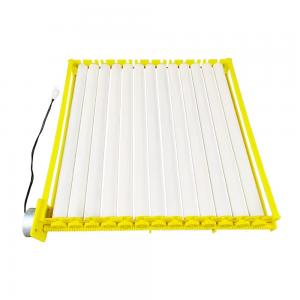
| Product Image | 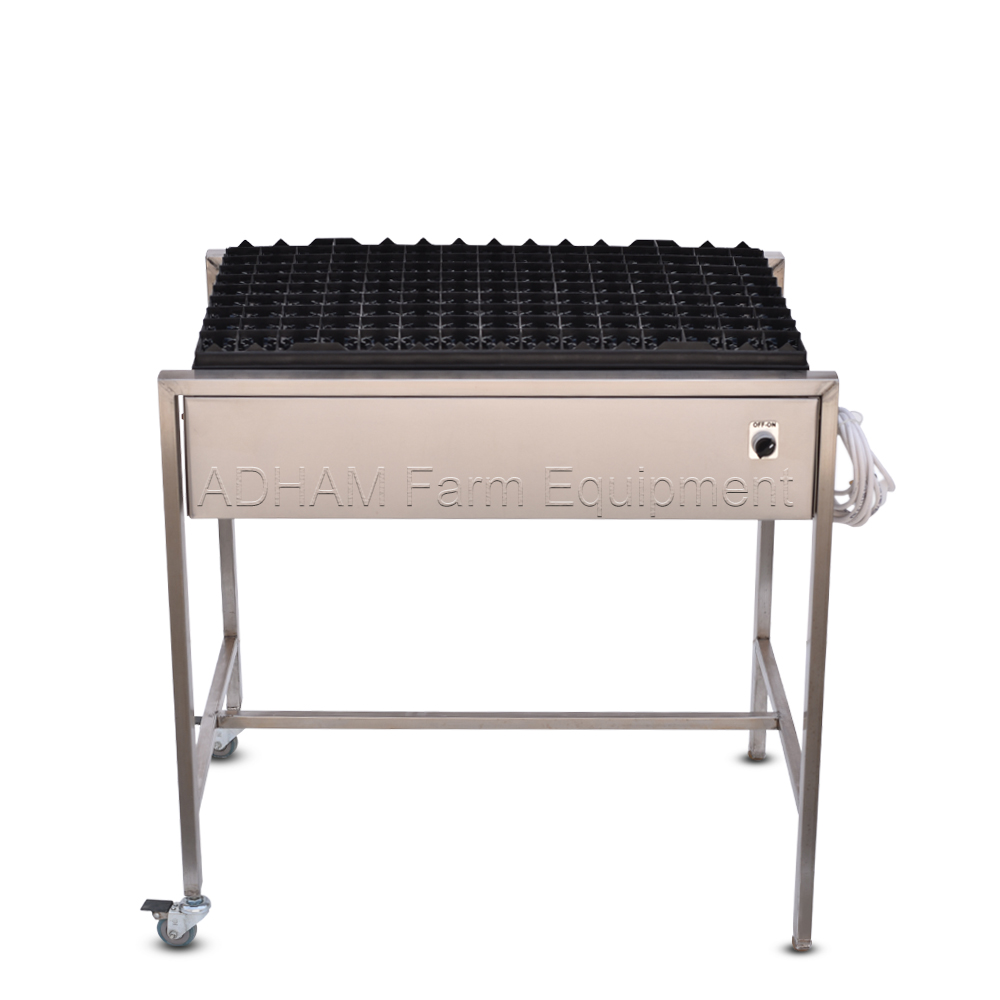 |
||||||||||||||||||||||||
| Product Overview | The Commercial Hatchery Candling Station is a multi-egg inspection table designed for manual examination of fertile poultry eggs during hatchery processing. A concentrated light source illuminates eggs from below, allowing operators to identify developing embryos, clear eggs, abnormal development and other conditions that require removal from the incubation batch. Compared with handheld candlers, the station allows an entire compatible egg tray to be positioned over the illuminated inspection surface, supporting faster and more consistent inspection in commercial poultry hatcheries. The equipment is particularly suitable for small and medium hatcheries, breeder farms, research facilities and as a practical backup candling station in larger automated hatchery installations. |
||||||||||||||||||||||||
| Key Features |
|
||||||||||||||||||||||||
| Structural Components |
|
||||||||||||||||||||||||
| Working Principle | A tray containing incubating eggs is placed over the illuminated candling surface. Light passes through the shell and reveals internal structures that can be interpreted by a trained hatchery operator. Developing embryos normally show visible vascular development and increasing internal opacity, while clear or non-developing eggs display different light transmission patterns. Eggs identified as infertile, early dead or otherwise unsuitable can be removed before the batch continues through the incubation process. Manual candling stations are particularly useful where operators require visual confirmation and direct control over egg selection without installing a fully automated detection and transfer line. |
||||||||||||||||||||||||
| Technical Specifications |
|
||||||||||||||||||||||||
| Applications |
|
||||||||||||||||||||||||
| Customization Options | The Commercial Hatchery Candling Station can be configured according to setter tray dimensions, poultry species, hatchery workflow and available working space. Available options may include tray support dimensions, illumination arrangement, worktable height, wheel configuration, electrical voltage and integration with adjacent egg transfer equipment. Customized configurations are available upon request and can be designed according to hatchery production capacity, local electrical standards and overall project requirements. |
||||||||||||||||||||||||
| Installation & Maintenance | Position the candling station on a stable, level floor close to the egg inspection or transfer area. When the unit is fitted with wheels, engage the brakes before placing loaded egg trays on the inspection surface. For best visibility, the surrounding work area should have controlled ambient light so internal egg structures can be observed clearly. Electrical connections should comply with local hatchery safety standards. Routine maintenance includes cleaning the stainless steel surfaces, removing eggshell or organic contamination, checking the light source, inspecting electrical connections and verifying the condition of wheels and brakes. The inspection surface should be cleaned and disinfected regularly as part of the hatchery biosecurity program. |
||||||||||||||||||||||||
| Project Cases | In a commercial hatchery, a multi-egg candling station can be positioned between setter unloading and egg transfer operations. Operators inspect complete trays, remove unsuitable eggs and allow viable eggs to continue toward the next incubation or transfer stage. For larger hatcheries using automated candling equipment, a manual station can also provide backup inspection capacity during maintenance, special breeder batches or quality-control sampling. The workstation can be coordinated with egg transfer tables, vacuum egg lifters, setter trolleys and hatcher basket handling equipment as part of a complete hatchery equipment layout. |
||||||||||||||||||||||||
| Product FAQ | Q: What is a commercial hatchery candling station used for? A: It illuminates multiple incubating eggs so operators can visually assess embryo development and remove clear, non-developing or unsuitable eggs. Q: Can a complete egg tray be inspected at one time? A: Yes. The station is designed around multi-egg tray inspection, with tray compatibility selected according to the hatchery system. Q: Is this an automatic egg rejection machine? A: No. This configuration is primarily a manual visual inspection station. Fully automatic candling and transfer systems are separate equipment for high-capacity hatcheries. Q: Can it be used in a large commercial hatchery? A: Yes. It can be used for special batches, quality-control inspection or as backup equipment alongside automated hatchery lines. Q: Can the tray size be customized? A: Yes. Tray support dimensions can be configured according to the setter trays used in the customer's hatchery. Q: Is stainless steel suitable for hatchery environments? A: Stainless steel provides a durable, corrosion-resistant and easily cleaned surface suitable for hygienic poultry hatchery equipment. Q: What information is required for quotation? A: Recommended information includes egg tray dimensions, eggs per tray, poultry species, required electrical supply, preferred workstation height and expected hatchery workflow. |
||||||||||||||||||||||||
| Product Gallery | 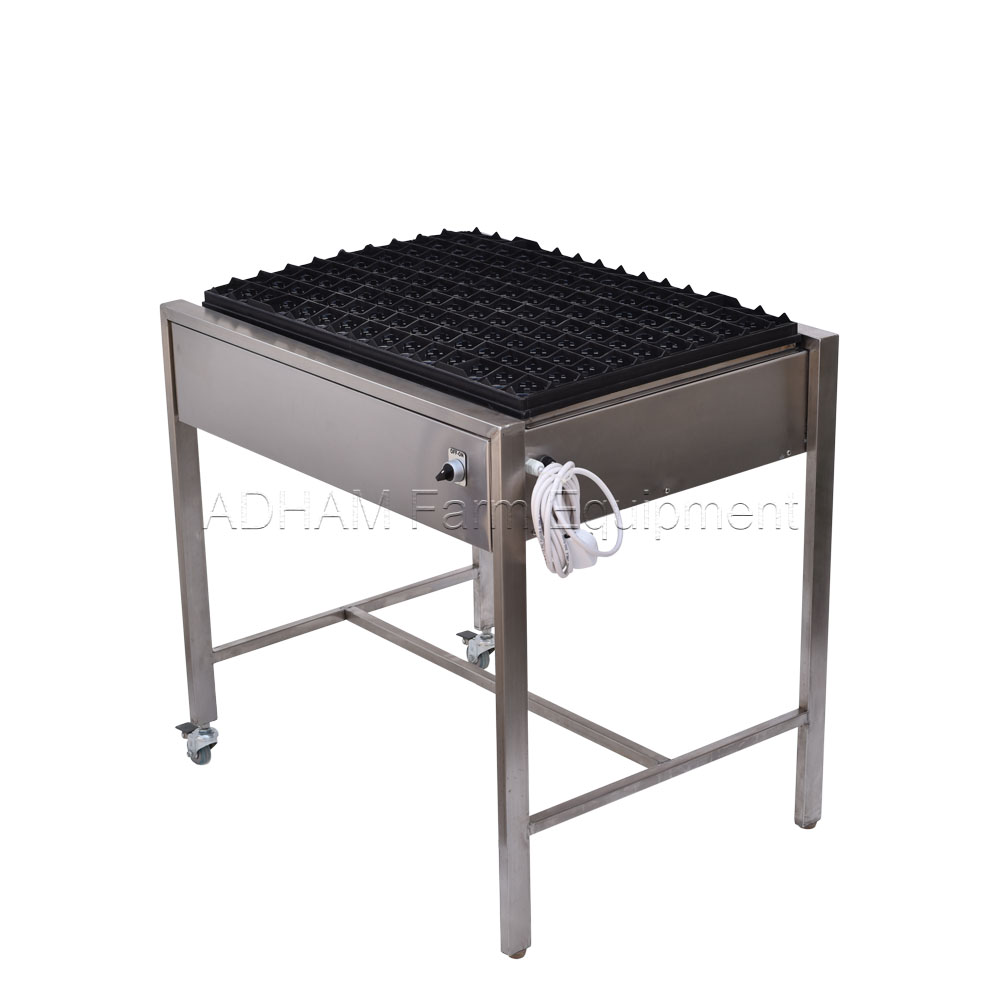  |
- Home
-
Products
- Pig Farming Equipment
- Cattle Farming Equipment
- Sheep & Goat Farming Equipment
- Poultry Farming Equipment
- Feeding & Drinking Systems
- Veterinary & Breeding Equipment
- Testing & Diagnostic Equipment
- Cleaning & Biosecurity Equipment
- Climate Control Equipment
- Livestock Weighing Equipment
- Manure & Waste Management
- Farm Transport & Handling
-
Solutions
- Pig Farm Solutions
- Dairy Farm Solutions
- Beef Cattle Farm Solutions
- Sheep & Goat Farm Solutions
- Layer Farm Solutions
- Broiler Farm Solutions
- Feeding & Drinking System Solutions
- Climate Control Solutions
- Biosecurity & Disinfection Solutions
- Manure & Waste Management
- Smart Farming Solutions
- Farm Renovation and Upgrade Solutions
- Partners
- Projects
- Resources
- News
- About Us
- Contact





Comments & Inquiries
Leave your questions or requirements below. We will reply as soon as possible.