

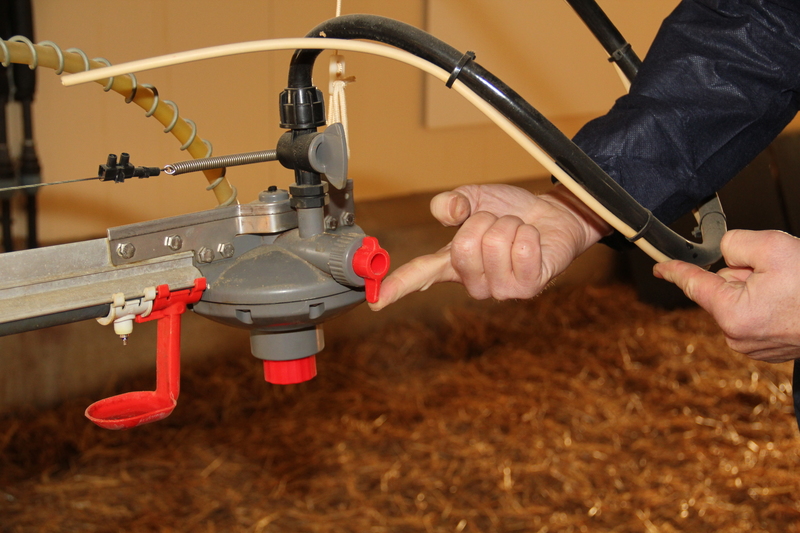
| Product Name | Cage Poultry Waterline Automatic Flushing System | ||||||||||||||||||||||||
| Product Image | 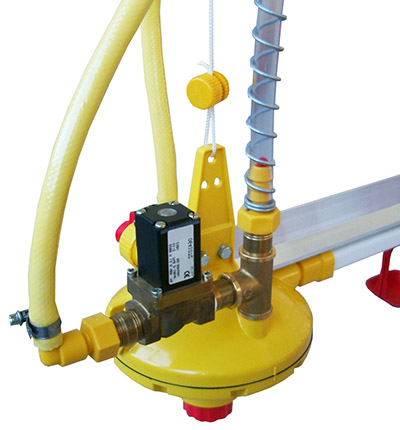 |
||||||||||||||||||||||||
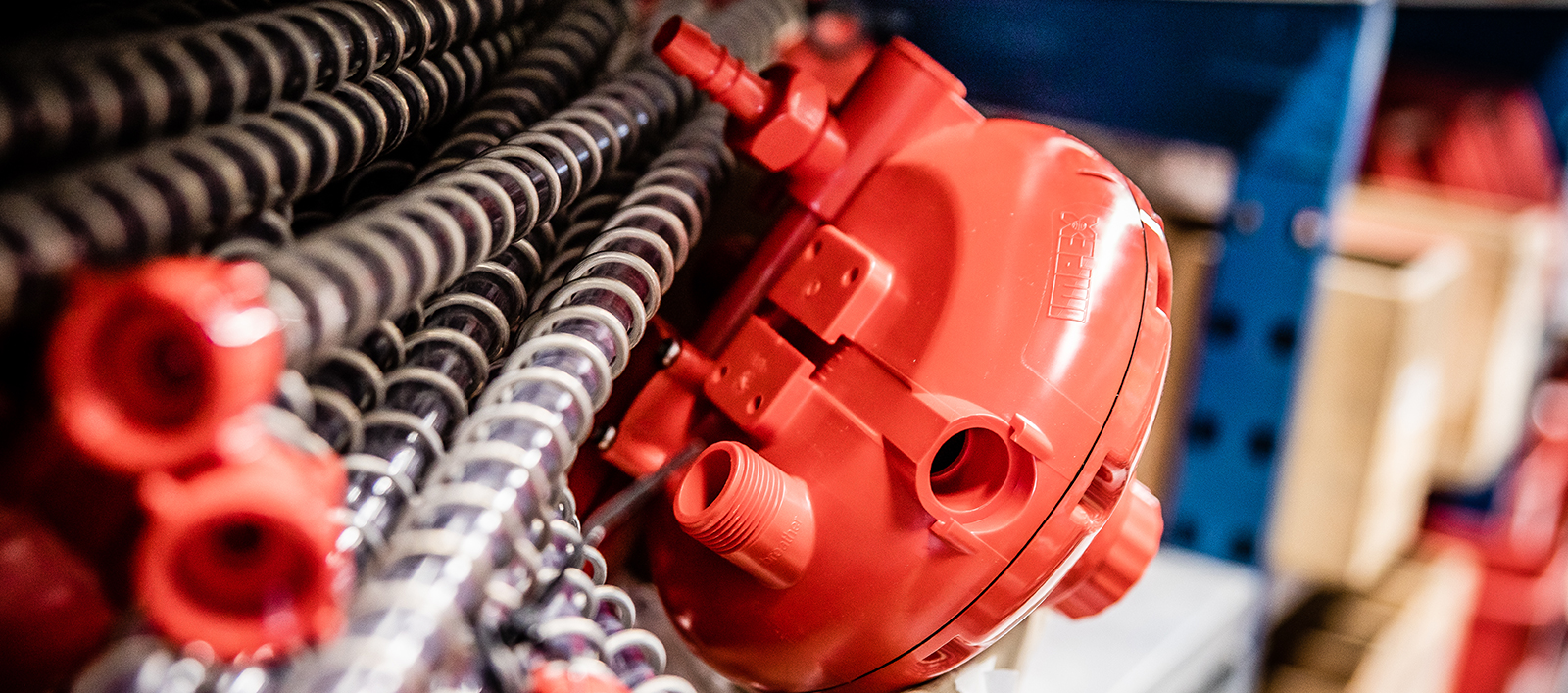
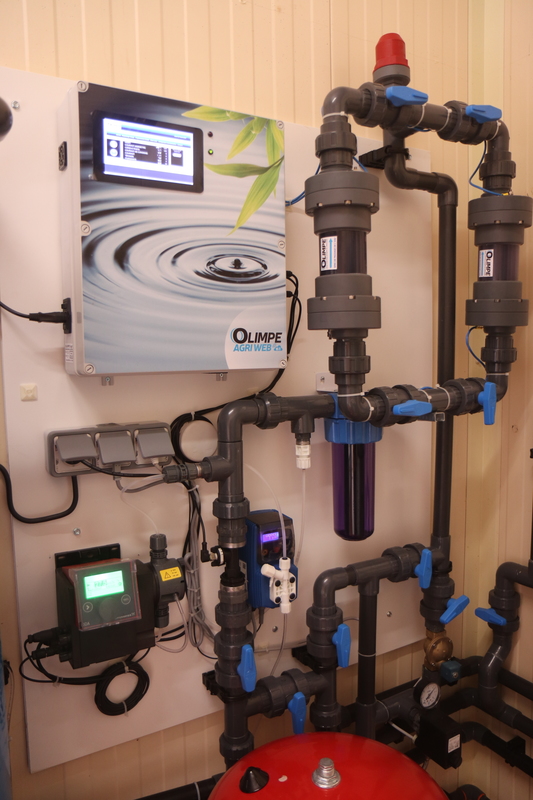
| Product Overview | The Cage Poultry Waterline Automatic Flushing System is designed for automatic cleaning and flushing of nipple drinking lines installed in poultry cages and aviary systems. It helps discharge stagnant water, suspended particles and loosened deposits from the drinking pipeline while reducing the labor required for manual line flushing. A typical system combines an automatic flushing pressure regulator, actuator, controller, flush breather unit, drain kit and drainage piping. Depending on the project configuration, extension control boxes and temperature-based flushing functions can also be incorporated. The system is suitable for commercial layer, pullet and breeder farms, large poultry equipment projects and steel structure poultry houses where multiple drinking lines require centralized and repeatable flushing management. |
||||||||||||||||||||||||
| Key Features |
|
||||||||||||||||||||||||
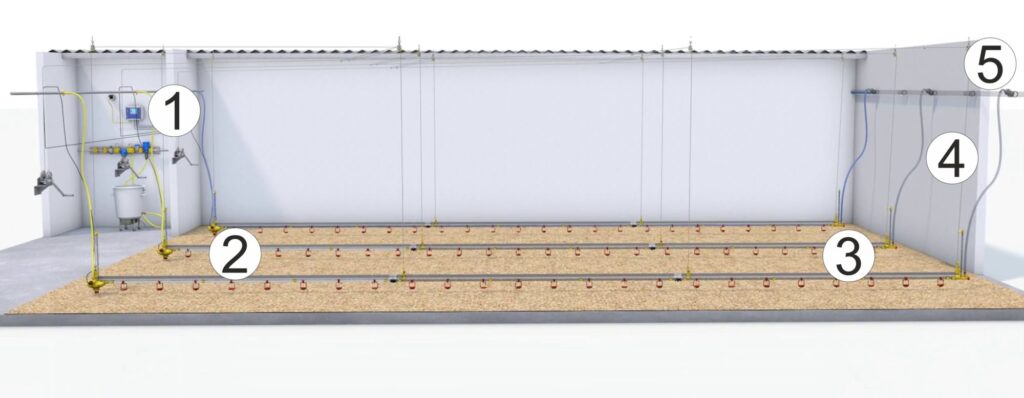
| Structural Components | A typical automatic flushing system may include:
|
||||||||||||||||||||||||
| Working Principle | During normal drinking operation, the pressure regulator maintains the required water supply condition for the nipple drinking line. When an automatic flushing cycle begins, the controller activates the actuator installed on the flushing pressure regulator. The actuator opens the flush valve so that a higher flow of water passes through the nipple pipe toward the end of the drinking line. At the line end, the automatic flush breather responds to flushing pressure and directs the discharged water through the drain kit into the designated drainage pipe. After the programmed flushing period is completed, the controller returns the system to normal drinking operation. This process can be repeated according to farm management requirements. |
||||||||||||||||||||||||
| Technical Specifications |
|
||||||||||||||||||||||||
| Applications |
|
||||||||||||||||||||||||
| Customization Options |
|
||||||||||||||||||||||||
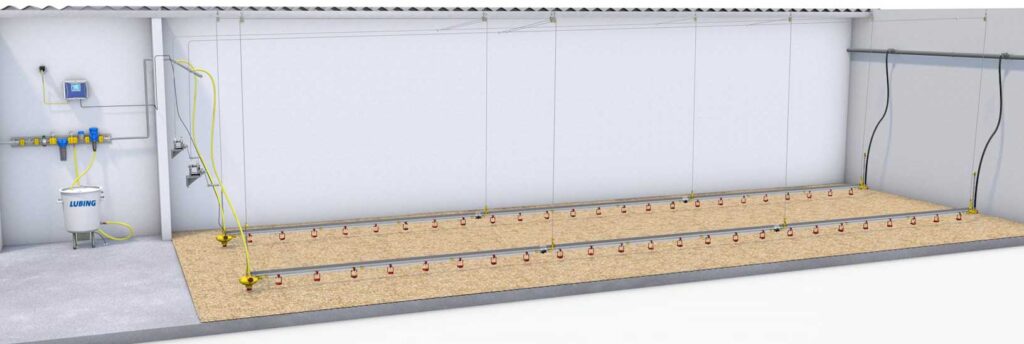
| Installation & Maintenance | The automatic flushing pressure regulator should be installed at the supply side of the drinking line, while the flush breather and drain kit are installed at the opposite end. A suitable drain pipe must be provided to carry flushing water away from the poultry house drinking system. The controller and actuator wiring should be installed according to the electrical layout and protected from moisture, mechanical damage and animal contact. Where several cage tiers or drinking lines are used, control circuits should be clearly identified to simplify commissioning and maintenance. Before operation, check pipe connections, pressure regulators, actuators, flush breathers and drainage outlets. Run a complete flushing cycle and verify that water is discharged correctly from each controlled line. Routine maintenance should include inspection of actuator operation, pressure regulator function, drain connections and flush breather movement. Drinking lines should be flushed according to farm hygiene procedures, especially after medication or water treatment. |
||||||||||||||||||||||||
| Project Cases | Automatic flushing systems are suitable for commercial cage houses where numerous nipple drinking lines are installed across multiple tiers. Centralized control can reduce the time required to flush individual lines manually and improve consistency between different sections of the poultry house. In new poultry farm construction projects, the flushing system can be planned together with drinking pipes, nipple drinkers, pressure regulators, water filters, dosing equipment and drainage infrastructure. For large steel structure poultry buildings, the number of controllers, extension boxes and drain connections can be configured according to the drinking line layout and overall project requirements. |
||||||||||||||||||||||||
| Product FAQ | Q: What does the automatic flushing system do? A: It automatically creates a flushing flow through the poultry drinking line and directs the discharged water to a drain, reducing the need to flush each line manually. Q: How many drinking lines can be controlled? A: The reference controller can automatically manage up to 10 drinking lines. Additional lines can be added using extension control boxes. Q: Can the system still be flushed manually? A: Yes. The actuator configuration allows manual flushing when required. Q: Can the system flush according to water temperature? A: A temperature monitoring kit can be added to compatible configurations for temperature-dependent flushing and filling. Q: Is the system suitable after poultry medication? A: Yes. Automatic flushing can be used to flush drinking lines after medication, and the flushing function can be disabled during medication when required. Q: Can it be installed in an existing cage house? A: Standard automatic flushing components can be integrated into suitable existing drinking systems according to the pipeline and drainage configuration. Optional ultrasonic cleaning should be evaluated separately for new installations. |
||||||||||||||||||||||||
| Product Gallery | 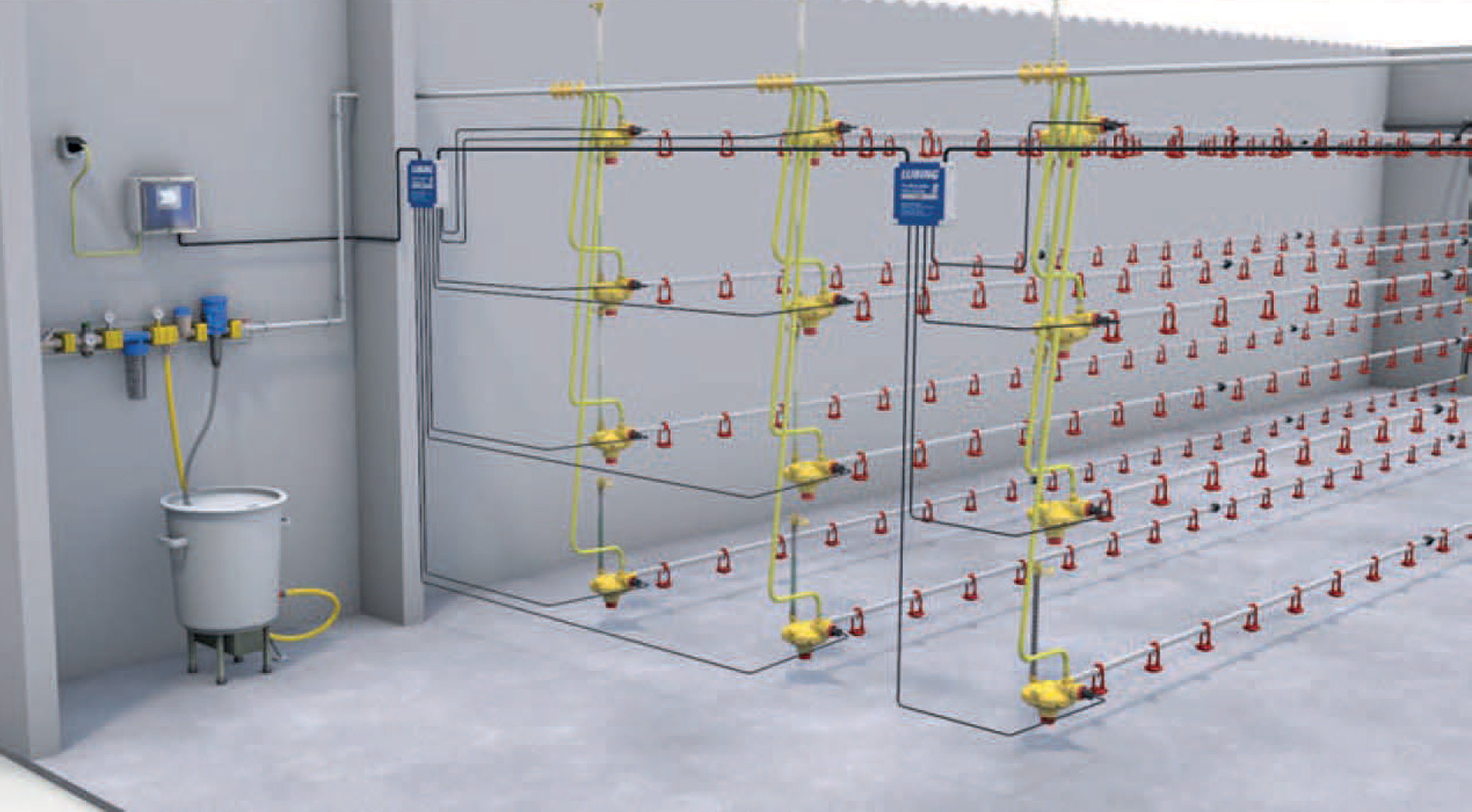  |
- Home
-
Products
- Pig Farming Equipment
- Cattle Farming Equipment
- Sheep & Goat Farming Equipment
- Poultry Farming Equipment
- Feeding & Drinking Systems
- Veterinary & Breeding Equipment
- Testing & Diagnostic Equipment
- Cleaning & Biosecurity Equipment
- Climate Control Equipment
- Livestock Weighing Equipment
- Manure & Waste Management
- Farm Transport & Handling
-
Solutions
- Pig Farm Solutions
- Dairy Farm Solutions
- Beef Cattle Farm Solutions
- Sheep & Goat Farm Solutions
- Layer Farm Solutions
- Broiler Farm Solutions
- Feeding & Drinking System Solutions
- Climate Control Solutions
- Biosecurity & Disinfection Solutions
- Manure & Waste Management
- Smart Farming Solutions
- Farm Renovation and Upgrade Solutions
- Partners
- Projects
- Resources
- News
- About Us
- Contact
Comments & Inquiries
Leave your questions or requirements below. We will reply as soon as possible.