

| Product Name | Multi-Line Automatic Drinking Water Flush System | ||||||||||||||||||||||
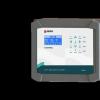
| Product Image |  |
||||||||||||||||||||||
| Product Overview | The Multi-Line Automatic Drinking Water Flush System is designed for automatic cleaning and water renewal in poultry nipple drinking systems. It coordinates the flushing of multiple drinking lines through a central controller, automatic flush actuators, line-end breather units and drainage components. During a programmed flushing cycle, the system switches selected drinking lines into flush mode so that water moves rapidly through the nipple pipes and carries accumulated residues toward the line-end drainage system. This reduces the manual work required for routine waterline flushing and helps maintain consistent drinking water management. The system is suitable for commercial broiler, breeder, pullet, layer, cage and aviary projects and can be incorporated into new livestock equipment installations or retrofitted to compatible existing drinking systems. |
||||||||||||||||||||||
| Key Features |
|
||||||||||||||||||||||
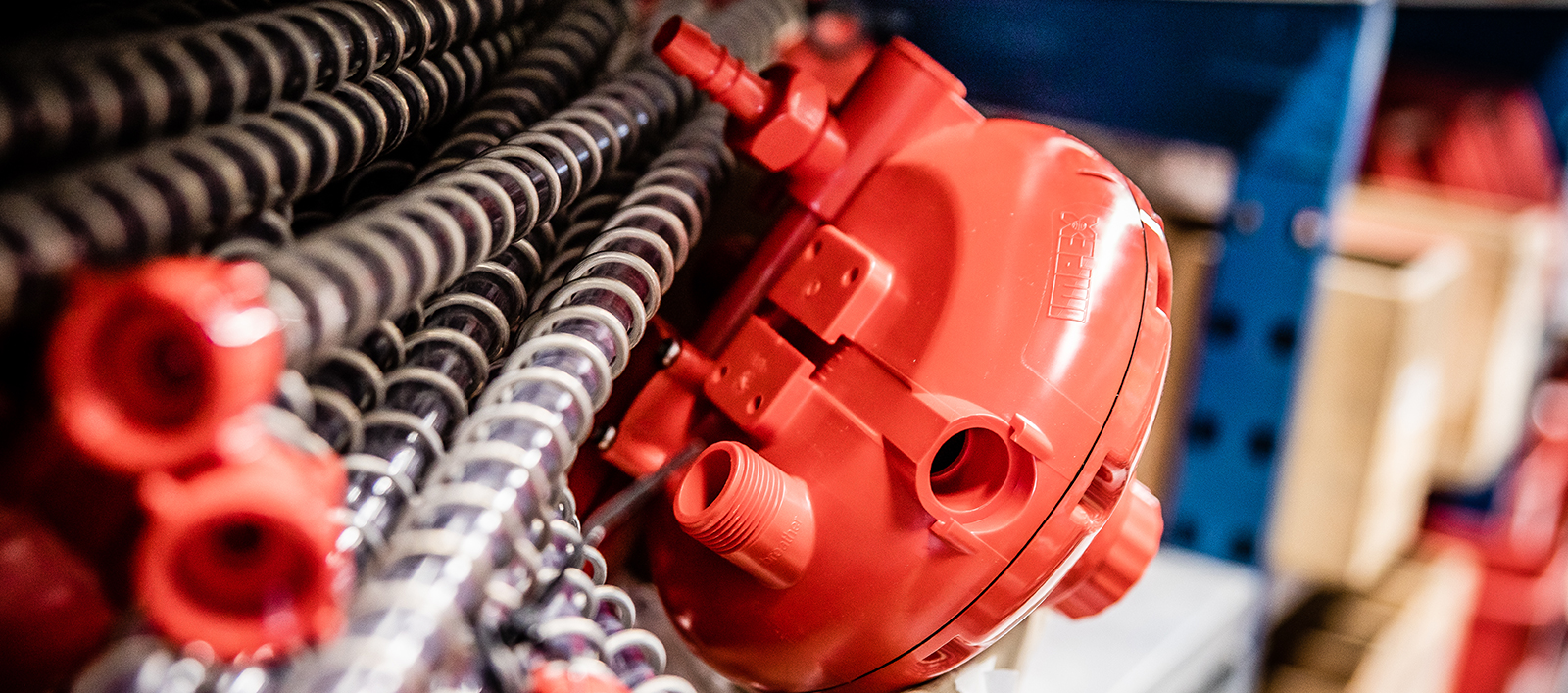
| Structural Components | A typical automatic drinking water flush system may include:
|
||||||||||||||||||||||
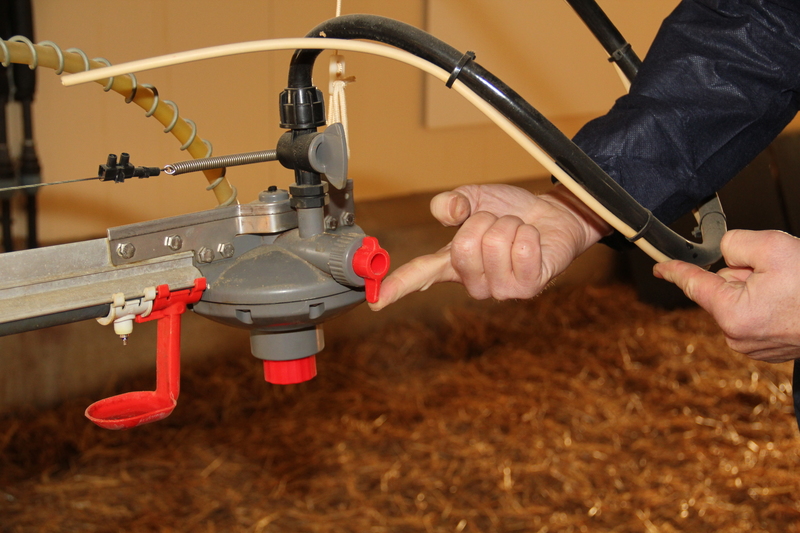
| Working Principle | Under normal operation, the pressure regulator supplies water to the nipple drinking line at the required drinking pressure. When a programmed flush cycle begins, the controller activates the actuator connected to the selected pressure regulator. The regulator switches into flushing mode, allowing higher water flow through the drinking line. At the opposite end of the line, the automatic breather and drainage assembly directs the flushing water into the drain system. Each line can be controlled according to the configured flushing sequence. After the selected flushing time is completed, the actuator returns the regulator to normal drinking operation and the controller proceeds to the next drinking line. |
||||||||||||||||||||||
| Technical Specifications |
|
||||||||||||||||||||||
| Applications |
|
||||||||||||||||||||||
| Customization Options |
|
||||||||||||||||||||||
| Installation & Maintenance | Before installation, confirm the number and length of drinking lines, pressure regulator locations, available water supply, controller position and wastewater drainage route. The automatic flush actuator should be correctly connected to the compatible pressure regulator and central controller. A line-end breather and drain kit should be installed at the discharge end of each drinking line, with flushing water directed to an appropriate drain pipe. During commissioning, test each drinking line separately to confirm actuator operation, water flow, flushing duration and drainage performance. The flushing time should be adjusted to provide adequate line renewal without unnecessary water consumption. Routine maintenance includes checking actuators, pressure regulators, breather units, drainage hoses, controller connections and drain pipes. Drinking lines should also be inspected after medication or water treatment cycles and flushed according to the farm hygiene program. |
||||||||||||||||||||||
| Project Cases | Multi-line automatic flushing systems are suitable for large commercial poultry houses where several parallel nipple drinking lines require routine cleaning and water renewal. In a typical project, each drinking line is equipped with a flush-compatible pressure regulator, actuator and line-end drainage assembly. A centralized controller coordinates the flushing sequence so operators can manage multiple lines without manually switching each regulator. For new poultry farm construction and steel structure building projects, the flushing system can be planned together with drinking lines, pressure regulators, filters, dosing equipment, water meters and drainage infrastructure. |
||||||||||||||||||||||
| Product FAQ | Q: What is the main function of an automatic drinking water flush system? A: It automatically increases water flow through selected nipple drinking lines to remove stagnant water and accumulated residues and to simplify routine waterline hygiene management. Q: How many drinking lines can be controlled? A: The reference LUBING configuration controls up to 10 drinking lines as standard and can be expanded with additional control modules. Q: Can each drinking line be flushed separately? A: Yes. Individual lines can be flushed separately, while grouped flushing can also be configured where the system and water supply allow. Q: Can the flushing time be adjusted? A: Yes. Flushing duration and timing can be programmed according to drinking line length and farm operating requirements. Q: Can the system be installed on an existing poultry drinking system? A: Yes. Retrofit installation is possible when the existing pressure regulators, drinking lines and related components are compatible with the automatic flushing equipment. Q: Where does the flushing water go? A: A line-end breather and drain kit guide the discharged flushing water into a dedicated drain pipe or approved wastewater collection system. |
||||||||||||||||||||||
| Product Gallery | 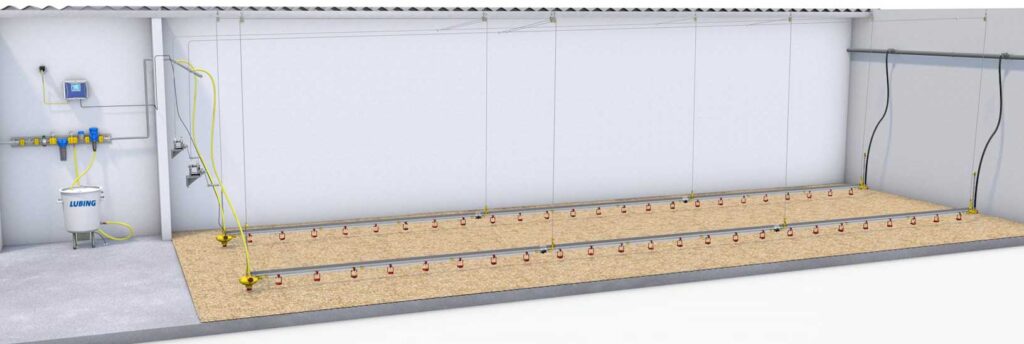 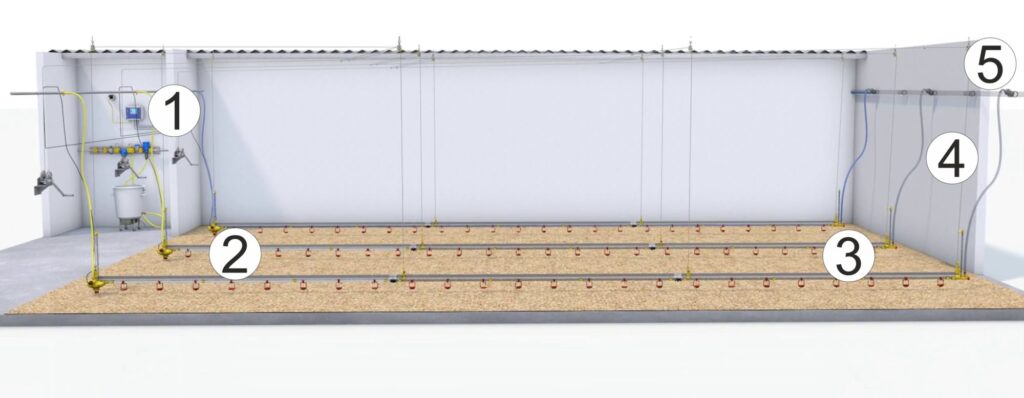 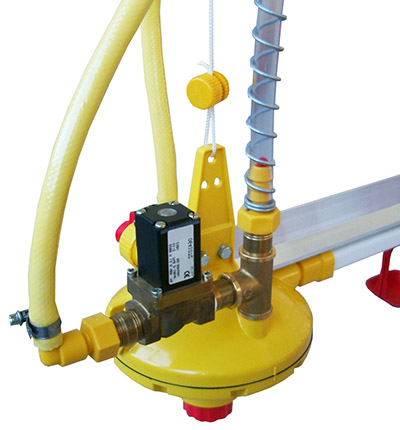 |
- Home
-
Products
- Pig Farming Equipment
- Cattle Farming Equipment
- Sheep & Goat Farming Equipment
- Poultry Farming Equipment
- Feeding & Drinking Systems
- Veterinary & Breeding Equipment
- Testing & Diagnostic Equipment
- Cleaning & Biosecurity Equipment
- Climate Control Equipment
- Livestock Weighing Equipment
- Manure & Waste Management
- Farm Transport & Handling
-
Solutions
- Pig Farm Solutions
- Dairy Farm Solutions
- Beef Cattle Farm Solutions
- Sheep & Goat Farm Solutions
- Layer Farm Solutions
- Broiler Farm Solutions
- Feeding & Drinking System Solutions
- Climate Control Solutions
- Biosecurity & Disinfection Solutions
- Manure & Waste Management
- Smart Farming Solutions
- Farm Renovation and Upgrade Solutions
- Partners
- Projects
- Resources
- News
- About Us
- Contact
Comments & Inquiries
Leave your questions or requirements below. We will reply as soon as possible.