

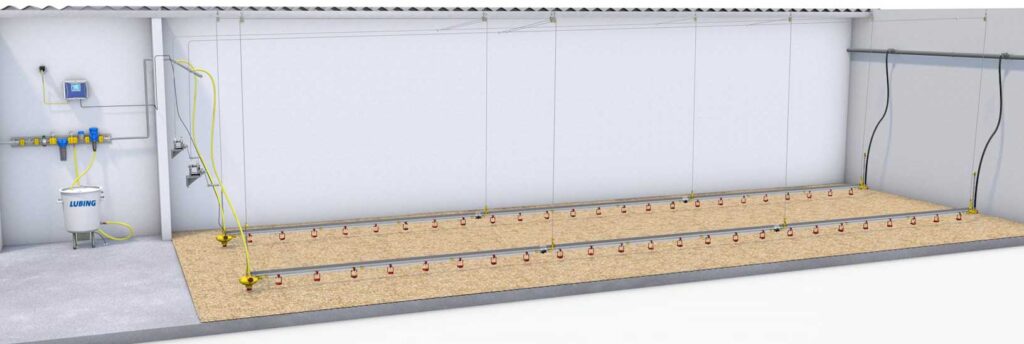
| Product Name | Automatic Poultry Waterline Flushing System | ||||||||||||||||||||
| Product Image | 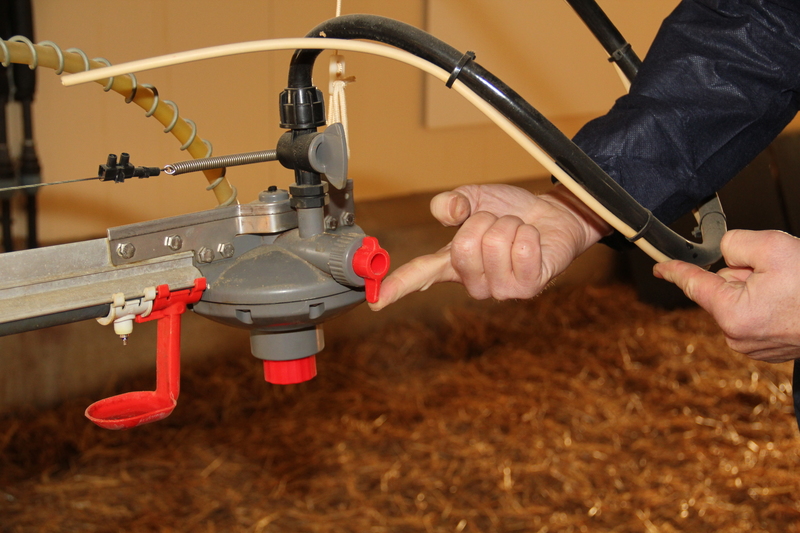 |
||||||||||||||||||||
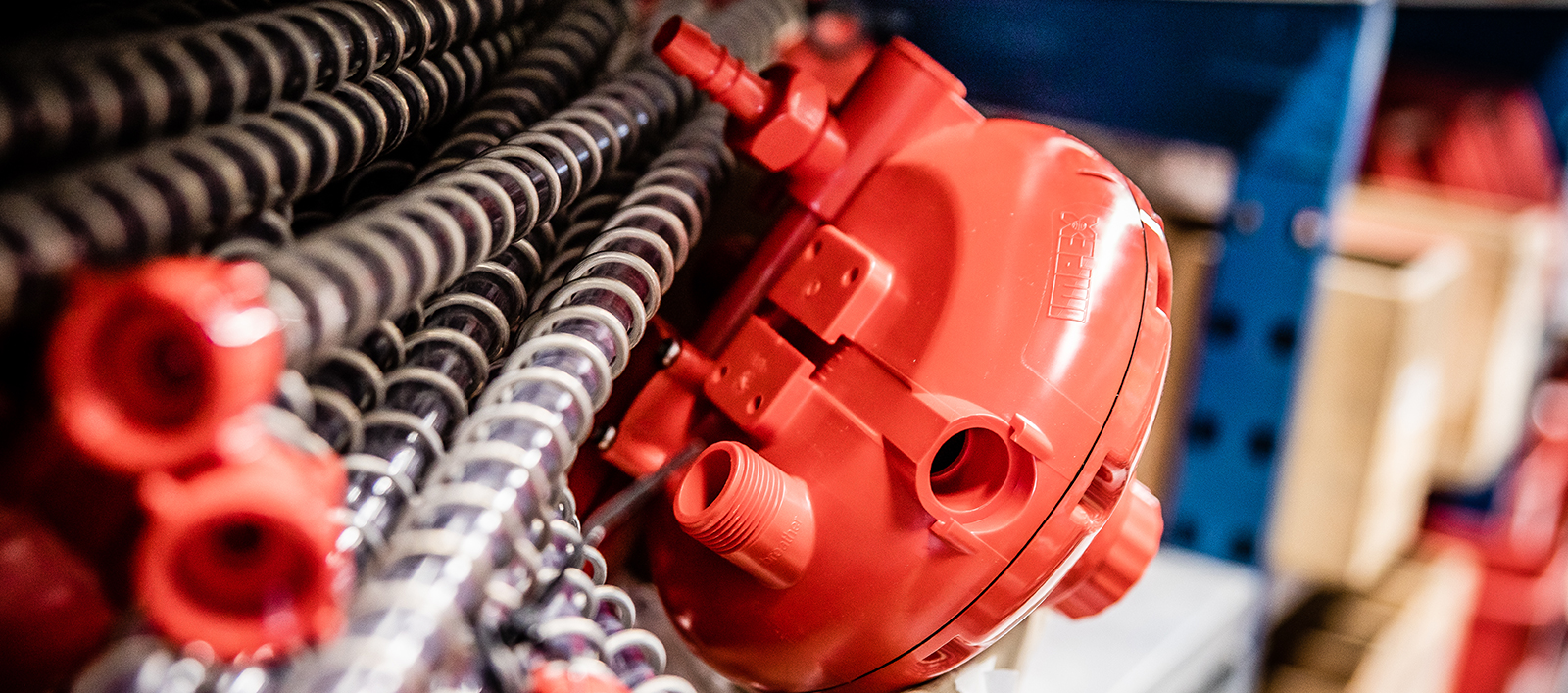
| Product Overview | The Automatic Poultry Waterline Flushing System is designed to automate the cleaning and refreshing of nipple drinking lines in commercial poultry houses. It allows flushing cycles to be programmed according to flock age, climate conditions, water quality, medication schedules and farm management requirements. During a flushing cycle, a control signal activates the flushing valve so that a higher water flow passes through the drinking line and exits at the line end. This helps remove loose sediment and residues while replacing warm or stagnant water with fresher water. The system can be integrated with line-head pressure regulators, poultry house controllers and existing nipple drinking systems. Wired and wireless configurations can be selected according to project requirements. |
||||||||||||||||||||
| Key Features |
|
||||||||||||||||||||
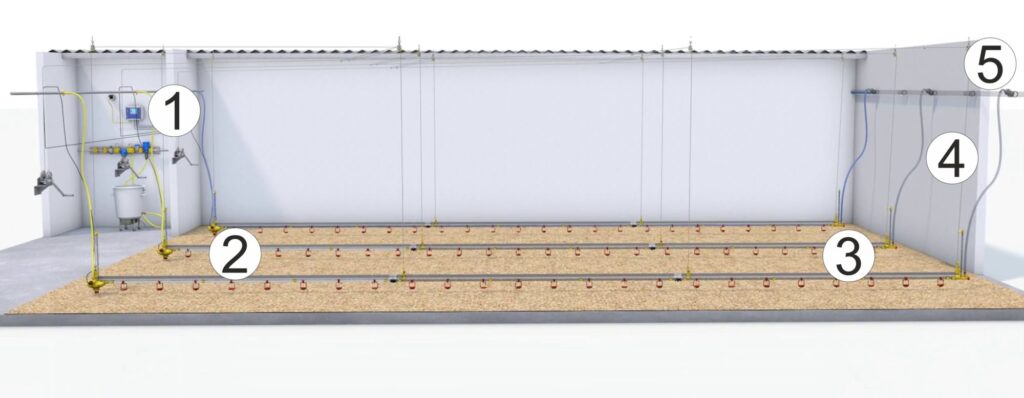
| Structural Components | A typical automatic waterline flushing system may include:
|
||||||||||||||||||||
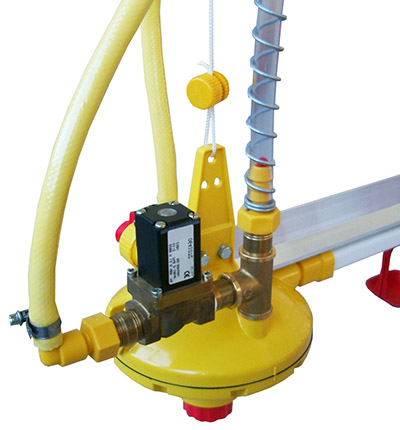
| Working Principle | Under normal drinking conditions, the pressure regulator maintains the operating water pressure required by the nipple drinking line. When a programmed flushing cycle begins, the control system activates the flushing valve. The valve creates a bypass or flushing condition that allows higher-flow water to travel from the line head through the entire drinking pipe. The line-end outlet remains open during flushing so water, loose sediment and suspended residues can be discharged outside the poultry house. After the programmed flushing period is completed, the system returns to normal drinking pressure. Automatic flushing plans can be scheduled according to time, flock age and other management conditions. Wireless systems may also allow flushing programs to be configured through a mobile control interface. |
||||||||||||||||||||
| Technical Specifications |
|
||||||||||||||||||||
| Applications |
|
||||||||||||||||||||
| Customization Options |
|
||||||||||||||||||||
| Installation & Maintenance | Before installation, confirm the number and length of drinking lines, regulator type, available supply pressure and drainage route. The flushing valve should be installed according to the drinking-system layout and the required water flow direction. For systems integrated with a line-head pressure regulator, the automatic flushing components should be connected according to the regulator and controller configuration. Line-end drainage hoses should discharge flushed water safely away from the poultry house. After installation, each drinking line should be tested individually to confirm valve operation, adequate flushing flow and reliable drainage. Flushing duration and frequency should then be programmed according to water quality, climate, flock age and farm management requirements. Routine maintenance should include checking solenoid valves, seals, regulator components, drain hoses and line-end outlets. Poultry drinking lines should also be cleaned between flocks and maintained according to the farm's water sanitation program. |
||||||||||||||||||||
| Project Cases | Automatic flushing systems can be installed across multiple nipple drinking lines in large commercial poultry houses, allowing flushing routines to be managed centrally instead of opening and closing each line manually. In hot-climate poultry projects, programmed flushing can be used to replace water that has warmed inside long drinking lines. In intensive production systems, flushing schedules can also be coordinated with water treatment, medication and flock-management programs. For new poultry farm construction and steel structure building projects, SHEWUYOU can configure flushing components together with drinking pipes, pressure regulators, nipple drinkers, filters, medicators and water-control equipment. |
||||||||||||||||||||
| Product FAQ | Q: What is the main purpose of an automatic waterline flushing system? A: It automatically sends higher-flow water through poultry drinking lines to refresh the water and help discharge loose sediment and residues. Q: Can flushing be programmed automatically? A: Yes. Flushing schedules can be programmed according to time, flock cycle, water conditions and other management requirements. Q: Is wireless flushing available? A: Yes. Wireless configurations can use a regulator-mounted control unit and mobile interface to manage scheduled flushing without extensive control wiring. Q: Can the system be installed on an existing poultry drinking line? A: Yes. Suitable configurations can be integrated with compatible existing line-head regulators and drinking lines. Q: Does flushing replace chemical waterline cleaning? A: No. Automatic flushing is an important part of waterline management, but periodic sanitation and cleaning procedures may still be required according to water quality and farm hygiene protocols. Q: Can the system be supplied for several drinking lines? A: Yes. Controller, valve and drainage configurations can be designed according to the number of drinking lines and poultry house layout. |
||||||||||||||||||||
| Product Gallery |  |
- Home
-
Products
- Pig Farming Equipment
- Cattle Farming Equipment
- Sheep & Goat Farming Equipment
- Poultry Farming Equipment
- Feeding & Drinking Systems
- Veterinary & Breeding Equipment
- Testing & Diagnostic Equipment
- Cleaning & Biosecurity Equipment
- Climate Control Equipment
- Livestock Weighing Equipment
- Manure & Waste Management
- Farm Transport & Handling
-
Solutions
- Pig Farm Solutions
- Dairy Farm Solutions
- Beef Cattle Farm Solutions
- Sheep & Goat Farm Solutions
- Layer Farm Solutions
- Broiler Farm Solutions
- Feeding & Drinking System Solutions
- Climate Control Solutions
- Biosecurity & Disinfection Solutions
- Manure & Waste Management
- Smart Farming Solutions
- Farm Renovation and Upgrade Solutions
- Partners
- Projects
- Resources
- News
- About Us
- Contact
Comments & Inquiries
Leave your questions or requirements below. We will reply as soon as possible.