
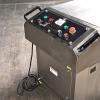
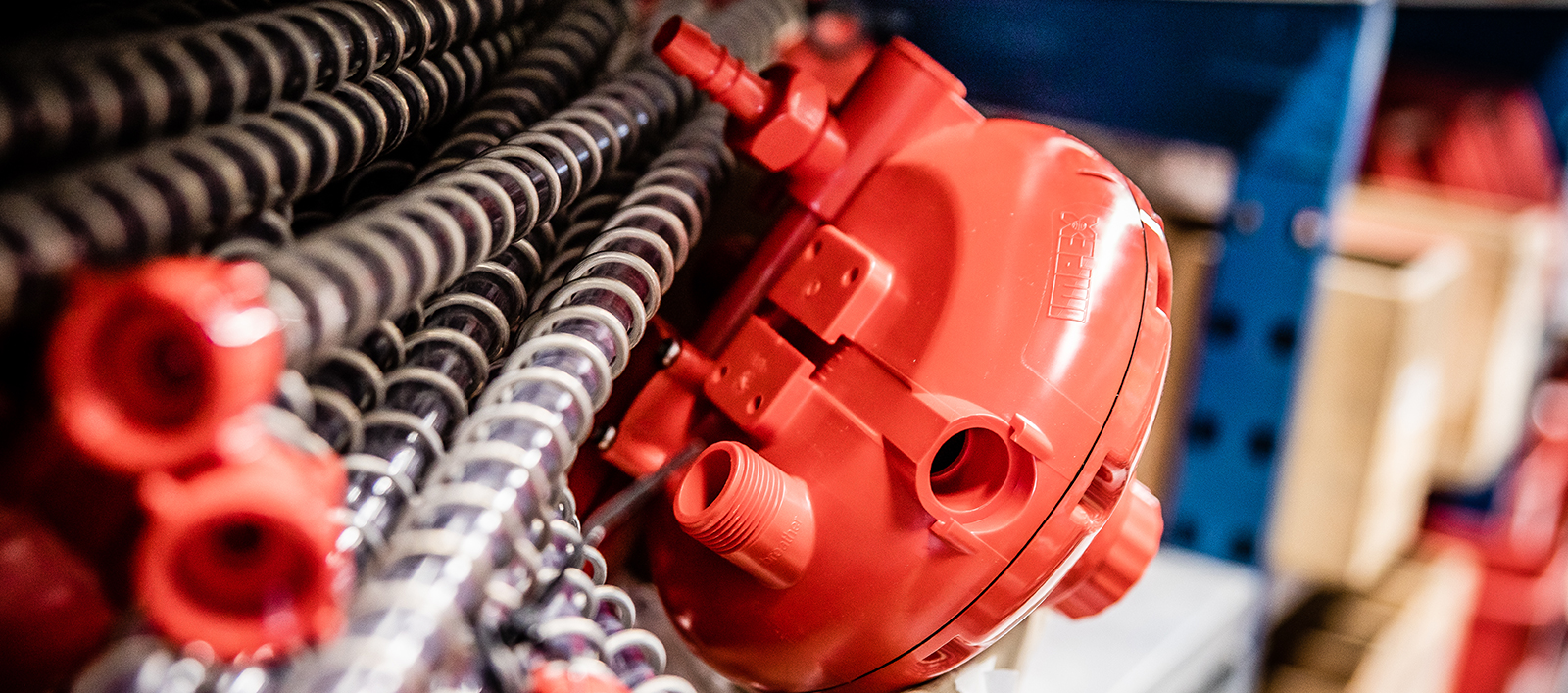
| Product Name | Ozone Pulse Waterline Cleaning Machine | ||||||||||||||||||||
| Product Image |  |
||||||||||||||||||||
| Product Overview | The Ozone Pulse Waterline Cleaning Machine is designed for cleaning and sanitation of drinking water pipelines in poultry and livestock farms. It combines ozone treatment with pulsating waterline flushing to help loosen organic deposits, accumulated residues and biofilm from the internal surface of drinking pipes. Unlike conventional low-flow rinsing, pulse cleaning creates repeated hydraulic disturbances inside the pipeline to improve contact with pipe-wall contamination. Ozone is introduced as an oxidizing treatment during the cleaning process, supporting waterline hygiene without relying solely on conventional chemical cleaning methods. The machine is suitable for broiler houses, breeder farms, layer facilities, pig farms and other commercial livestock operations. It can be incorporated into new livestock equipment projects, pig farm construction and steel structure building projects or used for maintenance of existing drinking water systems. |
||||||||||||||||||||
| Key Features |
|
||||||||||||||||||||
| Structural Components | A typical ozone pulse waterline cleaning system may include:
|
||||||||||||||||||||
| Working Principle | The cleaning machine is connected to the drinking water pipeline through suitable inlet, outlet and flushing connections. During operation, water is circulated or driven through the line while the pulse system generates repeated pressure and flow changes. These pulsating disturbances help loosen residues attached to the internal pipe wall and move detached contamination toward the line outlet. Ozone generated by the machine is introduced into the cleaning stream to provide an additional oxidation and sanitation process. The combined action of pulsed flow and ozone treatment helps improve removal of organic deposits and biofilm compared with routine low-flow flushing. After the cleaning cycle, loosened material and cleaning water are discharged through the end of the line or designated drainage point. |
||||||||||||||||||||
| Technical Specifications |
|
||||||||||||||||||||
| Applications |
|
||||||||||||||||||||
| Customization Options |
|
||||||||||||||||||||
| Installation & Maintenance | Before operation, confirm the drinking line layout, pipeline condition, water supply and drainage arrangement. The machine should be positioned on a stable surface with sufficient ventilation and convenient access to electrical and water connections. Connect the machine to the designated waterline inlet using compatible hoses and adapters. Open the required line-end outlet or drainage connection before starting the cleaning cycle so loosened contamination can be discharged safely. Cleaning pressure and operating sequence should be selected according to pipe diameter, line length, nipple system configuration and pipeline condition. Excessive pressure should be avoided to prevent damage to drinking line components. After cleaning, flush the line with suitable water according to the farm's drinking-water management procedure. Routine machine maintenance should include inspection of hoses, valves, pumps, seals, electrical components, pressure-control parts and ozone-generation components. |
||||||||||||||||||||
| Project Cases | Ozone pulse cleaning machines can be used as centralized maintenance equipment for commercial poultry farms with multiple houses. A mobile unit can be moved between buildings and connected to individual drinking lines according to the farm cleaning schedule. For large livestock projects, waterline cleaning equipment can be planned together with water filtration, pressure regulation, medication systems, nipple drinking lines and drainage facilities. In new pig farm construction and steel structure building projects, suitable waterline access points and drainage connections can be incorporated into the system design to simplify future cleaning and maintenance. |
||||||||||||||||||||
| Product FAQ | Q: What is the difference between pulse cleaning and normal waterline flushing? A: Normal flushing mainly relies on continuous water flow, while pulse cleaning creates repeated changes in flow and pressure to increase mechanical disturbance inside the pipeline. Q: What is the purpose of ozone in the cleaning process? A: Ozone provides an oxidation treatment that complements the mechanical flushing action and helps improve waterline sanitation. Q: Can the machine help remove biofilm? A: The combined pulse and ozone process is designed to help loosen and remove organic deposits and biofilm from drinking pipe surfaces. Q: Can it be used on existing poultry drinking lines? A: Yes. Suitable adapters and cleaning parameters can be selected according to the existing pipeline and drinking system configuration. Q: Is it suitable only for poultry farms? A: No. Appropriate configurations can also be used for pig and other livestock drinking water pipelines. Q: Can the machine specification be customized? A: Yes. Connection size, control configuration, cleaning arrangement and related accessories can be supplied according to project requirements. |
||||||||||||||||||||
| Product Gallery | 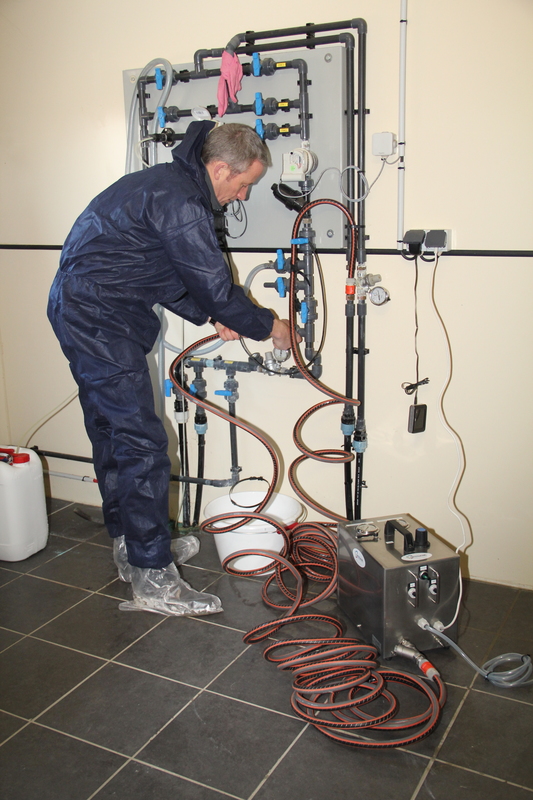 |
- Home
-
Products
- Pig Farming Equipment
- Cattle Farming Equipment
- Sheep & Goat Farming Equipment
- Poultry Farming Equipment
- Feeding & Drinking Systems
- Veterinary & Breeding Equipment
- Testing & Diagnostic Equipment
- Cleaning & Biosecurity Equipment
- Climate Control Equipment
- Livestock Weighing Equipment
- Manure & Waste Management
- Farm Transport & Handling
-
Solutions
- Pig Farm Solutions
- Dairy Farm Solutions
- Beef Cattle Farm Solutions
- Sheep & Goat Farm Solutions
- Layer Farm Solutions
- Broiler Farm Solutions
- Feeding & Drinking System Solutions
- Climate Control Solutions
- Biosecurity & Disinfection Solutions
- Manure & Waste Management
- Smart Farming Solutions
- Farm Renovation and Upgrade Solutions
- Partners
- Projects
- Resources
- News
- About Us
- Contact
Comments & Inquiries
Leave your questions or requirements below. We will reply as soon as possible.