
| Product Name | Compact Poultry Hatcher | ||||||||||||||||||||||||||||
| Product Image |  |
||||||||||||||||||||||||||||
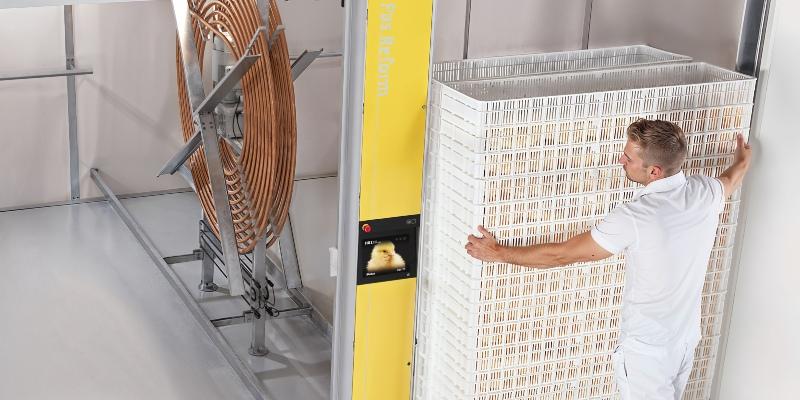
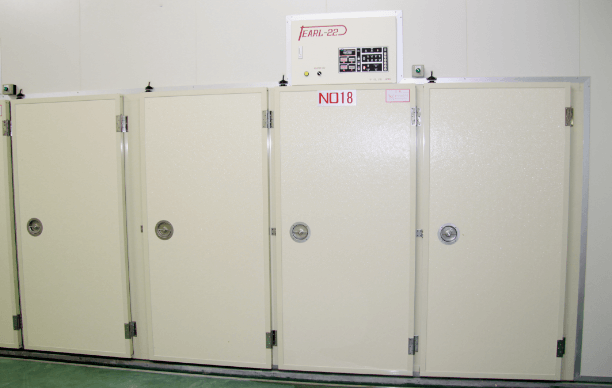
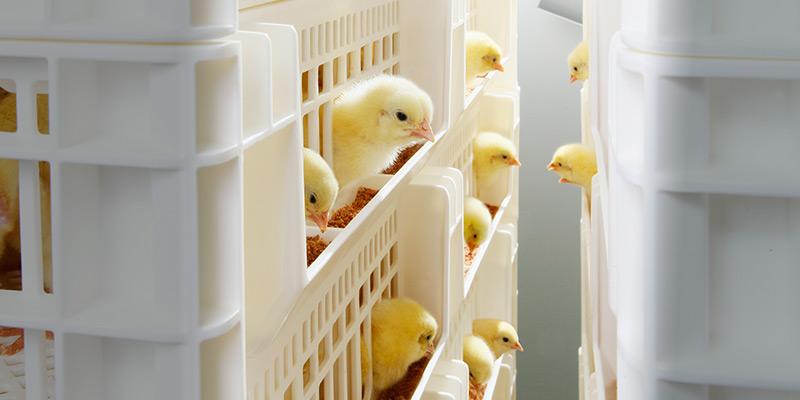
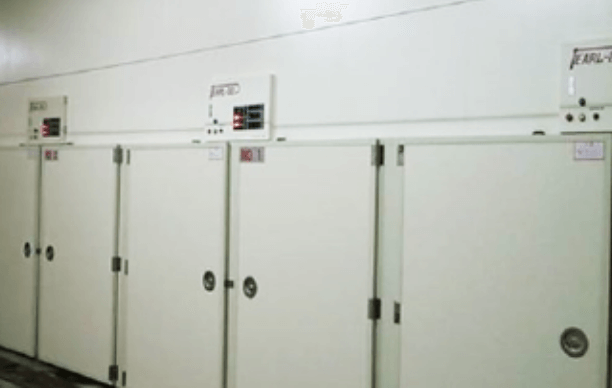
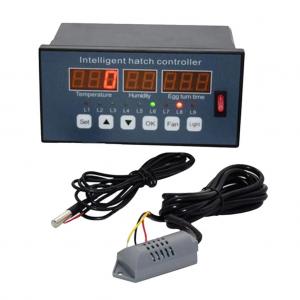
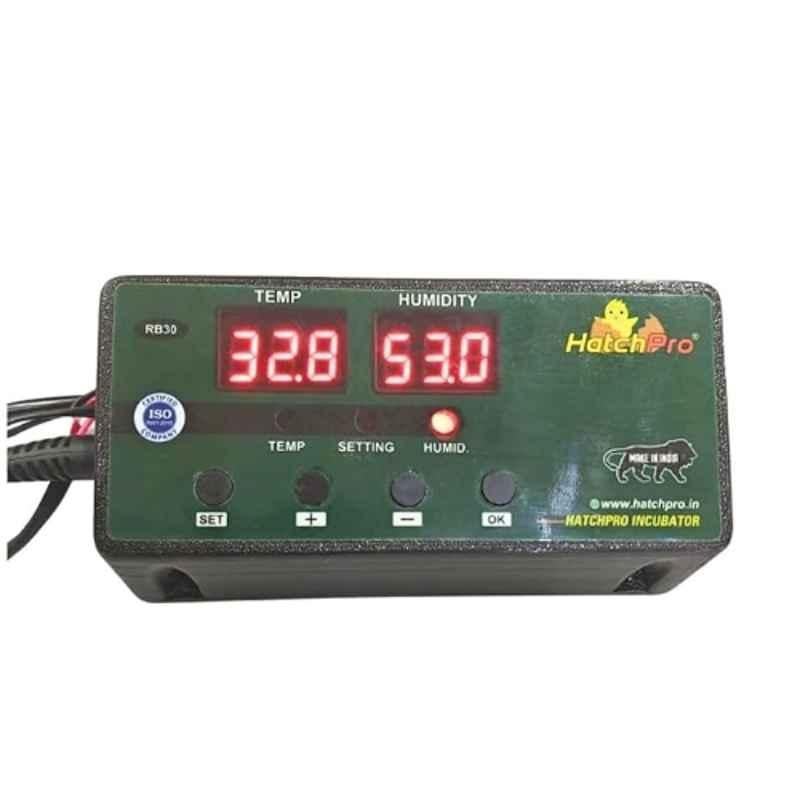
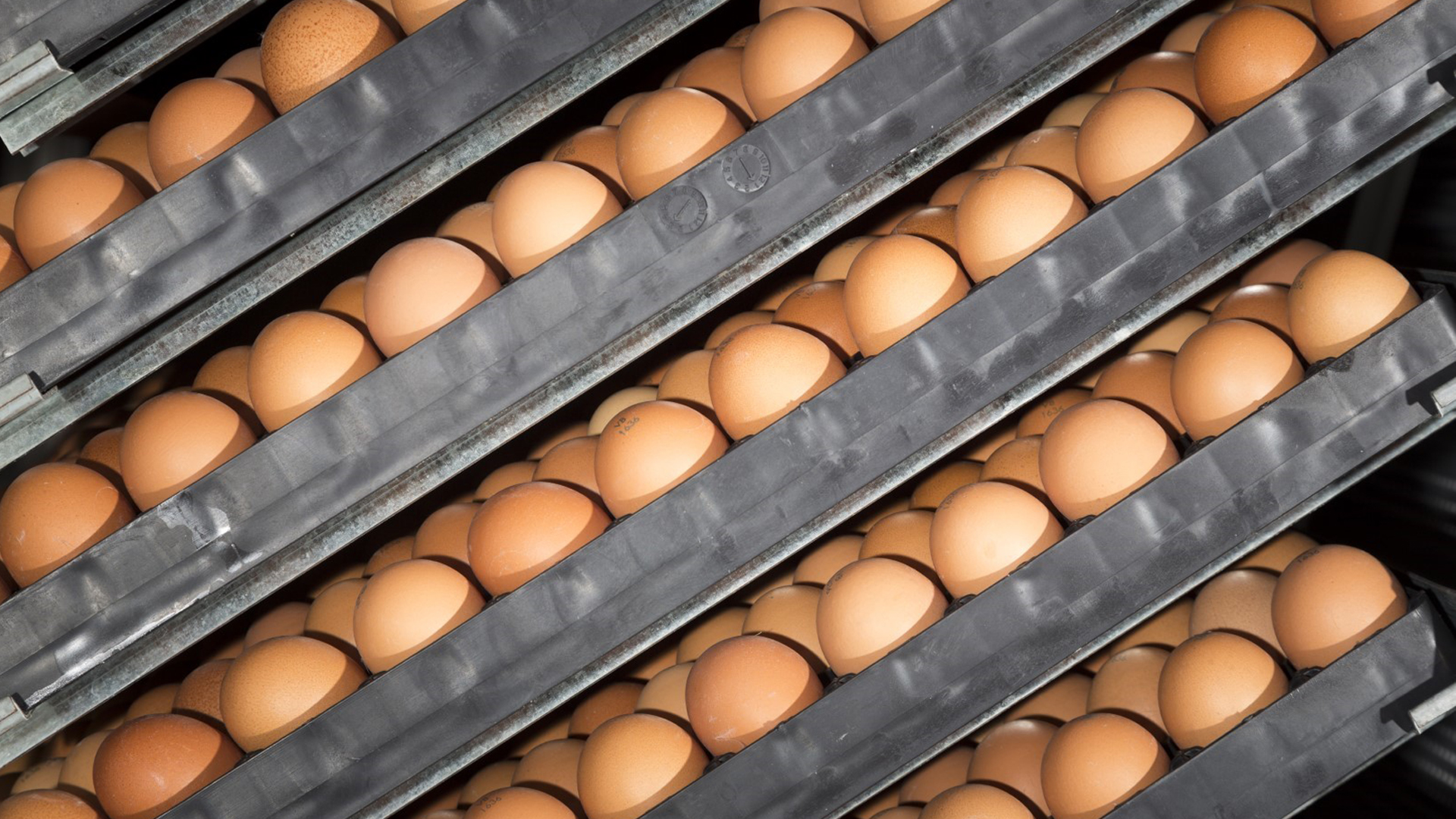
| Product Overview | The Compact Poultry Hatcher is a space-efficient hatchery machine designed for the final stage of poultry egg incubation. It provides controlled temperature, humidity, airflow and cooling after eggs are transferred from the setter into dedicated hatching baskets. Its compact cabinet configuration makes it suitable for breeder farms, small and medium commercial hatcheries, specialist poultry producers, research facilities and hatchery expansion projects where professional hatching performance is required without occupying the floor space of a large industrial hatcher. The system can be configured for chicken, turkey, duck, quail, pheasant, partridge and other commercial bird eggs according to egg size, hatch basket arrangement and project requirements. |
||||||||||||||||||||||||||||
| Key Features |
|
||||||||||||||||||||||||||||
| Structural Components |
|
||||||||||||||||||||||||||||
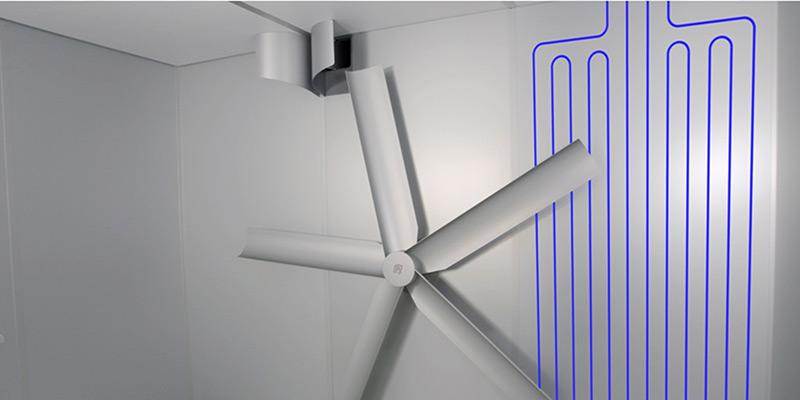
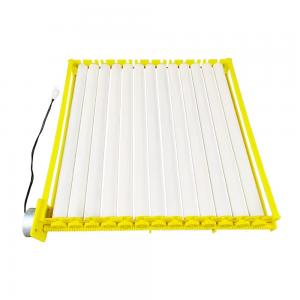
| Working Principle | Near the end of the setter period, fertile eggs are transferred from setter trays into hatching baskets. The baskets are then placed inside the compact hatcher on a stand, rack or movable dolly. The controller regulates cabinet temperature while the circulation fan distributes conditioned air around the baskets. Automatic humidification increases moisture to support shell pipping and chick emergence, while the cooling circuit removes excess heat generated by developing embryos. Egg turning is normally not required during this final stage. After the hatch cycle is complete, chicks are removed for grading, vaccination, counting or transfer, and the cabinet and baskets are cleaned before the next batch. |
||||||||||||||||||||||||||||
| Technical Specifications |
|
||||||||||||||||||||||||||||
| Applications |
|
||||||||||||||||||||||||||||
| Customization Options | The Compact Poultry Hatcher can be configured according to poultry species, weekly egg transfer volume, hatch basket dimensions, available hatchery space and required automation level. Available options may include cabinet capacity, basket quantity, basket dimensions, trolley or stand design, control interface, cooling configuration, humidification system, alarm functions and electrical specification. Equipment can be designed according to local climate and farm conditions and coordinated with the customer's hatchery room, steel structure building and production workflow. |
||||||||||||||||||||||||||||
| Installation & Maintenance | The hatcher should be installed on a stable and level floor with sufficient clearance for opening the door, removing baskets and performing maintenance. Electrical, water and drainage connections should be prepared according to the selected machine configuration. A compact cabinet is particularly suitable for hatchery rooms where efficient use of floor space is important. Utility connections can be arranged according to the project layout to simplify installation beside other hatchery machines. Routine maintenance includes checking sensors, fans, heating components, cooling pipes, humidity nozzles, door seals and alarm functions. Removable baskets and accessible internal components simplify washing and disinfection between hatch cycles. |
||||||||||||||||||||||||||||
| Project Cases | A compact hatcher is suitable for breeder farms and smaller hatcheries that require professional environmental control but do not need the capacity of a large industrial hatching room. It can also be used as an additional hatcher in an existing facility to increase production capacity, separate poultry species, process specialist breeding batches or provide greater flexibility in the hatchery production schedule. For new poultry projects, multiple compact machines can be incorporated into a modular hatchery layout that allows production capacity to expand gradually as flock size increases. |
||||||||||||||||||||||||||||
| Product FAQ | Q: What is the main advantage of a compact poultry hatcher? A: It provides professional hatching functions in a smaller cabinet footprint, making it suitable for smaller hatcheries, breeder farms and modular expansion projects. Q: Can the hatcher be used for chicken eggs? A: Yes. Basket capacity and operating configuration can be selected for chicken eggs and other commercial poultry species. Q: Can it hatch turkey or duck eggs? A: Yes. Basket layout and hatching capacity can be configured according to the larger dimensions of turkey and duck eggs. Q: Does a hatcher require automatic egg turning? A: No. Eggs are normally transferred to the hatcher near the end of incubation, when regular egg turning is no longer required. Q: Is automatic humidity control available? A: Yes. Automatic spray or other humidification systems can be supplied according to project requirements. Q: Can the machine be installed beside other hatchers? A: Yes. Compact configurations are suitable for modular hatchery layouts, subject to adequate service access and utility connections. Q: What information is required for quotation? A: Recommended information includes poultry species, egg transfer volume, required hatch capacity, preferred basket arrangement, electrical standard, water supply and available installation space. |
||||||||||||||||||||||||||||
| Product Gallery |   |
- Home
-
Products
- Pig Farming Equipment
- Cattle Farming Equipment
- Sheep & Goat Farming Equipment
- Poultry Farming Equipment
- Feeding & Drinking Systems
- Veterinary & Breeding Equipment
- Testing & Diagnostic Equipment
- Cleaning & Biosecurity Equipment
- Climate Control Equipment
- Livestock Weighing Equipment
- Manure & Waste Management
- Farm Transport & Handling
-
Solutions
- Pig Farm Solutions
- Dairy Farm Solutions
- Beef Cattle Farm Solutions
- Sheep & Goat Farm Solutions
- Layer Farm Solutions
- Broiler Farm Solutions
- Feeding & Drinking System Solutions
- Climate Control Solutions
- Biosecurity & Disinfection Solutions
- Manure & Waste Management
- Smart Farming Solutions
- Farm Renovation and Upgrade Solutions
- Partners
- Projects
- Resources
- News
- About Us
- Contact





Comments & Inquiries
Leave your questions or requirements below. We will reply as soon as possible.