

| Product Name | Positive Displacement Liquid Feed Pump | ||||||||||||||||||||||||||||
| Product Image |  |
||||||||||||||||||||||||||||
| Product Overview |
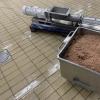
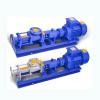
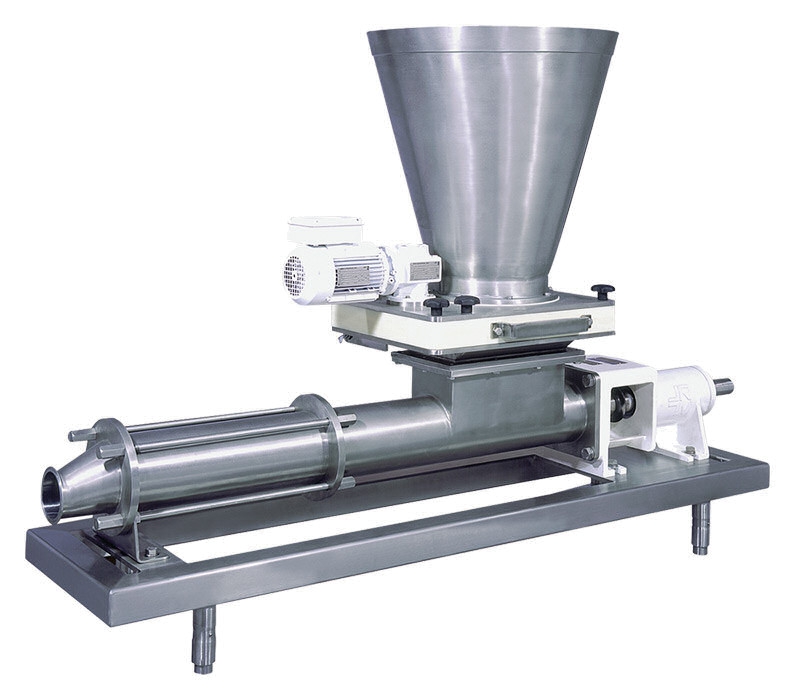
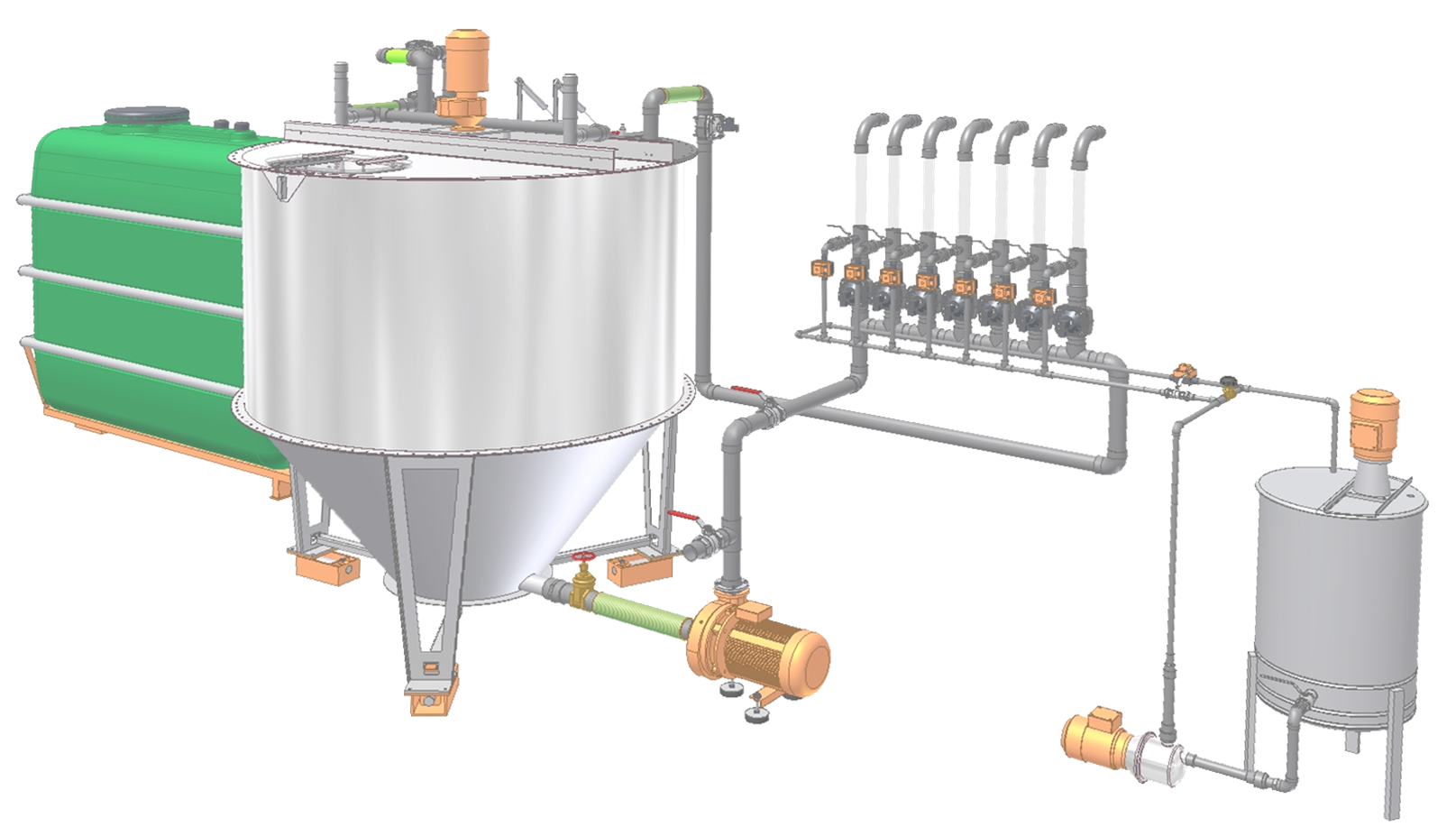
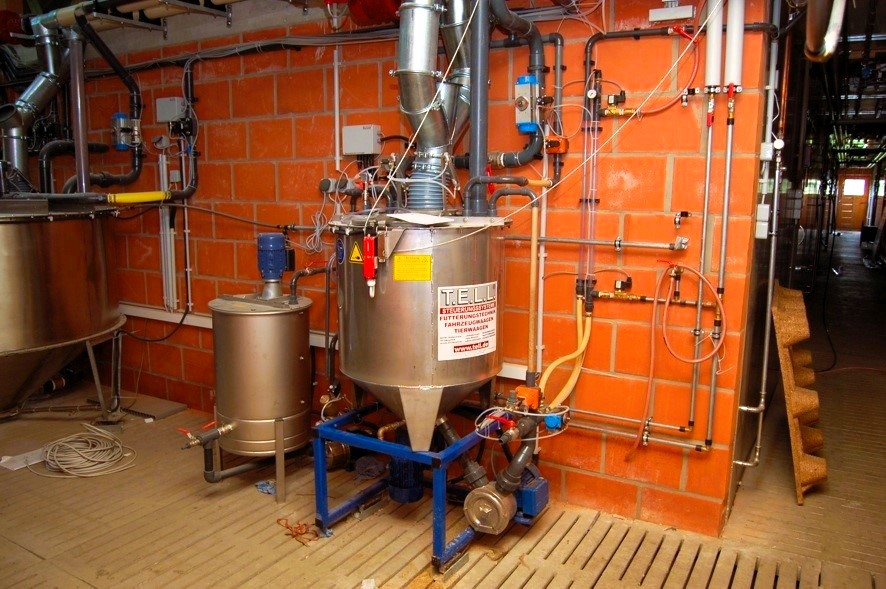
The Positive Displacement Liquid Feed Pump is designed for controlled transfer and distribution of liquid feed in commercial pig production. It is particularly suitable for systems handling viscous feed mixtures, higher dry-matter recipes and applications that require stable delivery pressure. Unlike a centrifugal pump, a positive displacement pump moves a defined volume of material during each pumping cycle. This principle makes it well suited to thick liquid feed and applications where consistent flow must be maintained despite changes in system pressure or feed viscosity. In computer-controlled liquid feeding installations, the pump transfers prepared feed from the mixing tank through ring lines, branch lines and feed valves to individual pig pens or feeding stations. Frequency-controlled operation can adjust pump output to different feeding stages and distribution requirements. The pump can form part of a complete liquid feeding project together with mixing tanks, rinse water tanks, feed valves, pipeline systems, weighing equipment, sensors and a central feeding computer. Pump capacity, motor power and connection arrangement are selected according to feed properties, transport distance and farm layout. |
||||||||||||||||||||||||||||
| Key Features |
|
||||||||||||||||||||||||||||
| Structural Components |
|
||||||||||||||||||||||||||||
| Working Principle |
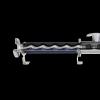
Prepared liquid feed enters the suction side of the pump from the mixing tank. Rotating or progressing displacement elements capture defined volumes of feed and move them through the pump housing toward the discharge connection. Because the operating principle is based on positive displacement rather than primarily on centrifugal force, the pump can maintain useful conveying performance with more viscous mixtures and under higher pipeline resistance. The pressurized liquid feed is transported through the main pipeline to the required feed valves. A feeding computer opens the appropriate valves according to the programmed recipe, animal group and feeding schedule. With frequency-controlled operation, motor speed can be adjusted according to required flow, pipeline condition or feeding phase. This allows one pump system to serve different operating demands while avoiding unnecessary full-speed operation. After feeding, compatible installations can use water or compressed-air-assisted systems to clear or rinse the feed lines as part of an automated hygiene program. |
||||||||||||||||||||||||||||
| Technical Specifications |
|
||||||||||||||||||||||||||||
| Applications |
|
||||||||||||||||||||||||||||
| Customization Options |
|
||||||||||||||||||||||||||||
| Installation & Maintenance |
Pump Location: Install the pump close to the liquid feed mixing tank where practical. A short, properly sized suction line helps maintain reliable feed supply to the pump. Foundation: The pump and motor should be installed on a rigid, level foundation or engineered base frame to maintain alignment and minimize vibration. Suction Piping: Avoid unnecessary restrictions, sharp bends and air pockets on the suction side. Pipe diameter should be selected according to viscosity and required flow rate. Discharge Protection: Because a positive displacement pump can continue generating pressure against a restricted discharge, suitable overpressure protection should be included in the system design. VFD Commissioning: Minimum and maximum operating speeds should be configured according to pump characteristics, feed viscosity and required delivery performance. Cleaning: The pump should be incorporated into the farm's liquid-feed rinsing and hygiene procedure. Feed residues should not be allowed to remain inside the pump during prolonged shutdown periods. Routine Maintenance: Periodically inspect seals, bearings, drive components, couplings, pressure devices and wetted parts for leakage or wear. Maintenance intervals should follow the selected pump design and actual operating conditions. |
||||||||||||||||||||||||||||
| Project Applications |
In a typical commercial pig farm, the pump is installed beneath or near a weighed liquid-feed mixing tank. Once the recipe has been prepared, the feeding computer starts the pump and distributes the mixture through the main feed pipeline to programmed feeding valves. Positive displacement pumps are particularly useful for piglet and sow applications, as well as transfer duties, where higher viscosity or system pressure can make a centrifugal pump less suitable. For large production sites, frequency-controlled pumps can be combined with multiple feed circuits, automated valves, rinse-water systems and centralized farm management controls. Final pump selection should be based on animal numbers, feed recipes, dry-matter content, required flow, pipe diameter, total transport distance, elevation changes and hydraulic resistance. |
||||||||||||||||||||||||||||
| Product FAQ |
Q: Why use a positive displacement pump for liquid pig feed? A: Positive displacement pumps are well suited to viscous feed mixtures and applications requiring stable flow at higher delivery pressures. Q: How does it differ from a centrifugal feed pump? A: A centrifugal pump transfers energy to the liquid through a rotating impeller, while a positive displacement pump physically moves defined volumes through the pump. The latter is often preferred for more viscous feed or higher-pressure applications. Q: What flow capacity is available? A: Capacity is selected according to the project. Comparable commercial liquid feeding systems use positive displacement pumps with approximately 130, 200, 300 and 400 L/min conveying capacities. Q: What pressure can the pump provide? A: The required pressure depends on system design. Comparable current liquid-feeding pump configurations operate with maximum delivery pressures around 4 to 6 bar. Q: Can the pump handle feed with a high dry-matter content? A: Positive displacement pumps are particularly suitable for more viscous liquid feed. The allowable dry-matter content depends on recipe characteristics, particle size, pump type and pipeline design. Q: Is variable-speed control available? A: Yes. Frequency-controlled operation is commonly used to match pump speed to different feeding and transfer requirements. Q: Can the pump be integrated with a feeding computer? A: Yes. The pump can be incorporated into an automatic liquid feeding system together with feed valves, tank weighing, pressure monitoring and computer-controlled feeding sequences. Q: Does a positive displacement pump require pressure protection? A: Yes. Appropriate overpressure protection should be included because the pump can continue building pressure if the discharge line becomes blocked or closed. Q: What information is required for pump selection? A: Please provide required flow rate, feed composition, approximate dry-matter content, maximum particle size, pipe diameter, total transport distance, elevation difference, required pressure, voltage and control-system requirements. |
||||||||||||||||||||||||||||
| Product Gallery |
|
- Home
-
Products
- Pig Farming Equipment
- Cattle Farming Equipment
- Sheep & Goat Farming Equipment
- Poultry Farming Equipment
- Feeding & Drinking Systems
- Veterinary & Breeding Equipment
- Testing & Diagnostic Equipment
- Cleaning & Biosecurity Equipment
- Climate Control Equipment
- Livestock Weighing Equipment
- Manure & Waste Management
- Farm Transport & Handling
-
Solutions
- Pig Farm Solutions
- Dairy Farm Solutions
- Beef Cattle Farm Solutions
- Sheep & Goat Farm Solutions
- Layer Farm Solutions
- Broiler Farm Solutions
- Feeding & Drinking System Solutions
- Climate Control Solutions
- Biosecurity & Disinfection Solutions
- Manure & Waste Management
- Smart Farming Solutions
- Farm Renovation and Upgrade Solutions
- Partners
- Projects
- Resources
- News
- About Us
- Contact



Comments & Inquiries
Leave your questions or requirements below. We will reply as soon as possible.