


| Product Name | Progressive Cavity Liquid Feed Pump | ||||||||||||||||||||||||||||||
| Product Image | 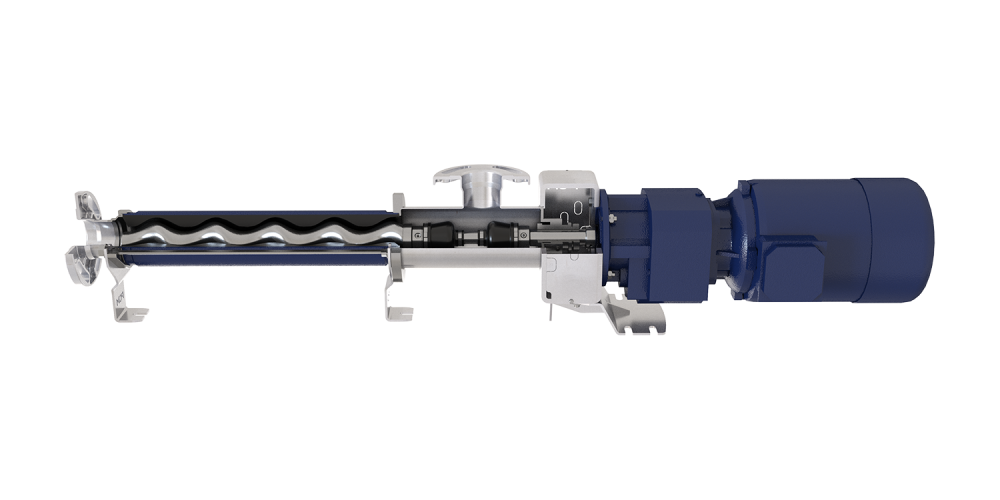 |
||||||||||||||||||||||||||||||
| Product Overview |
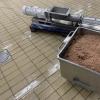
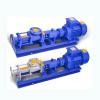
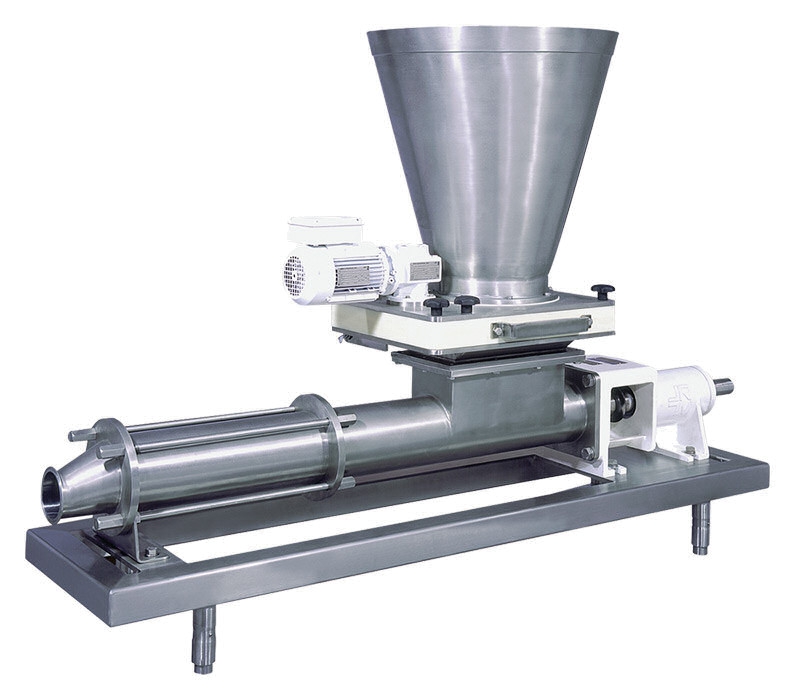
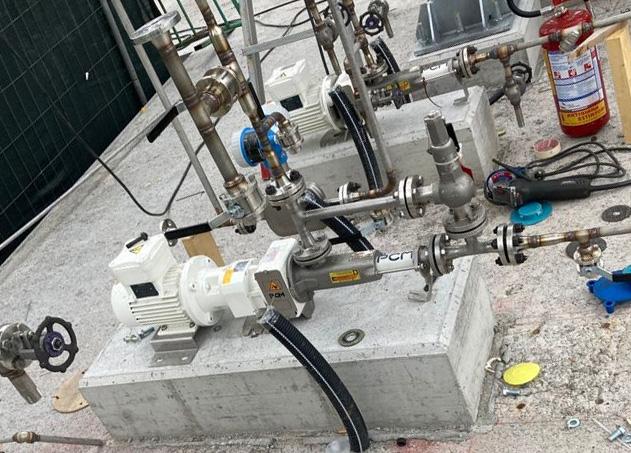
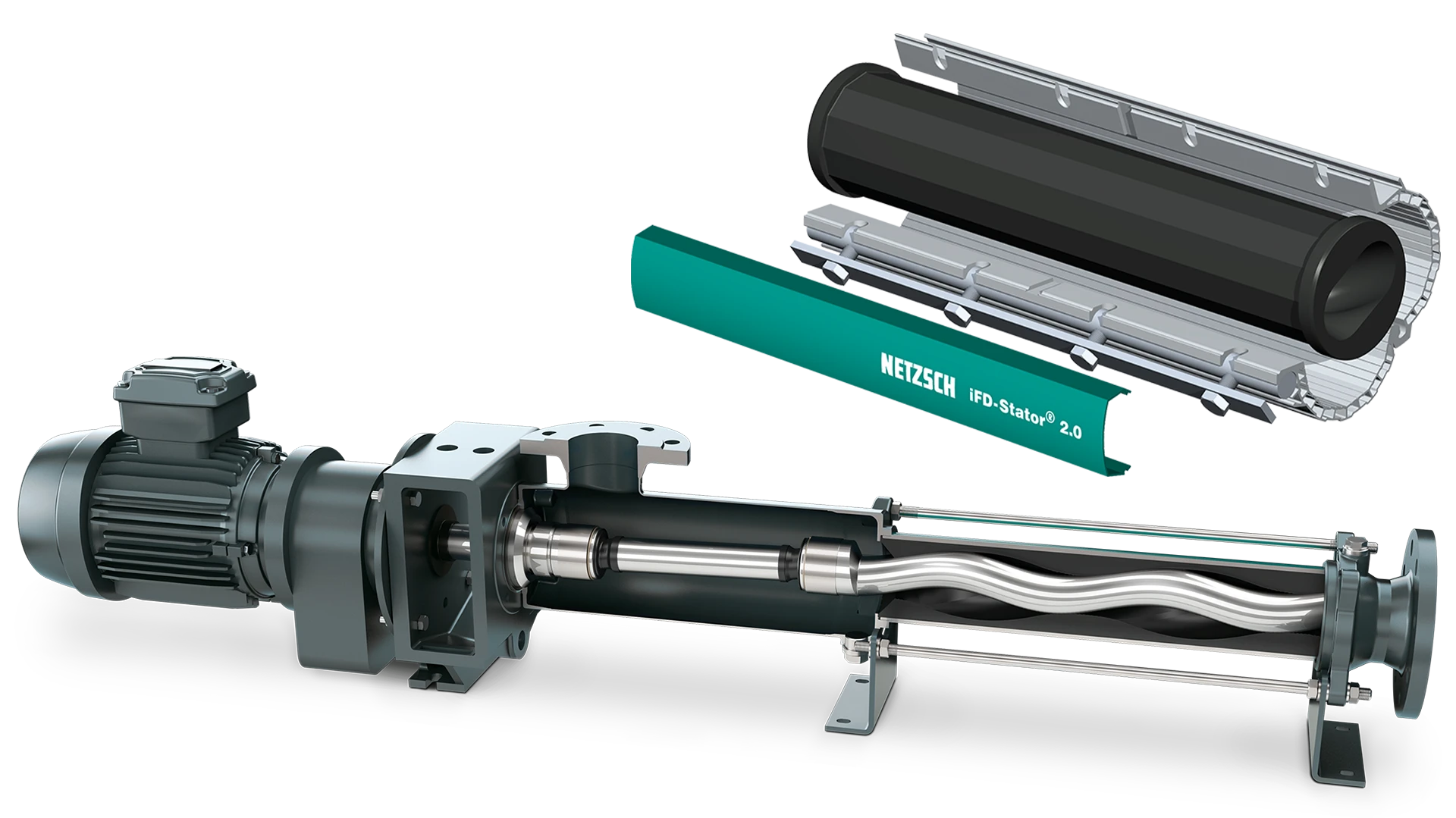
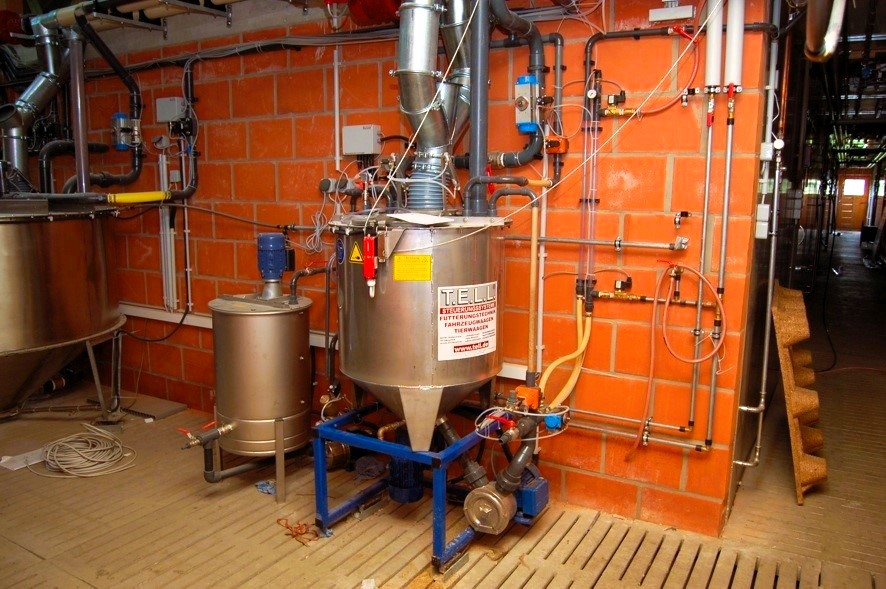
The Progressive Cavity Liquid Feed Pump is a positive displacement pump designed for controlled transfer of liquid feed, feed slurry, water-feed mixtures and other viscous or solids-containing media used in commercial livestock production. The pump operates with a helical rotor rotating inside an elastomer stator. This geometry forms sealed cavities that progress continuously from the suction side to the discharge side, producing a steady, low-pulsation flow with comparatively gentle handling of the pumped material. Progressive cavity technology is particularly suitable for pig liquid feeding systems because it can handle media ranging from relatively fluid mixtures to more viscous and heterogeneous feed suspensions. It can also accommodate certain solids and fibrous ingredients when the pump size, rotor-stator geometry and system design are selected correctly. The pump can be installed between mixing tanks, storage tanks, rinse tanks, distribution manifolds and feeding pipelines. Flow rate, pressure, motor power, wetted materials, seals and connection standards can be configured according to project requirements. |
||||||||||||||||||||||||||||||
| Key Features |
|
||||||||||||||||||||||||||||||
| Structural Components |
|
||||||||||||||||||||||||||||||
| Working Principle |
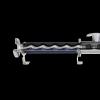
The progressing cavity pump uses a helically shaped metal rotor operating inside a matching elastomer stator. The rotor and stator geometry creates a sequence of sealed cavities along the pumping axis. As the rotor turns, these cavities move progressively from the suction port toward the discharge port without significant change in volume. The liquid feed is therefore transported continuously through the pump rather than being accelerated by an impeller. This positive displacement principle produces a flow rate that is closely related to pump speed. When used with a variable-frequency drive, the pump output can be adjusted to suit mixing, transfer, dosing or distribution requirements. The smooth cavity movement also helps limit pulsation and excessive shear, which is useful when transporting heterogeneous feed mixtures or media containing suspended solids. |
||||||||||||||||||||||||||||||
| Technical Specifications |
|
||||||||||||||||||||||||||||||
| Applications |
|
||||||||||||||||||||||||||||||
| Customization Options |
|
||||||||||||||||||||||||||||||
| Installation & Maintenance |
Foundation: Install the pump on a rigid, level base or engineered steel frame to maintain correct alignment between the motor, gearbox and pump body. Suction Piping: Keep the suction line as short and unrestricted as practical. Pipe diameter should be selected to limit excessive inlet losses, particularly when pumping viscous feed mixtures. Flexible Connections: Flexible couplings or compensators can be used where required to prevent excessive piping stress from being transferred to the pump housing. Dry-Running Protection: Progressive cavity pumps should not be operated dry because the pumped liquid normally lubricates and cools the rotor-stator interface. Suitable level or dry-running protection is recommended. Pressure Protection: A pressure sensor, relief arrangement or compatible control logic should be considered to protect the pump and pipeline against excessive discharge pressure. Cleaning: The pump and connected pipelines should be flushed according to the farm hygiene program. Cleaning procedures must be compatible with the selected elastomer and seal materials. Routine Maintenance: Periodically inspect the rotor, stator, mechanical seal, drive joints, bearings, gearbox and connection bolts. Wear intervals depend on feed composition, solids content, operating pressure and pump speed. |
||||||||||||||||||||||||||||||
| Project Applications |
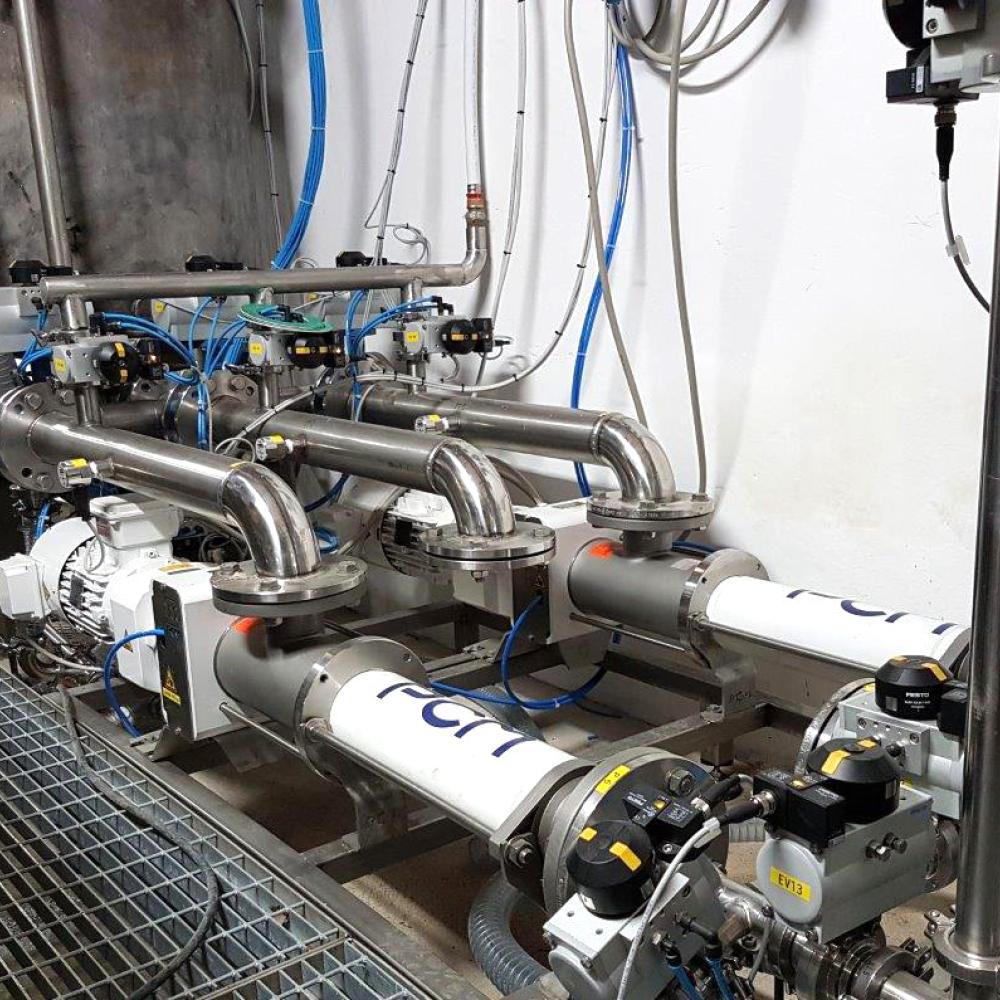
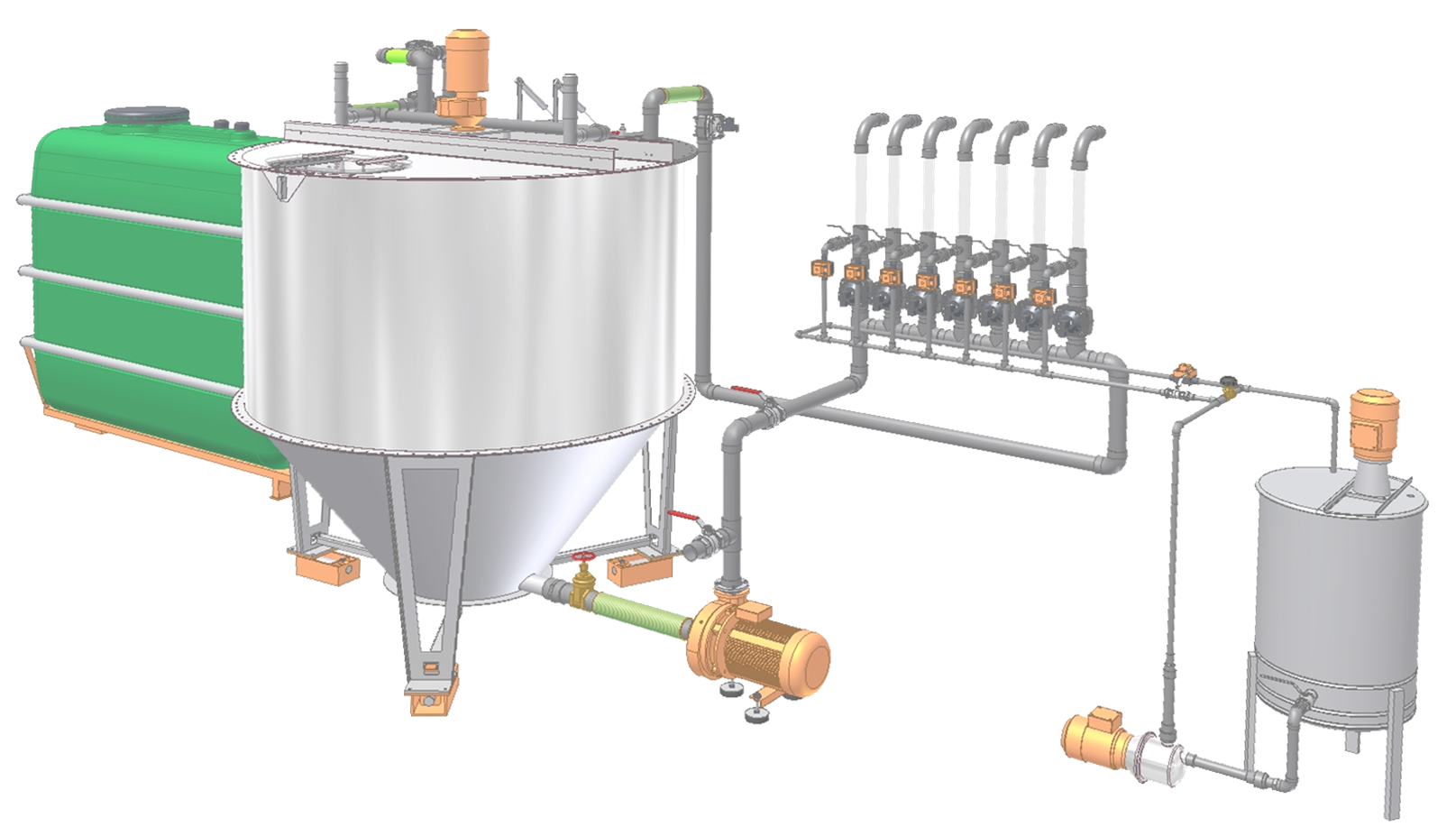
In a typical commercial pig liquid feeding system, the progressive cavity pump is installed downstream of the mixing tank. After the feed recipe is prepared, the pump transfers the mixture into the main distribution line and supplies the feeding valves located throughout the livestock house. For systems handling thick or heterogeneous feed, pump selection can be optimized by matching rotor-stator geometry, rotational speed, inlet arrangement and pipeline diameter to the expected viscosity and solids content. Multiple pumps can also be arranged for separate feed circuits, mixing tanks or production areas in large pig production complexes where redundancy or independent feeding zones are required. |
||||||||||||||||||||||||||||||
| Product FAQ |
Q: Why use a progressive cavity pump for liquid feed? A: Progressive cavity pumps provide steady, low-pulsation flow and can handle viscous, heterogeneous and solids-containing media, making them suitable for many pig liquid feeding applications. Q: Can the pump handle feed containing solids? A: Yes, suitable configurations can transport suspended particles and fibrous ingredients. Maximum particle size depends on pump geometry and project requirements. Q: Can the flow rate be adjusted? A: Yes. Pump delivery is approximately proportional to rotational speed, so a variable-frequency drive can be used to control feed flow. Q: Is the pump self-priming? A: Progressive cavity pumps generally provide strong self-priming and suction performance, although the actual installation should still be designed to minimize inlet restrictions. Q: Can the pump run dry? A: Dry running should be avoided because the pumped medium normally lubricates and cools the rotor-stator interface. Dry-running protection is recommended. Q: Can stainless steel wetted parts be supplied? A: Yes. Stainless steel construction and multiple elastomer and seal options are available according to feed composition and hygiene requirements. Q: Can the pump be integrated with an automatic liquid feeding controller? A: Yes. Motor starters, variable-frequency drives, pressure sensors and PLC interfaces can be integrated according to the project control architecture. Q: What information is required for pump selection? A: Please provide required flow rate, pipeline length, elevation difference, feed viscosity, solids content, particle size, operating temperature, required pressure, connection size and electrical supply. |
||||||||||||||||||||||||||||||
| Product Gallery |
|
- Home
-
Products
- Pig Farming Equipment
- Cattle Farming Equipment
- Sheep & Goat Farming Equipment
- Poultry Farming Equipment
- Feeding & Drinking Systems
- Veterinary & Breeding Equipment
- Testing & Diagnostic Equipment
- Cleaning & Biosecurity Equipment
- Climate Control Equipment
- Livestock Weighing Equipment
- Manure & Waste Management
- Farm Transport & Handling
-
Solutions
- Pig Farm Solutions
- Dairy Farm Solutions
- Beef Cattle Farm Solutions
- Sheep & Goat Farm Solutions
- Layer Farm Solutions
- Broiler Farm Solutions
- Feeding & Drinking System Solutions
- Climate Control Solutions
- Biosecurity & Disinfection Solutions
- Manure & Waste Management
- Smart Farming Solutions
- Farm Renovation and Upgrade Solutions
- Partners
- Projects
- Resources
- News
- About Us
- Contact


Comments & Inquiries
Leave your questions or requirements below. We will reply as soon as possible.