

| Product Name | Chain Feed Drive Unit with Tensioner | ||||||||||||||||||||||||||
| Product Image | 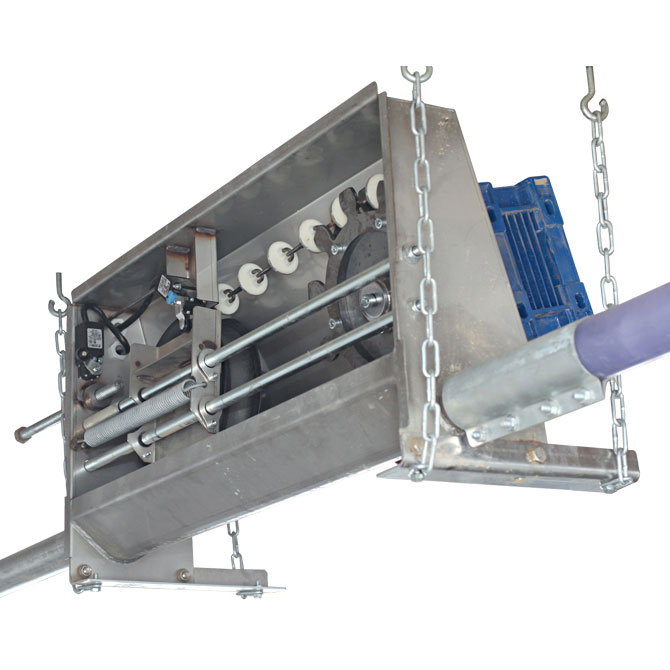 |
||||||||||||||||||||||||||
| Product Overview |
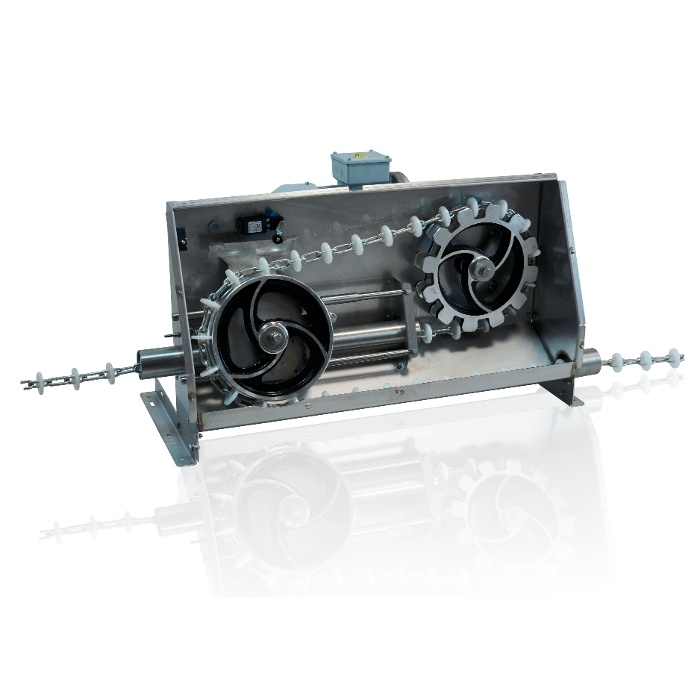
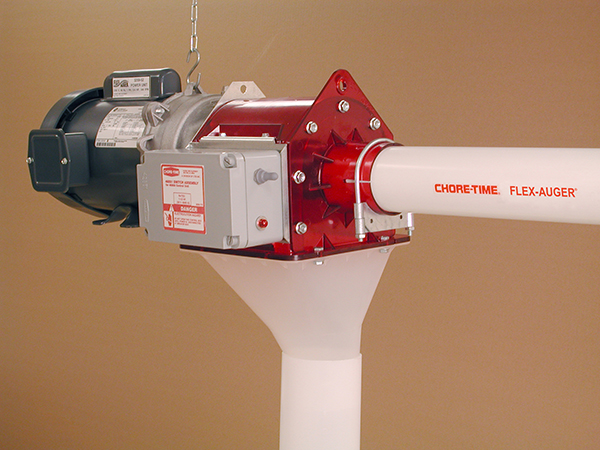
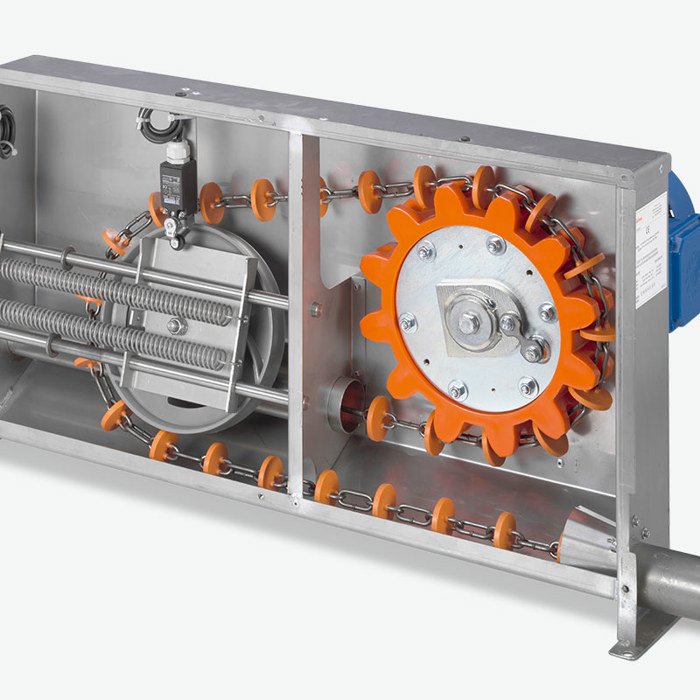
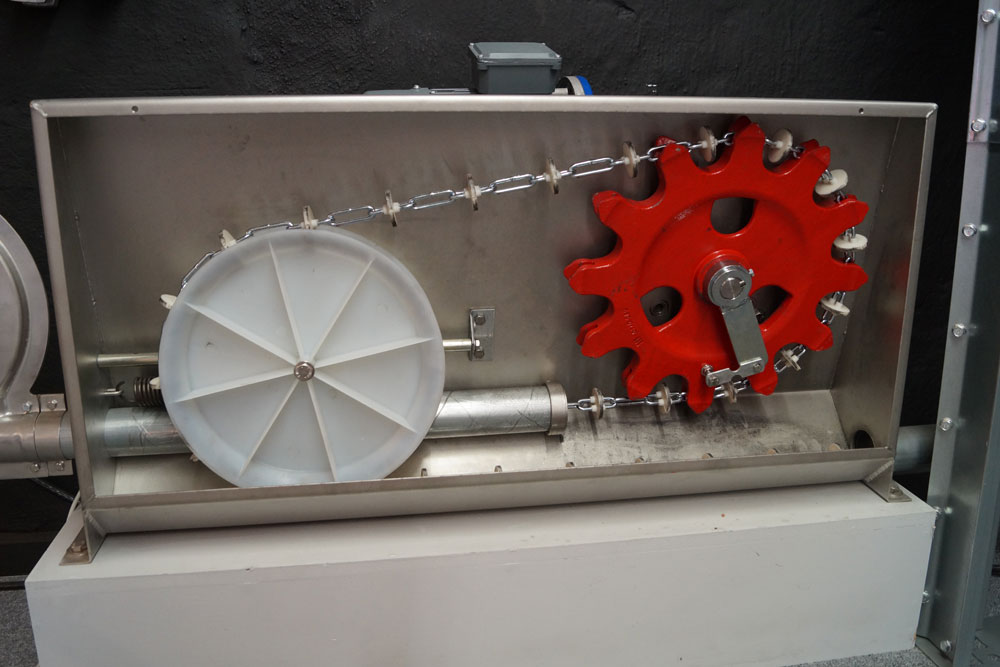
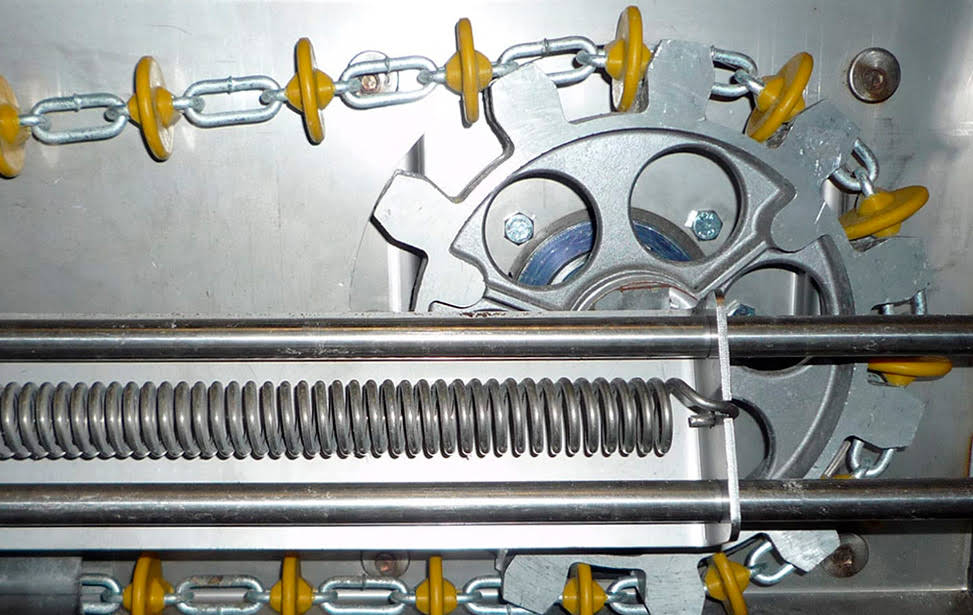
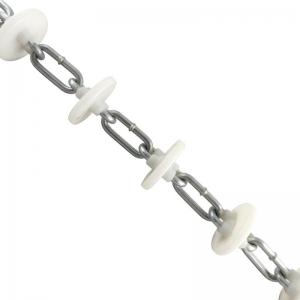
The Chain Feed Drive Unit with Tensioner is a core power and chain-control component for automatic dry-feed transport systems used in commercial pig farms and other livestock facilities. It drives the feed chain through the conveying circuit while maintaining the correct operating tension required for stable feed movement. The unit typically combines an electric geared motor, drive sprocket or specially profiled drive wheel, chain-guiding components and a mechanical or spring-assisted tensioning mechanism inside a protective housing. This compact arrangement helps maintain positive engagement between the drive wheel and conveyor chain while compensating for normal chain elongation during service. Designed for chain-disc and compatible dry-feed conveying lines, the drive unit can be integrated into new pig farm construction, livestock equipment upgrades and steel structure building projects. Motor power, housing material, tensioning arrangement and installation position can be configured according to circuit length, conveying load and project requirements. |
||||||||||||||||||||||||||
| Key Features |
|
||||||||||||||||||||||||||
| Structural Components |
|
||||||||||||||||||||||||||
| Working Principle |
When the feeding controller starts the drive motor, the geared motor rotates the drive wheel. The wheel engages the conveyor chain and pulls it continuously through the closed feed transport circuit. Carrier discs fixed to the chain move dry feed through the conveying pipe from the silo or feed hopper toward the required feeding points. To maintain stable traction, the tensioning mechanism applies controlled force to the chain and compensates for minor elongation resulting from normal wear and temperature changes. Proper tension keeps the chain seated correctly on the drive wheel, limits excessive slack and helps reduce impact loads when the chain passes through corners and long pipe sections. The drive unit can operate together with feed-level sensors, full sensors, timers and a feeding control cabinet so that the conveyor starts and stops automatically according to feed demand. |
||||||||||||||||||||||||||
| Technical Specifications |
|
||||||||||||||||||||||||||
| Applications |
|
||||||||||||||||||||||||||
| Customization Options |
|
||||||||||||||||||||||||||
| Installation & Maintenance |
Installation Position: Select a rigid, accessible mounting location that allows correct alignment with the feed pipes and provides sufficient space for inspection and chain adjustment. Structural Support: The drive unit should be securely fixed to a suitable steel structure, wall bracket or dedicated support frame capable of resisting the operating chain load. Pipe Alignment: Incoming and outgoing conveying pipes should be accurately aligned with the drive housing to minimize friction, chain misalignment and premature component wear. Initial Tensioning: Set the feed chain to the specified operating tension during commissioning. Excessive tension can accelerate wear, while insufficient tension can cause unstable engagement with the drive wheel. Electrical Commissioning: Confirm motor rotation, overload protection, safety-switch operation and compatibility with the feed-line controller before production use. Routine Maintenance: Periodically inspect chain tension, drive-wheel wear, chain guides, springs, bearings, gearbox condition, mounting bolts and safety devices. Adjust or replace wearing components as required by operating conditions. |
||||||||||||||||||||||||||
| Project Applications |
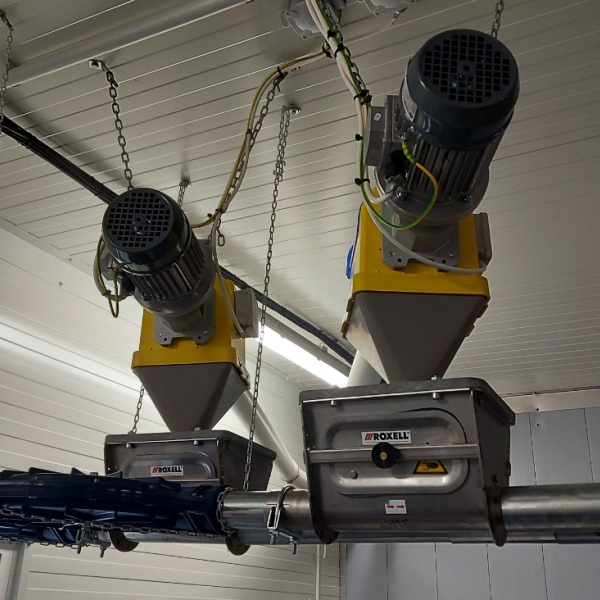
In a typical commercial pig farm, the drive unit forms part of a closed-loop feed conveying circuit extending from a feed silo or intake hopper through the livestock house to multiple feed drops, volumetric dispensers or feeders. For longer circuits or layouts with several corners, drive capacity and chain tension should be selected according to the calculated conveying resistance. High-capacity or reinforced drive configurations can be specified where required. Outdoor installations can be equipped with appropriate weather protection, while stainless steel or enhanced corrosion-resistant materials are recommended for demanding environments with humidity, dust and ammonia exposure. |
||||||||||||||||||||||||||
| Product FAQ |
Q: What is the function of the tensioner in a chain feed drive unit? A: The tensioner keeps the conveyor chain at a controlled operating tension. It helps compensate for normal elongation, maintains engagement with the drive wheel and reduces excessive chain slack. Q: Can the drive unit be used with a chain-disc feed system? A: Yes. It is intended for compatible automatic dry-feed chain and chain-disc conveying systems. Chain dimensions, carrier-disc spacing and pipe size must match the selected drive configuration. Q: How is the motor size selected? A: Motor and gearbox selection depends on circuit length, conveying capacity, feed type, number of corners, elevation changes and total system resistance. Q: Can the unit be installed outside the pig house? A: Yes, when the housing and electrical components are suitable for the installation environment and appropriate weather protection is provided. Q: Does the chain require regular manual adjustment? A: A suitable spring-assisted tensioner reduces the frequency of adjustment, but chain condition and tension should still be inspected as part of routine maintenance. Q: Can safety monitoring be added? A: Yes. Safety switches, chain-motion sensors and motor overload protection can be incorporated according to the selected feeding control system. Q: What information is required for quotation? A: Please provide feed-line pipe size, chain specification, total circuit length, number of corners, required conveying capacity, installation position, power supply, barn layout and preferred control functions. |
||||||||||||||||||||||||||
| Product Gallery |
|
- Home
-
Products
- Pig Farming Equipment
- Cattle Farming Equipment
- Sheep & Goat Farming Equipment
- Poultry Farming Equipment
- Feeding & Drinking Systems
- Veterinary & Breeding Equipment
- Testing & Diagnostic Equipment
- Cleaning & Biosecurity Equipment
- Climate Control Equipment
- Livestock Weighing Equipment
- Manure & Waste Management
- Farm Transport & Handling
-
Solutions
- Pig Farm Solutions
- Dairy Farm Solutions
- Beef Cattle Farm Solutions
- Sheep & Goat Farm Solutions
- Layer Farm Solutions
- Broiler Farm Solutions
- Feeding & Drinking System Solutions
- Climate Control Solutions
- Biosecurity & Disinfection Solutions
- Manure & Waste Management
- Smart Farming Solutions
- Farm Renovation and Upgrade Solutions
- Partners
- Projects
- Resources
- News
- About Us
- Contact


Comments & Inquiries
Leave your questions or requirements below. We will reply as soon as possible.