

| Product Name | Auger Feed Line Direct Drive Unit | ||||||||||||||||||||||||||
| Product Image | 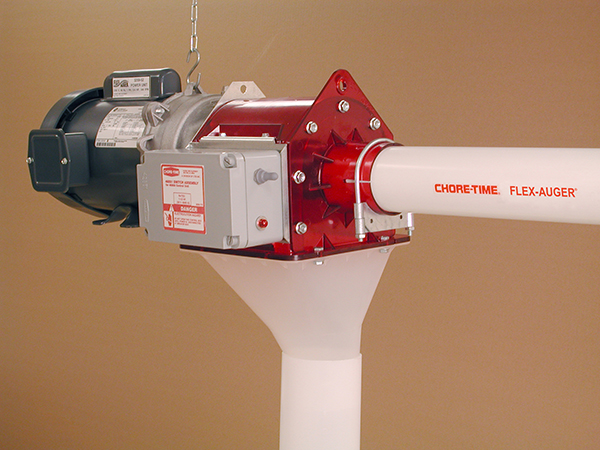 |
||||||||||||||||||||||||||
| Product Overview |
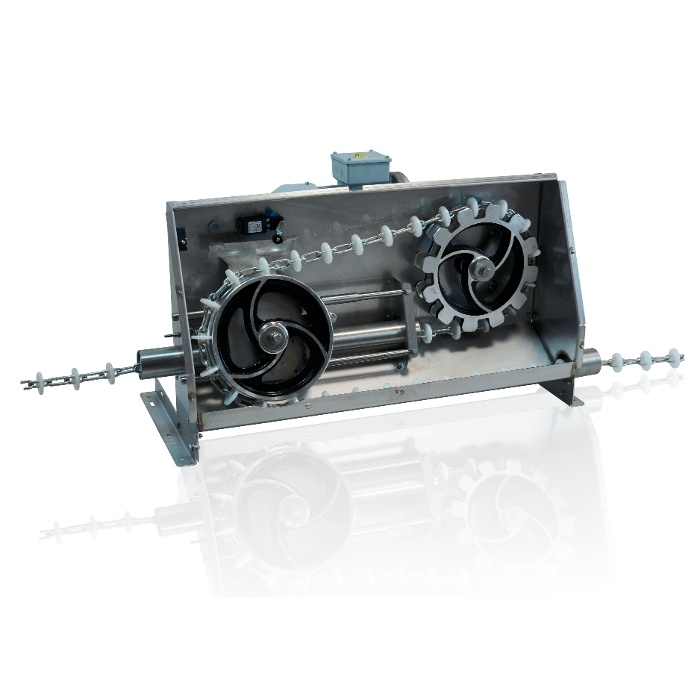
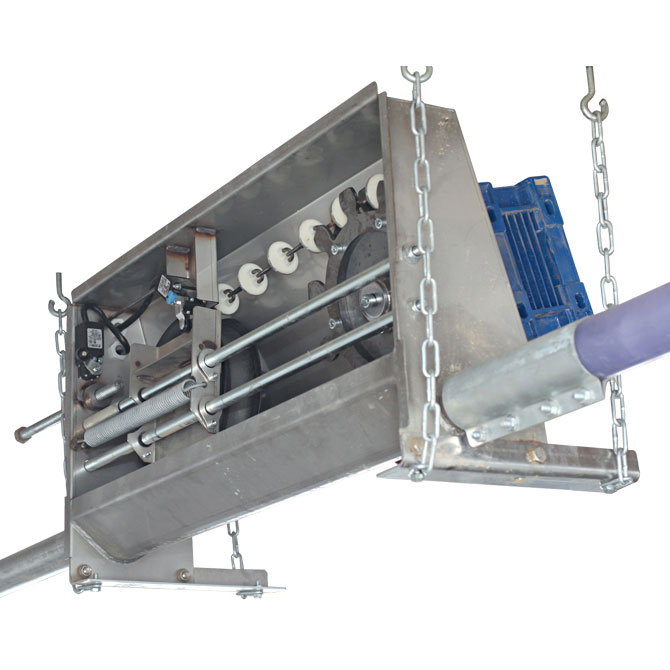
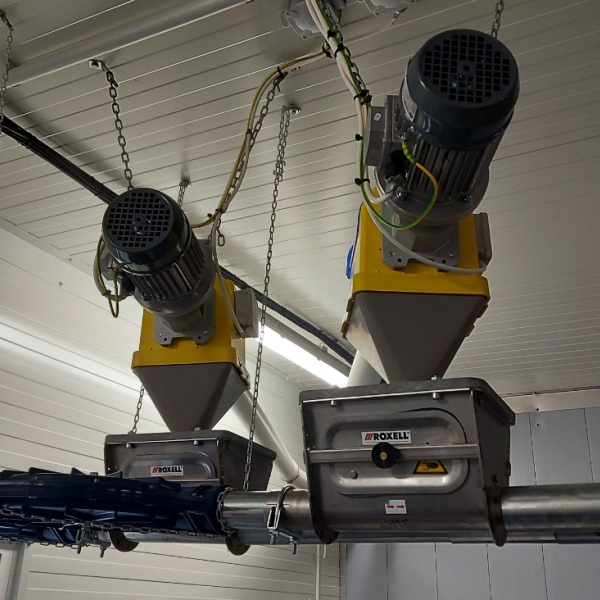
The Auger Feed Line Direct Drive Unit is a compact motor and gearhead assembly designed to rotate the flexible coreless auger used in automatic dry-feed conveying systems. Installed at the terminal end of the auger line, the unit converts electric motor power into controlled low-speed, high-torque rotation for reliable feed transport. It is suitable for commercial poultry houses, pig farms and other livestock facilities where feed must be conveyed automatically from a silo, feed bin or transfer hopper to feeder line hoppers, intermediate bins or other feeding equipment. Direct-drive construction eliminates the external belt transmission used by conventional belt-drive arrangements, helping simplify installation and routine maintenance. Motor power, gear ratio, output speed, voltage and mounting arrangement can be selected according to auger model, line length, feed characteristics and project requirements. |
||||||||||||||||||||||||||
| Key Features |
|
||||||||||||||||||||||||||
| Structural Components |
|
||||||||||||||||||||||||||
| Working Principle |
Feed enters the flexible auger system through a silo boot, hopper or feed intake. When a downstream level sensor requests feed, the control system starts the direct drive unit. The electric motor rotates the reduction gearhead, which transfers controlled rotational torque directly to the coreless auger. As the auger rotates inside the enclosed tube, it moves feed toward the required hopper or discharge location. The flexible auger can convey feed through horizontal sections, inclined sections and properly designed bends. When the destination hopper reaches the preset feed level, the level switch signals the controller to stop the drive unit. Optional timers, motor protection devices and farm management controls can provide additional operating protection and automated feed delivery according to project requirements. |
||||||||||||||||||||||||||
| Technical Specifications |
|
||||||||||||||||||||||||||
| Applications |
|
||||||||||||||||||||||||||
| Customization Options |
|
||||||||||||||||||||||||||
| Installation & Maintenance |
Drive Position: Install the direct drive unit at the designed terminal end of the flexible auger line. The supporting frame should be rigid and properly aligned with the conveying tube. Auger Connection: Connect the coreless auger securely to the drive output according to the selected coupling arrangement. Incorrect connection or excessive auger length can increase operating load. Electrical Installation: Motor wiring, overload protection, grounding and control devices should comply with local electrical standards and project requirements. Sensor Commissioning: Verify hopper level switches or other control sensors before normal operation to ensure reliable automatic starting and stopping. Initial Test: Confirm correct motor rotation, smooth auger operation and stable feed delivery before operating the system under full load. Routine Maintenance: Periodically inspect the motor, gearhead, mounting bolts, output coupling, auger connection, electrical terminals and control switches. Follow the specified lubrication and service requirements for the selected gearhead. |
||||||||||||||||||||||||||
| Project Applications |
In a typical commercial livestock project, feed is discharged from an outdoor silo into a flexible auger conveying line. The auger carries feed through enclosed tubing into one or more livestock houses, while the direct drive unit installed at the line terminal provides the rotational force required for conveying. Level switches positioned in feeder line hoppers can automatically call for feed. Once the required feed level is reached, the controller stops the direct drive unit, allowing automatic operation with minimal manual intervention. Final drive selection should be based on auger diameter, effective conveying length, number of bends, elevation changes, feed density and required delivery capacity. |
||||||||||||||||||||||||||
| Product FAQ |
Q: What is a direct drive unit in an auger feeding system? A: It is a motor and reduction gearhead assembly that directly rotates the flexible auger used to transport feed through the conveying tube. Q: What is the difference between direct drive and belt drive? A: A direct-drive configuration transfers power through the motor and gearhead without an external belt transmission. This creates a compact arrangement and eliminates routine belt tension adjustment. Q: Can the drive unit work automatically? A: Yes. It can be controlled by compatible hopper level switches, timers or farm control equipment for automatic feed delivery. Q: Can one motor size be used for every auger line? A: No. Drive capacity should be selected according to auger size, effective conveying length, elevation, feed characteristics and required transport rate. Q: Can the unit be used with pellets and mash feed? A: Properly configured flexible auger systems are suitable for common dry feeds including ground feed, crumbles and pellets within the design limits of the selected system. Q: Is the unit suitable for existing farm upgrades? A: Yes. Retrofit applications are possible when the drive unit, auger size, shaft connection, electrical supply and control equipment are compatible. Q: What information is required for quotation? A: Please provide auger diameter or model, total effective line length, feed type, required conveying capacity, number of bends, elevation changes, electrical voltage, frequency, phase and preferred control method. |
||||||||||||||||||||||||||
| Product Gallery |
|
- Home
-
Products
- Pig Farming Equipment
- Cattle Farming Equipment
- Sheep & Goat Farming Equipment
- Poultry Farming Equipment
- Feeding & Drinking Systems
- Veterinary & Breeding Equipment
- Testing & Diagnostic Equipment
- Cleaning & Biosecurity Equipment
- Climate Control Equipment
- Livestock Weighing Equipment
- Manure & Waste Management
- Farm Transport & Handling
-
Solutions
- Pig Farm Solutions
- Dairy Farm Solutions
- Beef Cattle Farm Solutions
- Sheep & Goat Farm Solutions
- Layer Farm Solutions
- Broiler Farm Solutions
- Feeding & Drinking System Solutions
- Climate Control Solutions
- Biosecurity & Disinfection Solutions
- Manure & Waste Management
- Smart Farming Solutions
- Farm Renovation and Upgrade Solutions
- Partners
- Projects
- Resources
- News
- About Us
- Contact


Comments & Inquiries
Leave your questions or requirements below. We will reply as soon as possible.