

| Product Name | Chain Disc Feed Conveyor Chain | ||||||||||||||||||||||||||||
| Product Image |  |
||||||||||||||||||||||||||||
| Product Overview |
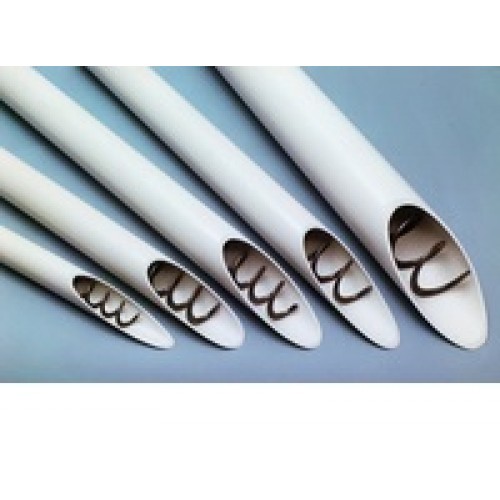
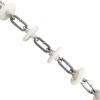
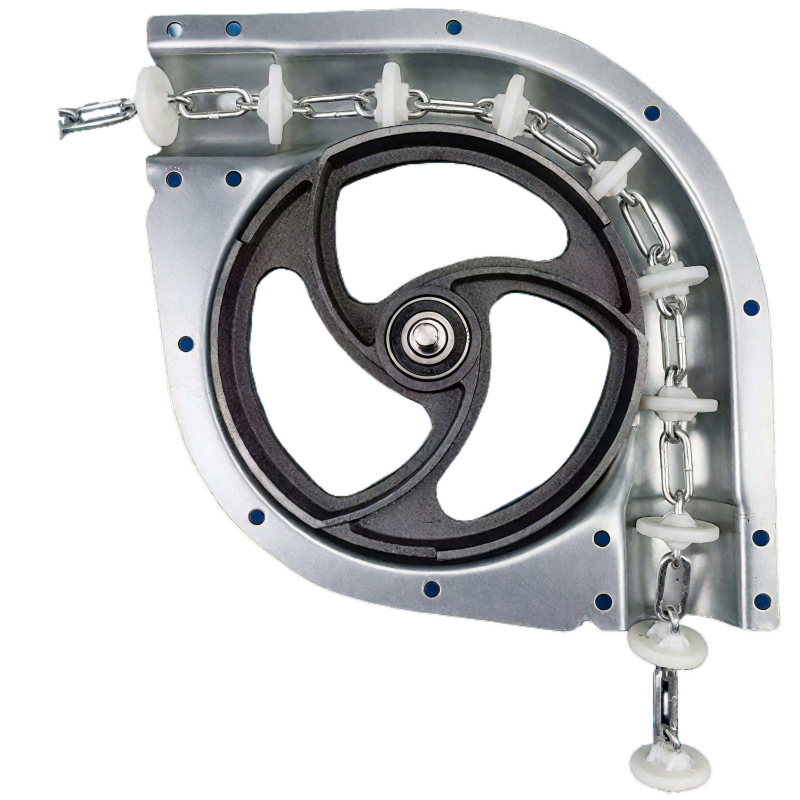
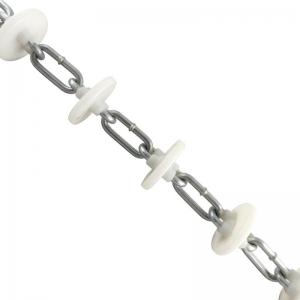
The Chain Disc Feed Conveyor Chain is the primary moving component inside an enclosed chain-disc feeding system. It combines a high-strength steel chain with regularly spaced polymer carrier discs that move dry livestock feed through tubular conveying circuits. As the chain travels through the pipeline, each carrier disc pushes feed forward while maintaining controlled spacing between material sections. This operating principle allows feed to move through straight pipes, horizontal sections, vertical changes and multiple corners within commercial pig farm feeding systems. Reference PigTek systems use surface-hardened alloy chain with high tensile strength and solid nylon discs molded around the chain links. Completely enclosed molded discs help maintain consistent spacing and reduce the risk of individual discs becoming loose during long-term operation. Chain diameter, carrier disc diameter, disc spacing, chain length and connecting links can be configured according to conveyor tube size, drive unit, corner design and project requirements. |
||||||||||||||||||||||||||||
| Key Features |
|
||||||||||||||||||||||||||||
| Structural Components |
|
||||||||||||||||||||||||||||
| Working Principle |
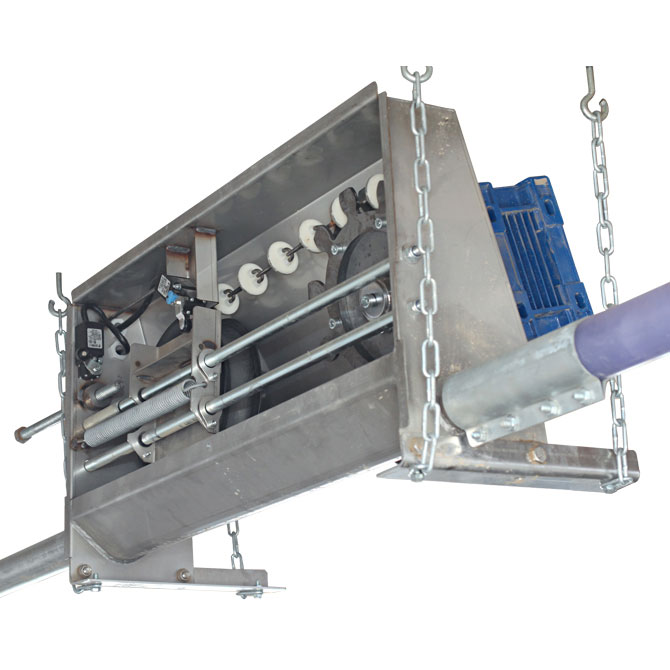
The conveyor chain forms a continuous loop inside the feed transport pipeline. A motor-driven sprocket engages the chain and pulls it through the complete conveying circuit. As the chain moves, the carrier discs sweep dry feed forward through the tube. Feed is transported between consecutive discs until it reaches an open drop outlet, feed dispenser, hopper or other discharge point. At corners, the chain passes around guide wheels designed to maintain alignment and minimize resistance. Correct chain tension keeps the links and carrier discs properly engaged with the drive and corner wheels. A correctly matched chain, disc, pipe and drive configuration provides stable feed transport while helping reduce feed segregation, excessive mechanical damage and unnecessary operating resistance. |
||||||||||||||||||||||||||||
| Technical Specifications |
|
||||||||||||||||||||||||||||
| Applications |
|
||||||||||||||||||||||||||||
| Customization Options |
|
||||||||||||||||||||||||||||
| Installation & Maintenance |
System Compatibility: Confirm conveyor tube diameter, corner-wheel dimensions, drive sprocket profile and existing chain specification before installation. Chain Direction: Directional carrier discs should be installed in the correct orientation according to the conveyor design and drive direction. Chain Connection: Use the specified hardened connecting link when joining chain sections. Confirm that the connector is correctly closed and moves freely through the drive and corners. Chain Tension: Set the correct tension before commissioning. Excessive tension can increase component wear, while insufficient tension can cause unstable engagement and irregular movement. Initial Test: Run the empty system first and verify smooth movement through all straight sections, corners and the drive unit before introducing feed. Routine Inspection: Periodically check the chain for elongation, damaged links, loose or worn discs and abnormal wear around connecting links. System Maintenance: Inspect drive sprockets, corner wheels and chain tension at the same time. Replacing worn mating components helps prevent accelerated wear of a new conveyor chain. |
||||||||||||||||||||||||||||
| Project Applications |
In a typical commercial pig farm, the chain disc conveyor forms a continuous loop between the feed silo, drive unit, multiple corner assemblies and feed drops located throughout the livestock buildings. Long circuits can supply several production areas while allowing the pipeline to change direction around building columns, pen layouts and other livestock equipment. Chain and disc dimensions must remain compatible with the pipe, corners and drive unit throughout the complete circuit. For retrofit projects, compatible adapters and matched replacement chain configurations can allow existing tubular feed circuits to remain in service while worn or obsolete conveying components are upgraded. |
||||||||||||||||||||||||||||
| Product FAQ |
Q: What is a chain disc feed conveyor chain? A: It is a continuous steel chain fitted with regularly spaced polymer carrier discs. The chain travels inside a tube and moves livestock feed around the conveying circuit. Q: Why are nylon discs used? A: Nylon provides good wear resistance, mechanical strength and relatively low friction when moving through suitable feed conveyor tubing and corners. Q: What is the advantage of molding the disc around the complete chain link? A: Whole-link molding helps secure the disc to the chain and maintain consistent spacing, reducing the risk of individual carrier discs becoming loose during operation. Q: Can damaged chain sections be replaced? A: Yes. Suitable hardened connector links allow damaged or worn sections to be removed and replacement chain sections to be installed. Q: Can the chain pass through multiple corners? A: Yes. Chain-disc systems are designed for circuits with multiple directional changes. The allowable number of corners depends on total circuit length, drive capacity and system design. Q: Can it replace the chain in an existing feed system? A: Replacement is possible when the chain pitch, disc diameter, disc spacing, pipe size, drive sprocket and corner components are compatible. Existing system dimensions should be confirmed before ordering. Q: What information is required for a quotation? A: Please provide conveyor tube diameter, chain link dimensions, carrier disc diameter, disc spacing, total required length, drive unit type, corner configuration and photos or drawings of the existing system when replacement compatibility is required. |
||||||||||||||||||||||||||||
| Product Gallery |
|
- Home
-
Products
- Pig Farming Equipment
- Cattle Farming Equipment
- Sheep & Goat Farming Equipment
- Poultry Farming Equipment
- Feeding & Drinking Systems
- Veterinary & Breeding Equipment
- Testing & Diagnostic Equipment
- Cleaning & Biosecurity Equipment
- Climate Control Equipment
- Livestock Weighing Equipment
- Manure & Waste Management
- Farm Transport & Handling
-
Solutions
- Pig Farm Solutions
- Dairy Farm Solutions
- Beef Cattle Farm Solutions
- Sheep & Goat Farm Solutions
- Layer Farm Solutions
- Broiler Farm Solutions
- Feeding & Drinking System Solutions
- Climate Control Solutions
- Biosecurity & Disinfection Solutions
- Manure & Waste Management
- Smart Farming Solutions
- Farm Renovation and Upgrade Solutions
- Partners
- Projects
- Resources
- News
- About Us
- Contact


Comments & Inquiries
Leave your questions or requirements below. We will reply as soon as possible.