

| Product Name | Feed Conveyor Tube Connector | ||||||||||||||||||||||||
| Product Image |  |
||||||||||||||||||||||||
| Product Overview |
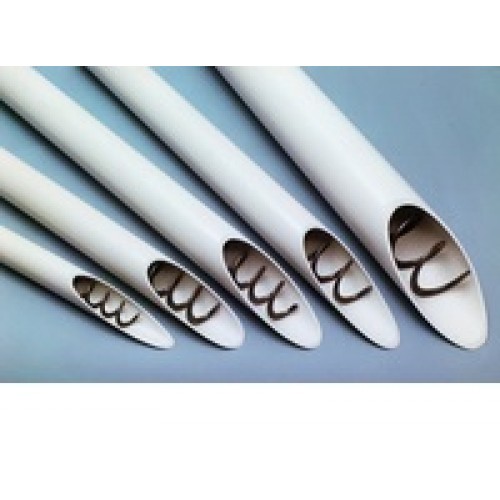
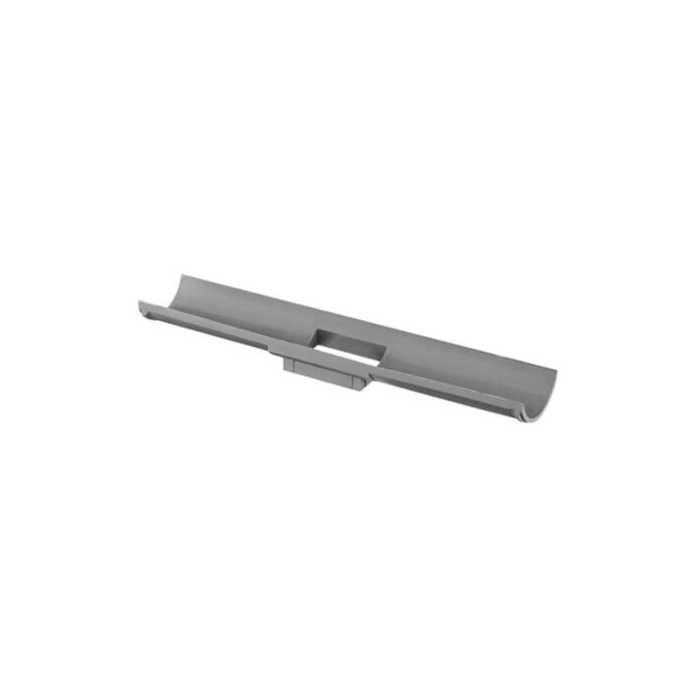
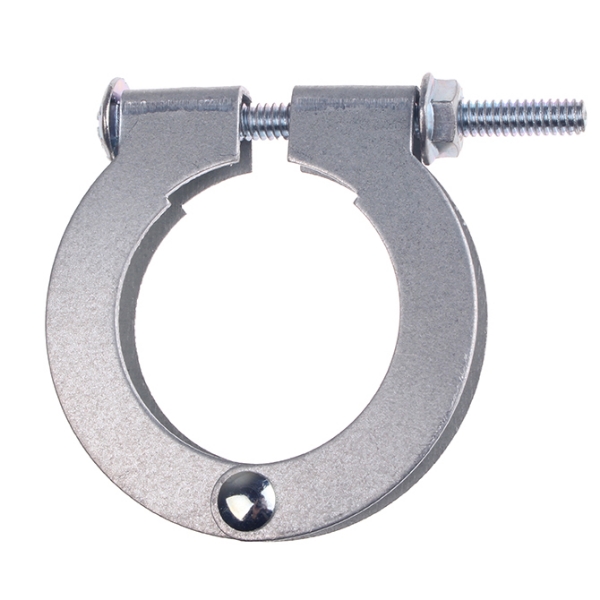
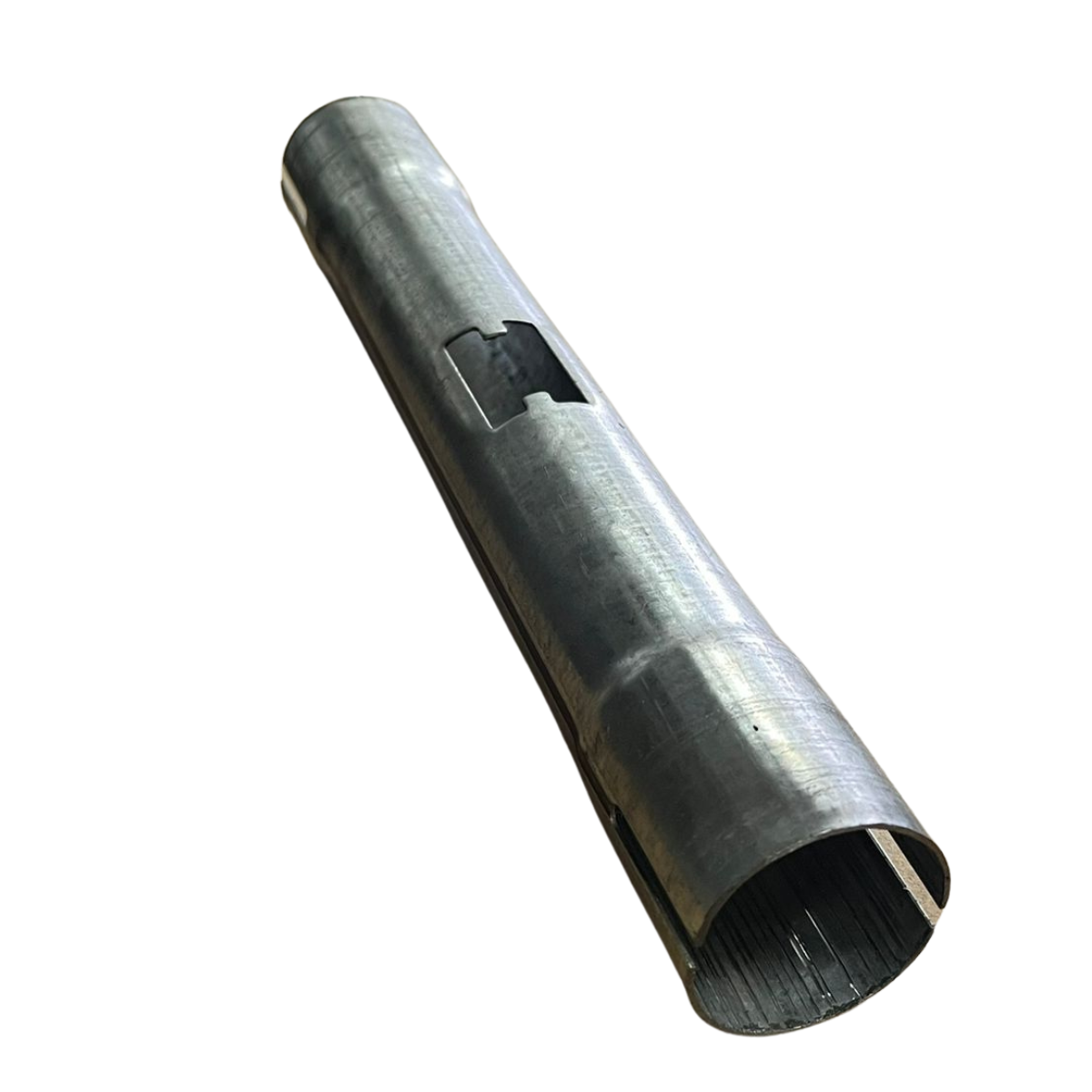
The Feed Conveyor Tube Connector is a joining component designed to connect compatible sections of feed conveying tube in automatic livestock feeding systems. It helps maintain tube alignment and continuity so that flexible augers or other conveying elements can move feed smoothly through the complete distribution line. Tube connectors are widely used in flexible auger feed delivery systems, poultry feeder lines, pig farm feed distribution systems and other livestock equipment installations. Depending on the conveying system, the connector can be manufactured as a polymer sleeve, galvanized steel coupling or reinforced clamp-type assembly. Correct tube connection is important because steps, gaps or misalignment between adjacent sections can increase friction, accelerate auger wear and create locations where feed may accumulate. A properly selected connector provides a smooth internal transition while maintaining reliable mechanical support. Tube diameter, connector length, material and fastening method can be supplied according to project requirements, making the component suitable for new pig farm construction, poultry houses, feed-system expansion and maintenance of existing livestock feeding installations. |
||||||||||||||||||||||||
| Key Features |
|
||||||||||||||||||||||||
| Structural Components |
|
||||||||||||||||||||||||
| Working Principle |
Two compatible feed conveying tube sections are positioned end-to-end and aligned along the same conveying axis. The connector fits over, between or around the tube ends according to its mechanical design. When the connector is secured, it maintains the relative position of both tubes and provides a continuous passage through which the flexible auger and feed can travel. Correct alignment minimizes interference with the rotating auger and helps maintain stable feed flow. During operation, feed moves through the connected tube sections as part of the complete conveying system. The connector itself has no powered components, making it a simple, dependable and low-maintenance part of the feed delivery line. |
||||||||||||||||||||||||
| Technical Specifications |
|
||||||||||||||||||||||||
| Applications |
|
||||||||||||||||||||||||
| Customization Options |
|
||||||||||||||||||||||||
| Installation & Maintenance |
Tube Preparation: Ensure that both conveying tube ends are clean, round and free from severe deformation. Cut ends should be square and free from sharp burrs. Tube Alignment: Position the two tube sections on the same centerline before securing the connector. Misalignment can increase auger friction and shorten component service life. Connector Installation: Slide or position the connector evenly over the adjoining tube ends. For clamp-type designs, tighten the fastening hardware evenly to avoid distortion. Internal Inspection: Check that the connection does not create an internal edge, screw projection or obstruction that could catch the flexible auger. System Support: Conveyor tubes should be adequately supported on both sides of the connection. The connector should not be used as the sole structural support for long tube sections. Routine Maintenance: Periodically inspect the connector for movement, cracking, corrosion, loose clamps or feed leakage. Replace damaged connectors before they cause tube misalignment or auger wear. |
||||||||||||||||||||||||
| Project Applications |
In commercial poultry houses, tube connectors are installed between successive feeder tube or feed delivery tube sections to create continuous feeding lines extending through the building. For pig farm construction, connectors can be used in flexible auger lines between outdoor feed silos and internal feed hoppers. The number of connectors depends on total conveying distance, available tube lengths and building layout. Connector selection should always match the exact outside diameter and structural design of the conveying tube. Complete feed-system engineering should also consider auger model, feed type, conveying distance, bends, elevation changes and required delivery capacity. |
||||||||||||||||||||||||
| Product FAQ |
Q: What is a feed conveyor tube connector? A: It is a coupling used to join two compatible sections of feed conveying tube while maintaining the alignment and internal passage required for smooth feed transport. Q: Can it be used with a flexible auger system? A: Yes. Tube connectors are standard components in many flexible auger feed delivery systems used for livestock and poultry production. Q: Are plastic and steel connectors available? A: Yes. Polymer sleeve connectors and metal coupling assemblies are available depending on tube material, conveying system and mechanical requirements. Q: Why is correct tube alignment important? A: Incorrect alignment can create internal steps or increase resistance against the moving auger, which may cause accelerated wear, higher drive load or unstable feed conveying. Q: Can a connector be used to repair an existing feed line? A: Yes. Suitable connectors can be used when replacing a damaged tube section, provided that the replacement tube and connector match the existing conveying system. Q: What tube sizes can be supplied? A: Different connector sizes are available. Reference poultry feeder systems use 1-3/4 inch and 2 inch tube couplings, while flexible auger feed delivery systems use other diameters depending on system model. Q: Does the connector require routine lubrication? A: Normally no. The connector is a stationary component. Routine inspection should focus on alignment, fastening condition, wear, cracking and corrosion. Q: What information is required for a quotation? A: Please provide the conveying tube outside diameter, tube material, feed system type, required connector quantity, preferred connector material and photos or drawings of the existing tube when replacement compatibility is required. |
||||||||||||||||||||||||
| Product Gallery |
|
- Home
-
Products
- Pig Farming Equipment
- Cattle Farming Equipment
- Sheep & Goat Farming Equipment
- Poultry Farming Equipment
- Feeding & Drinking Systems
- Veterinary & Breeding Equipment
- Testing & Diagnostic Equipment
- Cleaning & Biosecurity Equipment
- Climate Control Equipment
- Livestock Weighing Equipment
- Manure & Waste Management
- Farm Transport & Handling
-
Solutions
- Pig Farm Solutions
- Dairy Farm Solutions
- Beef Cattle Farm Solutions
- Sheep & Goat Farm Solutions
- Layer Farm Solutions
- Broiler Farm Solutions
- Feeding & Drinking System Solutions
- Climate Control Solutions
- Biosecurity & Disinfection Solutions
- Manure & Waste Management
- Smart Farming Solutions
- Farm Renovation and Upgrade Solutions
- Partners
- Projects
- Resources
- News
- About Us
- Contact

Comments & Inquiries
Leave your questions or requirements below. We will reply as soon as possible.