Global Livestock Equipment Manufacturer & Supplier
SHEWUYOU · Livestock Equipment
Integrated Equipment Solutions for Pig, Cattle & Poultry Farms

Honeycomb Evaporative Cooling Pad

Product Name Honeycomb Evaporative Cooling Pad
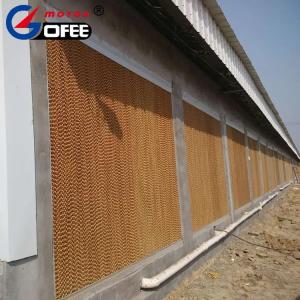
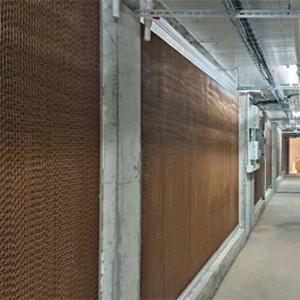
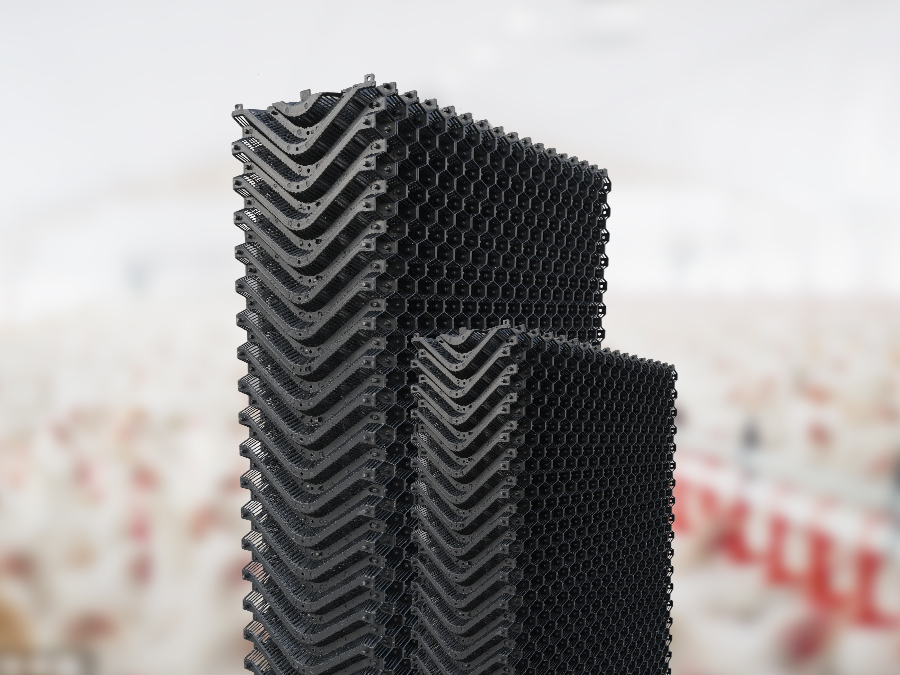
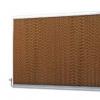
Product Image Honeycomb evaporative cooling pad for livestock ventilation
Product Overview

The Honeycomb Evaporative Cooling Pad is a structured cooling medium designed for direct evaporative cooling in livestock buildings, poultry houses, greenhouses and other agricultural facilities. Its three-dimensional corrugated structure creates a large effective contact area between water and incoming air.

During operation, water is distributed across the upper part of the cooling pad and moves downward through the structured media. Warm outdoor air is drawn through the wet pad by the ventilation system, allowing part of the water to evaporate and absorb heat from the passing air.

The cooling pad can be installed at the fresh-air intake side of tunnel or negative-pressure ventilation systems. When combined with exhaust fans, water distribution pipes, circulation pumps and collection troughs, it becomes an important component of a complete livestock ventilation system.

Pad dimensions, thickness, material and configuration can be selected according to airflow requirements, building design, local climate, water quality and project conditions. This makes the product suitable for new livestock facilities as well as existing ventilation-system upgrades.

Key Features
  • Honeycomb Airflow Structure: Provides extensive contact between incoming air and the wetted cooling surface.
  • Evaporative Heat Exchange: Uses the natural heat-absorption effect of water evaporation to cool incoming air.
  • Large Contact Surface: The corrugated structure increases the effective air-water interaction area.
  • Continuous Wetting: Designed to support consistent water distribution through the cooling media.
  • Fresh-Air Cooling: Helps reduce the temperature of outdoor air before it enters the livestock building.
  • Suitable for Negative-Pressure Ventilation: Compatible with tunnel and negative-pressure ventilation layouts.
  • Modular Installation: Individual pad sections can be combined into larger cooling-wall assemblies.
  • Material Flexibility: Cellulose and plastic cooling media can be selected according to project requirements.
  • Wide Agricultural Application: Suitable for pig, poultry, cattle, greenhouse and other controlled agricultural environments.
  • Project Customization: Product dimensions and configuration can be designed according to ventilation calculations.
Structural Components
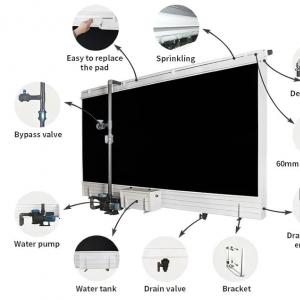
  • Evaporative Cooling Media: Corrugated or honeycomb material forms the main heat-exchange surface.
  • Airflow Channels: Internal passages guide outdoor air through the wetted media.
  • Water Absorption Surface: Provides the wetted area required for evaporation.
  • Upper Water Distribution Area: Receives water from the distribution pipe or header.
  • Lower Drainage Area: Allows excess water to leave the cooling media.
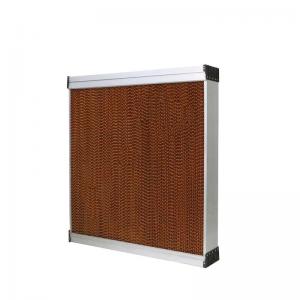
  • Supporting Frame: Holds the cooling-pad modules securely within the cooling-wall opening.
  • Water Collection System: Optional trough or gutter collects unused water for recirculation.
  • Sealing Elements: Help minimize air bypass around individual pad modules.
Working Principle / Structural Principle

The Honeycomb Evaporative Cooling Pad operates through direct evaporative heat transfer. Water is supplied to the upper section of the pad and flows downward through the structured media, creating a continuously wetted surface.

When exhaust fans create negative pressure inside the building, warm outdoor air is drawn through the wet cooling pad. As the air passes through the honeycomb channels, part of the water evaporates and absorbs heat from the air, resulting in cooler and more humidified incoming airflow.

Unevaporated water continues downward and can be collected through a lower trough before being returned to the circulation system. The structured media provides a controlled airflow path while maintaining extensive contact between air and water.

Actual cooling performance depends on outdoor temperature, relative humidity, airflow velocity, water distribution and the complete ventilation-system design.

Technical Specifications
  • Product Type: Honeycomb evaporative cooling pad
  • Cooling Method: Direct evaporative cooling
  • Media Structure: Honeycomb, corrugated or cross-fluted structure
  • Primary Material: Cellulose or plastic according to project requirements
  • Pad Height: Customizable
  • Pad Width / Length: Customizable
  • Pad Thickness: Customizable
  • Flute Configuration: According to selected cooling-pad design
  • Cooling Area: According to ventilation calculations
  • Airflow Capacity: According to pad configuration and system design
  • Pressure Drop: According to pad structure, thickness and operating airflow
  • Water Distribution: According to cooling-pad and water circulation design
  • Frame: Available according to project requirements
  • Installation Configuration: According to cooling-wall and airflow design
  • Operating Environment: Designed according to local climate and farm conditions
  • OEM / ODM: Available upon request

Specific dimensions, thickness, airflow rate, pressure drop and cooling performance are customizable and available upon request. Final specifications should be determined according to the complete ventilation design.

Applications
  • Commercial pig houses and intensive swine production facilities
  • Broiler, layer and breeder poultry houses
  • Dairy and beef cattle buildings
  • Sheep and goat livestock housing
  • Tunnel-ventilated livestock buildings
  • Negative-pressure livestock ventilation systems
  • Greenhouses and controlled agricultural growing facilities
  • Horticultural and nursery facilities
  • New pig farm construction and poultry farm development projects
  • Steel structure building and international agricultural project cooling systems
Customization Options
  • Pad Dimensions: Height, width, length and thickness can be customized according to the cooling-wall opening.
  • Media Material: Cellulose or plastic options can be selected according to project requirements.
  • Pad Thickness: Selected according to airflow, cooling requirements and installation space.
  • Flute / Channel Configuration: According to the required airflow and cooling-pad design.
  • Frame Configuration: Frame material and dimensions can be designed according to the building structure.
  • Water Distribution: Can be matched with water pipes, circulation pumps, collection troughs and filtration components.
  • Cooling Wall Layout: Multiple modules can be arranged to achieve the required total cooling area.
  • OEM / ODM: Available upon request for distributors, agents and agricultural engineering companies.
Installation & Maintenance

Installation:

  1. Confirm building dimensions, ventilation mode, exhaust-fan capacity and required cooling-pad area.
  2. Prepare a structurally suitable opening and supporting frame for the cooling-pad modules.
  3. Install the cooling pads according to the designed airflow direction.
  4. Align adjacent modules carefully to minimize air leakage and bypass.
  5. Install the upper water distribution pipe or header above the cooling pads.
  6. Connect the water distribution system to the circulation pump and collection system.
  7. Ensure that the lower drainage section is unobstructed.
  8. Seal unnecessary gaps around the cooling-wall frame.
  9. Start water circulation and verify uniform wetting across the cooling media.
  10. Start the exhaust ventilation system and confirm that outdoor air passes through the cooling pad.
  11. Check water flow, drainage, airflow and structural stability before continuous operation.

Maintenance:

  • Inspect the pad surface regularly for dust, dirt, mineral deposits and biological growth.
  • Check the water distribution system for blocked outlets or uneven wetting.
  • Inspect pumps, filters, valves and pipes according to the operating schedule.
  • Maintain suitable water quality to reduce scaling and contamination.
  • Clean the lower collection trough and drainage area regularly.
  • Clean cellulose pads using suitable low-pressure methods that do not damage the media.
  • Clean plastic pads according to the selected material and cleaning requirements.
  • Inspect the supporting frame for corrosion, deformation and loose connections.
  • Check sealing around the cooling wall for unwanted air leakage.
  • Replace severely damaged or permanently contaminated pad sections when cleaning cannot restore proper performance.
  • Inspect the complete cooling and ventilation system before each cooling season.
Project Cases

Illustrative Project Scenario 1 – Commercial Pig Farm
A commercial pig farm in a hot-climate region requires additional summer cooling for tunnel-ventilated finishing houses. Honeycomb evaporative cooling pads are installed at the fresh-air intake wall and connected to a recirculating water system. Pad area and configuration are designed according to building dimensions, airflow requirements and local climate.

Illustrative Project Scenario 2 – Large Poultry House
A poultry production project uses negative-pressure ventilation to control airflow through the house. Modular cooling pads are installed across the air intake opening, with water distribution and exhaust-fan capacity coordinated as one ventilation package.

Illustrative Project Scenario 3 – Steel Structure Livestock Building
An agricultural engineering company develops a steel structure livestock building requiring integrated summer climate control. Honeycomb cooling pads are fitted into the building envelope and coordinated with exhaust fans and water circulation equipment.

Illustrative Project Scenario 4 – Existing Farm Cooling Upgrade
An existing livestock facility requires replacement cooling media while retaining its current cooling-wall structure. New cooling-pad modules are selected according to the existing opening dimensions and connected to the available water circulation system.

The project scenarios above are illustrative engineering applications prepared for product communication and are not presented as completed customer projects.

Product FAQ

Q1: What is a Honeycomb Evaporative Cooling Pad?
A: It is a structured cooling medium that allows water and incoming air to interact across a large surface area. Water evaporation absorbs heat from the air and lowers its temperature.

Q2: How does the cooling pad work?
A: Water flows through the cooling media while ventilation fans draw warm outdoor air through the wet pad. Part of the water evaporates and absorbs heat from the air.

Q3: Is it suitable for pig houses?
A: Yes. It can be integrated into tunnel or negative-pressure ventilation systems used in commercial pig houses.

Q4: Can it be used in poultry houses?
A: Yes. It is suitable for broiler, layer and breeder poultry houses where evaporative cooling is required.

Q5: What materials are available?
A: Cellulose and plastic cooling media can be considered according to project requirements, climate, water quality and maintenance conditions.

Q6: What pad thickness should be selected?
A: Pad thickness should be selected according to airflow, cooling requirements, pressure-drop considerations and available installation space. It is customizable.

Q7: Does the cooling pad require a water circulation system?
A: A water distribution and collection system is normally used to keep the cooling media continuously wetted during operation.

Q8: Is evaporative cooling suitable for humid climates?
A: Performance depends on outdoor temperature and relative humidity. Evaporative cooling generally has greater temperature-reduction potential when outdoor air is hot and relatively dry.

Q9: How is the required cooling-pad area determined?
A: It should be calculated according to target airflow, exhaust-fan capacity, acceptable air velocity, pad characteristics, building dimensions and local climate.

Q10: What information is required for quotation?
A: Please provide livestock type, building dimensions, local climate, ventilation mode, target airflow or fan capacity, cooling-wall opening dimensions, preferred material, pad thickness and required quantity.

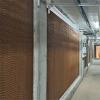
Product Gallery Honeycomb evaporative cooling pad in livestock ventilation
Cellulose honeycomb evaporative cooling pad with frame
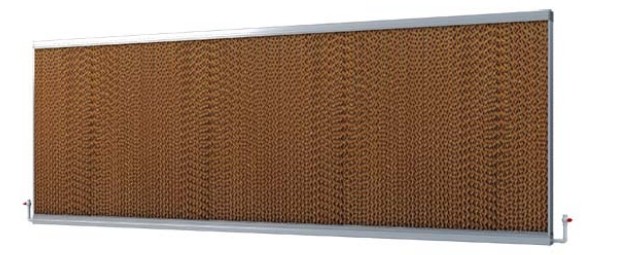
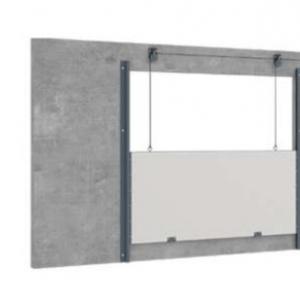
Honeycomb evaporative cooling pad panel
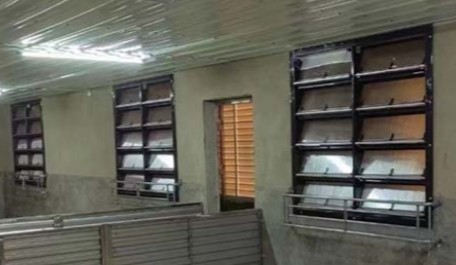
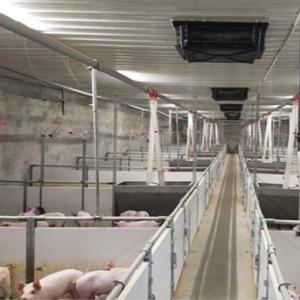
Honeycomb evaporative cooling pad for livestock farm

Comments & Inquiries

Leave your questions or requirements below. We will reply as soon as possible.