Global Livestock Equipment Manufacturer & Supplier
SHEWUYOU · Livestock Equipment
Integrated Equipment Solutions for Pig, Cattle & Poultry Farms

Cooling Pad Water Recirculation System

Product Name Cooling Pad Water Recirculation System
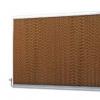
Product Image

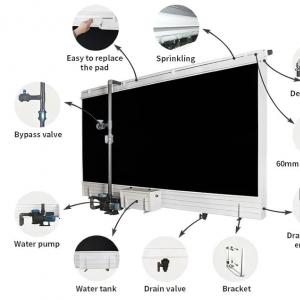
Cooling pad water recirculation system with pump and water distribution

Product Overview

The Cooling Pad Water Recirculation System is designed to provide continuous water circulation for evaporative cooling pads used in livestock and agricultural buildings. It forms the water-management section of a complete evaporative cooling installation and works together with cooling pads, exhaust fans and environmental controls.

During operation, a circulation pump transfers water from a collection trough or reservoir to the upper water-distribution section. Water is distributed across the cooling-pad surface and flows downward through the evaporative media. Water that does not evaporate is collected and returned to the circulation circuit.

This recirculating configuration helps maintain a continuously wetted cooling surface while reducing unnecessary water discharge. The system can be arranged as an integrated bottom-gutter design or as a separate reservoir-and-piping configuration according to the cooling-pad wall, building structure and project layout.

For international B2B projects, the pump, water collection section, distribution pipes, filtration, valves and control components can be coordinated with the total cooling-pad area and ventilation design. The final hydraulic configuration should be designed according to local climate, water quality, farm conditions and project requirements.

Key Features
  • Continuous Water Recirculation: Circulates water between the collection section and cooling-pad distribution system.
  • Uniform Water Distribution: Designed to provide consistent wetting across the required cooling-pad surface.
  • Integrated Water Collection: Collects unevaporated water from the lower section of the cooling pad for reuse.
  • Efficient Water Management: Recirculation reduces unnecessary continuous water discharge during normal operation.
  • Flexible System Layout: Suitable for integrated trough systems or separate tank-and-pipe configurations.
  • Farm Environment Compatibility: Components can be selected according to humidity, water quality, cleaning conditions and corrosion exposure.
  • Easy Maintenance: Pump, filter, valves and piping can be accessed for inspection and cleaning.
  • Cooling System Integration: Can be coordinated with evaporative cooling pads, exhaust fans and environmental controllers.
  • Modular Configuration: System length, pump arrangement and water distribution layout can be adapted to different cooling-wall sizes.
  • Project-Based Engineering: Hydraulic components are selected according to cooling-pad area, ventilation requirements and local farm conditions.
Structural Components
  • Circulation Pump: Transfers water from the collection section to the upper distribution system.
  • Water Collection Trough or Reservoir: Receives water returning from the cooling pads and provides the source for recirculation.
  • Water Supply Pipe: Transfers circulating water from the pump to the cooling-pad distribution section.
  • Water Distribution Pipe: Delivers water across the upper section of the evaporative cooling media.
  • Return-Water Path: Directs collected water back to the reservoir or lower circulation section.
  • Water Filter: Helps reduce suspended particles that may affect the pump or water-distribution outlets.
  • Valves and Fittings: Used for isolation, flow adjustment, drainage and service operations.
  • Optional Control Components: Water-level switches, temperature controls, pump controllers and environmental-control interfaces can be incorporated according to project requirements.
Working Principle / Structural Principle

The circulation pump draws water from the lower collection trough or reservoir and sends it through the supply pipe to the upper distribution section. Water is then distributed over the cooling-pad media and flows downward through the pad structure under gravity.

As ventilation fans draw outdoor air through the wetted cooling pad, a portion of the water evaporates and absorbs heat from the incoming air. The remaining water reaches the lower collection section and returns to the circulation circuit, where it can be pumped back to the distribution system.

The water circulation system therefore maintains the wet condition required for evaporative heat exchange while providing a controlled path for water supply and recovery. Proper pump sizing, water distribution and return-water capacity should be coordinated with the cooling-pad area and airflow design.

The system is normally used as part of a complete livestock ventilation system, rather than as an independent cooling device. Final configuration should be designed according to local climate and farm conditions.

Technical Specifications
  • Product Type: Cooling pad water recirculation system
  • System Function: Water supply, distribution, collection and recirculation for evaporative cooling pads
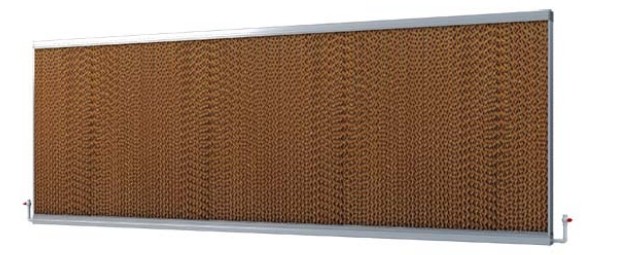
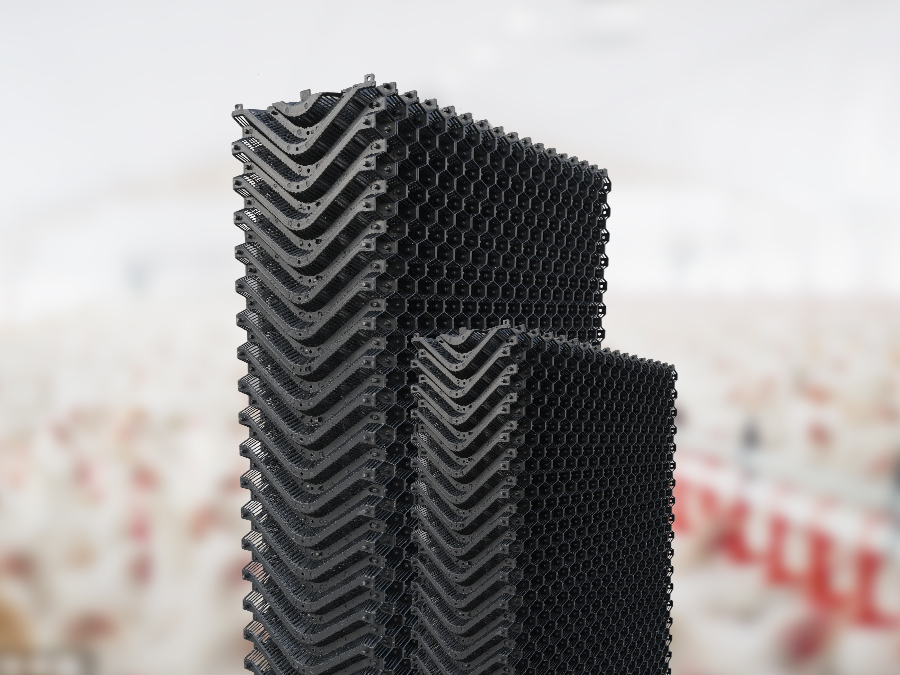
  • Cooling Pad Compatibility: Cellulose evaporative cooling pads, plastic evaporative cooling pads or other compatible media
  • Water Circulation Mode: Recirculating
  • Water Collection: Integrated bottom trough, external reservoir or project-specific configuration
  • Pump Capacity: According to cooling-pad area and project requirements
  • Water Flow: According to cooling-pad dimensions, distribution design and project requirements
  • Pipe Diameter: Customizable according to hydraulic design
  • Pipe Material: PVC, UPVC or other suitable material according to project requirements
  • Water Filter: According to water quality and system design
  • Water Distribution: Upper distribution pipe or project-specific arrangement
  • Water Inlet / Outlet: Customizable according to installation layout
  • Reservoir Capacity: According to cooling-pad area and water-circulation requirements
  • Control Method: Manual, automatic or integrated environmental control
  • Water-Level Management: According to project requirements
  • Installation Length: Customizable according to cooling-wall dimensions
  • Cooling Pad Area: According to ventilation and cooling calculations
  • Electrical Configuration: According to selected pump and local electrical standards
  • Operating Conditions: Designed according to local climate and farm conditions
  • OEM / ODM: Available upon request

Specific pump capacity, pipe dimensions, reservoir capacity, water-flow rate and electrical specifications are not fixed because they depend on the cooling-pad area, building design, water source and project requirements.

Applications
  • Commercial pig houses and swine production facilities
  • Broiler, layer and breeder poultry houses
  • Dairy and beef cattle buildings
  • Sheep and goat livestock housing
  • Tunnel-ventilated livestock buildings
  • Negative-pressure livestock ventilation systems
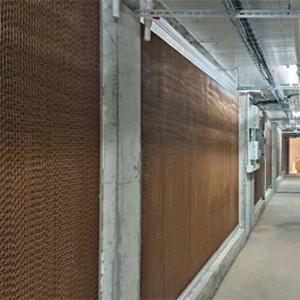
  • Evaporative cooling pad wall systems
  • Greenhouses and controlled agricultural buildings
  • New pig farm construction and poultry farm development projects
  • Steel structure building and international agricultural project cooling installations
Customization Options
  • Pump Configuration: Selected according to total cooling-pad area, required water circulation and system layout.
  • Water Collection: Integrated bottom gutter, external tank or project-specific collection arrangement.
  • Pipe Routing: Supply and return pipes can be arranged according to wall structure, equipment position and maintenance access.
  • Water Distribution: Distribution pipes and outlet arrangement can be designed according to cooling-pad length and height.
  • Filtration: Filter type and filtration arrangement can be selected according to local water quality.
  • Water-Level Control: Manual filling, float-controlled replenishment or other suitable water-level management methods can be configured.
  • Control Integration: Pump operation can be coordinated with temperature sensors, humidity sensors and environmental controllers.
  • Material Selection: PVC, UPVC, aluminum, stainless steel or other suitable materials can be specified according to project conditions.
Installation & Maintenance

Installation:

  1. Confirm the cooling-pad dimensions, total wet-pad area, ventilation mode and building structure before installing the water circulation system.
  2. Position the collection trough or reservoir at an appropriate location below or adjacent to the cooling pads.
  3. Install the circulation pump on a stable and accessible base.
  4. Connect the pump outlet to the main water supply pipe and route the pipe to the upper distribution section.
  5. Install the distribution pipe and outlets so that water can be distributed as evenly as possible across the cooling-pad surface.
  6. Connect the lower collection section to the return-water pipe or circulation reservoir.
  7. Install the filter and service valves in accessible positions for regular inspection and cleaning.
  8. Install drainage points where required for system cleaning and seasonal shutdown.
  9. Fill the system with clean water and inspect all pipe connections, fittings and valves for leakage.
  10. Start the circulation pump and verify water flow through the complete distribution circuit.
  11. Check the cooling-pad surface for uniform wetting and confirm that excess water returns smoothly to the collection section.
  12. Coordinate the water circulation system with the exhaust ventilation system during commissioning.

Maintenance:

  • Check pump operation and water level regularly during hot-weather operation.
  • Inspect the water filter and clean it according to water quality and operating conditions.
  • Check distribution outlets for blockage, mineral deposits or uneven water flow.
  • Inspect the collection trough or reservoir for sediment, algae and accumulated debris.
  • Check supply and return pipes for leakage, blockage or mechanical damage.
  • Inspect valves and fittings and replace damaged sealing components when required.
  • Monitor water quality to reduce mineral buildup and contamination within the circulation circuit.
  • Inspect cooling pads separately for dust, scale, algae and physical deterioration.
  • Clean the water collection section periodically to maintain unobstructed return flow.
  • Check pump vibration, noise and operating condition during routine inspections.
  • Drain and clean the water circuit before extended seasonal shutdown where appropriate for local climate conditions.
  • After maintenance, test water distribution and return flow before putting the cooling system back into normal operation.
Project Cases

Illustrative Project Scenario 1 – Commercial Pig Farm in Southeast Asia
A commercial pig farm with multiple finishing houses requires a centralized evaporative cooling arrangement for hot-weather operation. The water recirculation system is configured below the cooling-pad walls, with pump capacity and distribution piping selected according to the total cooling-pad area and ventilation requirements.

Illustrative Project Scenario 2 – Poultry Farm in a Hot Climate
A large tunnel-ventilated poultry house requires continuous wetting of its evaporative cooling pads during periods of high outdoor temperature. The circulation system combines a collection trough, circulation pump, filtration and distribution piping to maintain stable water delivery to the cooling wall.

Illustrative Project Scenario 3 – Steel Structure Agricultural Building
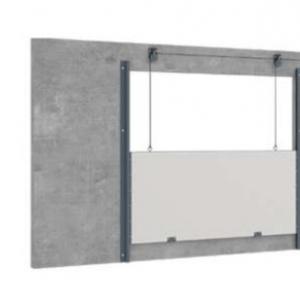
An agricultural engineering company develops a steel structure livestock building with a negative-pressure ventilation system. The cooling-pad water circuit is coordinated with the wall opening, exhaust fan arrangement, cooling-pad dimensions and environmental control system.

Illustrative Project Scenario 4 – Existing Farm Cooling System Upgrade
An existing livestock facility requires replacement of an aging water circulation circuit while retaining the existing cooling-pad wall. The upgraded system can be configured with new pump, filtration, supply piping, return piping and water-level management components according to the available installation space.

The project scenarios above are illustrative engineering applications prepared for product communication and are not presented as completed customer projects.

Product FAQ

Q1: What is a Cooling Pad Water Recirculation System?
A: It is the hydraulic circulation system used to supply water to evaporative cooling pads, collect unevaporated water and return it to the circulation circuit for continued use.

Q2: What are the main components of the system?
A: A typical configuration includes a circulation pump, water collection trough or reservoir, supply pipes, distribution pipes, return-water piping, filtration, valves and optional control components.

Q3: Why is water recirculation used in evaporative cooling?
A: Recirculation maintains the wet condition of the cooling pads while allowing unevaporated water to be collected and reused, helping reduce unnecessary continuous water discharge.

Q4: Can the system be used in pig houses?
A: Yes. It can be integrated with evaporative cooling pads and exhaust fans in commercial pig houses as part of a complete livestock ventilation system.

Q5: Can the system be used for poultry houses?
A: Yes. It can be configured for broiler, layer and breeder houses as well as other poultry buildings requiring evaporative cooling.

Q6: How is the circulation pump selected?
A: Pump capacity depends on the total cooling-pad area, required water circulation, pipe routing, elevation, distribution arrangement and project conditions. The final pump specification is therefore customizable.

Q7: Does the system require a separate water tank?
A: Not necessarily. An integrated bottom gutter can function as the water collection and storage section in suitable configurations. A separate reservoir can also be used when required by the project design.

Q8: Can the water circulation system be customized?
A: Yes. Pump configuration, reservoir or trough design, pipe routing, filtration, water distribution, valves and control components can be customized according to project requirements.

Q9: What type of water should be used?
A: Water quality should be suitable for continuous circulation. Excessive suspended solids, mineral content or biological contamination can affect filters, pumps, distribution outlets and cooling-pad condition. Final water-management requirements should be determined according to local water conditions.

Q10: What information is required for a quotation?
A: Please provide cooling-pad dimensions and total area, livestock type, building dimensions, ventilation mode, local climate, water source and quality, pump location, pipe-routing requirements, power standard and project quantity.

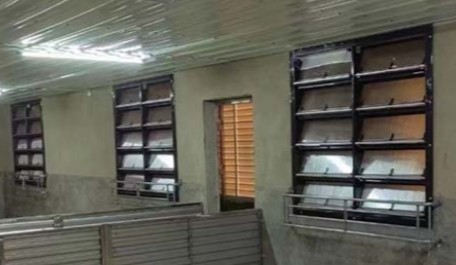
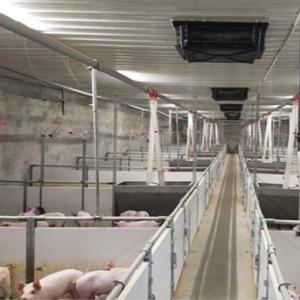
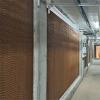
Product Gallery Cooling pad water pump and recirculation assembly
Cooling pad circulation pump and PVC water piping
Livestock cooling pad water distribution system
Evaporative cooling pad water circulation installation

Comments & Inquiries

Leave your questions or requirements below. We will reply as soon as possible.