

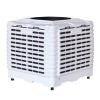
| Product Name | Industrial Evaporative Air Cooler |
| Product Image | |
| Product Overview |
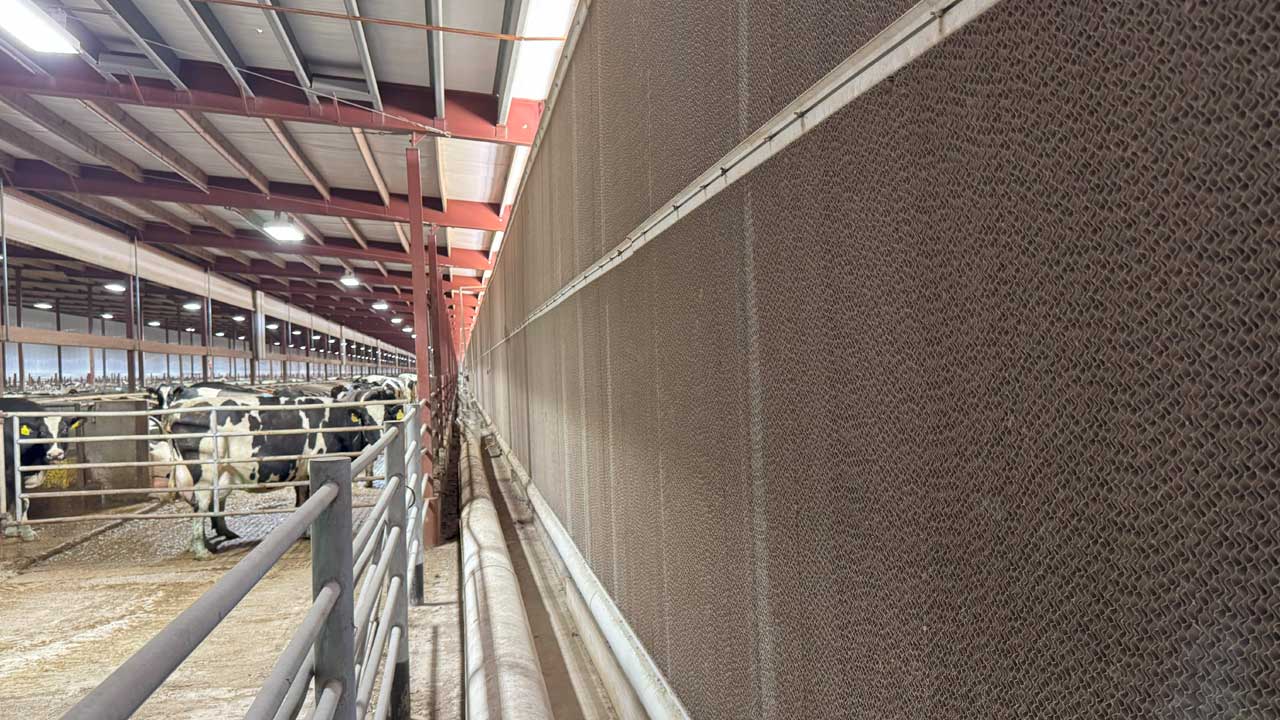
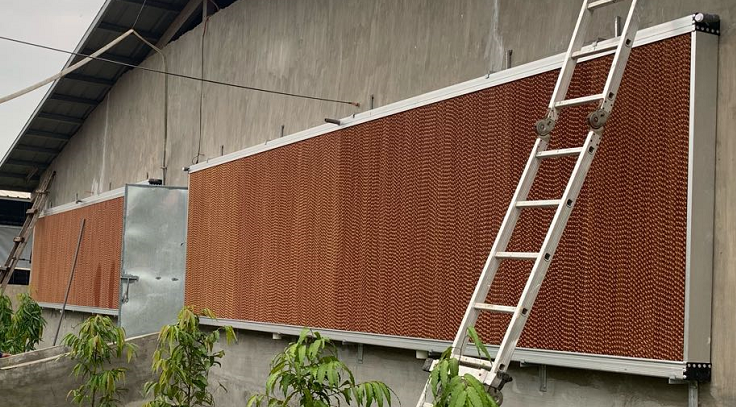
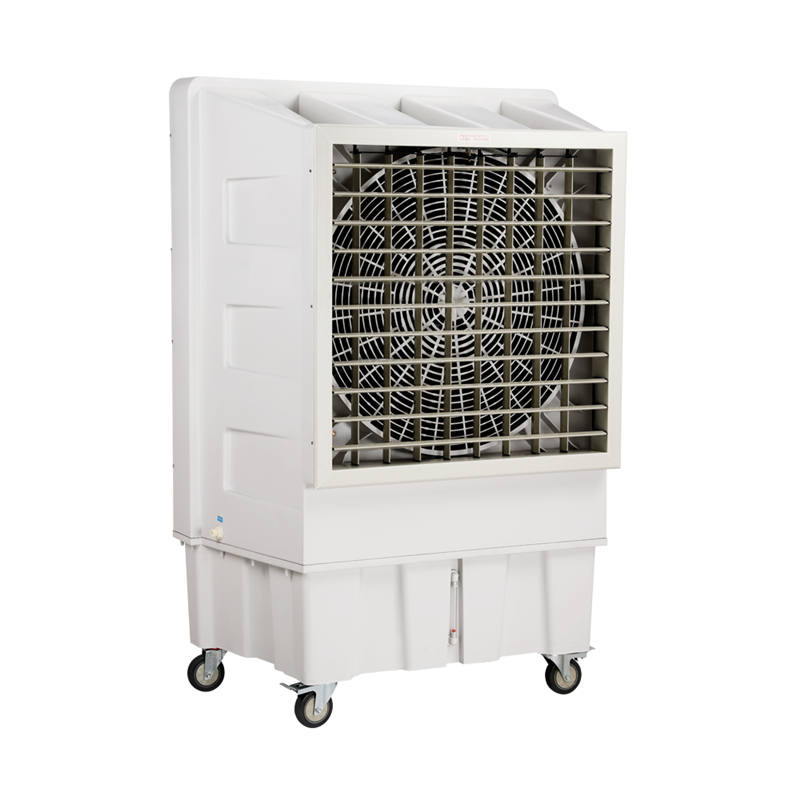
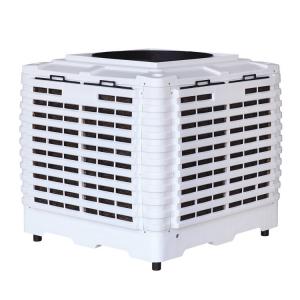
The Industrial Evaporative Air Cooler draws outdoor air through water-wetted cooling media. Evaporation absorbs heat from the passing air, and a fan supplies the treated air to the intended space. For livestock equipment projects, the cooler can form part of a planned livestock ventilation system. Fresh-air delivery, exhaust capacity and indoor humidity must be considered together, particularly in commercial pig and poultry buildings. The unit can be specified for new pig farm construction, agricultural facility upgrades and suitable steel structure buildings. Its mounting position, outlet arrangement and service access should be coordinated with the building design. For engineering companies, distributors and agricultural project buyers, the final configuration is designed according to local climate and farm conditions. Actual cooling performance varies with outdoor temperature, humidity, airflow and operation. |
| Key Features | 1. Uses water evaporation to cool incoming outdoor air. 2. Supplies fresh air to large or frequently opened spaces. 3. Can be integrated with a designed farm ventilation system. 4. Supports airflow selection according to building requirements. 5. Offers outlet and mounting arrangements subject to model selection. 6. Allows access to cooling media and water components for servicing. 7. Can be coordinated with exhaust fans and environmental controls. 8. Supports material selection for the local operating environment. 9. Can be planned for new construction or a suitable facility upgrade. |
| Structural Components | 1. Housing: Supports and encloses the cooling components. 2. Evaporative cooling media: Provides a wetted surface for heat transfer. 3. Fan and motor: Move air through the media and toward the outlet. 4. Water distributor: Spreads water across the cooling media. 5. Pump and water supply: Feed the distributor according to the selected design. 6. Reservoir and drain: Support water circulation and emptying where applicable. 7. Controls: Manage operation according to the chosen configuration. 8. Mounting and outlet accessories: Connect the unit to its support and air supply route. |
| Working Principle / Structural Principle |
The water system wets the evaporative media. As outdoor air passes through it, some water evaporates and absorbs heat, lowering the temperature of the supplied air. The fan delivers this air through the selected outlet or duct route. Exhaust fans or suitable relief openings allow warm, moisture-laden air to leave the building. Evaporative cooling potential decreases as outdoor humidity increases. Unit selection should therefore be based on local climate data and the building's ventilation requirements. |
| Technical Specifications | Airflow capacity: According to project requirements Unit dimensions and weight: Available upon request Electrical supply: Available upon request Air outlet configuration: Customizable, subject to model selection Cooling media configuration: Available upon request Water supply and drainage: According to project requirements Control options: Available upon request Mounting arrangement: According to building design Expected cooling performance: Designed according to local climate and farm conditions |
| Applications | 1. Commercial pig houses 2. Sow and breeding facilities 3. Broiler and poultry houses 4. Livestock barns 5. Steel structure agricultural buildings 6. Farm equipment and service buildings 7. Agricultural production facilities 8. New pig farm construction projects 9. Existing farm ventilation upgrades |
| Customization Options | 1. Airflow and unit quantity based on the ventilation plan. 2. Air outlet direction and compatible duct connection. 3. Mounting arrangement for the available structure. 4. Electrical supply for the destination market. 5. Water supply, drainage and filtration arrangement. 6. Control coordination with exhaust fans and farm equipment. 7. Housing and component selection for local climate and operating conditions. |
| Installation & Maintenance |
Installation planning: Confirm the outdoor-air intake, air distribution route, exhaust capacity, water supply, drainage, electrical connection and service clearance. Position the intake away from contaminated exhaust and avoid layouts that restrict airflow through the media. Structural coordination: For a wall, roof or steel structure building installation, the project engineer should verify mounting loads, fixing details and weather sealing. Connect the unit to the planned air supply route and commission it alongside the exhaust system. Routine maintenance: Inspect water distribution, clean the reservoir and drain, and check the pump, fan and controls. Clean or replace cooling media according to its condition and the equipment manual. Drain and service the water system during extended shutdowns to limit standing water, scale and blockage. |
| Project Cases |
Illustrative commercial pig farm: An engineering team specifies evaporative coolers at planned outdoor-air intake points and coordinates them with exhaust fans. The number of units follows the building layout, stocking plan and local summer conditions. Illustrative poultry facility: Coolers supply treated fresh air through an agreed distribution route while exhaust equipment removes heat and moisture from the poultry house. These examples describe possible agricultural project arrangements; they are not claims of completed SHEWUYOU installations. |
| Product FAQ | 1. What information is required for unit selection? Provide the project location, building drawings, intended use, ventilation plan, electrical supply and water availability. 2. Can this cooler be used in a commercial pig house? Yes, when its fresh-air supply is matched with suitable exhaust and humidity management. 3. Does it replace exhaust fans? No. Warm air and added moisture need an appropriate path out of the building. 4. What temperature reduction can be expected? It depends on outdoor temperature, humidity and system design. Project-specific performance should be assessed before purchase. 5. Is it suitable for a humid climate? Evaporative cooling potential is generally lower when outdoor humidity is high. Review local climate data during selection. 6. Can it be installed in an existing facility? Yes, if the structure, openings, services and ventilation arrangement can support the proposed design. 7. Can the unit connect to an environmental controller? Control compatibility and available interfaces depend on the selected configuration. 8. What maintenance does the water system need? Inspect and clean the water distributor, reservoir, drain and cooling media according to water quality and operating conditions. 9. Can distributors request a project-specific configuration? Yes. Share the destination market, building requirements and preferred supply arrangement for review. |
| Product Gallery |
- Home
-
Products
- Pig Farming Equipment
- Cattle Farming Equipment
- Sheep & Goat Farming Equipment
- Poultry Farming Equipment
- Feeding & Drinking Systems
- Veterinary & Breeding Equipment
- Testing & Diagnostic Equipment
- Cleaning & Biosecurity Equipment
- Climate Control Equipment
- Livestock Weighing Equipment
- Manure & Waste Management
- Farm Transport & Handling
-
Solutions
- Pig Farm Solutions
- Dairy Farm Solutions
- Beef Cattle Farm Solutions
- Sheep & Goat Farm Solutions
- Layer Farm Solutions
- Broiler Farm Solutions
- Feeding & Drinking System Solutions
- Climate Control Solutions
- Biosecurity & Disinfection Solutions
- Manure & Waste Management
- Smart Farming Solutions
- Farm Renovation and Upgrade Solutions
- Partners
- Projects
- Resources
- News
- About Us
- Contact


Comments & Inquiries
Leave your questions or requirements below. We will reply as soon as possible.