
| Product Name | Livestock Exhaust Air Purification System | ||||||||||||||||||||||||||||||
| Product Image | 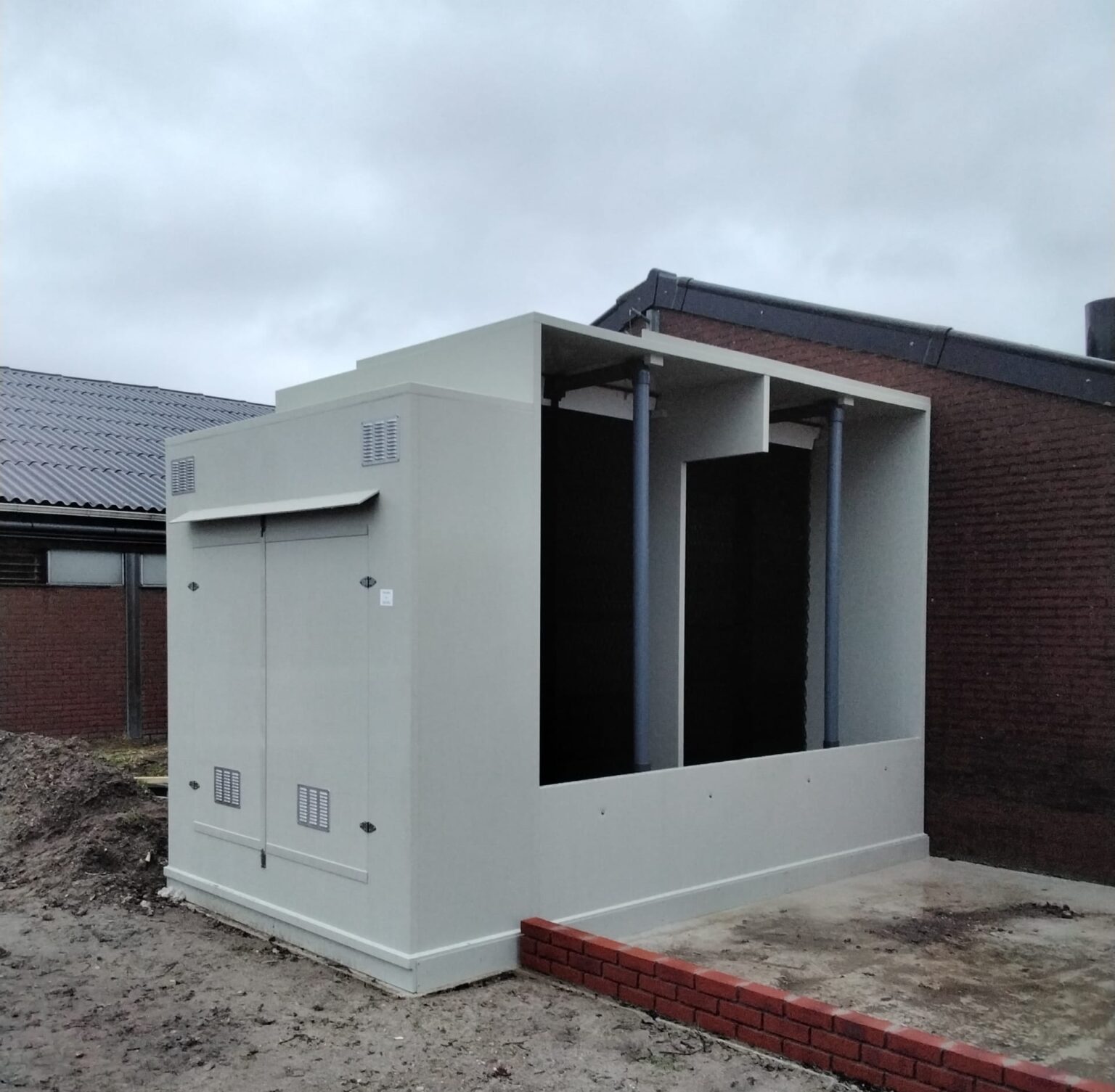 |
||||||||||||||||||||||||||||||
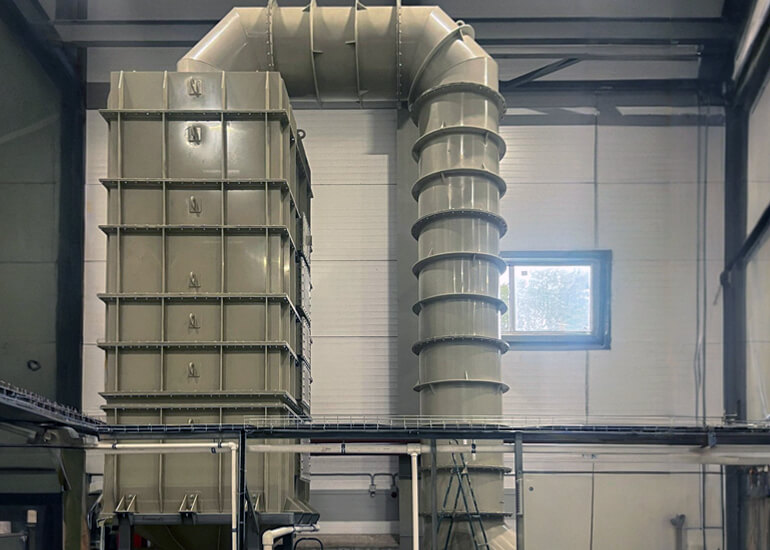
| Product Overview | The Livestock Exhaust Air Purification System is an engineered air-cleaning solution designed to reduce ammonia, dust, odor and other airborne emissions from commercial pig houses, poultry houses and other mechanically ventilated livestock buildings. The system is normally connected to a centralized exhaust ventilation system. Contaminated house air is collected through exhaust ducts or pressure chambers and directed through one or more treatment stages before being discharged outdoors. Depending on project requirements, the system can use chemical scrubbing, biological treatment or combined multi-stage purification. Wash water is circulated through filter media to increase contact between the exhaust air and cleaning liquid, while downstream treatment stages can provide additional odor reduction. The system can be incorporated into new pig farm construction, livestock farm renovation and steel structure building projects. Airflow capacity, treatment stages, housing dimensions, water circulation and control functions can be designed according to farm size, ventilation capacity and local environmental requirements. |
||||||||||||||||||||||||||||||
| Key Features |
|
||||||||||||||||||||||||||||||
| Structural Components |
|
||||||||||||||||||||||||||||||
| Working Principle | Exhaust air generated inside the livestock building is collected by the ventilation system and directed into the air purification unit through a centralized exhaust-air channel or pressure chamber. In the wet scrubbing stage, exhaust air passes through structured filter media while process water or treatment solution is distributed across the media through a spray system. The large contact surface allows dust particles and soluble gaseous compounds such as ammonia to transfer from the exhaust air into the washing liquid. In chemical configurations, the pH of the circulating liquid can be controlled through chemical dosing to improve ammonia absorption. Biological configurations can use microorganisms and suitable filter media to further treat ammonia or odorous compounds. Multi-stage systems can combine wet scrubbing with an additional biological filter stage for improved odor treatment. A droplet separator can be installed before the cleaned air leaves the system to reduce moisture carryover. Process water is recirculated until operating parameters reach the programmed limits. Part of the used water can then be discharged and replaced with fresh water automatically according to the system design. |
||||||||||||||||||||||||||||||
| Technical Specifications |
|
||||||||||||||||||||||||||||||
| Applications |
|
||||||||||||||||||||||||||||||
| Customization Options |
|
||||||||||||||||||||||||||||||
| Installation & Maintenance | Exhaust air purification should be considered during the early design stage of the livestock ventilation system. Centralized exhaust-air ducts, pressure chambers, fan capacity and scrubber resistance must be coordinated to maintain the required building ventilation performance. For new pig farm construction, the scrubber can be integrated at the gable end, long side or in a dedicated external module according to building layout. Foundations, water supply, drainage, electrical supply and process-water storage should be prepared according to the final engineering design. Routine maintenance includes inspecting and cleaning filter media, spray nozzles and droplet separators; checking circulation pumps and valves; monitoring process-water pH and conductivity where applicable; and removing accumulated sediment according to operating requirements. Air scrubber performance depends on correct operation and regular maintenance. Process monitoring, cleaning intervals and chemical dosing should therefore follow the final system specification and local environmental requirements. |
||||||||||||||||||||||||||||||
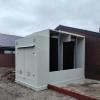
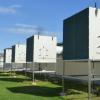
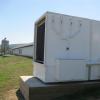
| Project Cases | Livestock exhaust air purification systems are commonly used in mechanically ventilated pig and poultry buildings where environmental emissions must be reduced before exhaust air is released outdoors. In commercial pig farm projects, exhaust air from multiple animal rooms can be collected through centralized ventilation channels and routed to a common scrubber installed at the end or side of the livestock building. Depending on local requirements, a wet chemical or biological treatment stage can be combined with additional odor-treatment media. Modular systems can also be installed beside an existing building where sufficient space and centralized exhaust-air collection are available. Final system design should be based on maximum ventilation airflow, livestock category, expected pollutant load, local environmental requirements and available space for installation. |
||||||||||||||||||||||||||||||
| Product FAQ | Q: What pollutants can the system reduce? A: Depending on the selected treatment process, livestock exhaust air scrubbers are designed to reduce ammonia, dust and odorous substances. Q: Is the system suitable for commercial pig farms? A: Yes. It is particularly suitable for mechanically ventilated pig houses with centralized exhaust-air collection. Q: Can the system be used for poultry houses? A: Yes. Project-specific exhaust air purification systems can also be configured for poultry applications according to airflow and pollutant load. Q: What is the difference between chemical and biological air cleaning? A: Chemical systems use controlled wash-water chemistry to absorb target pollutants such as ammonia, while biological systems use microorganisms and suitable filter media to treat selected gaseous and odorous compounds. Q: Can several cleaning stages be combined? A: Yes. Multi-stage configurations can combine wet scrubbing, chemical treatment and biological odor reduction according to project requirements. Q: Can the system be installed on an existing farm? A: In many cases, yes. Retrofit feasibility depends on the existing ventilation system, available installation space, structural conditions and the possibility of centralizing exhaust air. Q: How is system capacity selected? A: Capacity should be engineered according to maximum ventilation airflow, livestock type, building dimensions and required air-cleaning performance. Q: Is automatic operation available? A: Yes. Pumps, dosing systems, valves, water-quality monitoring and alarms can be integrated into an automatic control system. |
||||||||||||||||||||||||||||||
| Product Gallery |  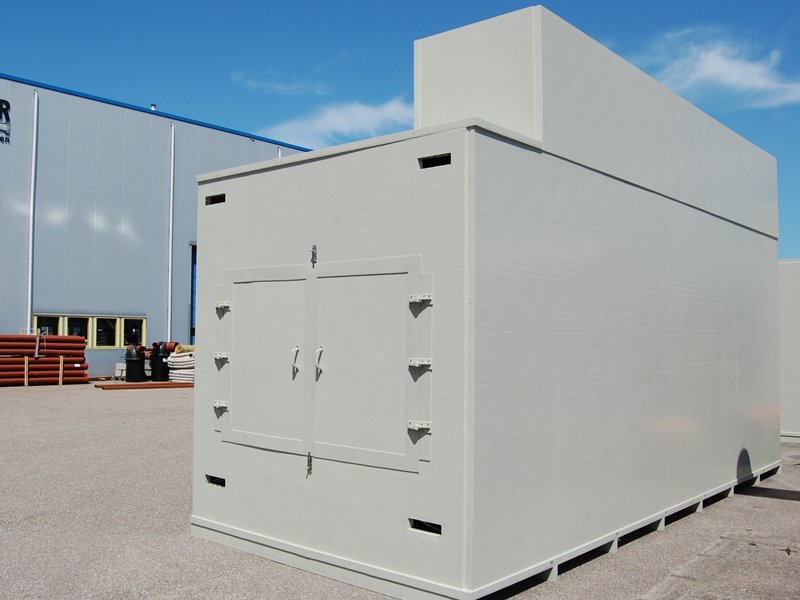 |
- Home
-
Products
- Pig Farming Equipment
- Cattle Farming Equipment
- Sheep & Goat Farming Equipment
- Poultry Farming Equipment
- Feeding & Drinking Systems
- Veterinary & Breeding Equipment
- Testing & Diagnostic Equipment
- Cleaning & Biosecurity Equipment
- Climate Control Equipment
- Livestock Weighing Equipment
- Manure & Waste Management
- Farm Transport & Handling
-
Solutions
- Pig Farm Solutions
- Dairy Farm Solutions
- Beef Cattle Farm Solutions
- Sheep & Goat Farm Solutions
- Layer Farm Solutions
- Broiler Farm Solutions
- Feeding & Drinking System Solutions
- Climate Control Solutions
- Biosecurity & Disinfection Solutions
- Manure & Waste Management
- Smart Farming Solutions
- Farm Renovation and Upgrade Solutions
- Partners
- Projects
- Resources
- News
- About Us
- Contact

Comments & Inquiries
Leave your questions or requirements below. We will reply as soon as possible.