

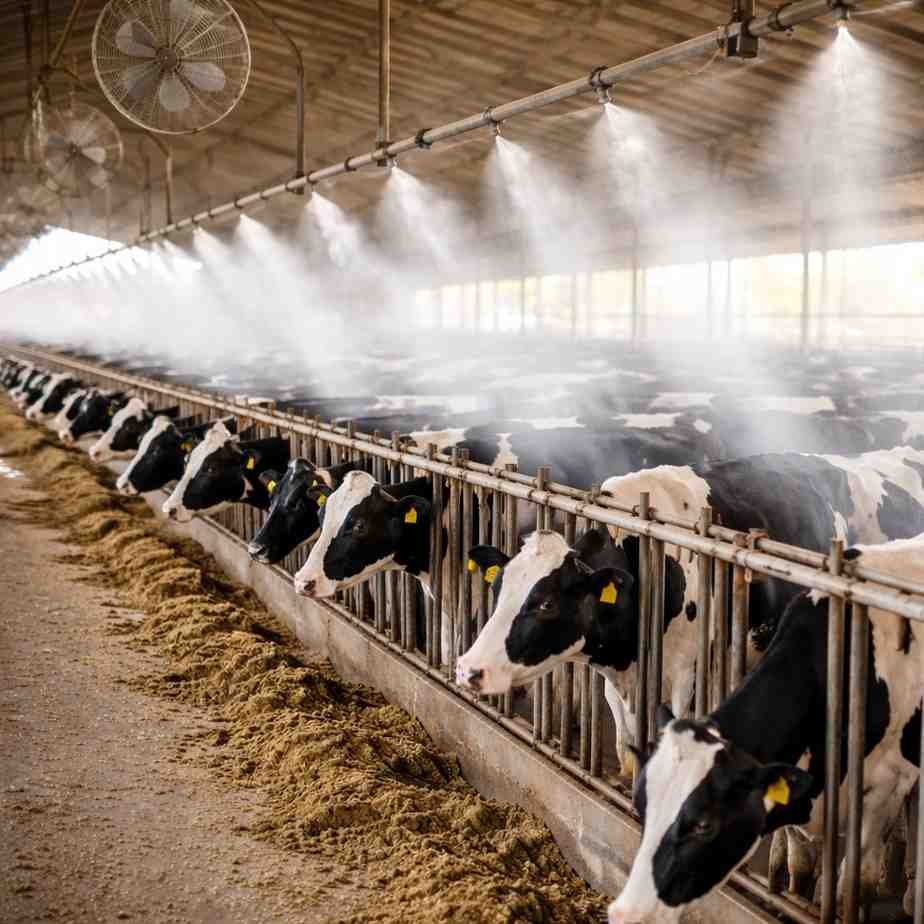
| Product Name | Pig House Odor Control Spray System | ||||||||||||||||||||||||||
| Product Image | 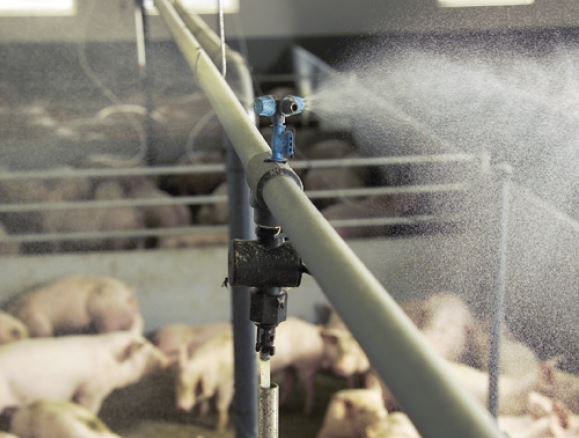 |
||||||||||||||||||||||||||
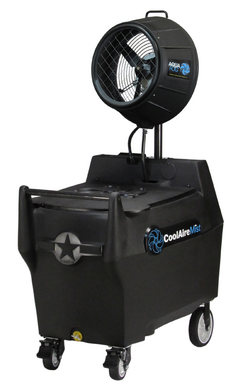
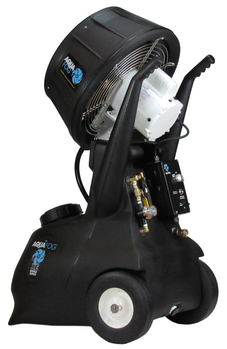
| Product Overview | The Pig House Odor Control Spray System is a fine-mist environmental treatment system designed for commercial pig farms, breeding facilities, manure handling areas and livestock exhaust zones. A high-pressure pump delivers water and a compatible odor-control agent through distribution pipelines to precision misting nozzles installed at selected odor-generation or air-movement zones. The nozzles generate fine droplets that remain suspended in the air long enough to improve contact between the treatment solution and airborne odor compounds. The system can be installed inside pig houses, around manure collection areas, near ventilation exhaust points or along farm boundaries according to the odor source and airflow pattern. Modular piping and nozzle layouts make the system suitable for both new pig farm construction and retrofit projects, including steel structure livestock buildings and large commercial farm complexes. |
||||||||||||||||||||||||||
| Key Features |
|
||||||||||||||||||||||||||
| Structural Components |
|
||||||||||||||||||||||||||
| Working Principle | Water is supplied to the pump system and filtered before entering the high-pressure circuit. Where required, a compatible odor-control agent is introduced through a dosing or injection system. The pressurized treatment solution travels through the distribution pipelines and is atomized by fine-mist nozzles positioned near the target odor source or airflow path. The resulting droplets remain suspended in the air and increase contact between the treatment agent and airborne odor compounds. Proper nozzle placement allows treatment close to manure areas, ventilation outlets or other identified odor sources instead of spraying the entire building unnecessarily. Operating frequency should be adjusted according to animal density, ventilation rate, humidity, manure management and odor conditions. Appropriate agent concentration must follow the treatment-chemical manufacturer's instructions. |
||||||||||||||||||||||||||
| Technical Specifications |
|
||||||||||||||||||||||||||
| Applications |
|
||||||||||||||||||||||||||
| Customization Options |
|
||||||||||||||||||||||||||
| Installation & Maintenance | Before installation, identify the major odor sources and evaluate livestock-house airflow, ventilation outlets, manure handling areas, water quality and available utility connections. Nozzles should be positioned so the fine mist interacts effectively with the target air stream while avoiding unnecessary wetting of animals, feed, electrical equipment and building surfaces. For new pig farm construction, high-pressure pipelines and control wiring can be coordinated with ventilation, feeding and steel structure building systems during the design stage. Routine maintenance includes cleaning filters, checking nozzle spray patterns, inspecting pump pressure, examining chemical dosing equipment and flushing pipelines where required. Clogged or worn nozzles should be cleaned or replaced promptly. Only treatment agents suitable for livestock environments and compatible with the pump, seals, pipelines and nozzles should be used according to the chemical supplier's instructions and applicable regulations. |
||||||||||||||||||||||||||
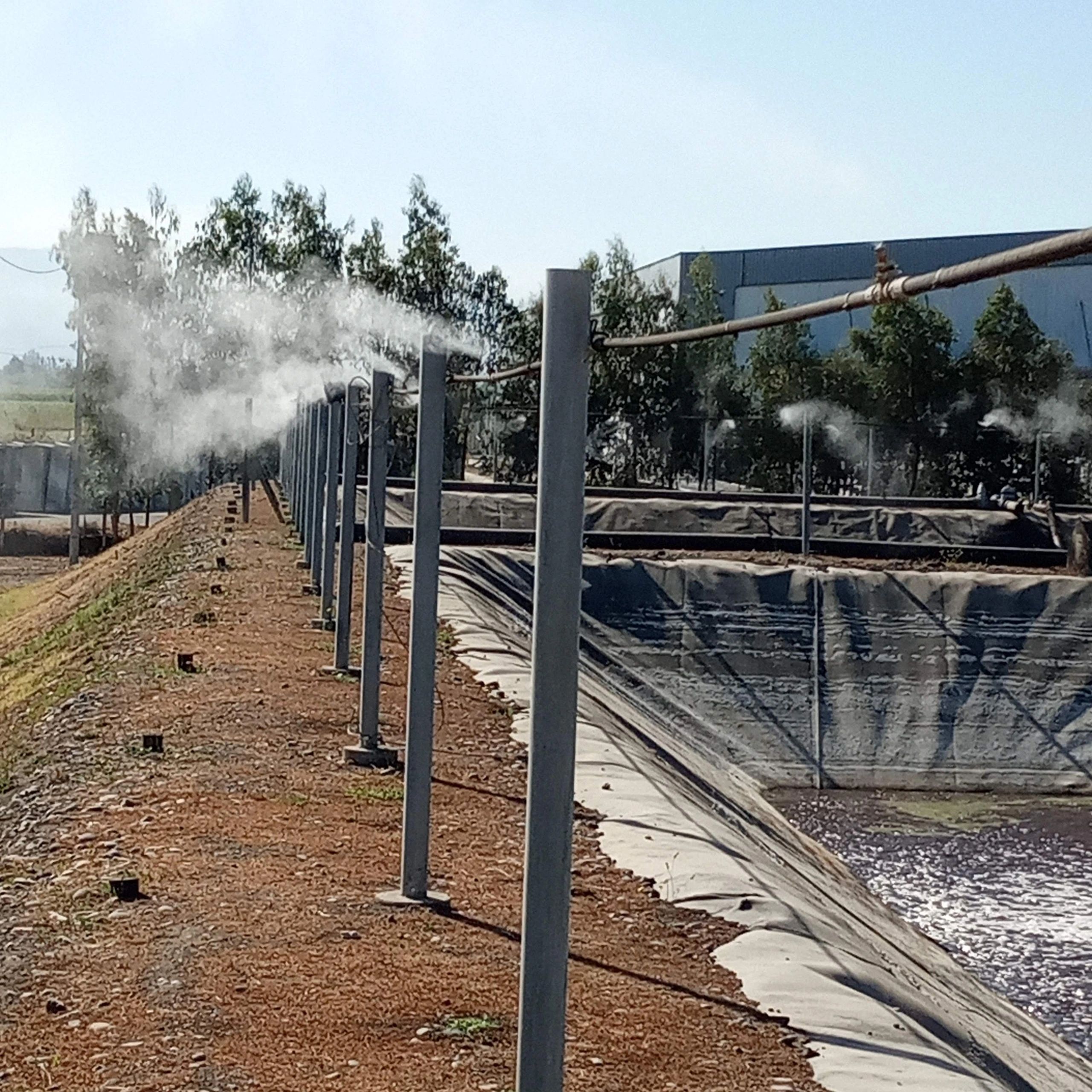
| Project Cases | Pig house odor-control misting systems can be configured according to the actual location where odor is generated or released. Inside livestock buildings, nozzle lines can be installed near manure channels or ventilation air paths. At mechanically ventilated pig houses, spray lines can also be positioned near exhaust areas to treat odor-bearing air before dispersion around the farm. In larger commercial projects, one centralized high-pressure pump can supply several independently controlled spray zones, reducing duplicated equipment while allowing different operating schedules for separate livestock buildings. Final layout should be determined according to animal density, manure management, prevailing airflow, ventilation volume and the selected odor-control agent. |
||||||||||||||||||||||||||
| Product FAQ | Q: Where should the odor-control nozzles be installed? A: Nozzles can be installed near manure areas, ventilation exhaust points, livestock-house air paths or farm boundaries according to the identified odor source. Q: Does the system only spray water? A: It can operate with water and a compatible odor-control agent. The selected chemical and dilution ratio should be determined according to the application and supplier recommendations. Q: Will the fine mist make the pig house wet? A: Correctly designed high-pressure systems use fine droplets and controlled operating cycles to minimize excessive wetting. Final performance depends on nozzle selection, humidity, airflow and installation layout. Q: Can one system serve several pig houses? A: Yes. A centralized pump and multi-zone control system can supply several treatment areas when hydraulic capacity and pipeline design are suitable. Q: Can the system operate automatically? A: Yes. Timers, programmable controllers and zone-control valves can be provided according to project requirements. Q: Can the system be installed in an existing pig farm? A: Yes. Modular nozzle and pipeline systems are suitable for many retrofit projects where suitable water, electrical supply and installation routes are available. Q: Is water filtration necessary? A: Filtration is strongly recommended because fine misting nozzles have small internal openings that can be affected by suspended particles and mineral deposits. Q: What information is needed for project selection? A: Building dimensions, animal capacity, ventilation layout, odor source locations, water quality, desired treatment zones and available utilities are normally required. |
||||||||||||||||||||||||||
| Product Gallery |   |
- Home
-
Products
- Pig Farming Equipment
- Cattle Farming Equipment
- Sheep & Goat Farming Equipment
- Poultry Farming Equipment
- Feeding & Drinking Systems
- Veterinary & Breeding Equipment
- Testing & Diagnostic Equipment
- Cleaning & Biosecurity Equipment
- Climate Control Equipment
- Livestock Weighing Equipment
- Manure & Waste Management
- Farm Transport & Handling
-
Solutions
- Pig Farm Solutions
- Dairy Farm Solutions
- Beef Cattle Farm Solutions
- Sheep & Goat Farm Solutions
- Layer Farm Solutions
- Broiler Farm Solutions
- Feeding & Drinking System Solutions
- Climate Control Solutions
- Biosecurity & Disinfection Solutions
- Manure & Waste Management
- Smart Farming Solutions
- Farm Renovation and Upgrade Solutions
- Partners
- Projects
- Resources
- News
- About Us
- Contact

Comments & Inquiries
Leave your questions or requirements below. We will reply as soon as possible.