

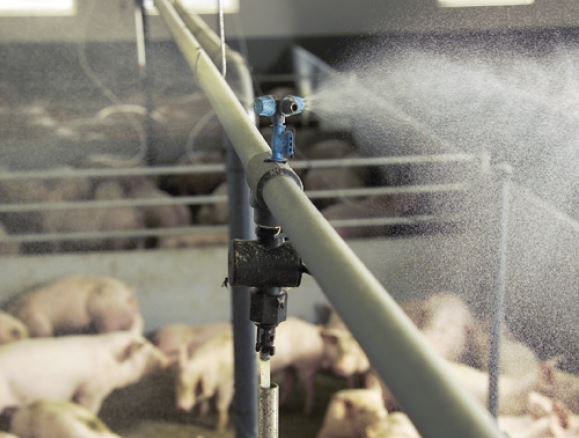
| Product Name | Mobile Odor Control Fogging System | ||||||||||||||||||||||||||
| Product Image | 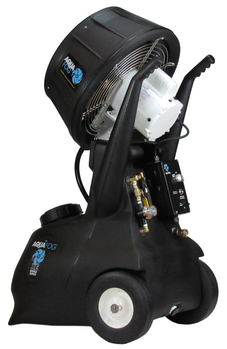 |
||||||||||||||||||||||||||
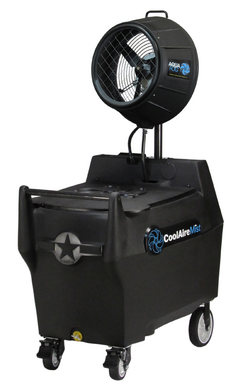
| Product Overview | The Mobile Odor Control Fogging System is a high-output environmental treatment unit designed for livestock farms, manure handling areas, rendering facilities, wastewater zones and other agricultural locations where broad-area odor treatment is required. The machine uses centrifugal atomization instead of conventional high-pressure spray nozzles. Liquid is delivered to a high-speed atomizing head, where it is converted into fine droplets and projected over a wide area by strong airflow. This nozzle-free design helps reduce clogging and simplifies routine maintenance. For mobile applications, diluted treatment solution can be prepared directly in the integrated tank. For longer-duration operation, the system can be connected to a continuous water supply and an external metering pump that injects concentrated odor-control chemical into the feed line before atomization. The wheeled structure and adjustable fogging head allow the equipment to be moved between livestock buildings, manure storage areas, service yards and other treatment zones according to farm operating requirements. |
||||||||||||||||||||||||||
| Key Features |
|
||||||||||||||||||||||||||
| Structural Components |
|
||||||||||||||||||||||||||
| Working Principle | Liquid enters a reservoir behind the rotating atomizing fan. Centrifugal force moves the liquid through internal channels toward the blade tips, where it is broken into fine droplets and further atomized before being projected into the surrounding airflow. For short-duration mobile use, diluted treatment solution can be prepared in the onboard tank and supplied directly to the atomizer. For continuous odor-control operation, fresh water can enter through the float-controlled supply connection while an external metering pump injects concentrated odor-treatment chemical into the feed line. This configuration allows the treatment ratio to be controlled without repeatedly mixing large batches inside the tank. Fog output and droplet size can be adjusted by changing the liquid feed rate. Lower output generally produces finer and drier particles, while higher liquid flow produces larger droplets. |
||||||||||||||||||||||||||
| Technical Specifications |
|
||||||||||||||||||||||||||
| Applications |
|
||||||||||||||||||||||||||
| Customization Options |
|
||||||||||||||||||||||||||
| Installation & Maintenance | Position the mobile fogger on a stable surface with adequate clearance around the fan intake and discharge area. The fogging head should be directed toward the target treatment zone while avoiding unnecessary spraying onto sensitive electrical equipment or occupied work areas. For continuous operation, connect the water supply to the float-controlled inlet and install the metering pump according to the selected chemical dilution ratio. Chemical compatibility should be confirmed before operation. Routine maintenance includes cleaning the atomizing head, checking the fan guard, inspecting liquid lines and strainers, cleaning the tank, checking flow-control valves and verifying correct operation of the low-level shut-off system. Only treatment chemicals compatible with the equipment materials and approved for the intended agricultural application should be used. Dilution, exposure and worker-safety requirements must follow the chemical manufacturer's instructions. |
||||||||||||||||||||||||||
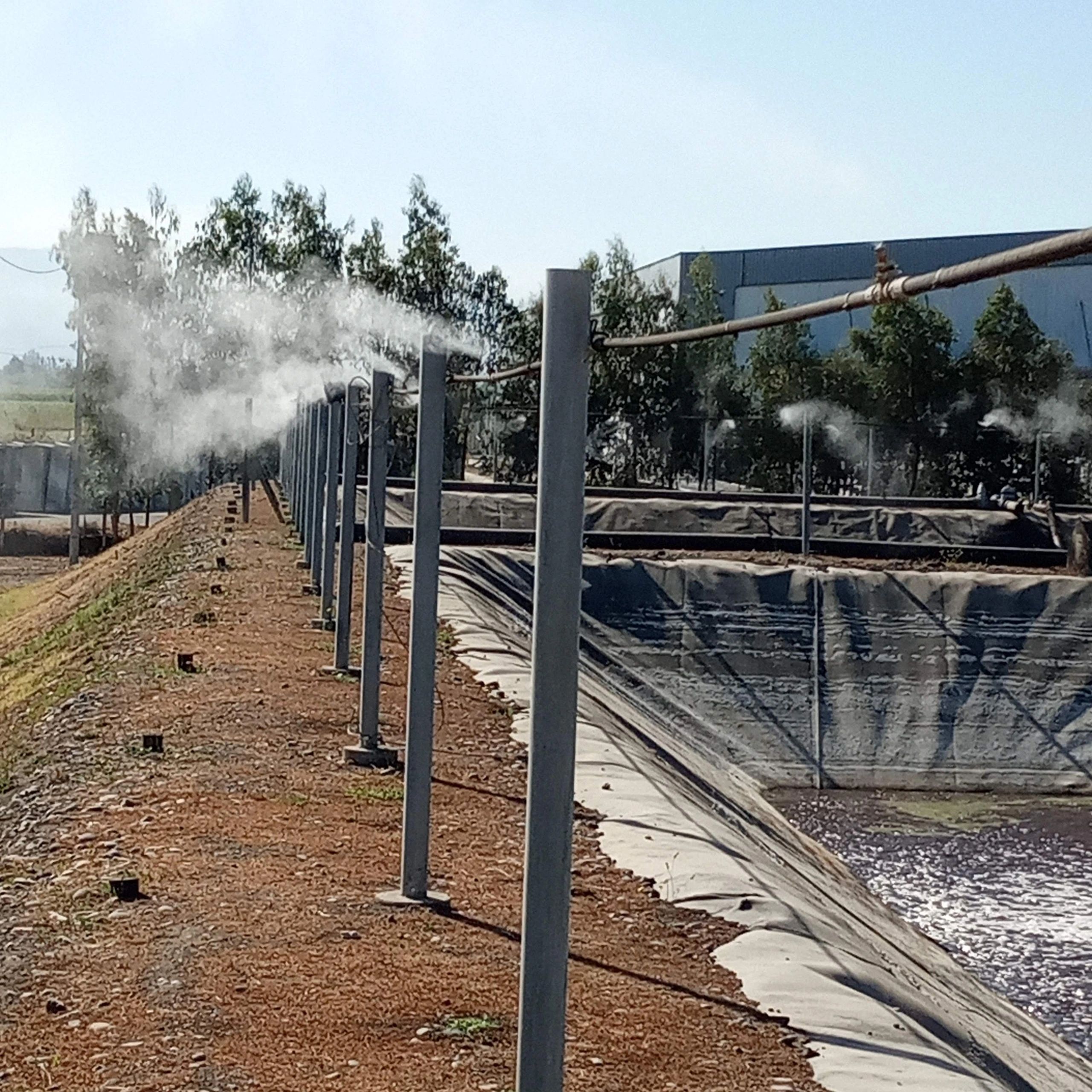
| Project Cases | Mobile odor-control foggers are suitable for farms where treatment locations change during daily operation or where permanent fixed fogging lines are not required. In commercial pig farms, a mobile system can be positioned near manure transfer areas, loading zones or other localized odor sources. For poultry and agricultural processing facilities, the unit can be moved between service areas according to operating schedules. For long-duration odor-control projects, the system can be connected to a continuous water source and a concentrated chemical drum through a metering pump, allowing extended operation with reduced manual refilling. Final treatment design should consider odor source intensity, wind direction, treatment chemical characteristics, operating schedule and site safety requirements. |
||||||||||||||||||||||||||
| Product FAQ | Q: Does the system use conventional spray nozzles? A: No. The reference design uses centrifugal atomization, which produces fog without conventional high-pressure nozzles. Q: Can the machine be moved between different farm areas? A: Yes. The integrated wheeled structure is designed for mobile deployment. Q: Can concentrated odor-control chemical be injected automatically? A: Yes. The system can be connected to an external metering pump that injects concentrate into the incoming water line. Q: Can it operate continuously? A: Extended operation is possible when the system is connected to a continuous water supply and suitable chemical injection arrangement. Q: Can fog direction be adjusted? A: Yes. The reference unit provides multiple fogging-head positions for different discharge angles. Q: Is it suitable for livestock farms? A: Yes. It can be used for suitable odor-treatment applications around pig farms, poultry facilities, manure handling areas and other agricultural sites. Q: Can corrosive treatment chemicals be used? A: Stainless steel plumbing options are available for selected corrosive solutions, but chemical compatibility should always be confirmed before use. Q: Can output be adjusted? A: Yes. Dual flow-control valves allow the liquid feed rate and fogging output to be adjusted according to the application. |
||||||||||||||||||||||||||
| Product Gallery | 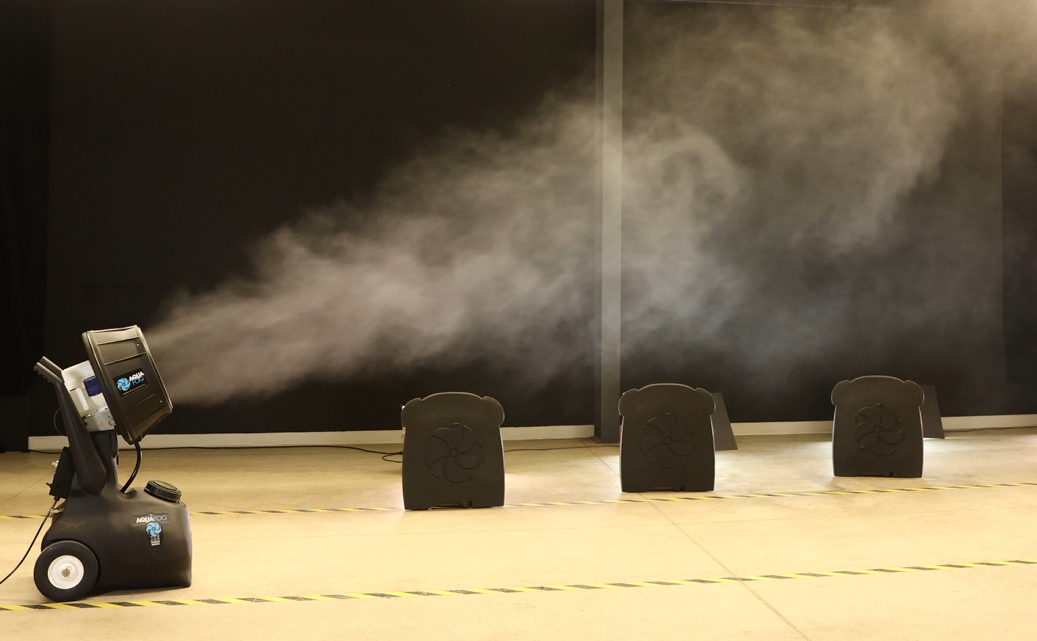 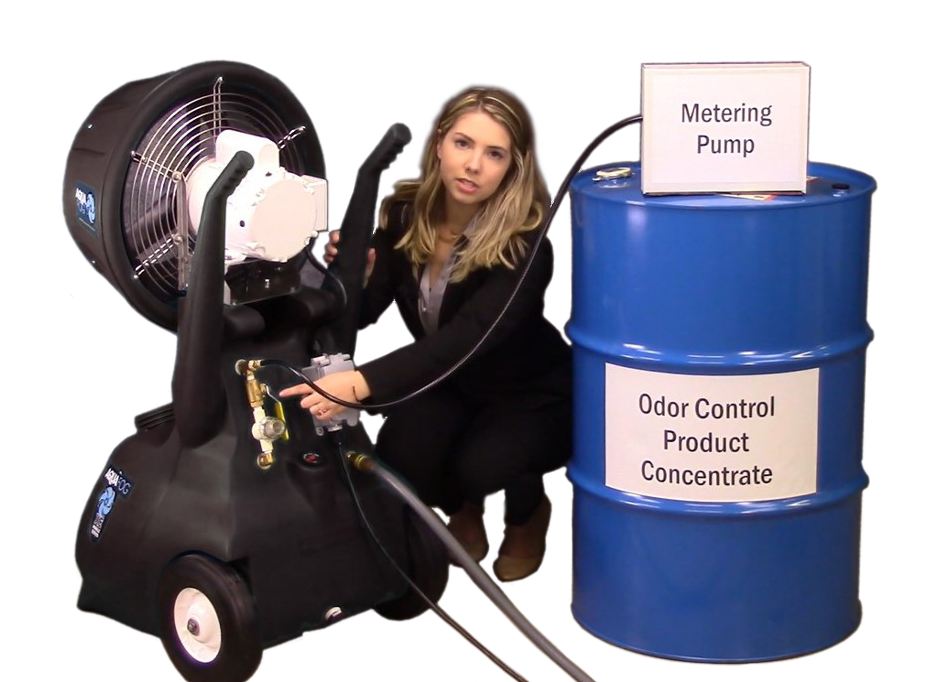 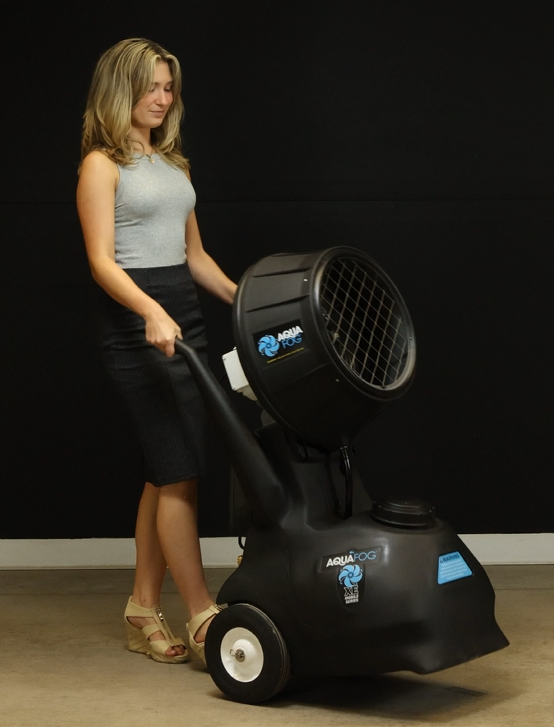 |
- Home
-
Products
- Pig Farming Equipment
- Cattle Farming Equipment
- Sheep & Goat Farming Equipment
- Poultry Farming Equipment
- Feeding & Drinking Systems
- Veterinary & Breeding Equipment
- Testing & Diagnostic Equipment
- Cleaning & Biosecurity Equipment
- Climate Control Equipment
- Livestock Weighing Equipment
- Manure & Waste Management
- Farm Transport & Handling
-
Solutions
- Pig Farm Solutions
- Dairy Farm Solutions
- Beef Cattle Farm Solutions
- Sheep & Goat Farm Solutions
- Layer Farm Solutions
- Broiler Farm Solutions
- Feeding & Drinking System Solutions
- Climate Control Solutions
- Biosecurity & Disinfection Solutions
- Manure & Waste Management
- Smart Farming Solutions
- Farm Renovation and Upgrade Solutions
- Partners
- Projects
- Resources
- News
- About Us
- Contact

Comments & Inquiries
Leave your questions or requirements below. We will reply as soon as possible.