
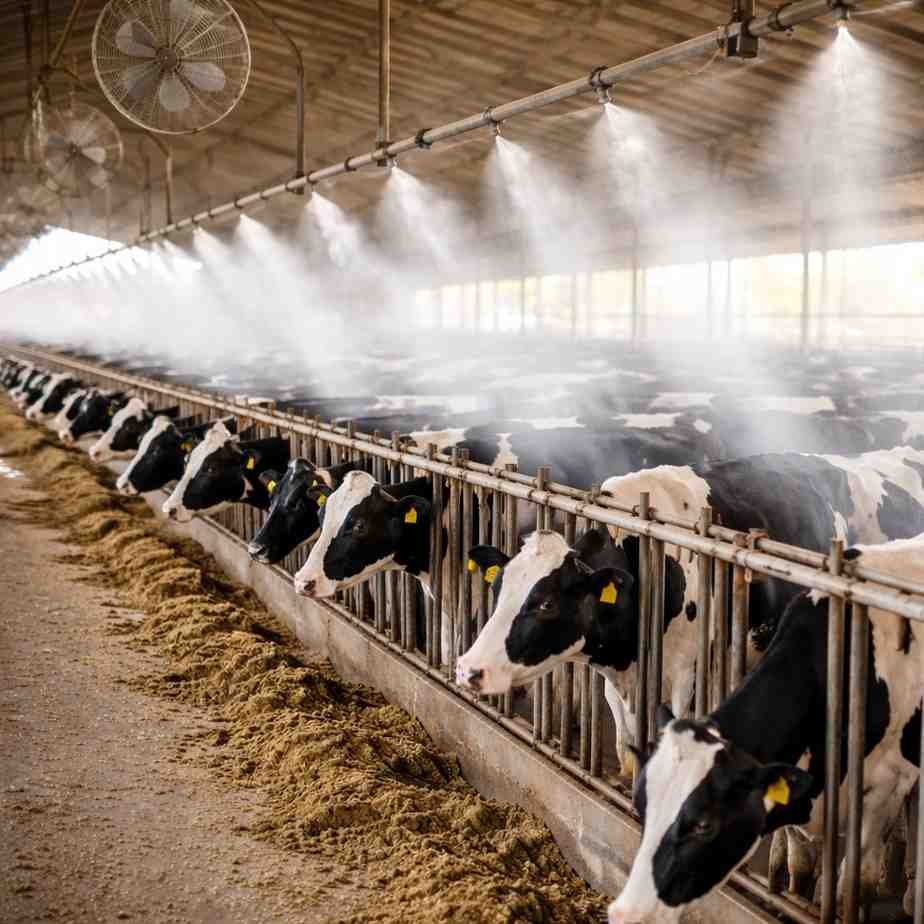
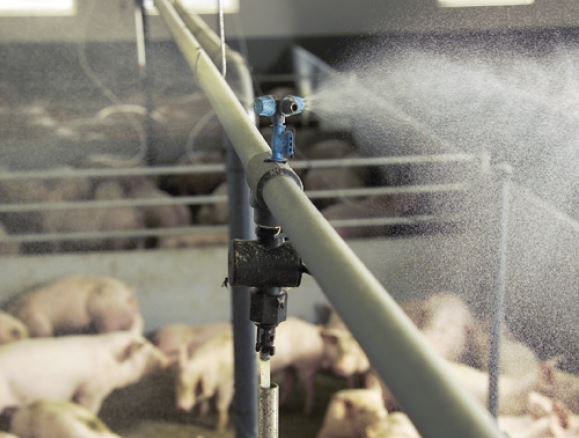
| Product Name | Poultry House Odor Control Misting System | ||||||||||||||||||||||||
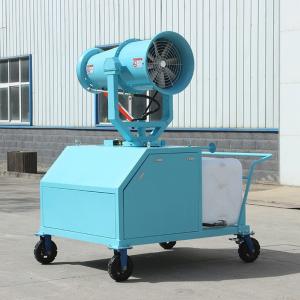
| Product Image |  |
||||||||||||||||||||||||
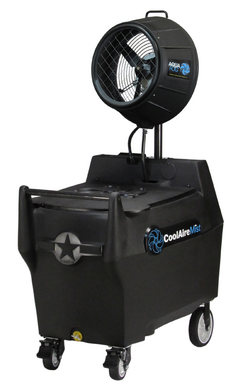
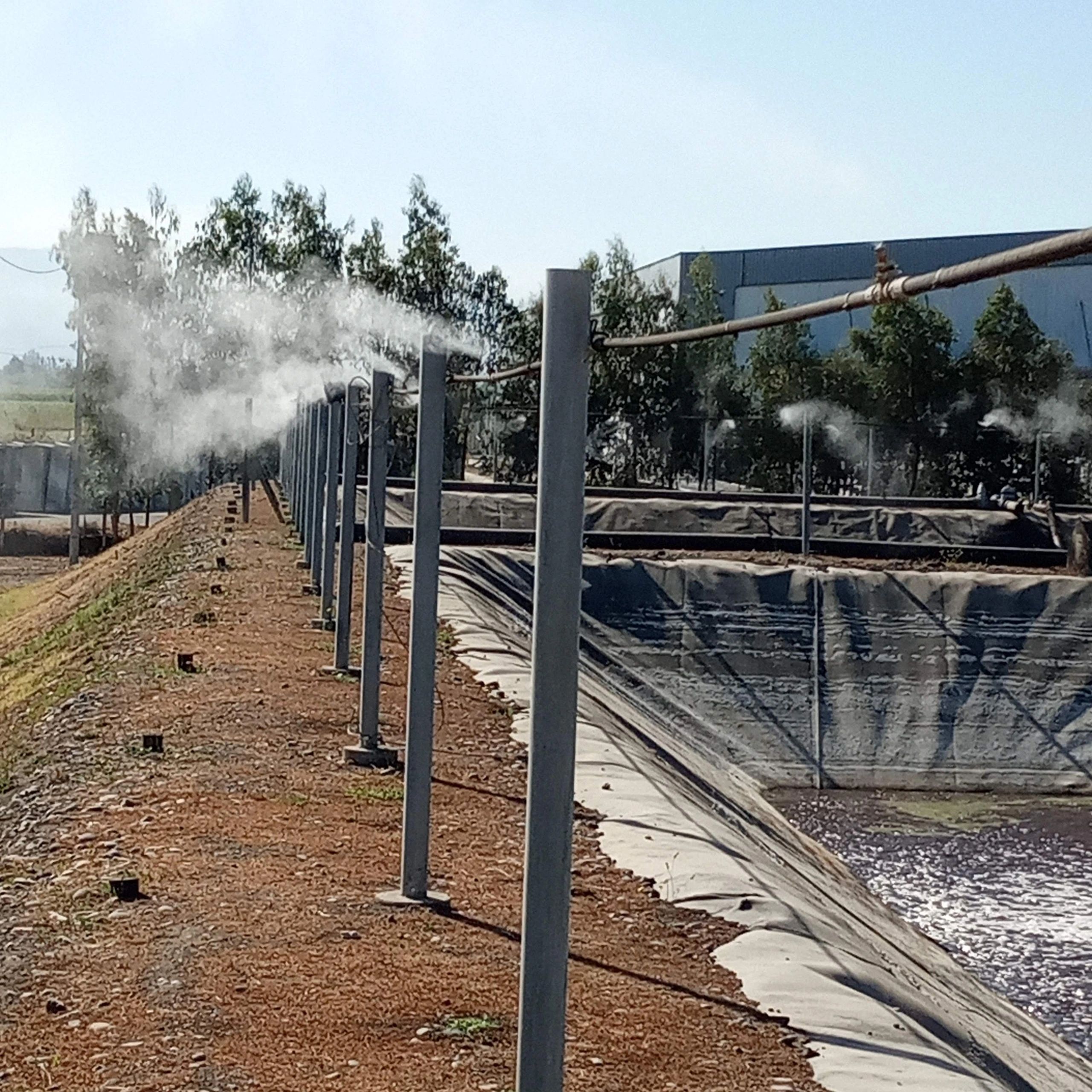
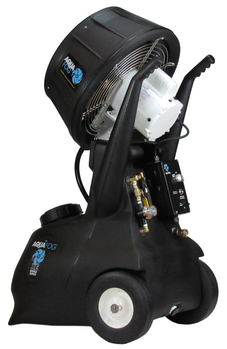
| Product Overview | The Poultry House Odor Control Misting System is a high-pressure fine-mist solution designed for broiler houses, layer houses, breeder farms, manure handling areas and other poultry production facilities where airborne odor management is required. The system uses a high-pressure pump, precision atomizing nozzles and distributed mist lines to generate very fine droplets. When used with a compatible odor-control agent, the suspended mist can contact airborne odor compounds throughout the treatment zone while minimizing unnecessary surface wetting. The system can be installed inside poultry houses, near exhaust-air discharge points, around manure handling areas or along other odor-source zones. Nozzle quantity, pipe layout, pump capacity and control strategy can be customized according to house dimensions, ventilation rate and odor-control requirements. It is suitable for new poultry farm construction, existing farm renovation and steel structure poultry buildings requiring centralized or zone-based odor management. |
||||||||||||||||||||||||
| Key Features |
|
||||||||||||||||||||||||
| Structural Components |
|
||||||||||||||||||||||||
| Working Principle | Clean water is supplied to the high-pressure pump and delivered through the distribution lines to precision atomizing nozzles. Where an odor-control product is required, a compatible dosing system introduces the agent into the water stream at the specified concentration. The nozzles convert the pressurized liquid into a dense fine mist. These small droplets remain suspended in the air and mix with the air stream inside or around the poultry house. Depending on the selected odor-control agent, the mist can help capture, bind or neutralize odor-causing compounds rather than simply covering the smell with fragrance. System operating intervals should be coordinated with poultry-house ventilation, humidity and litter conditions to avoid excessive moisture accumulation. |
||||||||||||||||||||||||
| Technical Specifications |
|
||||||||||||||||||||||||
| Applications |
|
||||||||||||||||||||||||
| Customization Options |
|
||||||||||||||||||||||||
| Installation & Maintenance | Before installation, the poultry-house dimensions, ventilation direction, odor-source locations and available water and electrical supplies should be evaluated. Nozzles should be positioned to achieve even airborne coverage while avoiding direct spraying onto sensitive electrical equipment, feed or excessively wet litter areas. Main mist lines can be mounted along ceiling structures, sidewalls or exhaust-air zones. In steel structure poultry houses, pipe supports can be coordinated with roof trusses, columns and other structural members. Routine maintenance includes checking water filters, cleaning or replacing nozzles, inspecting high-pressure fittings, checking pump oil and seals where applicable, and confirming correct operation of chemical dosing equipment. Water quality is important for reliable nozzle operation. Appropriate filtration and water-treatment options should be selected where mineral content is high. |
||||||||||||||||||||||||
| Project Cases | Poultry odor-control misting systems can be configured for both whole-house treatment and targeted odor-source control. In broiler and layer projects, high-pressure mist lines can be installed along the poultry-house ceiling or sidewall to distribute fine mist through the ventilation air stream. For farms where odor discharge is concentrated around exhaust fans, dedicated nozzle lines can be positioned close to exhaust-air outlets. Larger farms can use centralized pump stations serving multiple poultry houses or independent zones. The final design should consider house length, fan capacity, humidity, litter condition, local climate and the selected odor-control agent. |
||||||||||||||||||||||||
| Product FAQ | Q: How does the poultry odor-control misting system work? A: A high-pressure pump supplies liquid to fine atomizing nozzles, creating a suspended mist that mixes with the poultry-house air. Compatible odor-control agents can be injected into the mist when required. Q: Will the mist make the poultry house excessively wet? A: A properly engineered high-pressure system uses very fine droplets and controlled operating intervals to reduce unnecessary surface wetting. Actual performance depends on humidity, ventilation and nozzle layout. Q: Can the system be installed around exhaust fans? A: Yes. Targeted mist lines can be installed around exhaust-air areas where odor emissions are concentrated. Q: Can the system be used inside the poultry house? A: Yes. Ceiling and sidewall configurations are available, provided the operating strategy is coordinated with ventilation, litter moisture and poultry management requirements. Q: Can deodorizing chemicals be added automatically? A: Yes. Compatible odor-control agents can be introduced through an automatic dosing or injection system. Q: Can one pump serve several poultry houses? A: Centralized multi-zone systems are available according to distance, flow demand and project requirements. Q: Is the system suitable for steel structure poultry houses? A: Yes. Pipe supports, nozzle lines and equipment layout can be integrated with steel structure poultry buildings. Q: What odor-control chemical should be used? A: Only products approved for the intended poultry-farm application should be used. Chemical concentration, animal exposure and operating procedures must follow the chemical manufacturer's instructions and applicable regulations. |
||||||||||||||||||||||||
| Product Gallery | 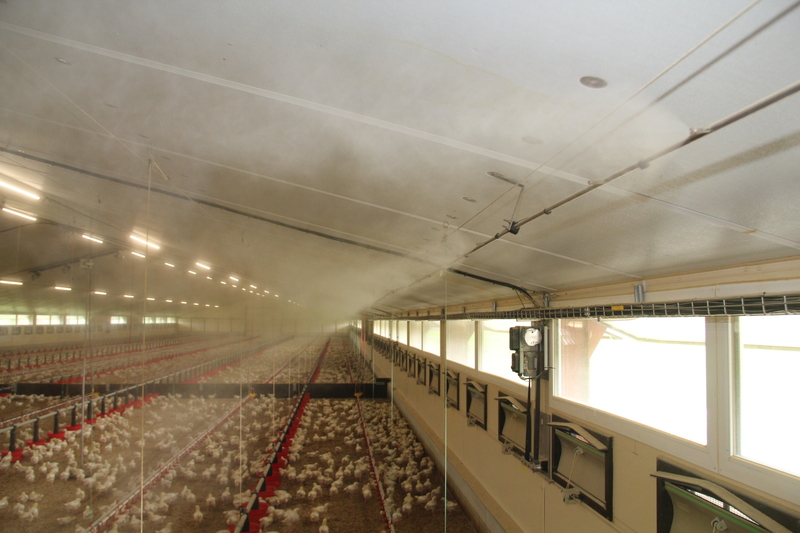 |
- Home
-
Products
- Pig Farming Equipment
- Cattle Farming Equipment
- Sheep & Goat Farming Equipment
- Poultry Farming Equipment
- Feeding & Drinking Systems
- Veterinary & Breeding Equipment
- Testing & Diagnostic Equipment
- Cleaning & Biosecurity Equipment
- Climate Control Equipment
- Livestock Weighing Equipment
- Manure & Waste Management
- Farm Transport & Handling
-
Solutions
- Pig Farm Solutions
- Dairy Farm Solutions
- Beef Cattle Farm Solutions
- Sheep & Goat Farm Solutions
- Layer Farm Solutions
- Broiler Farm Solutions
- Feeding & Drinking System Solutions
- Climate Control Solutions
- Biosecurity & Disinfection Solutions
- Manure & Waste Management
- Smart Farming Solutions
- Farm Renovation and Upgrade Solutions
- Partners
- Projects
- Resources
- News
- About Us
- Contact

Comments & Inquiries
Leave your questions or requirements below. We will reply as soon as possible.