

| Product Name | Large-Area Odor Control Fogging System | ||||||||||||||||||||||||||||
| Product Image |  |
||||||||||||||||||||||||||||
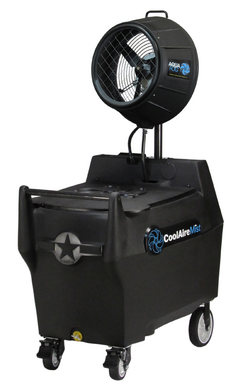
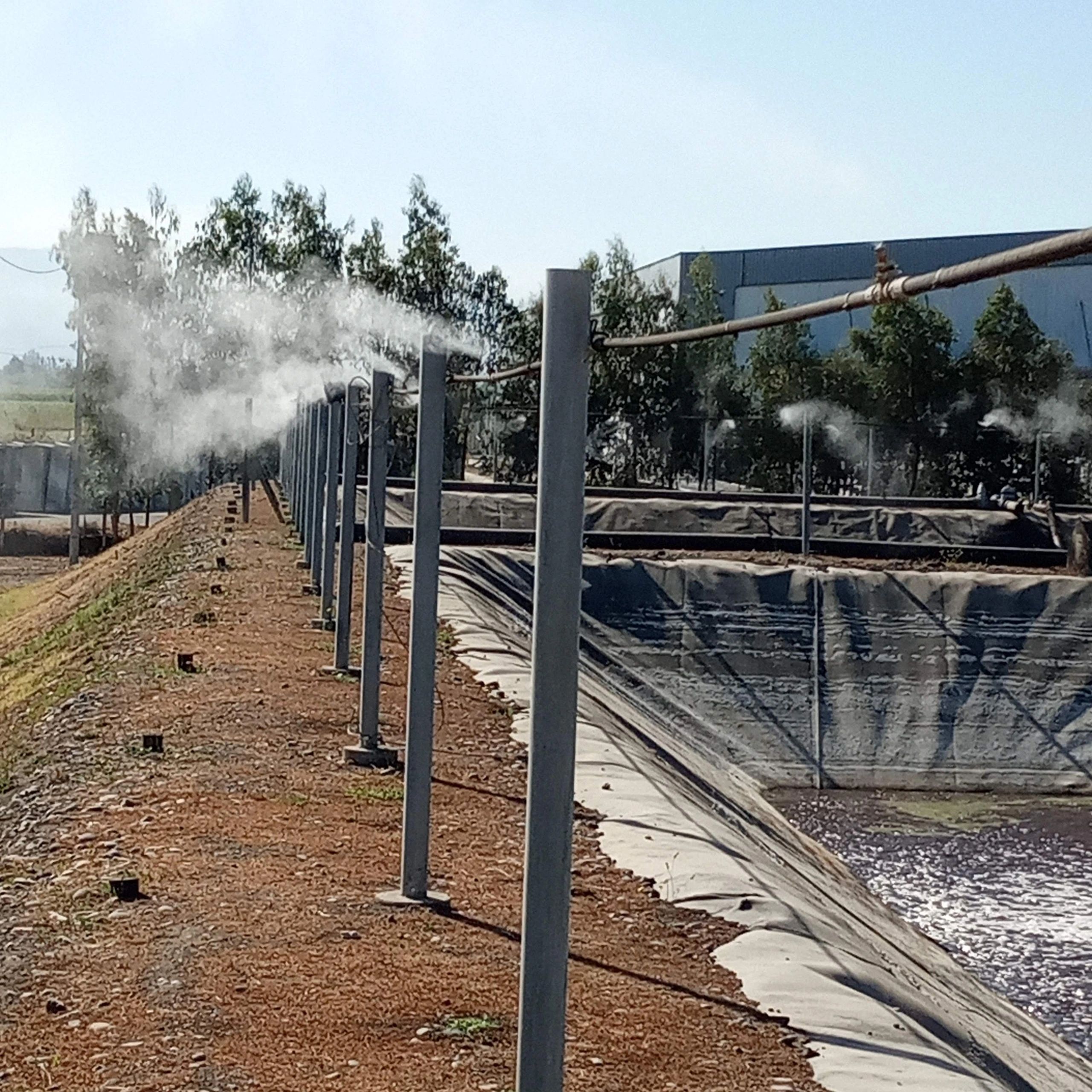
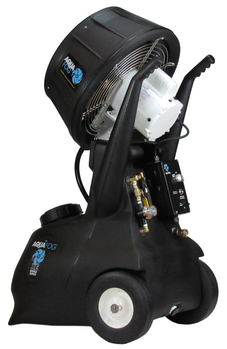
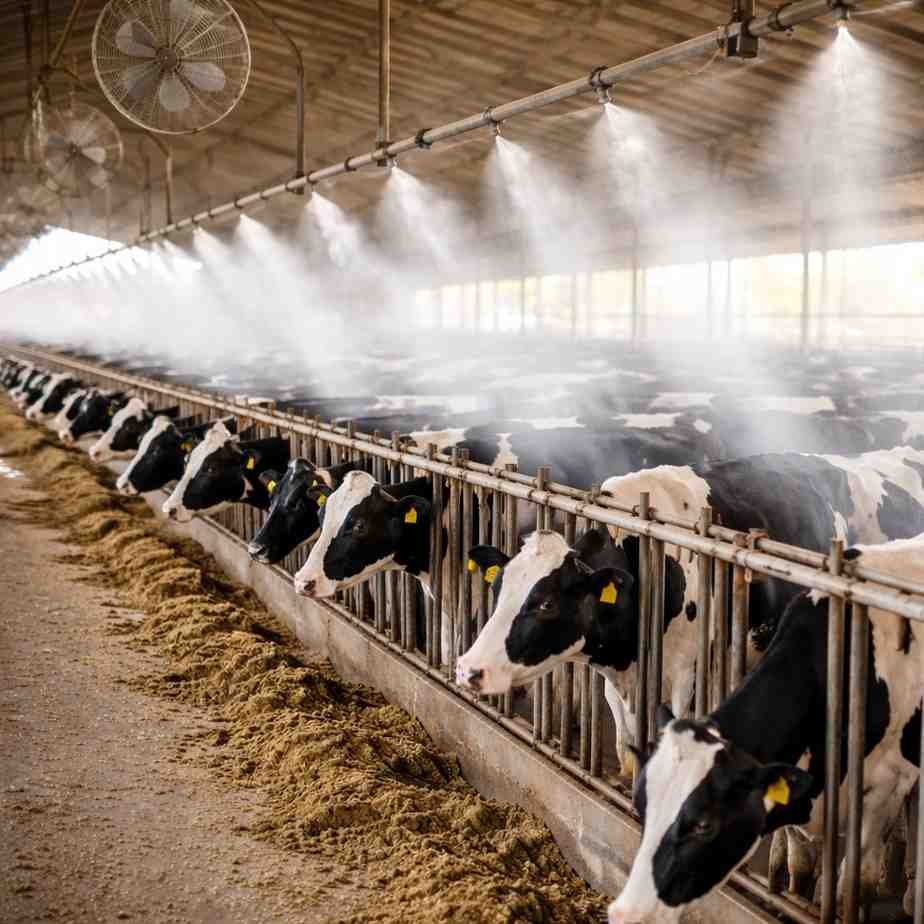
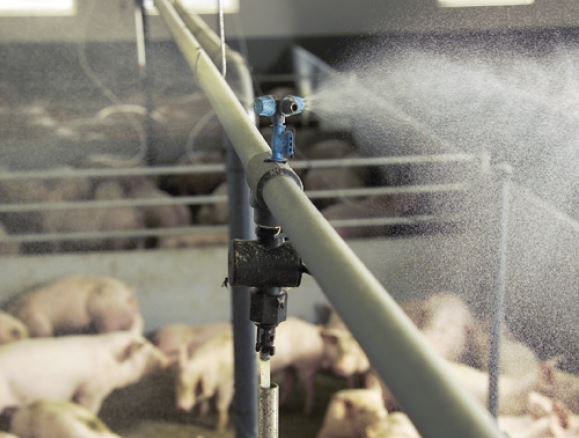
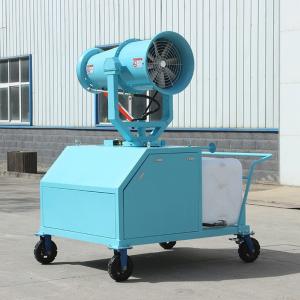
| Product Overview | The Large-Area Odor Control Fogging System is designed for wide-area dispersion of compatible odor-control and environmental treatment solutions in commercial pig farms, poultry farms, manure handling areas, livestock waste zones and agricultural processing facilities. The system atomizes a prepared treatment solution into fine airborne droplets and projects the fog into the surrounding area with strong airflow. Fine droplets provide broad dispersion while using significantly less carrier water than conventional coarse spraying methods. Depending on the selected configuration, odor-control concentrate can be introduced through a metering pump into a continuous water supply, allowing controlled chemical dosing during extended operation. Mobile configurations can be repositioned between manure storage areas, ventilation exhaust zones and other odor sources according to farm requirements. The equipment can be used as an independent mobile unit or incorporated into a livestock farm odor-management program together with ventilation, manure management and fixed perimeter misting systems. |
||||||||||||||||||||||||||||
| Key Features |
|
||||||||||||||||||||||||||||
| Structural Components |
|
||||||||||||||||||||||||||||
| Working Principle | Water or prepared treatment solution is delivered to the atomizing head by an integrated pump or continuous water supply. Where chemical injection is used, a metering pump introduces concentrated odor-control product into the water stream before atomization. The atomizing mechanism breaks the liquid into fine droplets. A high-volume airflow then projects the fog outward and distributes the treatment solution across the designated odor-control area. Fine droplets remain airborne longer than coarse spray droplets, allowing the treatment chemical to disperse through a larger air volume. Actual odor-control performance depends on the selected chemical formulation, droplet size, application rate, wind conditions, humidity, odor concentration and distance from the emission source. For livestock applications, treatment parameters should be selected according to the chemical manufacturer's instructions and farm environmental-management procedures. |
||||||||||||||||||||||||||||
| Technical Specifications |
|
||||||||||||||||||||||||||||
| Applications |
|
||||||||||||||||||||||||||||
| Customization Options |
|
||||||||||||||||||||||||||||
| Installation & Maintenance | Position the fogging system where the generated mist can intercept or disperse through the main odor plume without obstructing livestock traffic, ventilation inlets or maintenance routes. For outdoor applications, prevailing wind direction and the location of the odor source should be considered when selecting equipment position and fogging-head orientation. Where continuous chemical injection is used, the water supply, chemical drum and metering pump should be installed according to the dosing-system manufacturer's instructions. Chemical compatibility should be confirmed for tanks, pumps, seals, valves and plumbing components. Routine maintenance includes cleaning the atomizer and air intake, inspecting pumps and flow controls, checking chemical tubing, cleaning the tank, confirming low-level protection and examining wheels, electrical components and protective guards. Always follow the odor-control chemical manufacturer's dilution, handling, ventilation and livestock-exposure requirements. |
||||||||||||||||||||||||||||
| Project Cases | Large-area fogging systems are suitable for livestock projects where odor sources are distributed across manure handling, exhaust or outdoor waste-management zones. In commercial pig farm projects, mobile foggers can be positioned near manure collection areas, loading zones or ventilation exhaust points during periods when additional odor management is required. For poultry and agricultural processing facilities, fogging units can be used around waste handling or by-product areas where broad airborne treatment coverage is required. Treatment effectiveness should be evaluated according to site-specific conditions, including the odor source, ventilation pattern, wind direction, treatment chemistry and operating schedule. |
||||||||||||||||||||||||||||
| Product FAQ | Q: What is the main purpose of this fogging system? A: It is designed to disperse compatible odor-control or environmental treatment solutions as fine fog over large treatment areas. Q: Is it suitable for livestock farms? A: Yes. It can be used around pig farms, poultry farms, manure handling areas, livestock exhaust zones and other agricultural odor sources. Q: Can concentrated odor-control chemicals be used? A: A metering pump can be integrated to inject compatible concentrate into the water stream at a controlled ratio. Q: Can the unit operate continuously? A: Continuous or extended operation is possible when suitable water supply, chemical dosing and control systems are provided. Q: Is the fog output adjustable? A: Yes. Flow-control arrangements can be used to adjust liquid output according to application requirements. Q: Does the equipment use high-pressure spray nozzles? A: Centrifugal atomizer configurations are available that generate fine fog without conventional high-pressure nozzle systems. Q: Can the unit be used outdoors? A: Outdoor configurations are available, but wind speed and direction should be considered because they directly affect fog distribution. Q: Can stainless steel plumbing be supplied? A: Yes. Stainless steel plumbing is available for compatible corrosive chemical applications according to project requirements. |
||||||||||||||||||||||||||||
| Product Gallery | 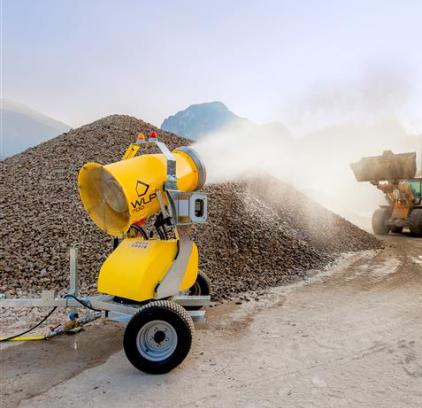 |
- Home
-
Products
- Pig Farming Equipment
- Cattle Farming Equipment
- Sheep & Goat Farming Equipment
- Poultry Farming Equipment
- Feeding & Drinking Systems
- Veterinary & Breeding Equipment
- Testing & Diagnostic Equipment
- Cleaning & Biosecurity Equipment
- Climate Control Equipment
- Livestock Weighing Equipment
- Manure & Waste Management
- Farm Transport & Handling
-
Solutions
- Pig Farm Solutions
- Dairy Farm Solutions
- Beef Cattle Farm Solutions
- Sheep & Goat Farm Solutions
- Layer Farm Solutions
- Broiler Farm Solutions
- Feeding & Drinking System Solutions
- Climate Control Solutions
- Biosecurity & Disinfection Solutions
- Manure & Waste Management
- Smart Farming Solutions
- Farm Renovation and Upgrade Solutions
- Partners
- Projects
- Resources
- News
- About Us
- Contact

Comments & Inquiries
Leave your questions or requirements below. We will reply as soon as possible.