

| Product Name | Poultry House Air Purification System | ||||||||||||||||||||||||||
| Product Image | 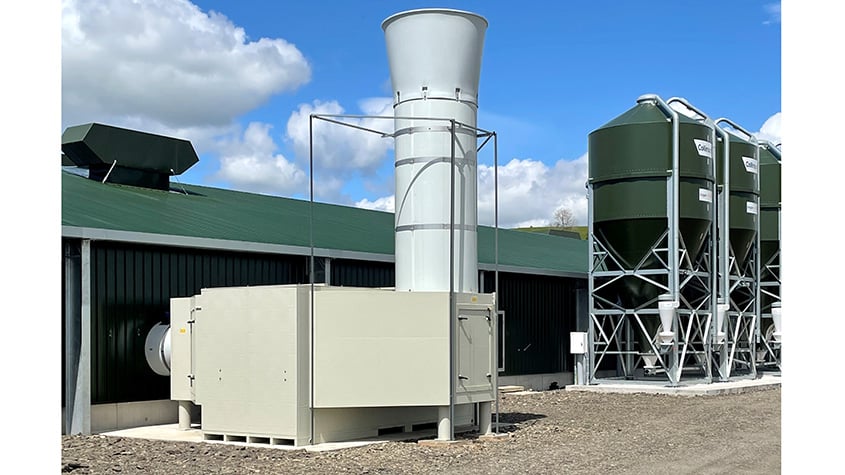 |
||||||||||||||||||||||||||
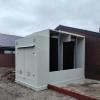
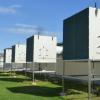
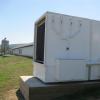
| Product Overview | The Poultry House Air Purification System is an exhaust-air treatment solution designed for commercial broiler houses, breeder farms, layer facilities and other intensive poultry production buildings. The system is integrated with the poultry house ventilation network so that contaminated exhaust air passes through a dedicated cleaning section before being discharged outdoors. Depending on the selected configuration, dust particles, ammonia and odor-related compounds can be reduced through filtration, water washing or chemical scrubbing. A typical wet-scrubber configuration uses a large-surface packing element that is continuously sprayed with process water. Exhaust air is forced through the wetted media, allowing airborne contaminants to transfer from the air stream into the washing liquid. The system can be engineered for new poultry house construction, steel structure farm buildings and renovation projects according to ventilation capacity, bird population, emission requirements and local environmental regulations. |
||||||||||||||||||||||||||
| Key Features |
|
||||||||||||||||||||||||||
| Structural Components |
|
||||||||||||||||||||||||||
| Working Principle | Poultry-house ventilation fans collect contaminated exhaust air containing dust, ammonia and odor-related compounds and direct it toward the air purification system. Inside a wet-scrubber configuration, the exhaust air passes through a packing or filter element that is continuously sprayed with process water. Dust is captured by the wet surfaces, while water-soluble gaseous compounds are transferred into the washing liquid. Where chemical ammonia removal is required, the process water can be maintained at an appropriate operating condition using a controlled dosing system. The reference Pollo-M technology uses acidified process water and a horizontally arranged packing element to increase the available contact area. A droplet separator removes entrained moisture before the treated exhaust air is released through the exhaust outlet or stack. Process water is collected, monitored and recirculated according to the system design. |
||||||||||||||||||||||||||
| Technical Specifications |
|
||||||||||||||||||||||||||
| Applications |
|
||||||||||||||||||||||||||
| Customization Options |
|
||||||||||||||||||||||||||
| Installation & Maintenance | The air purification system should be engineered together with the poultry-house ventilation system. Exhaust fan capacity, duct dimensions, air resistance, treatment capacity and discharge arrangement should be evaluated before equipment selection. For new steel structure poultry houses, the exhaust-air collection chamber, scrubber foundation, water supply, drainage, electrical connections and service access can be incorporated during the building design stage. Routine maintenance includes inspecting and cleaning filter media, spray nozzles and droplet separators; checking circulation pumps and chemical dosing systems; removing accumulated solids; and monitoring process-water condition. Access doors and service passages should remain unobstructed so operators can inspect pumps, sensors, filter sections and drainage components conveniently. Where chemical treatment is used, chemical handling, storage and dosing must follow the chemical supplier's safety instructions and applicable local regulations. |
||||||||||||||||||||||||||
| Project Cases | Poultry-house air cleaning systems are commonly used where farms must manage ammonia, dust and odor emissions while maintaining the ventilation rates required for intensive poultry production. In commercial broiler projects, exhaust air can be collected centrally and pushed through a wet or chemical scrubber before discharge. The reference Pollo-M system uses a single-stage chemical scrubbing process specifically designed for broiler production. Independent DLG testing reported ammonia separation of 91% and total dust separation of 87% for the tested Pollo-M installation. Actual performance of a SHEWUYOU project depends on equipment configuration, airflow, farm conditions, maintenance and operating parameters. Larger poultry farms can use modular treatment sections designed around maximum summer ventilation capacity and applicable local emission standards. |
||||||||||||||||||||||||||
| Product FAQ | Q: What pollutants can the poultry air purification system reduce? A: Depending on the selected technology, the system can reduce ammonia, total dust, fine dust and odor-related emissions from poultry-house exhaust air. Q: How is contaminated poultry-house air treated? A: Exhaust air is collected by the ventilation system and passed through filter or scrubber media. Wet configurations continuously spray the media so contaminants can be captured or transferred into the process water. Q: Is the system suitable for broiler houses? A: Yes. Chemical air scrubbers are used specifically in commercial broiler production for ammonia and dust emission control. Q: Can the system handle the full ventilation airflow of a poultry house? A: Yes, provided the system is correctly sized. Airflow capacity, filter area, fan performance and pressure loss should be calculated according to the project. Q: Can it be integrated into a new steel structure poultry house? A: Yes. Exhaust ducts, scrubber chambers, foundations, water connections and drainage can be planned together with the poultry-house construction. Q: Is automatic chemical dosing available? A: Yes. Chemical dosing and process-water control can be integrated where required by the selected treatment technology. Q: Can operating data be recorded? A: Yes. Monitoring, data logging and remote-control functions are available according to the control configuration. Q: Are system dimensions fixed? A: No. The system can be customized according to poultry-house capacity, ventilation airflow, building layout and local emission requirements. |
||||||||||||||||||||||||||
| Product Gallery |  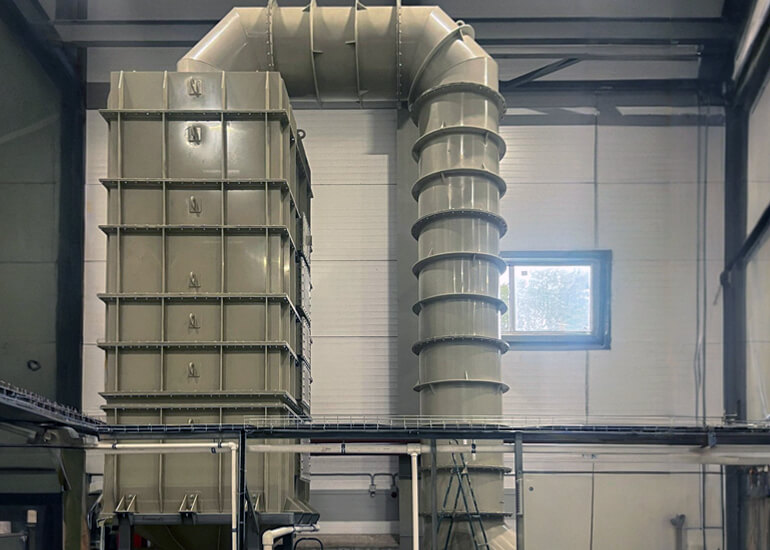 |
- Home
-
Products
- Pig Farming Equipment
- Cattle Farming Equipment
- Sheep & Goat Farming Equipment
- Poultry Farming Equipment
- Feeding & Drinking Systems
- Veterinary & Breeding Equipment
- Testing & Diagnostic Equipment
- Cleaning & Biosecurity Equipment
- Climate Control Equipment
- Livestock Weighing Equipment
- Manure & Waste Management
- Farm Transport & Handling
-
Solutions
- Pig Farm Solutions
- Dairy Farm Solutions
- Beef Cattle Farm Solutions
- Sheep & Goat Farm Solutions
- Layer Farm Solutions
- Broiler Farm Solutions
- Feeding & Drinking System Solutions
- Climate Control Solutions
- Biosecurity & Disinfection Solutions
- Manure & Waste Management
- Smart Farming Solutions
- Farm Renovation and Upgrade Solutions
- Partners
- Projects
- Resources
- News
- About Us
- Contact

Comments & Inquiries
Leave your questions or requirements below. We will reply as soon as possible.