

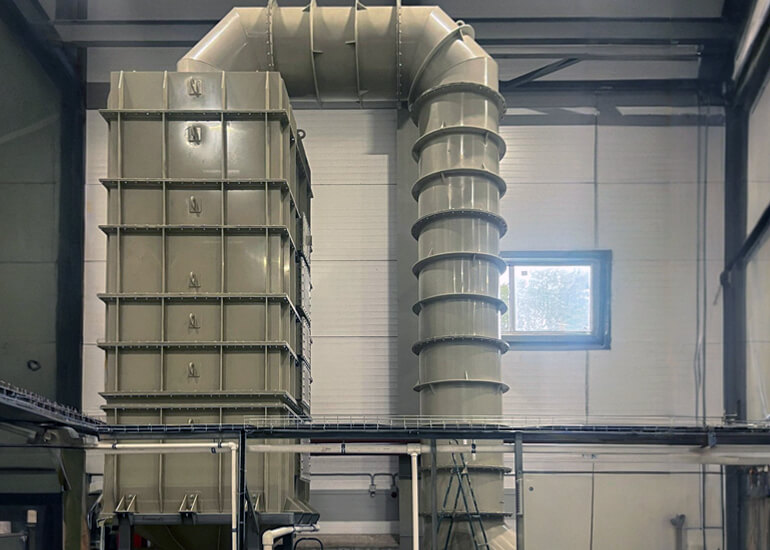
| Product Name | Poultry House Dust Air Filter | ||||||||||||||||||||||||
| Product Image | 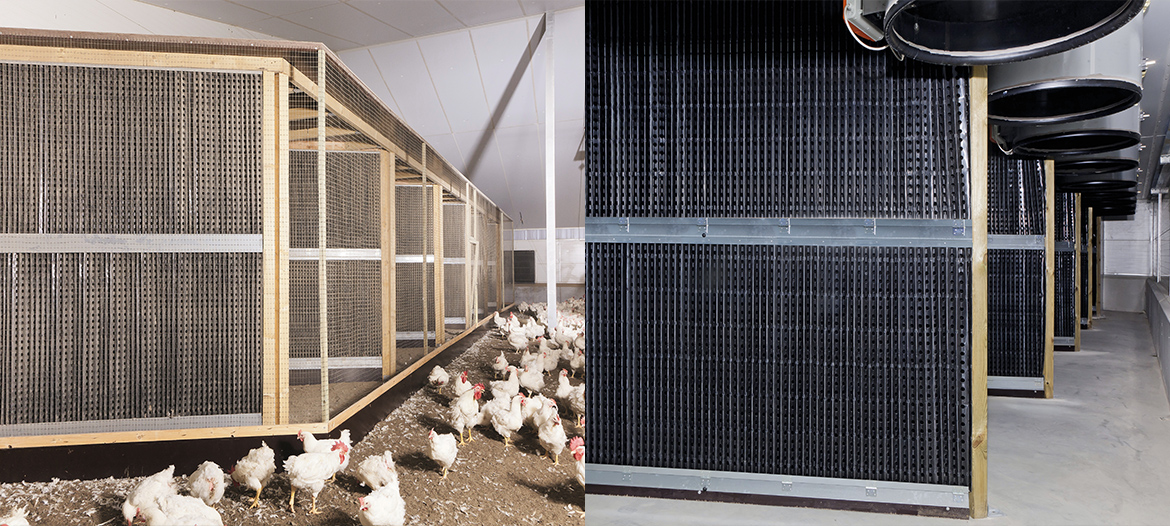 |
||||||||||||||||||||||||
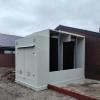
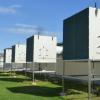
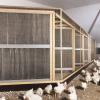
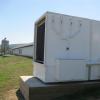
| Product Overview | The Poultry House Dust Air Filter is a modular dry air-cleaning system designed for mechanically ventilated broiler houses, layer houses, pullet houses, breeder facilities and other commercial poultry buildings with high airborne dust loads. The system is typically installed between the poultry production area and the exhaust ventilation section. Specially shaped filter elements force the outgoing air to change direction rapidly. Due to centrifugal force and particle inertia, a portion of the dust is separated from the airflow and collected inside dedicated sedimentation areas. Unlike wet air scrubbers, the dry filtration process does not require continuous process water. This simplifies installation and daily operation while making the system suitable for poultry farms seeking a practical solution for reducing dust emissions. The modular structure can be adapted to poultry house width, ventilation capacity and exhaust fan arrangement, making it suitable for both new steel structure poultry buildings and renovation projects. |
||||||||||||||||||||||||
| Key Features |
|
||||||||||||||||||||||||
| Structural Components |
|
||||||||||||||||||||||||
| Working Principle | Poultry house exhaust fans draw dust-laden air toward the filter bank. The internal geometry of the filter forces the airflow to make a series of rapid directional changes. Larger and heavier dust particles cannot follow these changes as easily as the air itself. Centrifugal force and particle inertia therefore cause part of the airborne dust to separate from the airflow. The separated particles move into V-shaped or similar sedimentation chambers located outside the primary airflow path. This arrangement provides dust-storage capacity without immediately blocking the main air passages. The filtered exhaust air then continues toward the poultry house exhaust fans and is discharged from the building. Filter area, ventilation rate, air velocity and pressure loss must be considered together during poultry house ventilation design to maintain the required environmental conditions for the birds. |
||||||||||||||||||||||||
| Technical Specifications |
|
||||||||||||||||||||||||
| Applications |
|
||||||||||||||||||||||||
| Customization Options |
|
||||||||||||||||||||||||
| Installation & Maintenance | The dust filter should be incorporated into the poultry house mechanical exhaust-air system. Filter area must be selected according to the maximum ventilation rate, allowable air velocity and acceptable pressure loss. For new poultry farm construction, the filter chamber, exhaust fans, maintenance corridors and steel support structure can be designed together to provide efficient airflow and convenient service access. The filter bank should be inspected regularly for dust accumulation, mechanical damage and abnormal airflow resistance. Accumulated dust should be removed according to the maintenance schedule and farm biosecurity procedures. Differential pressure across the filtration section should be monitored where required. Excessive dust accumulation can increase resistance and affect poultry-house ventilation performance. Cleaning frequency depends on bird type, stocking density, litter condition, ventilation rate, production stage and airborne dust concentration. |
||||||||||||||||||||||||
| Project Cases | Dry dust filter systems are particularly suitable for mechanically ventilated poultry farms where reducing particulate emissions is an important environmental or project requirement. In broiler and layer projects, a modular filter wall can be installed upstream of centralized exhaust fans. Dust-laden house air passes through the filter elements before leaving the building, reducing the amount of particulate matter discharged with the exhaust air. Professional poultry dry-filter systems using this operating principle have demonstrated total dust separation rates of up to approximately 70% under measured conditions. Actual performance depends on filter configuration, airflow rate, maintenance condition and poultry-house operating conditions. The modular design allows the filtration area to be matched to different house capacities and can be incorporated into both new poultry farm construction and suitable renovation projects. |
||||||||||||||||||||||||
| Product FAQ | Q: What type of poultry house is this dust filter designed for? A: It is primarily intended for mechanically ventilated poultry buildings such as broiler, layer, breeder and pullet houses. Q: How does the filter separate dust? A: The specially shaped filter elements force the air to change direction rapidly. Centrifugal force and particle inertia separate a portion of the dust from the airflow. Q: Does the system require water? A: No. It is a dry filtration system and does not require continuous process water for normal dust separation. Q: What dust separation efficiency can be achieved? A: Comparable professional systems using this technology have achieved total dust separation rates of up to approximately 70% under measured operating conditions. Q: Will the filter affect poultry house ventilation? A: Any air filter introduces additional resistance. Filter area and exhaust fans therefore need to be selected together so that the required poultry-house ventilation capacity is maintained. Q: Can the filter wall be customized? A: Yes. Filter area, number of modules, support frame and exhaust-air layout can be designed according to project requirements. Q: Can it be used in an existing poultry house? A: Yes, provided the existing exhaust ventilation arrangement, available space and fan capacity are suitable for the additional filtration system. Q: How often should the filter be cleaned? A: Cleaning frequency depends on dust load, ventilation rate, bird type and production conditions. Routine inspection and pressure monitoring are recommended. |
||||||||||||||||||||||||
| Product Gallery | 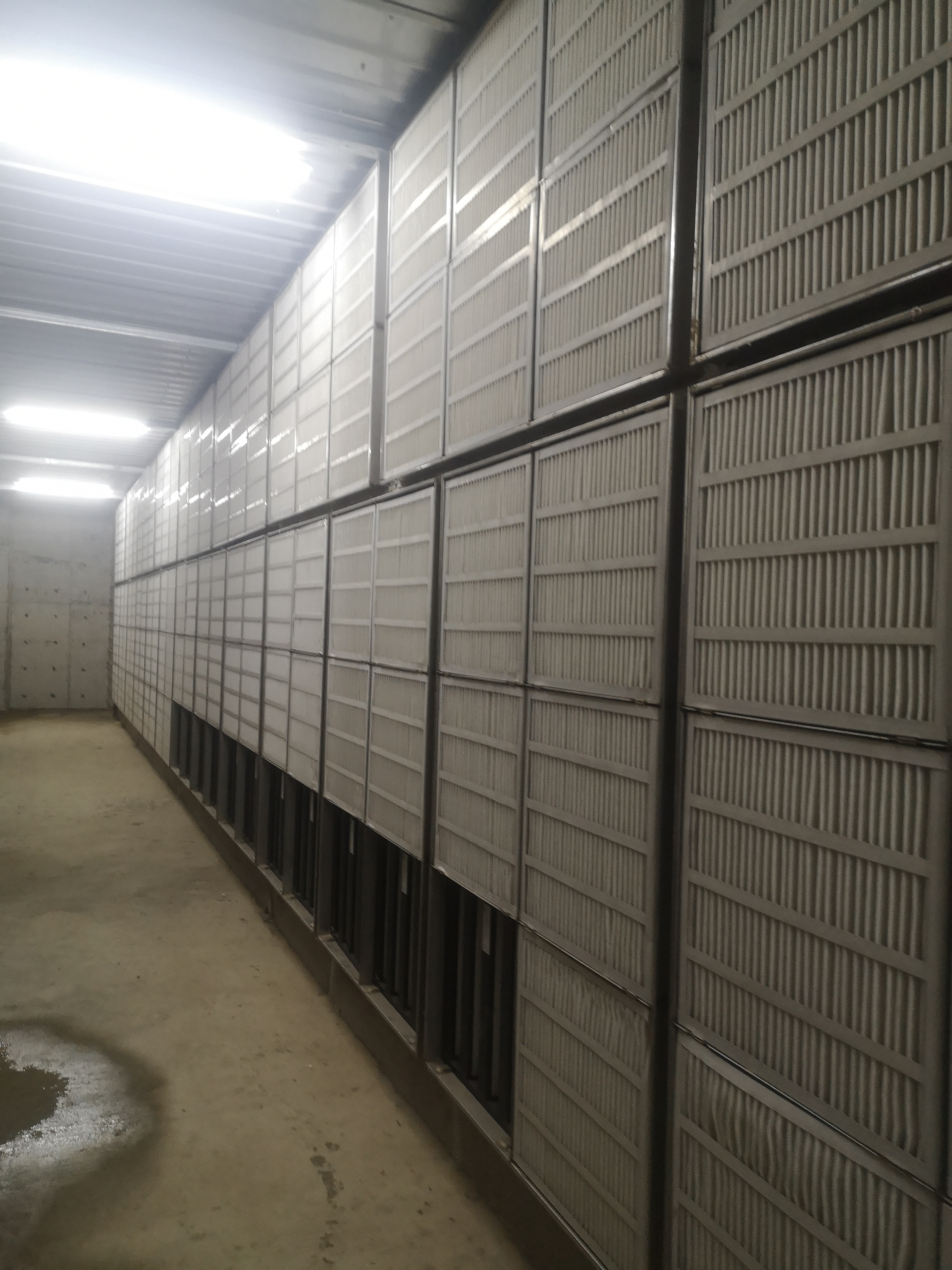  |
- Home
-
Products
- Pig Farming Equipment
- Cattle Farming Equipment
- Sheep & Goat Farming Equipment
- Poultry Farming Equipment
- Feeding & Drinking Systems
- Veterinary & Breeding Equipment
- Testing & Diagnostic Equipment
- Cleaning & Biosecurity Equipment
- Climate Control Equipment
- Livestock Weighing Equipment
- Manure & Waste Management
- Farm Transport & Handling
-
Solutions
- Pig Farm Solutions
- Dairy Farm Solutions
- Beef Cattle Farm Solutions
- Sheep & Goat Farm Solutions
- Layer Farm Solutions
- Broiler Farm Solutions
- Feeding & Drinking System Solutions
- Climate Control Solutions
- Biosecurity & Disinfection Solutions
- Manure & Waste Management
- Smart Farming Solutions
- Farm Renovation and Upgrade Solutions
- Partners
- Projects
- Resources
- News
- About Us
- Contact

Comments & Inquiries
Leave your questions or requirements below. We will reply as soon as possible.