| Product Showcase |
Content |
| Product Name |
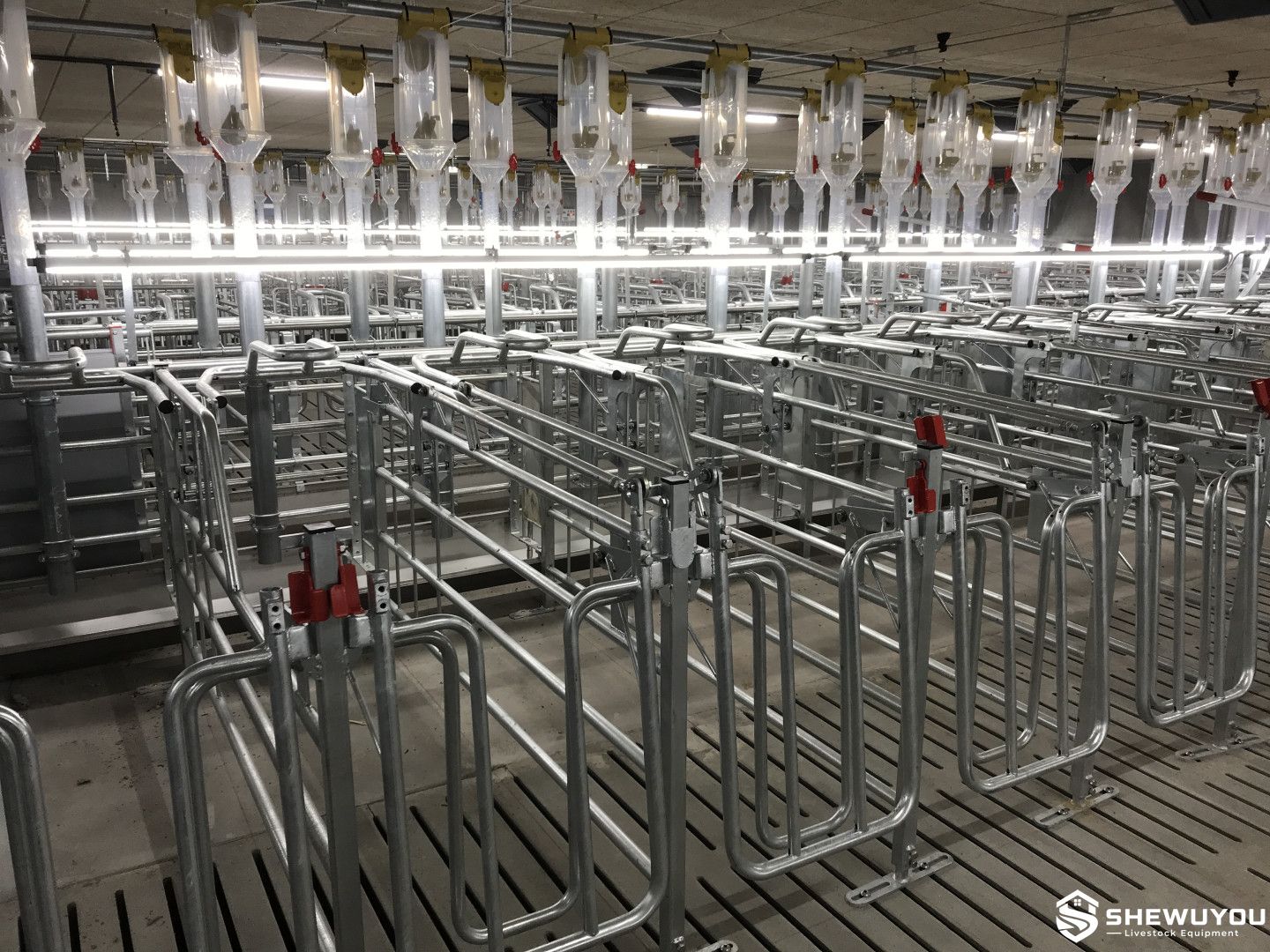
Sow Mating & Insemination Stall
|
| Product Image |
|
| Product Overview |
The Sow Mating & Insemination Stall is a specialized pig breeding housing system designed to provide controlled, accessible and efficient working conditions during estrus detection, artificial insemination, pregnancy inspection and early breeding management.
Unlike a conventional permanently restrictive sow crate, a modern mating stall can be configured as part of a free-access or group-housing system. The sow can enter the individual station when required, while the locking mechanism allows farm personnel to secure selected animals for insemination, veterinary inspection, feeding or other management procedures.
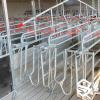
The open-frame layout provides convenient access to the sow during insemination and supports boar stimulation while helping maintain separation between neighboring animals. Stall width, locking configuration, feeding system, water supply, flooring and row layout can be customized for commercial breeding farms, nucleus farms and integrated pig production projects.
|
| Key Features |
- Efficient Insemination Access: Open structural areas provide convenient access to the sow for artificial insemination, heat detection and reproductive inspection.
- Flexible Sow Movement: The system can allow sows to enter and leave individual stations according to the selected housing and management configuration.
- Controlled Locking: Individual stalls or multiple stalls can be secured according to breeding, feeding or inspection requirements.
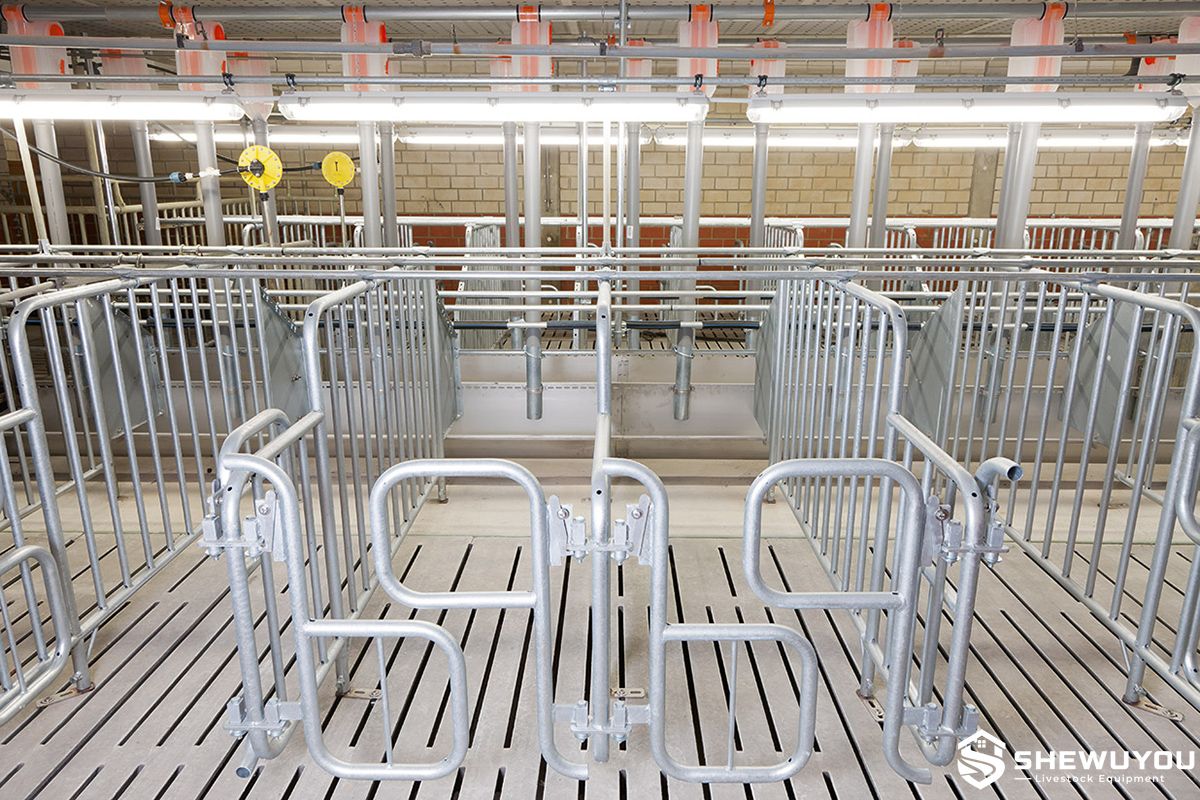
- Easy Status Identification: High-visibility locking handles or indicators can help workers identify locked and unlocked stations from the service aisle.
- Improved Workflow: Stall arrangement can allow technicians to work with adjacent sows from one service position, reducing unnecessary movement during insemination procedures.
- Sow Safety: Properly spaced rails and controlled entrance geometry help reduce the risk of animals becoming trapped between structural components.
- Reduced Group Disturbance: Selected animals can be temporarily controlled without unnecessarily reorganizing the entire sow group.
- Durable Construction: Galvanized steel structures and corrosion-resistant fastening components are available for demanding commercial pig-house environments.
- Individual Feeding Compatibility: Suitable for feed dispensers, troughs and automatic dry feeding systems.
- Water System Integration: Drinking nipples, drinking bowls and centralized water pipelines can be incorporated.
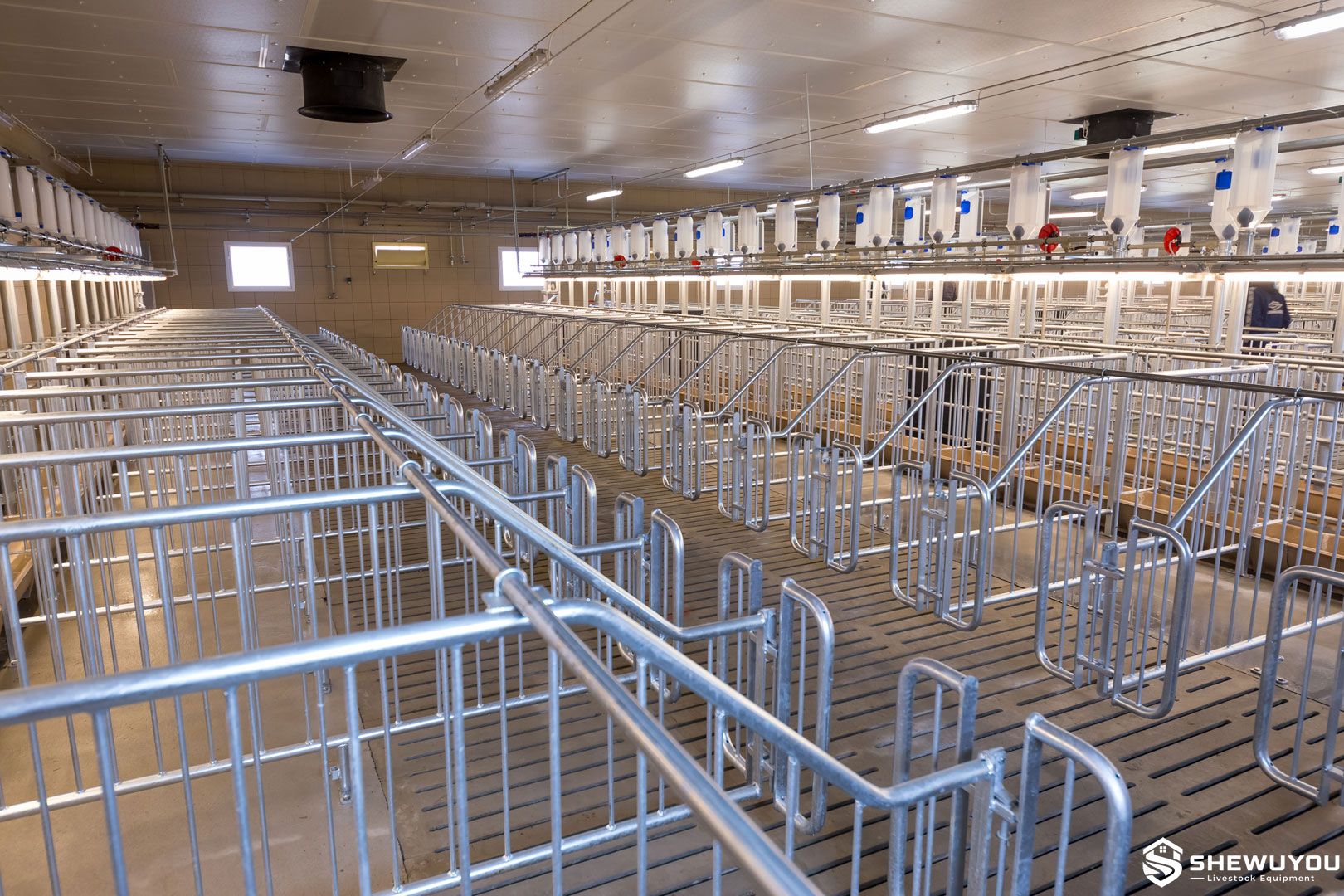
- Modular Installation: Repetitive stall modules simplify layout planning and installation in large breeding units.
- New-Build & Retrofit Applications: Suitable for new steel structure pig houses and renovation of existing breeding barns.
|
| Structural Components |
| Side Partitions |
Tubular steel partitions defining the individual sow station and separating adjacent animals. |
| Entrance Gate |
Self-closing, controlled-access or project-specific gate system according to farm management requirements. |
| Locking Mechanism |
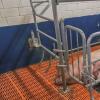
Individual, centralized, manual or pneumatic locking configurations available according to project requirements. |
| Visual Lock Indicator |
High-visibility operating handle or indicator for quick identification of stall status from the aisle. |
| Structural Posts |
Heavy-duty posts and supports maintaining alignment and stability throughout the stall row. |
| Feeding Equipment |
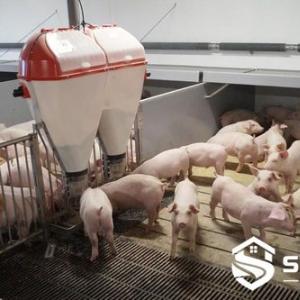
Individual troughs, feed dispensers, drop pipes and automatic dry feeding equipment as required. |
| Water Supply |
Centralized water pipelines with nipple drinkers, bowls or other sow drinking equipment. |
| Floor Fixings |
Base plates, brackets, anchors and corrosion-resistant fasteners according to the floor structure. |
|
| Working Principle / Structural Principle |
The stall creates an individual breeding station within a sow mating or gestation unit. The sow enters through the controlled gate and is positioned between two steel side partitions. The geometry of the entrance and locking system is designed to provide controlled access while preventing two animals from entering the same station simultaneously in compatible free-access configurations.
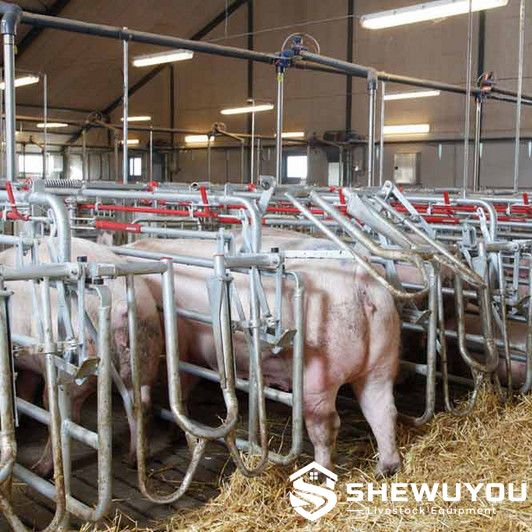
During heat detection or artificial insemination, selected stalls can be locked so that breeding technicians can work safely and efficiently around the sow. Open structural areas provide access for back-pressure stimulation, insemination procedures, ultrasound examination and routine health checks.
After the required procedure, the station can be unlocked according to the farm's management program. Centralized systems can control multiple stations together, while individual locking allows specific sows to remain temporarily secured.
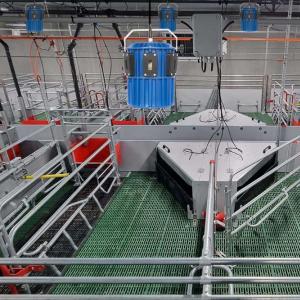
Feed dispensers can deliver controlled portions into individual feeding areas, while water lines provide drinking access. The complete stall system can be coordinated with slatted flooring, manure channels, service aisles and automatic feeding systems within the breeding barn.
|
| Technical Specifications |
| Product Type |
Sow mating and artificial insemination stall |
| Primary Application |
Estrus detection, insemination, breeding management and early gestation handling |
| Reference Stall Widths |
500 / 550 / 600 / 650 / 700 mm center-to-center configurations are available for comparable systems |
| Overall Length |
Customizable according to sow size and project requirements |
| Overall Height |
According to project requirements |
| Frame Material |
Galvanized steel or equivalent corrosion-resistant livestock housing material |
| Locking Mode |
Individual or centralized locking according to project requirements |
| Operating Mode |
Manual or pneumatic operation available upon request |
| Reference Central Control |
Comparable configurations can operate groups of up to approximately 30 stalls from one central opening system |
| Feeding Compatibility |
Individual troughs, feed dispensers and automatic dry feeding systems |
| Drinking System |
Nipple drinker, drinking bowl or centralized sow water supply |
| Flooring Compatibility |
Concrete slats, solid/slatted combinations or project-specific flooring systems |
| Installation Type |
Modular row installation |
| Customization |
According to project requirements |
|
| Applications |
- Commercial sow breeding farms
- Sow mating and insemination units
- Artificial insemination centers within pig farms
- Weaned sow breeding sections
- Early gestation management units
- Nucleus and genetic breeding farms
- Multiplier sow farms
- Large integrated pig production groups
- Free-access sow housing systems
- Prefabricated steel structure pig houses
- Existing breeding-barn renovation projects
- Turnkey commercial pig farm projects
|
| Customization Options |
The system can be engineered according to sow genetics, body size, breeding protocol, group-housing strategy, barn dimensions, feeding system and local farm management requirements.
- Stall width and overall dimensions
- Side partition geometry
- Individual or centralized locking
- Manual locking system
- Pneumatic central opening system
- High or low locking configuration
- Gate dimensions and opening direction
- Visual lock indicators
- Galvanized steel specifications
- Stainless steel components
- Sow feeding troughs
- Automatic feed dispensers
- Dry feeding line integration
- Nipple or bowl drinking equipment
- Boar contact and stimulation aisle arrangement
- Concrete or slatted flooring integration
- Service aisle width and access arrangement
- New-build or retrofit installation
|
| Installation & Maintenance |
Installation Process:
- Confirm breeding-barn dimensions, sow quantity, group size, feeding system, service aisles and manure-management layout.
- Select stall width and row arrangement according to sow genetics and operating requirements.
- Mark partition, gate, post and feeding-equipment positions according to installation drawings.
- Install floor anchors, support posts and side partition assemblies.
- Install entrance gates and individual or centralized locking components.
- Install manual control or pneumatic operating equipment where specified.
- Install feeding troughs, feed dispensers, drinking lines and related pig housing equipment.
- Align the complete row and check all gates, locking mechanisms and clearances before commissioning.
Maintenance Recommendations:
- Clean and disinfect the stall system according to the farm biosecurity program.
- Inspect locking mechanisms, handles, hinges and gates regularly.
- Check central opening rods, pneumatic components and actuators where installed.
- Inspect anchors, bolts, brackets and structural connections for looseness.
- Check galvanized surfaces for damage, particularly near the floor and manure-exposed areas.
- Keep feed dispensers, troughs, water lines and drinkers clean and functional.
- Replace bent, worn or damaged components promptly.
- Test locking and release functions before introducing a new group of sows.
|
| Product FAQ |
Q1: What is a Sow Mating & Insemination Stall used for?
It provides controlled working conditions for heat detection, artificial insemination, reproductive inspection, feeding and early breeding management of sows.
Q2: Can the sow enter and leave the stall freely?
Yes, free-access configurations can allow voluntary entry and exit when the stall is unlocked. The exact operating method depends on the selected housing design.
Q3: Can one sow be locked individually?
Yes. Individual locking is available for selected animals during insemination, veterinary inspection or other management procedures.
Q4: Can multiple stalls be operated together?
Yes. Centralized locking and opening systems can be configured for groups of stalls. Manual and pneumatic options are available according to project requirements.
Q5: What stall widths are available?
Reference center-to-center widths for comparable mating systems include 500, 550, 600, 650 and 700 mm. Final dimensions should be selected according to sow size and project requirements.
Q6: Is the stall suitable for artificial insemination?
Yes. The open-frame arrangement is specifically suitable for sow stimulation, insemination procedures and reproductive inspection.
Q7: Can automatic feeding be integrated?
Yes. Individual feed dispensers, troughs and automatic dry feeding systems can be coordinated with the stall layout.
Q8: Can the system be installed in an existing pig house?
Yes. Retrofit installation can be designed after reviewing the existing building dimensions, flooring, manure channels, service aisles and feeding equipment.
Q9: Is it suitable for steel structure pig houses?
Yes. The modular system can be integrated into prefabricated steel structure pig houses as well as conventional concrete livestock buildings.
Q10: What information is required for a quotation?
Please provide the project country, sow quantity, sow genetics or approximate body size, barn dimensions, preferred stall width, housing system, feeding method, flooring type, locking requirements and available farm layout drawings.
|
| Product Gallery |
|

Comments & Inquiries
Leave your questions or requirements below. We will reply as soon as possible.