



| Product Showcase | Content | ||||||||||||||||||||||||||||
| Product Name | High Dust-Holding Livestock Pre-Filter Mat | ||||||||||||||||||||||||||||
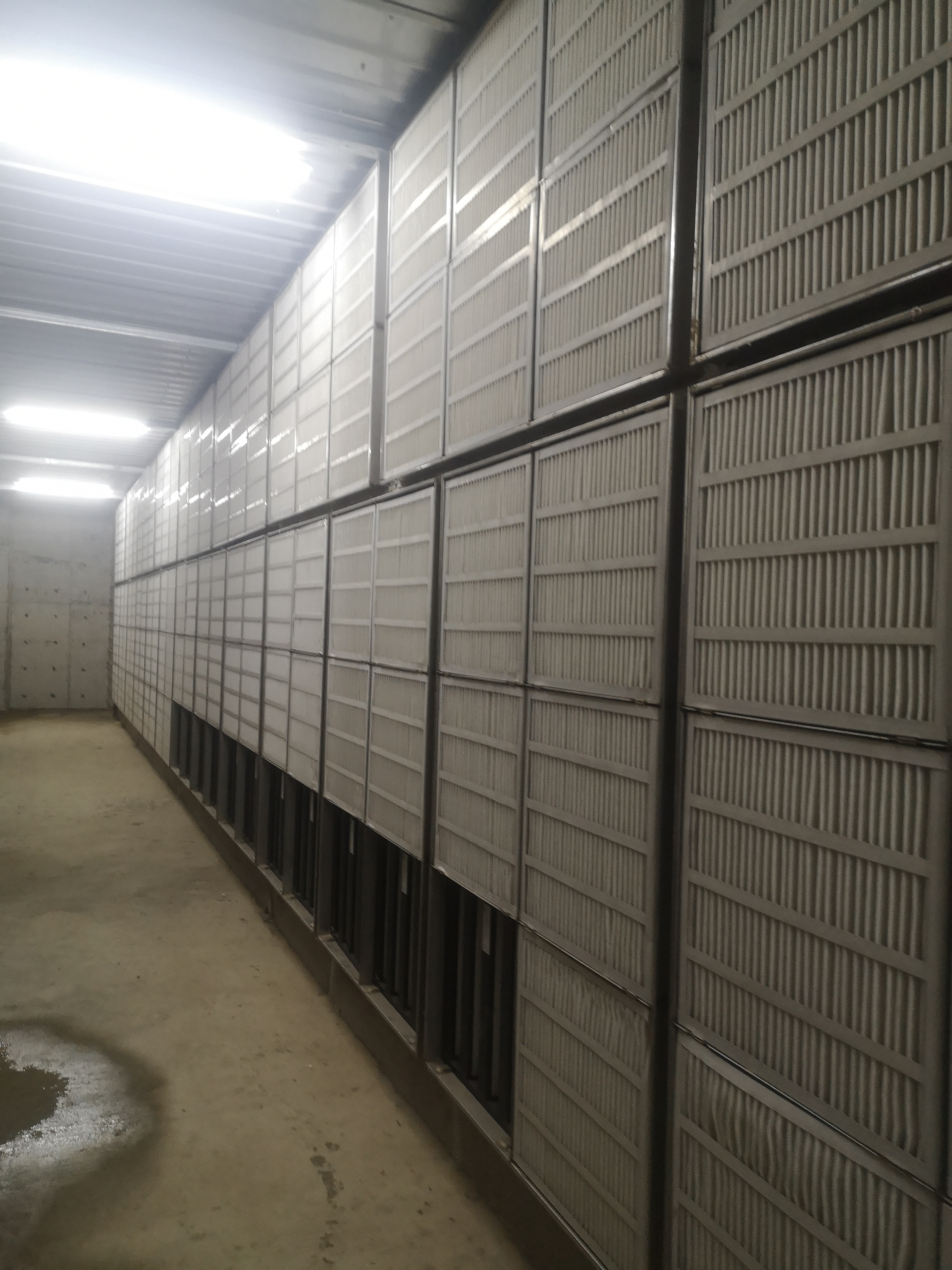
| Product Image | 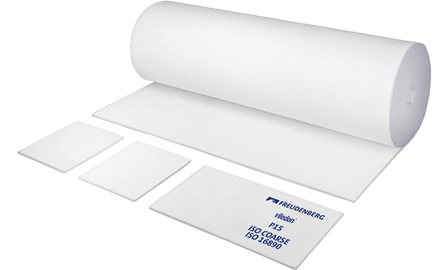 |
||||||||||||||||||||||||||||
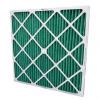
| Product Overview | The High Dust-Holding Livestock Pre-Filter Mat is designed for first-stage air filtration in commercial pig houses, poultry houses, dairy barns, livestock buildings and agricultural ventilation projects. Its open synthetic fiber structure captures coarse airborne dust, feed particles, hair and other suspended contaminants before the air reaches higher-efficiency filters, ventilation fans or climate-control equipment. The filter medium can be supplied as rolls, cut pads or project-specific sections for installation in filter frames, air inlet boxes, centralized filtration walls and other livestock ventilation assemblies. A high dust-loading design helps extend maintenance intervals while maintaining practical airflow performance in demanding farm environments. |
||||||||||||||||||||||||||||
| Key Features |
|
||||||||||||||||||||||||||||
| Structural Components |
|
||||||||||||||||||||||||||||
| Working Principle / Structural Principle | Ventilation air passes through the three-dimensional synthetic fiber network before entering the livestock building or the next filtration stage. Larger dust particles are intercepted within the upstream and middle layers of the mat instead of accumulating only on the surface. In progressive-density versions, the more open air-entry side captures larger particles while increasingly dense downstream fiber layers retain smaller coarse particles. This depth-loading principle distributes dust throughout more of the filter volume, helping reduce premature surface blockage and supporting stable ventilation airflow. When used as the first stage of a multi-stage livestock air filtration system, the mat can reduce the coarse-particle load reaching higher-efficiency filters and help extend their practical service intervals. Pre-filters are commonly used as the primary filtration stage in filtered swine facilities. :chatgpt-content-reference{index="0"} |
||||||||||||||||||||||||||||
| Technical Specifications |
|
||||||||||||||||||||||||||||
| Applications |
|
||||||||||||||||||||||||||||
| Customization Options |
|
||||||||||||||||||||||||||||
| Installation & Maintenance | Installation:
|
||||||||||||||||||||||||||||
| Project Cases | Commercial Pig House Intake Air Pre-Filtration Installed as the first filtration stage upstream of higher-efficiency filter modules to capture coarse farm dust and reduce downstream filter loading. Wall Inlet Filter Retrofit Cut filter pads can be integrated into suitable wall-inlet filter housings for existing livestock buildings where centralized filtration construction is impractical. Centralized Air Filtration Room Large-area pre-filter mats can be arranged across modular support frames before secondary filtration stages in centralized positive-pressure ventilation projects. Final filter selection, filter area and ventilation configuration should be determined according to required airflow, target filtration performance, building layout, local climate and biosecurity strategy. |
||||||||||||||||||||||||||||
| Product FAQ | Q1: What is the main function of this livestock pre-filter mat? A: It is primarily used to capture coarse airborne dust and other larger particles before ventilation air enters downstream filters or farm climate-control equipment. Q2: Can it be used in a multi-stage pig house filtration system? A: Yes. It can be installed as the first filtration stage before higher-efficiency filters. The complete filtration configuration should be selected according to the farm's biosecurity and ventilation requirements. Q3: Can the filter mat be supplied in rolls? A: Yes. Roll media, cut pads and project-specific sizes are available according to project requirements. Q4: Can the thickness and filtration grade be customized? A: Yes. Media thickness, coarse filtration grade and dimensions can be selected according to required airflow, dust load and filter housing design. Q5: Is a progressive-density structure available? A: Yes. Progressive-density versions can be supplied where required, with fiber density increasing toward the clean-air side to improve depth loading and dust-holding performance. Q6: Can the pre-filter be installed in existing livestock houses? A: Yes. Depending on the ventilation design, it can be incorporated into suitable wall inlet filter boxes, centralized filter systems or retrofit filtration frames. :chatgpt-content-reference{index="3"} Q7: How often should the filter mat be replaced? A: There is no single replacement interval for every farm. Replacement or cleaning should be based on dust loading, pressure drop, airflow performance, operating hours and local environmental conditions. Q8: Can SHEWUYOU help with filter sizing for a livestock project? A: Yes. Filter dimensions and media configuration can be designed according to project airflow, building layout, existing ventilation equipment and local climate conditions. |
||||||||||||||||||||||||||||
| Product Gallery | 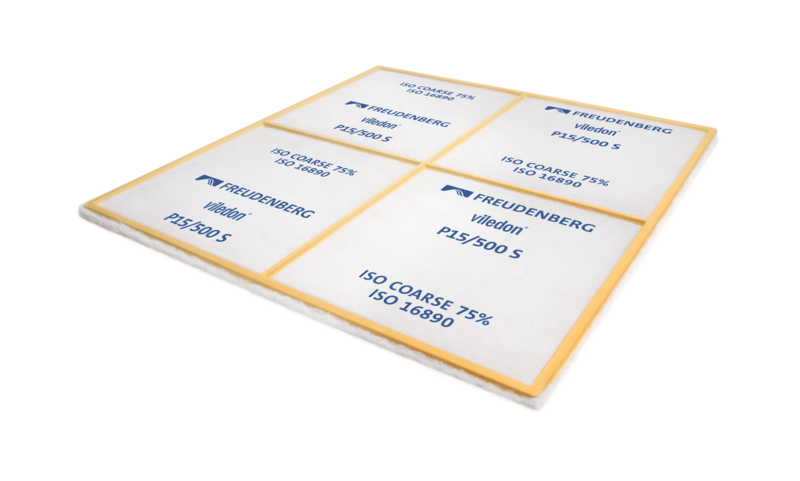  |
- Home
-
Products
- Pig Farming Equipment
- Cattle Farming Equipment
- Sheep & Goat Farming Equipment
- Poultry Farming Equipment
- Feeding & Drinking Systems
- Veterinary & Breeding Equipment
- Testing & Diagnostic Equipment
- Cleaning & Biosecurity Equipment
- Climate Control Equipment
- Livestock Weighing Equipment
- Manure & Waste Management
- Farm Transport & Handling
-
Solutions
- Pig Farm Solutions
- Dairy Farm Solutions
- Beef Cattle Farm Solutions
- Sheep & Goat Farm Solutions
- Layer Farm Solutions
- Broiler Farm Solutions
- Feeding & Drinking System Solutions
- Climate Control Solutions
- Biosecurity & Disinfection Solutions
- Manure & Waste Management
- Smart Farming Solutions
- Farm Renovation and Upgrade Solutions
- Partners
- Projects
- Resources
- News
- About Us
- Contact

Comments & Inquiries
Leave your questions or requirements below. We will reply as soon as possible.