
| Product Showcase | Content | ||||||||||||||||||||||||
| Product Name | V-Bank Air Filter Wall for Pig Houses | ||||||||||||||||||||||||
| Product Image | 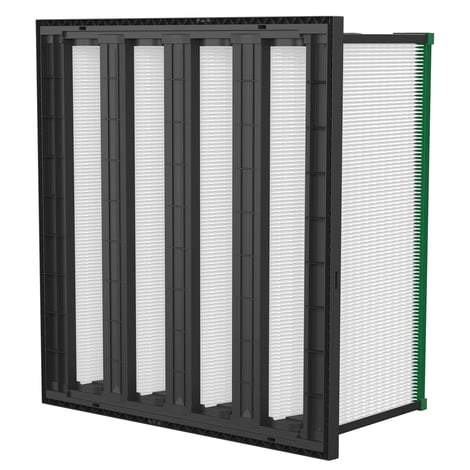 |
||||||||||||||||||||||||
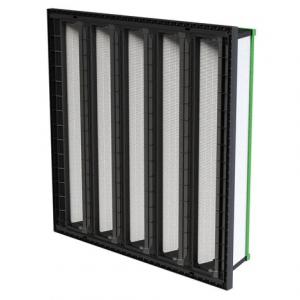
| Product Overview | The V-Bank Air Filter Wall for Pig Houses is a modular incoming-air filtration solution developed for commercial swine facilities where ventilation performance and farm biosecurity must be considered together. Multiple high-efficiency V-bank filter modules are arranged in a large filter-bank structure so that the required ventilation airflow can pass through a large effective filtration area before entering the livestock building. The V-shaped filter configuration provides a large media surface area within a compact filter depth, helping reduce face velocity and airflow resistance compared with a flat filter arrangement of similar footprint. The system can be integrated into centralized fresh-air chambers, positive-pressure ventilation systems, tunnel or cross-ventilated pig houses, breeding facilities, boar stations and other controlled livestock buildings. Filter-wall dimensions, filtration stages, support frames and connection details can be engineered according to project airflow requirements, building layout, local climate and required filtration efficiency. |
||||||||||||||||||||||||
| Key Features |
|
||||||||||||||||||||||||
| Structural Components | A typical V-bank filter wall can be configured with the following components:
|
||||||||||||||||||||||||
| Working Principle / Structural Principle | Outdoor ventilation air is directed toward the filter wall by the farm ventilation system. When a pre-filter is installed, larger dust particles and debris are removed at the first stage. The air then passes through the V-bank main filters, where finer airborne particles are captured by the filtration media. After filtration, the cleaned air enters the pig-house air distribution system through a plenum, duct, ceiling inlet or wall inlet arrangement. In positive-pressure systems, supply fans push filtered air into the building and help limit uncontrolled infiltration of unfiltered outside air. In other ventilation configurations, the filter wall can be engineered as part of the main air-intake path. The V-bank structure increases the total filter media area while keeping the filter module compact. This helps maintain the airflow required by livestock climate-control systems while limiting unnecessary resistance across the filtration stage. |
||||||||||||||||||||||||
| Technical Specifications |
|
||||||||||||||||||||||||
| Applications |
|
||||||||||||||||||||||||
| Customization Options | The air filter wall can be configured according to the ventilation and construction requirements of each pig farm project. Available engineering options may include:
|
||||||||||||||||||||||||
| Installation & Maintenance | The filter wall should be installed in the designated fresh-air intake section or filtration chamber and securely connected to the building structure or steel support frame. The frame should remain level and properly sealed so that incoming air cannot bypass the filter modules. Adequate service clearance should be reserved for filter inspection and replacement. Filters should be checked regularly for dust loading, physical damage, moisture exposure and gasket condition. Where differential-pressure monitoring is installed, pressure-drop trends can be used as an additional maintenance indicator. Pre-filters should be inspected and serviced at intervals appropriate to local dust conditions. Main filters should be replaced according to actual pressure drop, operating conditions and the maintenance program established for the farm. Filter modules should not be damaged, excessively compressed or installed with gaps around their sealing surfaces. |
||||||||||||||||||||||||
| Project Cases | V-bank and centralized air filtration concepts are suitable for high-health pig production projects where incoming ventilation air is treated before entering animal areas. Similar filtration strategies are used in breeding facilities and boar stations to support airborne biosecurity measures. For each project, the filter-wall area and filtration arrangement should be selected together with the ventilation system. SHEWUYOU can provide project-based configuration support for new pig house construction, ventilation renovation, centralized air-intake rooms and integrated farm environmental-control projects. |
||||||||||||||||||||||||
| Product FAQ | Q: Why use a V-bank configuration instead of a flat filter wall? A: The V-bank arrangement increases the effective filter media area within a compact footprint. A larger media area can help lower face velocity and control airflow resistance while supporting the ventilation volume required by commercial pig houses. Q: Can a pre-filter be installed before the V-bank main filter? A: Yes. A coarse pre-filter stage can be included to capture larger dust particles before they reach the main filter, which can help reduce main-filter loading. Q: Can the filter wall be used with positive-pressure ventilation? A: Yes. The filter wall can be designed as part of a positive-pressure fresh-air system in which supply fans move outdoor air through the filtration stage before the air enters the pig house. Q: What filtration efficiency should be selected? A: The required filter grade depends on farm biosecurity objectives, local airborne contamination risks, fan capacity, allowable pressure drop and the overall ventilation design. Selection should be confirmed according to project requirements. Q: Can the dimensions be customized? A: Yes. Filter-wall dimensions, module quantity, support structure and connection details can be customized according to the pig house layout and required airflow. Q: Can the system be used for an existing pig house? A: Retrofit solutions are possible where sufficient intake area, installation space and fan capacity are available. The existing ventilation system should be evaluated before the filter wall is designed. Q: How is filter replacement determined? A: Replacement intervals depend on dust loading, local environmental conditions, filter type, operating hours and pressure-drop development. Regular inspection and differential-pressure monitoring are recommended where appropriate. |
||||||||||||||||||||||||
| Product Gallery | 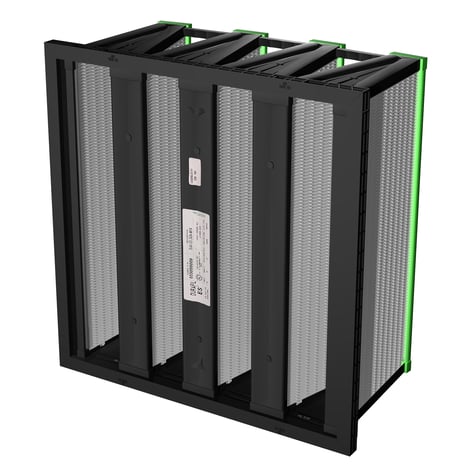 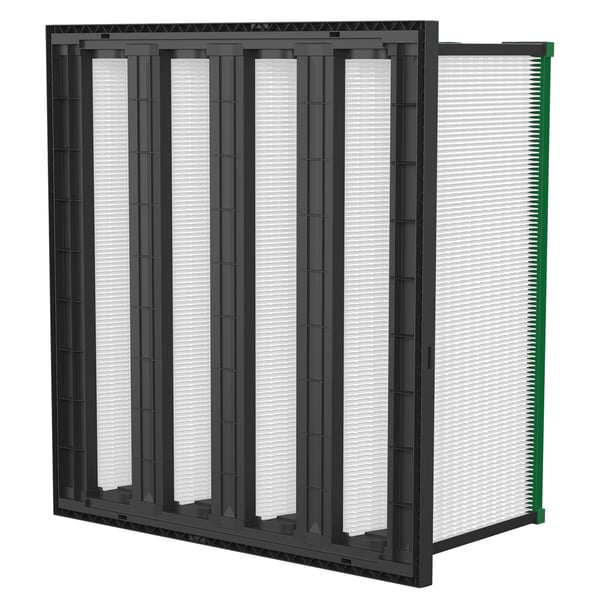 |
- Home
-
Products
- Pig Farming Equipment
- Cattle Farming Equipment
- Sheep & Goat Farming Equipment
- Poultry Farming Equipment
- Feeding & Drinking Systems
- Veterinary & Breeding Equipment
- Testing & Diagnostic Equipment
- Cleaning & Biosecurity Equipment
- Climate Control Equipment
- Livestock Weighing Equipment
- Manure & Waste Management
- Farm Transport & Handling
-
Solutions
- Pig Farm Solutions
- Dairy Farm Solutions
- Beef Cattle Farm Solutions
- Sheep & Goat Farm Solutions
- Layer Farm Solutions
- Broiler Farm Solutions
- Feeding & Drinking System Solutions
- Climate Control Solutions
- Biosecurity & Disinfection Solutions
- Manure & Waste Management
- Smart Farming Solutions
- Farm Renovation and Upgrade Solutions
- Partners
- Projects
- Resources
- News
- About Us
- Contact

Comments & Inquiries
Leave your questions or requirements below. We will reply as soon as possible.