
| Product Name | Fixed Livestock House Ammonia Sensor | ||||||||||||||||||||||||||||||||
| Product Image | 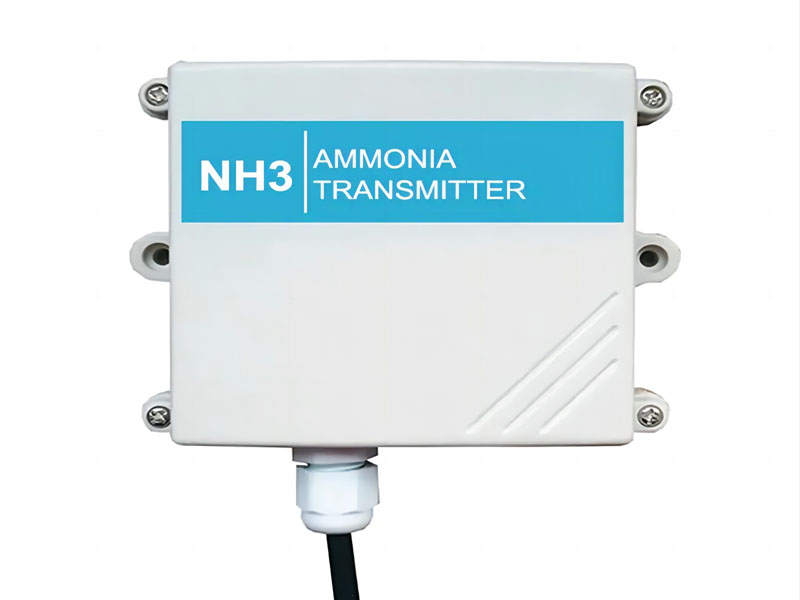 |
||||||||||||||||||||||||||||||||
| Product Overview | The Fixed Livestock House Ammonia Sensor is designed for continuous monitoring of NH3 concentration in commercial livestock buildings. It provides real-time air-quality information for pig houses, poultry houses, dairy barns and other intensive animal-production facilities. The sensor uses electrochemical detection technology to measure ammonia concentration and converts the measurement into a standard electrical signal for connection to compatible climate controllers, ventilation systems, PLC equipment or centralized farm-management platforms. For commercial pig farm construction and renovation projects, the sensor can be integrated with exhaust fans, air inlets, minimum-ventilation systems and environmental controllers to create an automated livestock-house climate management solution. |
||||||||||||||||||||||||||||||||
| Key Features | Continuous NH3 Monitoring: Provides 24-hour ammonia concentration monitoring inside livestock houses, reducing dependence on occasional manual measurements. Electrochemical Sensing Technology: Uses a dedicated electrochemical sensing element for continuous detection of ammonia in agricultural environments. 0–100 ppm Detection Range: The reference configuration provides a measurement range suitable for routine livestock-house air-quality monitoring. 4–20 mA Signal Output: Standard industrial analog output facilitates integration with livestock climate controllers, PLC systems and building automation equipment. Automatic Ventilation Integration: Ammonia concentration can be used as an additional control parameter for compatible ventilation and environmental-management systems. Fixed Wall-Mounted Installation: Permanent installation provides consistent monitoring at a representative location within the livestock building. Sealed Agricultural Enclosure: Designed for demanding farm environments where dust, humidity and corrosive gases may be present. Suitable for New and Existing Farms: Can be incorporated into new pig farm construction, poultry-house projects or modernization of existing livestock facilities. Low-Voltage Operation: The reference system operates from a 12–24 VDC power source through the appropriate sensor power arrangement. Commercial Farm Scalability: Multiple sensors can be installed across different livestock rooms, production zones or buildings according to project requirements. |
||||||||||||||||||||||||||||||||
| Structural Components | Electrochemical NH3 Sensing Element: Responds to ammonia present in the surrounding air and generates an electrical signal related to gas concentration. Signal Conditioning Circuit: Processes the sensor response and converts it into a stable output suitable for environmental controllers. Protective Enclosure: Sealed housing protects internal electronic components from typical livestock-house dust and humidity. Gas Sampling Area: Allows surrounding barn air to reach the sensing element while helping protect the internal components. Wall-Mounting Points: Enable secure fixed installation on walls, posts, equipment panels or steel structure building members. Power Connection: Provides low-voltage power to the sensor and electronic processing components. 4–20 mA Output Interface: Transmits the measured ammonia concentration to a compatible controller or monitoring system. Optional Control Accessories: Power modules, controller interfaces, signal wiring and mounting accessories can be configured according to project requirements. |
||||||||||||||||||||||||||||||||
| Working Principle | Air inside the livestock house reaches the electrochemical sensing element through the sensor's sampling area. When ammonia interacts with the sensor, an electrochemical reaction produces an electrical response proportional to the NH3 concentration. The internal electronics process this response and convert it into a standardized 4–20 mA output signal. A compatible livestock environmental controller interprets the signal and displays or records the corresponding ammonia concentration. When integrated into an automatic ventilation system, ammonia measurements can be evaluated together with temperature, relative humidity, carbon dioxide, static pressure and other environmental parameters. The controller can then operate ventilation equipment according to the programmed environmental strategy, helping maintain suitable air exchange while supporting efficient climate management. |
||||||||||||||||||||||||||||||||
| Technical Specifications |
|
||||||||||||||||||||||||||||||||
| Applications | Pig Houses: Suitable for farrowing rooms, gestation barns, nursery buildings, growing-finishing houses and other commercial swine facilities. Poultry Houses: Provides continuous ammonia monitoring in broiler, breeder and layer houses where manure or litter can contribute to NH3 accumulation. Dairy Barns: Can be installed in enclosed or mechanically ventilated cattle buildings for continuous air-quality monitoring. Minimum Ventilation Control: Ammonia information can provide an additional reference when managing minimum ventilation during cold-weather livestock production. Automatic Climate Control: Suitable for integration with compatible fans, air inlets, controllers and environmental-management systems. Commercial Pig Farm Construction: Can be included in the electrical and environmental-control design of new pig farm projects. Steel Structure Livestock Buildings: Compact fixed installation allows the sensor to be mounted on suitable wall surfaces, support posts or equipment structures according to the building layout. Farm Renovation Projects: Existing livestock buildings can be upgraded from manual air-quality inspection to continuous sensor-based environmental monitoring. Centralized Farm Management: Multiple monitoring points can provide environmental information from different houses or production zones for centralized management. |
||||||||||||||||||||||||||||||||
| Customization Options | The ammonia monitoring solution can be configured according to livestock species, building dimensions, ventilation design and farm-management requirements. Available options may include: • Number of ammonia sensors • Sensor installation locations • Signal cable length • 4–20 mA controller interface • Low-voltage power supply modules • Environmental controller integration • Centralized farm-management integration • Ammonia alarm functions according to controller configuration • Data-recording functions according to project requirements • Combined NH3, CO2, temperature and humidity monitoring • Exhaust fan and air-inlet control integration • Pig house environmental-control packages • Poultry-house environmental-control packages • OEM and distributor project configurations Final sensor quantity and installation arrangement should be designed according to local climate, animal density, livestock-house dimensions and ventilation conditions. |
||||||||||||||||||||||||||||||||
| Installation & Maintenance | Before installation, review the livestock-house layout, ventilation direction, animal zone and environmental-control system. Select a representative monitoring location rather than a position directly beside a fresh-air inlet, exhaust fan or unusually concentrated local ammonia source. Secure the sensor enclosure to a stable wall, steel structure member, equipment support or other suitable mounting surface. The installation position should allow free air circulation around the sensing area and convenient access for inspection. Route the low-voltage power and 4–20 mA signal cable separately from high-power motor cables where practical to reduce electrical interference. Connect the sensor to the compatible environmental controller according to the wiring diagram. Verify power polarity, signal wiring and controller input configuration before commissioning. After installation, confirm that the controller receives a stable sensor signal and that the ammonia value responds correctly to the configured measurement range. During routine operation, keep the sensing area free from excessive dust and contamination. Avoid direct high-pressure washing of the sensing element or electrical connections. Electrochemical sensors should be periodically inspected and verified according to the maintenance instructions for the selected model. Sensor replacement or calibration requirements depend on operating conditions and manufacturer recommendations. |
||||||||||||||||||||||||||||||||
| Project Cases | Commercial Pig House Environmental Control: Fixed ammonia sensors can be installed in nursery and finishing buildings and connected to a centralized climate controller together with temperature, humidity and static-pressure sensors. New Pig Farm Construction: During the design of a new steel structure pig house, NH3 monitoring points can be planned together with exhaust fans, air inlets, cooling systems, heating equipment and electrical-control cabinets. Poultry House Air-Quality Monitoring: Continuous ammonia monitoring can support litter management and minimum-ventilation adjustment in mechanically ventilated poultry buildings. Multi-Building Livestock Projects: Separate ammonia sensors can be installed in multiple livestock houses or production zones and connected to compatible centralized monitoring equipment. Farm Modernization: Existing livestock facilities can add fixed ammonia sensors as part of an upgrade to automatic ventilation and digital environmental management. |
||||||||||||||||||||||||||||||||
| Product FAQ | Q: What does the fixed livestock ammonia sensor measure? A: It continuously measures ammonia, or NH3, concentration in the air inside livestock buildings. Q: What is the detection range? A: The reference configuration provides a measurement range of 0–100 ppm. Q: What sensing technology is used? A: The reference product uses electrochemical ammonia-sensing technology. Q: What is the published reference accuracy? A: The reference configuration specifies an accuracy of ±3% at 25°C. Q: What signal output is available? A: The reference configuration uses a standard 4–20 mA analog output. Q: Can the sensor connect to a pig house ventilation controller? A: Yes. A compatible 4–20 mA environmental controller can use the ammonia signal for monitoring and ventilation-management functions. Q: Can ammonia control be combined with temperature and humidity? A: Yes. In a complete livestock climate-control system, NH3 can be monitored together with temperature, humidity, CO2 and static-pressure parameters. Q: Where should the sensor be installed? A: The sensor should be installed at a representative air-monitoring position based on animal location, airflow pattern, ventilation design and project requirements. Q: Can one livestock house use more than one ammonia sensor? A: Yes. Large buildings or separate ventilation zones may require multiple monitoring points according to project design. Q: Is it suitable for steel structure pig houses? A: Yes. The wall-mounted enclosure can be installed on a suitable wall, column, equipment panel or structural support according to the farm layout. Q: Can it be used in an existing livestock building? A: Yes. The sensor can be incorporated into renovation projects when compatible low-voltage power, signal wiring and environmental-control equipment are available. Q: Does the sensor require maintenance? A: Yes. The sensing area should be kept clean, wiring should be inspected regularly, and sensor verification or replacement should follow the selected product's maintenance requirements. |
||||||||||||||||||||||||||||||||
| Product Gallery | 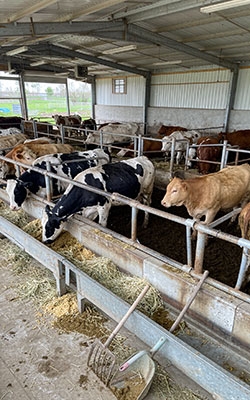 |
- Home
-
Products
- Pig Farming Equipment
- Cattle Farming Equipment
- Sheep & Goat Farming Equipment
- Poultry Farming Equipment
- Feeding & Drinking Systems
- Veterinary & Breeding Equipment
- Testing & Diagnostic Equipment
- Cleaning & Biosecurity Equipment
- Climate Control Equipment
- Livestock Weighing Equipment
- Manure & Waste Management
- Farm Transport & Handling
-
Solutions
- Pig Farm Solutions
- Dairy Farm Solutions
- Beef Cattle Farm Solutions
- Sheep & Goat Farm Solutions
- Layer Farm Solutions
- Broiler Farm Solutions
- Feeding & Drinking System Solutions
- Climate Control Solutions
- Biosecurity & Disinfection Solutions
- Manure & Waste Management
- Smart Farming Solutions
- Farm Renovation and Upgrade Solutions
- Partners
- Projects
- Resources
- News
- About Us
- Contact
Comments & Inquiries
Leave your questions or requirements below. We will reply as soon as possible.