


| Product Name | Livestock CO2 NH3 Temperature Humidity Monitor |
| Product Image |  |
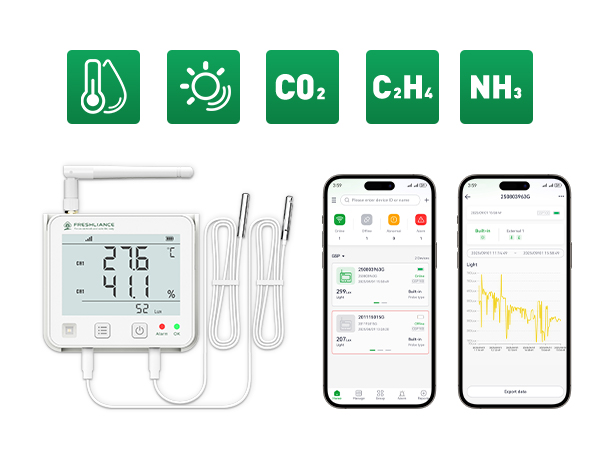
| Product Overview | The Livestock CO2 NH3 Temperature Humidity Monitor is a multi-parameter environmental sensing device designed for continuous air-quality and climate monitoring in poultry houses, pig farms, cattle barns and other intensive livestock facilities. The unit combines carbon dioxide, ammonia, temperature and relative humidity monitoring in one system, allowing farm operators to observe several important environmental parameters without installing separate standalone instruments for every measurement. Continuous monitoring of these parameters supports ventilation management, environmental alarms and long-term farm data collection. The device can be connected to livestock environmental controllers, PLC systems, IoT gateways or remote management platforms according to the selected communication configuration. Its protected enclosure and flexible communication options make it suitable for commercial livestock projects, new farm construction, ventilation upgrades and smart agricultural engineering systems. |
| Key Features | Four-Parameter Monitoring: Measures CO2, NH3, temperature and relative humidity for integrated livestock environmental management. Continuous Online Measurement: Designed for long-term monitoring rather than occasional handheld inspection. Livestock Environment Design: Suitable for pig houses, poultry houses, cattle barns and other animal production facilities. Multiple Communication Options: RS485 Modbus, analog output and wireless communication configurations are available for different farm automation systems. Remote Monitoring Capability: LoRaWAN, WiFi, Bluetooth or 4G configurations can be selected according to project requirements. Environmental Control Integration: Measurement data can be transferred to compatible ventilation controllers, PLC systems, SCADA platforms or IoT gateways. Protected Enclosure: The housing is designed for dusty and humid agricultural operating environments. Commercial Farm Application: Suitable for large poultry complexes, pig farms, livestock groups, engineering contractors and agricultural project procurement. |
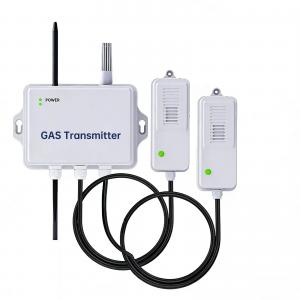
| Structural Components | Main Transmitter Housing: Contains signal processing, communication and power-management electronics. CO2 Sensing Module: Continuously monitors carbon dioxide concentration inside the livestock environment. NH3 Sensing Module: Detects ammonia concentration generated from manure, litter and livestock production processes. Temperature Sensor: Measures ambient temperature for climate monitoring and ventilation management. Humidity Sensor: Measures relative humidity inside the livestock building. Remote Sensor Assemblies: Sensor modules may be separated from the main transmitter according to the selected configuration. Communication Module: Provides wired or wireless data transmission according to project requirements. Cable Glands and Connection Ports: Support protected wiring for power supply, sensors and communication interfaces. Mounting Points: Allow wall or structural mounting in livestock houses and agricultural buildings. |
| Working Principle / Structural Principle | The monitor continuously samples environmental conditions around its sensing modules. Dedicated sensing elements detect CO2 concentration, NH3 concentration, ambient temperature and relative humidity. The sensor signals are processed by the internal electronics and converted into digital measurement values. These values can then be transmitted through a compatible wired or wireless interface to a livestock environmental controller, PLC, gateway, local monitoring terminal or cloud-based management platform. In a smart livestock ventilation system, CO2 and NH3 measurements can provide information about gas accumulation and ventilation effectiveness, while temperature and humidity data provide additional climate information for environmental management. The connected control system can use these measurements as part of a programmed strategy for ventilation fans, air inlets, cooling equipment, heating equipment or environmental alarms. The monitor itself primarily provides measurement and communication functions, while equipment control depends on the selected system configuration. |
| Technical Specifications | Product Type: Multi-parameter livestock environmental monitor Measured Parameters: CO2, NH3, temperature and relative humidity CO2 Measurement Range: 0-10000 ppm NH3 Measurement Range: 0-100 ppm Temperature Range: -45 to 125 °C Temperature Accuracy: ±0.5 °C Humidity Range: 0-99% RH Humidity Accuracy: ±3% RH Power Supply: DC 10-30 V Protection Rating: IP67 Housing Material: Flame-retardant ABS Standard Communication: RS485 Modbus configuration available Analog Output: 4-20 mA / 0-5 V configuration available Wireless Communication: LoRaWAN, WiFi, Bluetooth or 4G options available Monitoring Mode: Continuous online monitoring Installation Method: Wall or structural mounting according to project requirements Controller Integration: Available upon request IoT Platform Integration: According to project requirements OEM / ODM Configuration: Available upon request |
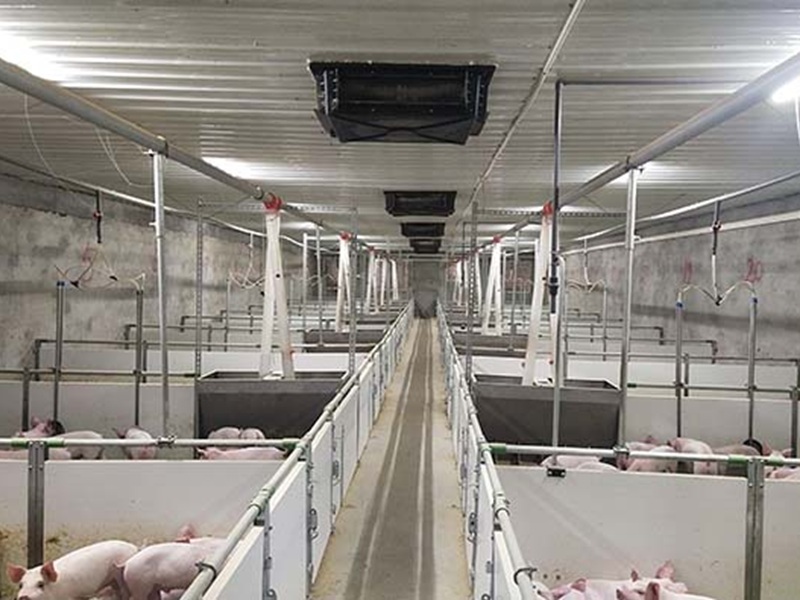
| Applications | Broiler Houses: Monitoring of CO2, ammonia, temperature and humidity during minimum, transitional and tunnel ventilation operation. Layer Houses: Continuous air-quality monitoring in cage, aviary and enclosed layer production facilities. Breeder Houses: Environmental monitoring for commercial breeder ventilation and climate-management systems. Pig Nursery Houses: Monitoring of air quality and climate conditions around young pigs and nursery pens. Farrowing Houses: Continuous environmental monitoring for sow and piglet production areas. Finishing Pig Houses: Detection of gas accumulation and environmental changes in intensive pig production buildings. Cattle Barns: Monitoring of livestock-house temperature, humidity and air-quality conditions. Manure and Waste Areas: Environmental monitoring in selected livestock waste-management areas according to project requirements. Livestock Engineering Projects: Suitable for new farm construction, ventilation upgrades, smart farm systems and centralized environmental monitoring. |
| Customization Options | Communication Interface: RS485 Modbus, analog output or wireless communication can be selected according to project requirements. Wireless Networking: LoRaWAN, WiFi, Bluetooth and 4G configurations available upon request. Output Configuration: 4-20 mA, 0-5 V or compatible digital communication according to the selected model. Sensor Arrangement: Integrated or remote sensing configurations available according to installation requirements. Monitoring Network: Multiple units can be incorporated into centralized farm environmental monitoring systems. Gateway Integration: IoT gateway and remote platform connectivity available upon request. Alarm Functions: Configurable through compatible controllers or monitoring platforms. Mounting Accessories: Brackets, protective structures and cable configurations available according to project requirements. System Integration: Can be combined with air velocity, static pressure and other livestock environmental sensors. Project Configuration: Designed according to local climate, livestock species, house structure and farm control requirements. |
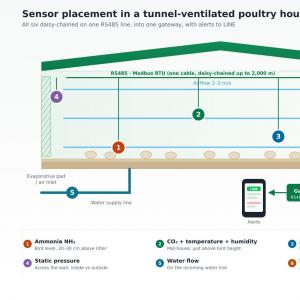
| Installation & Maintenance | Install the monitor at a representative location inside the livestock building where air can circulate freely around the sensing area. Avoid positions directly beside fresh-air inlets, exhaust fans, heaters or other equipment unless that specific local condition needs to be measured. Installation height should be selected according to livestock species, building structure and monitoring objectives. For large commercial houses, multiple monitoring points may be required to represent different production zones accurately. The mounting surface should be secure and protected from direct animal contact. Power and communication cables should be routed away from livestock, rodents, moving machinery and sharp structural components. Although the enclosure provides protection for agricultural environments, the sensing openings should be kept free from excessive dust, feathers, litter particles and other deposits that may affect air exchange around the sensor. During farm washing or aggressive chemical disinfection, follow the project maintenance procedure and protect sensing areas where required. Periodic inspection, sensor verification and calibration should be carried out according to operating conditions and farm quality-management requirements. |
| Project Cases | Typical Commercial Broiler Project: Multi-parameter monitors can be installed at representative positions in a poultry house to provide continuous CO2, NH3, temperature and humidity information for ventilation management. Typical Pig Nursery Project: Environmental monitors can be connected to a central controller to provide air-quality information for minimum ventilation and climate-management strategies. Typical Multi-House Farm Project: Several livestock buildings can use networked monitoring devices connected through compatible gateways for centralized environmental data collection. Typical Farm Upgrade Project: Existing ventilation systems can be equipped with environmental transmitters to add digital monitoring without replacing the complete mechanical ventilation installation. Typical Smart Livestock Project: Gas, temperature and humidity data can be combined with air velocity and static pressure measurements for a more complete environmental monitoring system. |
| Product FAQ | Q: Which environmental parameters does this monitor measure? A: It is designed to measure carbon dioxide, ammonia, temperature and relative humidity continuously. Q: Is it suitable for pig and poultry houses? A: Yes. The monitor is designed for livestock environments including pig houses, poultry houses, cattle barns and other agricultural buildings. Q: Can it connect to a livestock ventilation controller? A: Yes. Compatible RS485 Modbus or analog signal configurations can be selected according to the controller and project requirements. Q: Does it support wireless communication? A: LoRaWAN, WiFi, Bluetooth and 4G configurations are available for suitable applications. Q: Can several monitors be installed in one livestock house? A: Yes. Large commercial buildings may use multiple monitoring points to evaluate environmental conditions in different production zones. Q: Can the data be monitored remotely? A: Yes. Remote monitoring can be implemented through compatible communication gateways and IoT platforms according to project requirements. Q: Can the system activate ventilation equipment automatically? A: Measurement data can be supplied to a compatible controller or PLC. Automatic equipment control depends on the selected control-system design. Q: Is customization available for engineering projects? A: Yes. Communication interfaces, networking methods, mounting arrangements and system integration can be configured according to project requirements. |
| Product Gallery |    |
- Home
-
Products
- Pig Farming Equipment
- Cattle Farming Equipment
- Sheep & Goat Farming Equipment
- Poultry Farming Equipment
- Feeding & Drinking Systems
- Veterinary & Breeding Equipment
- Testing & Diagnostic Equipment
- Cleaning & Biosecurity Equipment
- Climate Control Equipment
- Livestock Weighing Equipment
- Manure & Waste Management
- Farm Transport & Handling
-
Solutions
- Pig Farm Solutions
- Dairy Farm Solutions
- Beef Cattle Farm Solutions
- Sheep & Goat Farm Solutions
- Layer Farm Solutions
- Broiler Farm Solutions
- Feeding & Drinking System Solutions
- Climate Control Solutions
- Biosecurity & Disinfection Solutions
- Manure & Waste Management
- Smart Farming Solutions
- Farm Renovation and Upgrade Solutions
- Partners
- Projects
- Resources
- News
- About Us
- Contact

Comments & Inquiries
Leave your questions or requirements below. We will reply as soon as possible.