| Product Name |
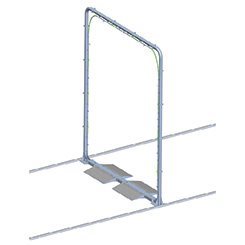
Automatic Wheel and Undercarriage Spray System |
| Product Image |
 |
| Product Overview |
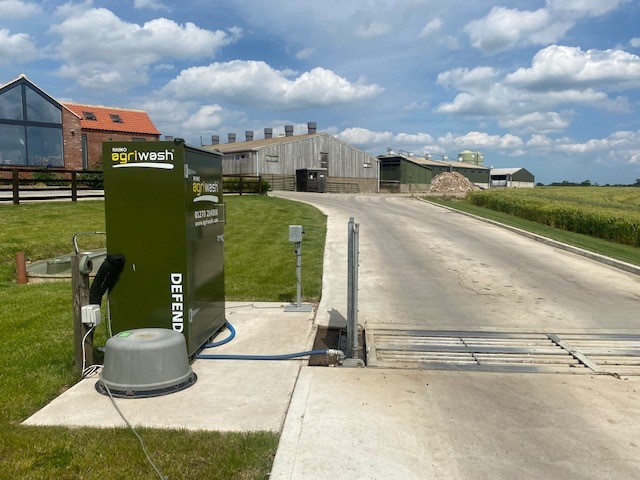
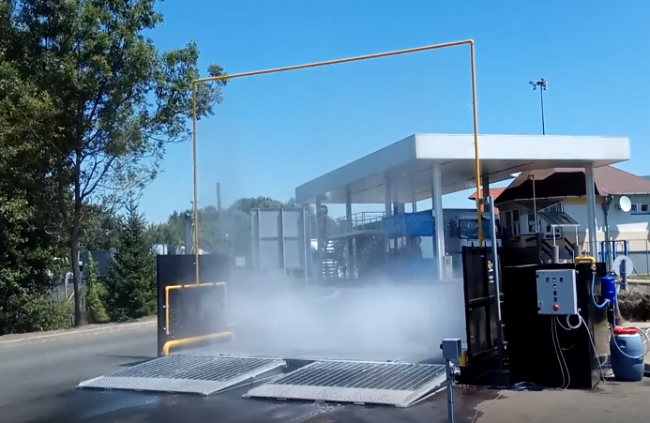
The Automatic Wheel and Undercarriage Spray System is a modular drive-through vehicle disinfection solution developed for controlled livestock farm entrances, agricultural facilities and biosecurity zones.
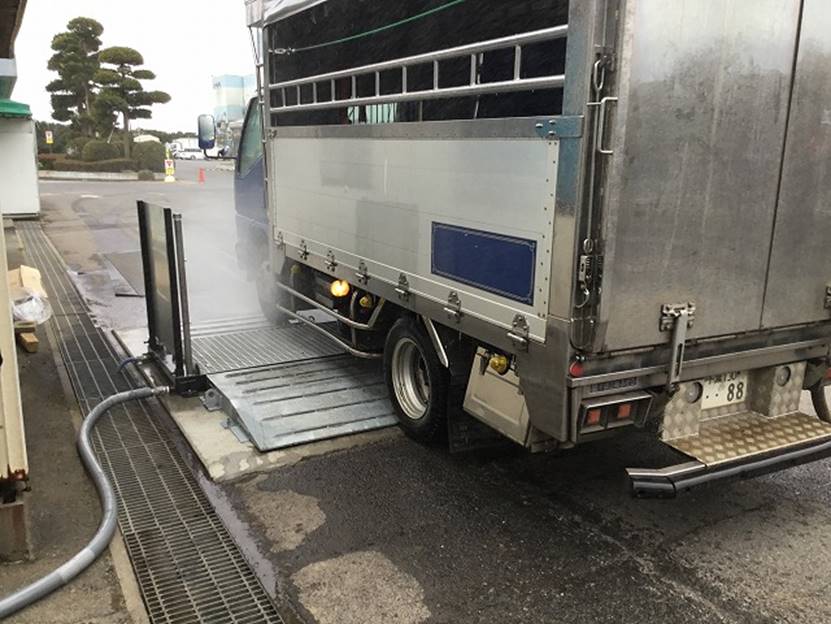
The system is designed to apply a prepared disinfectant solution to vehicle tyres, wheels, wheel areas and accessible undercarriage surfaces as vehicles pass through the treatment zone. Automatic vehicle detection can activate the programmed spray cycle, reducing the need for manual spraying.
Its modular construction can combine a high-pressure pump module, disinfectant dosing system, spray lines, galvanized steel support frames, low-level wheel and undercarriage spray components, access platforms and automatic controls. The configuration can be adapted according to vehicle dimensions, traffic flow, farm layout and local climate conditions.
The system is suitable for commercial pig farms, poultry farms, cattle operations, breeding facilities, livestock transport areas, feed mills and new livestock farm construction projects where vehicle biosecurity is an important part of the site design. |
| Key Features |
- Automatic Vehicle Detection: Photocell or equivalent vehicle sensors can initiate the configured spray cycle automatically.
- Wheel and Tyre Treatment: Dedicated low-level spray lines target tyres and wheel areas during vehicle passage.
- Undercarriage Coverage: Lower spray nozzles can be positioned to treat accessible chassis and underbody surfaces.
- Drive-Through Design: Vehicles pass through a defined treatment area without requiring an operator to manually spray each vehicle.
- Controlled Chemical Dosing: The dosing system can be configured for compatible disinfectants and project requirements.
- High-Pressure Spray: A high-pressure pump supplies the spray circuit according to the selected system configuration.
- Galvanized Steel Structure: Structural components are suitable for demanding agricultural environments and frequent wet operation.
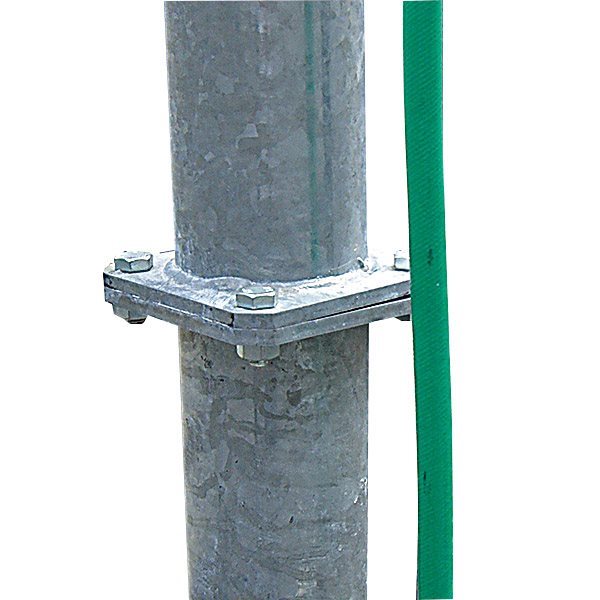
- Modular Assembly: Structural sections can be assembled using bolted connections for practical project installation.
- Manual Override: Manual ON/OFF control can be incorporated alongside automatic operation.
- Custom Spray Layout: Nozzle quantity, position and spray direction can be designed according to vehicle dimensions and required coverage.
- Project Integration: The system can be coordinated with farm roads, drainage, water supply and electrical infrastructure.
|
| Structural Components |
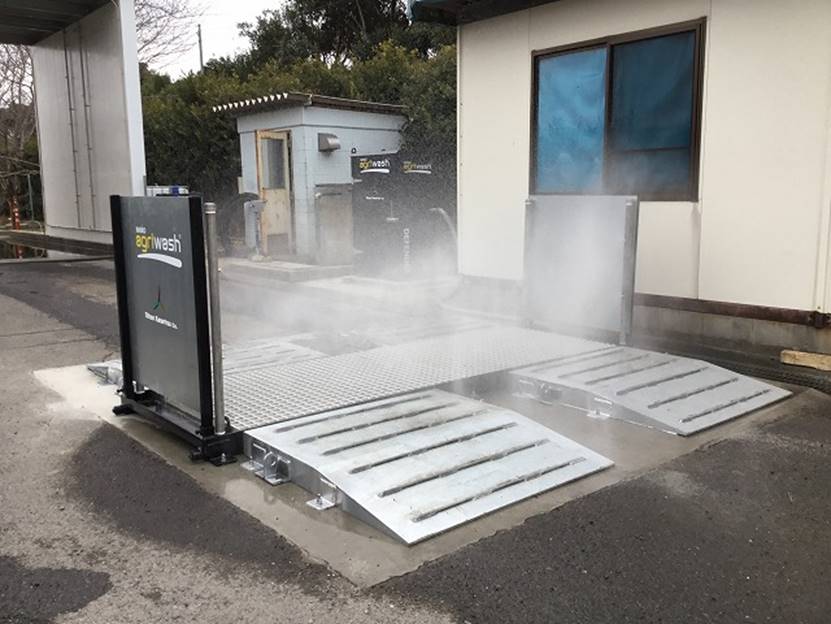
- Wheel Disinfection Frame: Galvanized steel base frames support the low-level wheel and undercarriage spray assembly.
- Undercarriage Spray Lines: Flexible hoses and spray nozzles distribute disinfectant beneath and around the vehicle lower section.
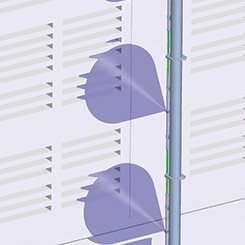
- Spray Nozzles: Multiple nozzles provide targeted spray coverage according to the vehicle treatment layout.
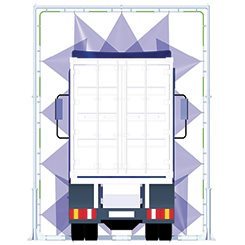
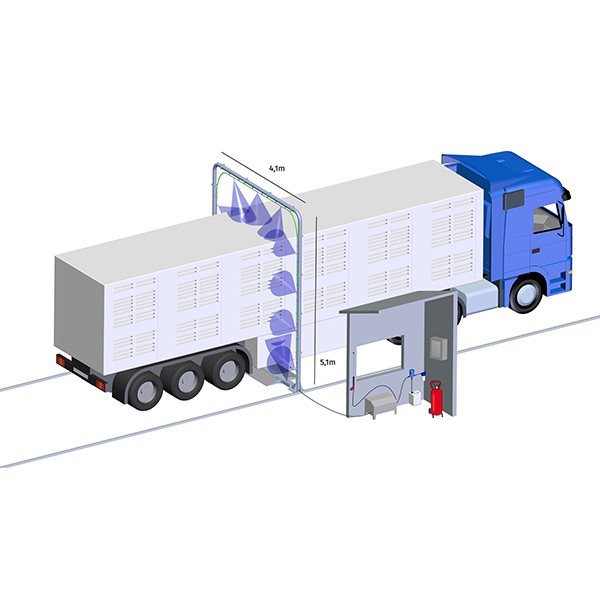
- Disinfection Arch: Optional side and upper spray structure can be integrated for broader vehicle exterior coverage.
- Galvanized Steel Columns and Beams: Bolted structural members form the main support framework where an arch configuration is required.
- High-Pressure Pump Module: Includes the electric motor, pump, control valve, safety valve and pressure gauge according to configuration.
- Disinfectant Filtering and Dosing Unit: Filters and introduces compatible disinfectant into the spray circuit.
- Photocell Sensors: Detect vehicle movement and initiate automatic operation.
- Control System: Provides automatic activation and manual control according to project configuration.
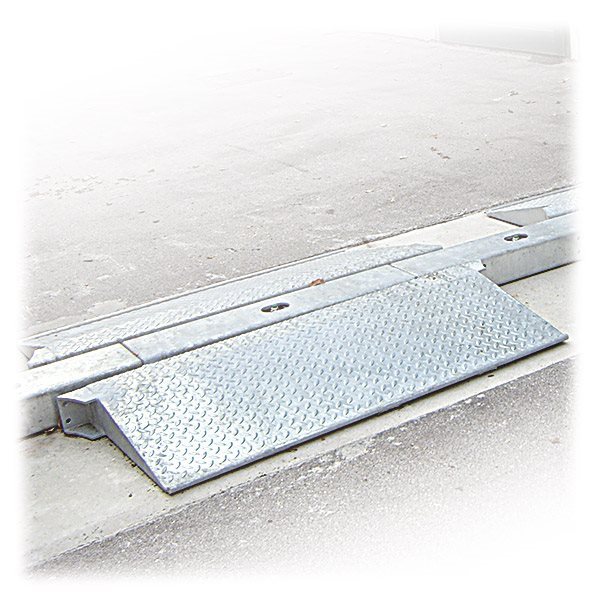
- Platform System: Galvanized steel platform sections provide a defined vehicle passage and support the lower spray assembly.
- Connection Piping: Stainless steel piping or other suitable connection materials can be selected according to chemical compatibility and project conditions.
|
| Working Principle / Structural Principle |
The system combines automatic vehicle detection, chemical dosing, high-pressure pumping and strategically positioned spray nozzles into a controlled vehicle disinfection process.
When a vehicle enters the designated treatment area, the photocell or vehicle sensor detects its presence and activates the programmed spray cycle. The pump supplies water and prepared disinfectant through the distribution lines to the lower spray system.
Low-level nozzles direct the disinfectant solution toward tyres, wheels and accessible undercarriage surfaces. Additional side or overhead spray lines can be incorporated where broader vehicle exterior coverage is required.
The modular structure keeps the spray equipment positioned around the vehicle passage while allowing the pump and control components to be installed in an accessible service area. The spray cycle, activation method and coverage arrangement can be configured according to the farm's vehicle traffic and biosecurity procedure.
Where vehicle cleaning is also required, a separate high-pressure washing module can be incorporated before the disinfection stage. Cleaning and disinfection should be managed according to the farm biosecurity SOP and the approved instructions for the selected disinfectant. |
| Technical Specifications |
| Product Type |
Automatic wheel and undercarriage vehicle disinfection system |
| Primary Application |
Vehicle tyres, wheels, underbody and accessible chassis areas |
| Reference Operating Pressure |
100 bar for a comparable high-pressure configuration |
| Reference Pump Flow |
21 L/min for a comparable configuration |
| Reference Pump Maximum Pressure |
150 bar pump specification for the comparable configuration |
| Reference Pump Type |
Camshaft high-pressure pump with three ceramic pistons and brass head |
| Reference Motor |
3-phase, 400 V, 1450 rpm for the comparable configuration |
| Reference Spray Arrangement |
16 nozzles for wheel/undercarriage treatment and 7 nozzles for arch treatment in a comparable modular configuration |
| Main Structural Material |
Galvanized steel reference configuration |
| Connection Piping |
AISI 304 stainless steel reference configuration |
| Automatic Activation |
Photocell-controlled operation |
| Manual Control |
ON/OFF manual control available according to configuration |
| Vehicle Clearance |
Customizable according to vehicle dimensions and project requirements |
| Power Supply |
According to local electrical standards and project requirements |
| System Configuration |
Customizable according to farm layout, vehicle fleet and biosecurity requirements |
Reference values are based on a comparable modular commercial vehicle disinfection system. Final pressure, flow, nozzle quantity, vehicle clearance, motor specification, electrical supply and structural dimensions should be confirmed according to the selected project configuration.
|
| Applications |
- Commercial Pig Farms: Vehicle wheel and undercarriage treatment at controlled farm entrances.
- Poultry Farms: Biosecurity treatment for feed trucks, poultry transport vehicles and service vehicles.
- Cattle and Dairy Farms: Disinfection of livestock transporters and agricultural service vehicles.
- Breeding Facilities: Controlled vehicle sanitation between production and service areas.
- Livestock Transport Facilities: Automated treatment of vehicle wheels and lower chassis before entering controlled zones.
- Feed Mills and Agricultural Logistics: Vehicle hygiene at access points handling feed and agricultural products.
- New Pig Farm Construction: Integration into the vehicle circulation, drainage, water supply and electrical design of new livestock facilities.
- Farm Biosecurity Upgrades: Modular installation at existing entrances where automated wheel and undercarriage treatment is required.
- Agricultural Engineering Projects: Custom vehicle disinfection systems for commercial livestock infrastructure.
|
| Customization Options |
The system can be engineered around the customer's vehicle fleet, traffic volume, farm entrance and biosecurity workflow.
- Vehicle Clearance: Width and height can be designed according to the largest vehicle using the entrance.
- Wheelbase Adaptation: Lower spray lines can be positioned according to axle arrangement and wheelbase.
- Undercarriage Coverage: Nozzle quantity, height and spray direction can be configured for the required chassis coverage.
- Pump Performance: Pressure and flow can be selected according to the spray pattern and application method.
- Chemical Dosing: Filtering and dosing equipment can be configured for the selected compatible disinfectant.
- Automatic Control: Photocell activation, spray cycle timing and operating sequence can be configured according to project requirements.
- Traffic Direction: Single-direction or two-way vehicle detection can be incorporated where required.
- Material Selection: Galvanized steel, stainless steel and other suitable materials can be selected according to local climate and chemical compatibility.
- Installation: The structure can be adapted to new construction or existing farm entrances.
- Drainage Integration: The platform and wastewater connections can be coordinated with the farm's drainage system.
- Washing Module: A separate high-pressure washing system can be integrated when cleaning is required before disinfection.
- OEM / ODM: Project-specific engineering, documentation, branding and packaging are available upon request.
|
| Installation & Maintenance |
Installation: The modular structure is designed for practical assembly using bolted connections. The system can be installed at a farm entrance, vehicle biosecurity gate or controlled transition area according to the project layout.
- Confirm the dimensions, wheelbase, axle load and clearance requirements of the farm vehicle fleet.
- Prepare a level, stable and load-bearing foundation or hardstanding according to the selected configuration.
- Assemble and secure the galvanized steel wheel and undercarriage spray frame.
- Install the spray lines and position the nozzles according to the approved spray layout.
- Install the pump module, dosing equipment and connection piping in the designated service area.
- Install photocells and connect the automatic control system.
- Connect the water supply and chemical dosing circuit according to the system design.
- Connect drainage or wastewater collection facilities where required by the project.
- Test pump pressure, flow, spray direction, nozzle coverage and sensor activation before commissioning.
- Clean spray nozzles and filters regularly to prevent blockage caused by suspended particles or chemical deposits.
- Inspect hoses, valves, pump components, fittings and electrical connections for wear or leakage.
- Check galvanized structural components and bolted connections periodically.
- Flush the spray circuit according to the selected disinfectant manufacturer's instructions.
- Keep the vehicle treatment area clear of mud, organic matter and other debris.
- Operate and maintain the system according to the farm biosecurity SOP and equipment maintenance schedule.
|
| Project Cases |
Commercial Pig Farm Entrance: The system can be installed at the main vehicle entrance to treat feed trucks, livestock transporters and service vehicles before they enter controlled production areas.
Poultry Production Facility: Low-level spray lines can provide dedicated wheel and undercarriage treatment for vehicles serving poultry houses and associated agricultural facilities.
Large Livestock Complex: The spray layout and vehicle clearance can be designed for larger livestock transporters and higher vehicle traffic volumes.
New Farm Construction: The system can be specified during the pig farm construction stage so that vehicle routes, drainage, water supply, electrical infrastructure and biosecurity zones are coordinated in the overall site plan.
Existing Farm Upgrade: A modular structure can be installed at an existing entrance to improve automated vehicle treatment without redesigning the entire farm traffic system.
Engineering and Distribution Projects: The modular design supports project-specific configurations for agricultural contractors, farm engineering companies, livestock equipment distributors and international project procurement. |
| Product FAQ |
Q: What is an Automatic Wheel and Undercarriage Spray System?
A: It is a drive-through vehicle sanitation system designed to automatically apply a prepared disinfectant solution to vehicle tyres, wheels and accessible undercarriage areas.
Q: Is it suitable for commercial pig farms?
A: Yes. The system is suitable for commercial pig farms, poultry farms, cattle operations, breeding facilities and other livestock production sites requiring controlled vehicle biosecurity.
Q: How does automatic operation work?
A: A photocell or equivalent vehicle sensor detects the approaching vehicle and activates the configured spray cycle. Manual ON/OFF control can also be incorporated according to the system configuration.
Q: Which vehicle areas can be treated?
A: The standard concept focuses on wheels, tyres and lower vehicle areas. Spray lines can be configured for accessible undercarriage and chassis surfaces, with additional side or overhead spray coverage available.
Q: Can the system handle livestock transport trucks?
A: Yes. Vehicle clearance, spray-bar arrangement and structural dimensions can be designed according to the dimensions and axle loads of the vehicles used at the farm.
Q: Can the system be customized?
A: Yes. Pump performance, nozzle quantity, spray layout, vehicle clearance, chemical dosing, control logic, structural materials and installation configuration can be customized according to project requirements.
Q: What materials are used?
A: Galvanized steel is suitable for the main structural components, while stainless steel connection piping can be selected where corrosion resistance and chemical compatibility are required.
Q: Can it be used for both washing and disinfection?
A: A separate high-pressure washing module can be integrated for projects requiring vehicle cleaning before the disinfection stage. Washing and disinfection should follow the farm's established biosecurity procedure.
Q: Is special installation equipment required?
A: The modular structural concept uses bolted connections for practical assembly. Foundation, water, electrical and drainage requirements depend on the final project configuration.
Q: Can it be designed for international livestock projects?
A: Yes. The system can be designed according to local climate, vehicle specifications, electrical standards, farm layout, traffic flow and biosecurity requirements.
|
| Product Gallery |
 |

Comments & Inquiries
Leave your questions or requirements below. We will reply as soon as possible.