| Product Name |
Vehicle Tire Disinfection Dip System |
| Product Image |
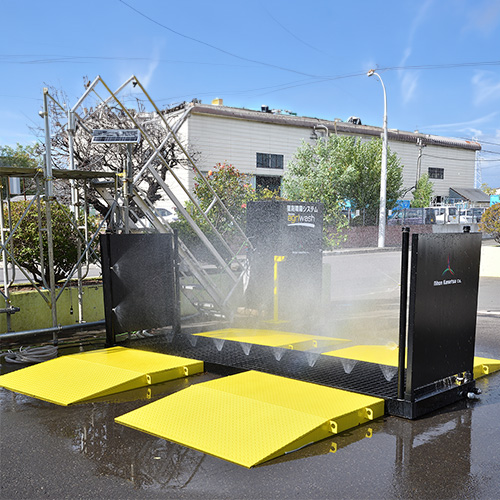 |
| Product Overview |
The Vehicle Tire Disinfection Dip System is a dedicated farm biosecurity installation designed to treat vehicle tires at the controlled entrance of livestock farms, poultry farms, breeding facilities, feed mills and agricultural production sites.
Unlike spray-only systems, a tire dip uses a prepared disinfectant solution contained within a purpose-designed wheel bath or recessed disinfection trough. As the vehicle drives slowly through the treatment section, the tires pass through the solution, providing direct liquid contact with the tire tread and lower sidewall surfaces.
The system can be designed as a reinforced concrete or steel-lined structure with suitable ramps, drainage, solution containment and traffic guidance. It can also be combined with an automatic spray system to extend treatment to wheel arches, chassis and underbody areas.
For commercial pig farm construction and livestock engineering projects, the tire dip can be integrated into the clean/dirty zone layout, entrance road, drainage network and overall vehicle biosecurity workflow.
Dimensions, bath depth, vehicle load capacity, lining material, drainage arrangement and traffic configuration are customizable according to vehicle types, local climate, farm layout and project requirements. |
| Key Features |
- Direct Tire Immersion: Vehicle tires pass through a disinfectant bath for direct contact with the prepared solution.
- Dedicated Farm Biosecurity Point: Creates a defined sanitation barrier at the controlled vehicle entrance.
- Drive-Through Operation: Vehicles can cross the treatment zone without requiring drivers to leave the cab.
- Continuous Tire Contact: The bath can wet the tire tread and lower sidewalls as the wheels rotate through the solution.
- Heavy-Duty Construction: The structure can be engineered for commercial livestock trucks, feed trucks and agricultural vehicles.
- Controlled Solution Containment: The bath can incorporate waterproof lining, sealed joints and dedicated drainage.
- Easy Farm Integration: Suitable for incorporation into farm roadways, gates, loading areas and clean/dirty zone transitions.
- Optional Automatic Refill: Water and chemical management equipment can be added according to project requirements.
- Optional Spray Assistance: Spray bars can be added for wheel arches, chassis and undercarriage coverage.
- Corrosion-Resistant Materials: Concrete, galvanized steel, stainless steel or chemical-resistant lining systems can be selected according to site conditions.
- Custom Vehicle Clearance: Bath width, length and approach geometry can be designed for the farm's vehicle fleet.
- Permanent Installation: Suitable for new livestock facilities and long-term farm biosecurity infrastructure.
|
| Structural Components |
- Disinfection Bath: Recessed or surface-integrated container holding the prepared disinfectant solution.
- Load-Bearing Structure: Reinforced concrete, steel or engineered support structure designed according to vehicle axle loads.
- Waterproof Lining: Chemical-resistant lining or coating can be used to protect the structural substrate.
- Entry and Exit Ramps: Sloped approaches provide smooth vehicle access to the dip area.
- Traffic Guide: Optional side barriers or guide structures help keep vehicle wheels correctly positioned.
- Drainage System: Controlled drainage allows used solution to be removed or transferred to an approved wastewater system.
- Solution Filling Point: Water and disinfectant can be introduced through a dedicated filling connection.
- Level Monitoring: Optional level sensors can monitor solution height and provide refill or alarm functions.
- Chemical Dosing Unit: An external dosing system can be integrated for controlled preparation or replenishment of disinfectant solution.
- Spray Module: Optional side or undercarriage spray lines can extend treatment beyond the tire contact area.
- Access Covers: Removable covers or service access points can be provided where required for maintenance.
- Drain Valve: A dedicated valve can facilitate controlled emptying during solution replacement and maintenance.
|
| Working Principle / Structural Principle |
The system operates on the principle of vehicle tire immersion disinfection. A disinfectant solution is prepared inside the wheel dip at the concentration specified by the selected disinfectant manufacturer and the farm's approved biosecurity procedure.
As a vehicle approaches the farm entrance, it enters the designated tire dip at controlled speed. The vehicle's tires descend into the disinfectant bath and rotate through the solution, allowing the tread and lower tire surfaces to contact the disinfectant.
The bath length and liquid depth can be designed according to vehicle wheelbase, tire dimensions and site traffic requirements. Proper vehicle speed and adequate solution coverage are important for achieving the intended contact conditions.
A drainage or collection system can be provided to control wastewater and prevent uncontrolled discharge around the farm entrance. Where required, a separate spray system can treat wheel arches, chassis and other vehicle surfaces that are not fully reached by the tire dip.
The tire dip should be kept clean and the disinfectant solution should be monitored and replaced according to the farm biosecurity SOP, contamination level and disinfectant manufacturer's instructions. Organic matter can reduce disinfection performance, making appropriate cleaning and solution management essential. :contentReference[oaicite:0]{index=0} |
| Technical Specifications |
| Product Type |
Fixed vehicle tire and wheel disinfection bath |
| Primary Application |
Tire tread and lower tire sidewall disinfection |
| Installation |
Recessed, surface-integrated or project-specific fixed installation |
| Bath Length |
Customizable according to vehicle wheelbase, tire rotation and site layout |
| Bath Width |
Customizable according to vehicle tire track and maximum vehicle width |
| Bath Depth |
Designed according to tire size, vehicle clearance and local engineering requirements |
| Vehicle Load |
Designed according to vehicle axle load and traffic frequency |
| Structural Material |
Reinforced concrete, galvanized steel, stainless steel or other suitable materials available according to project requirements |
| Surface Protection |
Chemical-resistant lining or coating according to selected disinfectant and local conditions |
| Disinfectant Solution |
Selected according to the farm biosecurity protocol and disinfectant manufacturer's instructions |
| Solution Management |
Manual or automated filling, level monitoring and drainage available according to project requirements |
| Chemical Dosing |
Optional automatic dosing system available upon request |
| Automatic Control |
Optional level sensors, valves, alarms and control cabinet |
| Spray Integration |
Optional wheel, chassis and undercarriage spray modules |
| Drainage |
Controlled drain connection according to the farm wastewater management plan |
Final dimensions, liquid depth, structural loading, lining specification and drainage design should be confirmed according to the selected vehicle fleet, local climate, civil engineering conditions and project requirements. No unverified standard dimensions are specified here.
|
| Applications |
- Commercial Pig Farms: Tire disinfection for feed trucks, livestock transporters, waste collection vehicles and service vehicles.
- Poultry Farms: Vehicle tire sanitation at controlled farm entrances and biosecurity gates.
- Cattle and Dairy Farms: Wheel dip infrastructure for livestock production and agricultural vehicle access.
- Breeding Farms: Vehicle sanitation between external traffic areas and controlled production zones.
- Feed Mills: Tire disinfection for delivery vehicles entering controlled production and storage areas.
- Livestock Transport Facilities: Dedicated tire bath systems for trucks and trailers.
- Animal Production Complexes: Permanent vehicle biosecurity infrastructure for controlled site access.
- New Pig Farm Construction: Integration with entrance roads, drainage, fencing, clean/dirty zones and other biosecurity equipment.
- Farm Renovation Projects: Retrofit of existing entrances where a permanent tire dip is required.
- Agricultural Engineering Projects: Customized vehicle sanitation infrastructure for farm groups, contractors, distributors and engineering companies.
|
| Customization Options |
The tire dip can be engineered around the farm's vehicle fleet, traffic volume, site conditions and biosecurity workflow.
- Bath Dimensions: Length, width and depth can be designed according to vehicle and tire dimensions.
- Vehicle Load Rating: Structural capacity can be designed according to axle load and traffic frequency.
- Foundation Design: Recessed or surface-integrated configurations can be developed according to civil engineering conditions.
- Lining System: Chemical-resistant lining or coating can be selected according to the disinfectant and substrate.
- Ramp Configuration: Entry and exit slopes can be adapted to vehicle clearance and roadway geometry.
- Traffic Guidance: Guide rails, barriers and wheel alignment features can be added according to site traffic requirements.
- Chemical Management: Manual or automatic filling, dosing, level monitoring and solution replacement arrangements are available.
- Drainage: Drain valves, collection tanks and wastewater connections can be coordinated with the farm wastewater plan.
- Spray Integration: Spray arches or undercarriage modules can be added for surfaces not treated by tire immersion.
- Climate Adaptation: Freeze protection, insulation and weather protection can be considered according to local climate.
- Control System: Sensors, automatic valves, alarms and control panels can be incorporated according to project requirements.
- OEM / ODM: Custom engineering drawings, technical documentation, branding and project packaging are available upon request.
|
| Installation & Maintenance |
Installation: A permanent tire dip should be incorporated into a properly engineered vehicle entrance. The foundation, waterproofing, vehicle approach, drainage and wastewater management should be coordinated during the civil engineering stage.
- Confirm the largest vehicle dimensions, axle load, wheelbase and tire dimensions.
- Determine the clean/dirty zone boundary and vehicle traffic direction.
- Prepare the foundation, drainage and structural support according to the approved project drawing.
- Install the bath structure and chemical-resistant lining or protective coating.
- Install entry and exit ramps and optional traffic guide structures.
- Connect filling, level monitoring and drainage components where specified.
- Install optional chemical dosing, pump or spray equipment.
- Fill the bath with the prepared disinfectant solution according to the approved procedure.
- Check solution depth and verify that the tire contact area is adequately covered.
- Keep the bath free from excessive mud, manure and organic debris.
- Inspect the bath lining, joints, ramps and structural components regularly.
- Monitor disinfectant concentration and solution condition according to the disinfectant manufacturer's instructions.
- Replace contaminated or depleted solution according to the farm biosecurity SOP.
- Clean accumulated solids and organic matter before preparing fresh disinfectant solution.
- Inspect drainage and wastewater connections regularly to prevent blockage or uncontrolled discharge.
- Where freezing conditions occur, implement an appropriate winterization procedure based on local climate.
Vehicle cleaning should precede disinfection when significant mud or organic contamination is present. Disinfection effectiveness depends on the selected product, concentration, contact conditions and environmental factors. :contentReference[oaicite:1]{index=1}
|
| Project Cases |
Commercial Pig Farm Entrance: A recessed tire dip can be incorporated into the main vehicle entrance to treat feed delivery trucks, livestock transporters and service vehicles before they enter the controlled farm area.
Poultry Farm Biosecurity Gate: A dedicated wheel dip can provide a defined vehicle sanitation step at the transition between external traffic and controlled poultry production zones.
Large Livestock Complex: The bath dimensions and structural capacity can be designed around frequent truck traffic and different vehicle axle configurations.
New Pig Farm Construction: The tire dip can be designed together with farm roads, fencing, drainage, electrical infrastructure and clean/dirty zoning as part of the overall steel structure building and civil engineering plan.
Existing Farm Upgrade: A surface-integrated or purpose-built tire bath can be added to an existing entrance where permanent vehicle disinfection is required.
Combined Tire and Vehicle Disinfection: A wheel dip can be paired with an automatic spray arch or undercarriage spray system when the project requires treatment beyond the tire contact surfaces. |
| Product FAQ |
Q: What is a Vehicle Tire Disinfection Dip System?
A: It is a fixed wheel-bath system in which vehicle tires pass through a prepared disinfectant solution at the entrance of a controlled livestock or agricultural site.
Q: What is the difference between a tire dip and a tire spray system?
A: A tire dip disinfects through direct immersion of the tires in a liquid bath, while a spray system applies disinfectant through nozzles. The two methods can also be combined to extend vehicle coverage.
Q: Is a tire dip suitable for commercial pig farms?
A: Yes. Tyre dips are used as a farm entrance biosecurity measure for vehicles entering controlled livestock areas. Pig-farm biosecurity guidance specifically identifies disinfectant wheel dips as an entrance control measure. :contentReference[oaicite:2]{index=2}
Q: Does the system disinfect the entire vehicle?
A: The primary treatment area is the tires and lower tire sidewalls. Wheel arches, chassis, underbody and vehicle body surfaces require additional cleaning or spray treatment where those surfaces are part of the farm's biosecurity procedure.
Q: Can the tire dip be designed for heavy livestock trucks?
A: Yes. The supporting structure and foundation can be engineered according to vehicle axle loads, wheel dimensions and traffic frequency.
Q: Can it be integrated into a new pig farm construction project?
A: Yes. Bath dimensions, road geometry, drainage, wastewater handling and traffic control can be coordinated with the overall farm engineering and biosecurity layout.
Q: How often should the disinfectant solution be replaced?
A: There is no universal replacement interval. The solution should be monitored and replaced according to the disinfectant manufacturer's instructions, contamination level and the farm's biosecurity SOP. Organic matter can reduce disinfectant performance. :contentReference[oaicite:3]{index=3}
Q: Can the system work with automatic chemical dosing?
A: Yes. An automatic dosing and level-management system can be incorporated according to project requirements.
Q: Can the tire dip operate in cold climates?
A: Yes, with an appropriate project design. Insulation, heating or other freeze-protection measures can be considered according to local climate conditions.
Q: Can SHEWUYOU combine the tire dip with other vehicle biosecurity equipment?
A: Yes. The tire dip can be integrated with vehicle disinfection arches, wheel spray modules, chassis spray systems, high-pressure cleaning equipment, chemical dosing units and controlled wastewater collection systems.
|
| Product Gallery |
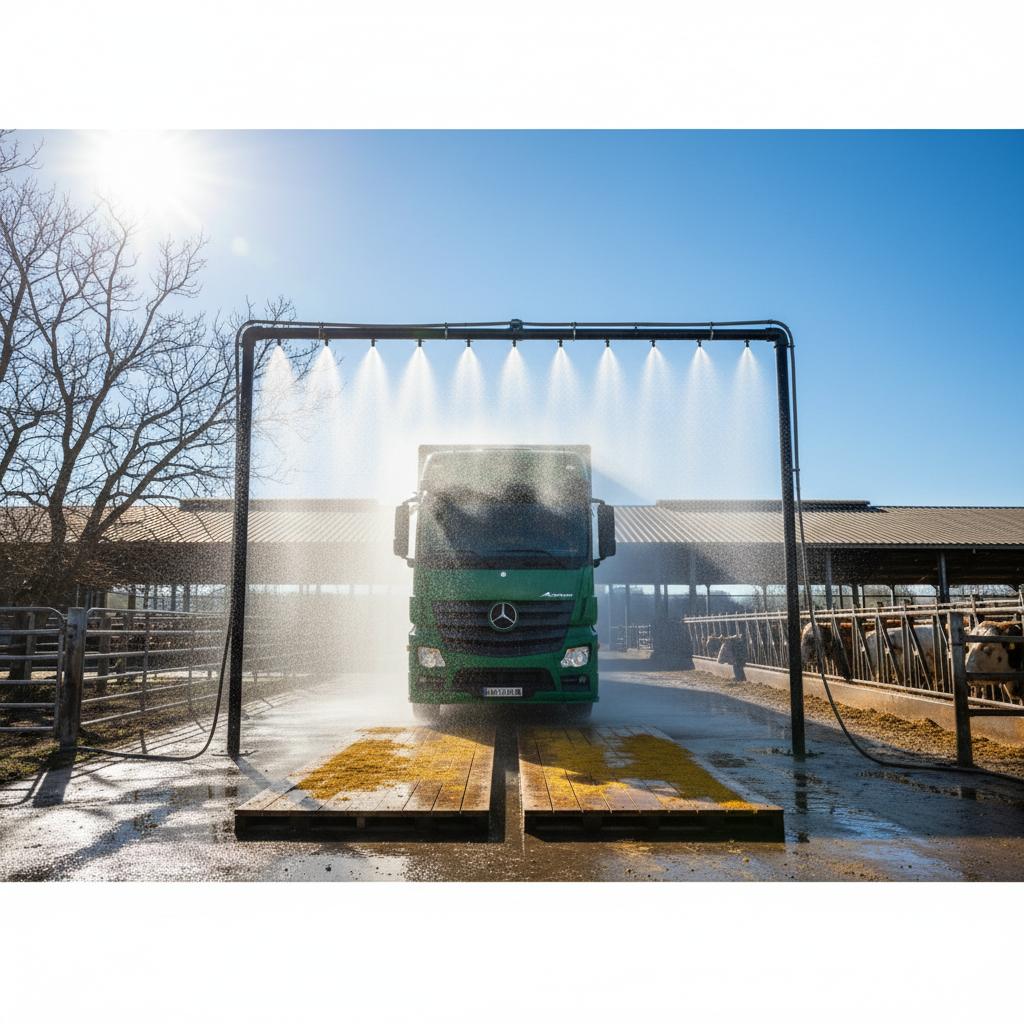 |



Comments & Inquiries
Leave your questions or requirements below. We will reply as soon as possible.