| Product Name |
Vehicle Undercarriage Drying System |
| Product Image |
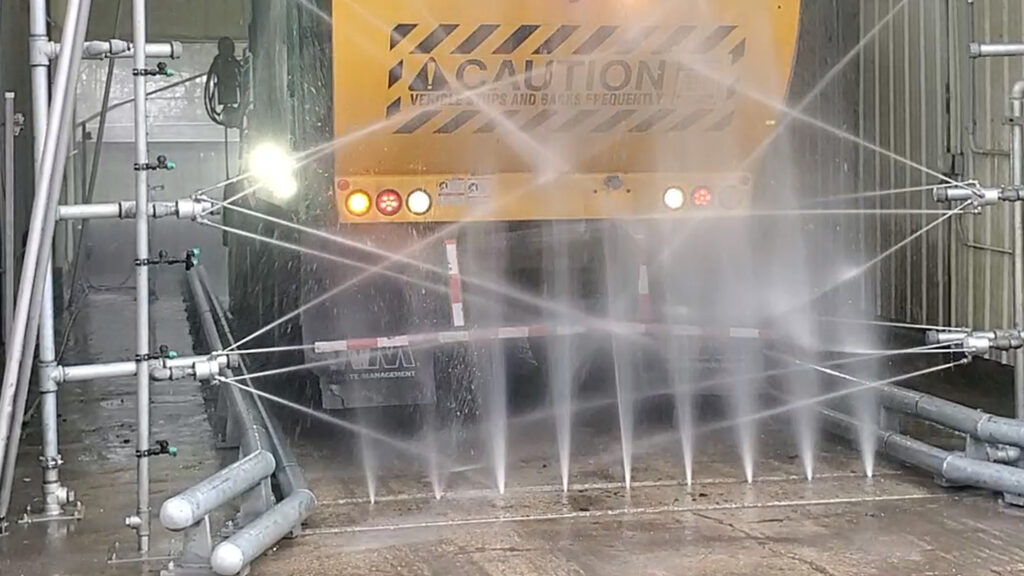 |
| Product Overview |
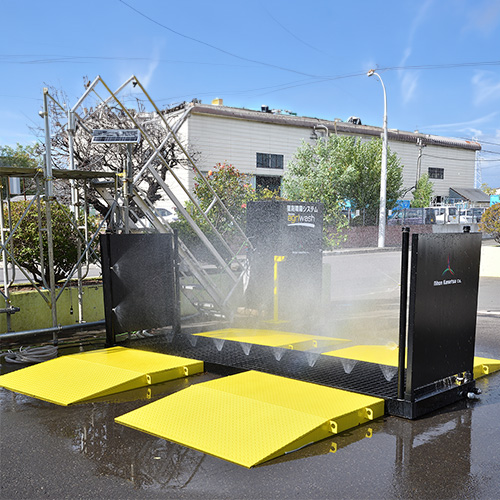
The Vehicle Undercarriage Drying System is a dedicated non-contact air-drying module designed to remove residual water from the underside of commercial vehicles after washing, rinsing or disinfection.
The system uses strategically positioned high-volume air outlets to direct airflow toward the chassis, axle areas, wheel wells and other accessible underbody surfaces. It is particularly suitable for livestock transporters, feed trucks, agricultural trailers and farm service vehicles processed through commercial wash and biosecurity facilities.
The drying module can be installed as a standalone underbody drying station or integrated into a complete vehicle wash and disinfection line. Structural dimensions, blower arrangement and control functions are designed according to vehicle dimensions, tunnel layout, local climate and project requirements.
|
| Key Features |
- Targeted Undercarriage Airflow: Directs airflow toward difficult-to-access areas beneath the vehicle.
- Non-Contact Drying: Removes residual water without brushes, wiping materials or mechanical contact.
- Post-Wash Integration: Designed for installation after vehicle washing, rinsing or disinfection.
- Automated Operation: Can be connected to vehicle detection sensors and a programmable control system.
- Heavy-Duty Construction: Structural components can be engineered for demanding agricultural and commercial environments.
- Modular Configuration: Air outlets, blower units and support frames can be arranged according to the project.
- Improved Process Consistency: Provides a repeatable drying stage for frequently processed farm vehicles.
- Easy System Integration: Can be coordinated with wheel wash, chassis wash and vehicle disinfection equipment.
- Project Engineering: Designed around vehicle clearance, traffic flow, drainage and available installation space.
|
| Structural Components |
- High-Speed Blower Units: Generate the airflow required for underbody drying.
- Undercarriage Air Manifold: Distributes airflow along the drying zone.
- Air Delivery Nozzles: Direct airflow toward chassis and lower vehicle surfaces.
- Support Frame: Provides a stable mounting structure for blowers, manifolds and protective components.
- Protective Guards: Can be provided around moving blower components and service areas.
- Vehicle Detection Sensors: Available upon request for automatic cycle activation.
- Electrical Control Cabinet: Provides centralized operation and sequence control.
- Service Access: Maintenance access can be incorporated according to installation conditions.
- Drainage-Compatible Layout: The drying assembly can be coordinated with the existing wash-bay drainage arrangement.
|
| Working Principle / Structural Principle |
After the vehicle completes the washing, rinsing and, where applicable, disinfection process, it enters the designated undercarriage drying position. A vehicle sensor, timer or operator command can initiate the drying cycle.
High-speed blowers generate a controlled air stream that is distributed through low-level manifolds or strategically positioned nozzles. The airflow is directed upward toward the vehicle underside to displace residual water from accessible chassis, axle and lower-frame surfaces.
For automated farm installations, the drying module can be synchronized with the vehicle wash sequence. Airflow coverage, blower quantity, nozzle position and operating duration are determined according to vehicle configuration and project requirements rather than a fixed universal specification.
|
| Technical Specifications |
| Product Type |
Vehicle undercarriage air-drying system |
| Drying Method |
Directed high-volume airflow |
| Drying Area |
Vehicle chassis, lower frame, axle area and accessible underbody surfaces |
| Blower Quantity |
Customizable |
| Airflow Capacity |
According to project requirements |
| Motor Power |
According to selected blower configuration and local power supply |
| Drying Width |
Designed according to vehicle dimensions and wheel-track requirements |
| Installation Height |
Designed according to chassis clearance and vehicle configuration |
| Air Outlet Arrangement |
Customizable |
| Control Mode |
Manual or automatic, according to project requirements |
| Vehicle Detection |
Available upon request |
| Support Structure |
Galvanized steel, stainless steel or project-specified construction |
| Electrical Specification |
According to local power supply and project requirements |
| Installation |
Standalone, pit-mounted or integrated wash-bay configuration according to project design |
| Customization |
Available upon request |
Final airflow, motor power, blower quantity, structural dimensions and electrical configuration should be confirmed through project engineering.
|
| Applications |
- Commercial Pig Farms: Drying livestock transporters after washing and sanitation procedures.
- Poultry Farms: Supporting vehicle biosecurity workflows at controlled entry and exit points.
- Dairy Farms: Drying milk tankers, feed vehicles and service vehicles after cleaning.
- Cattle Operations: Suitable for livestock trailers and agricultural transport fleets.
- Feed Mills: Integration into vehicle cleaning and sanitation facilities for delivery fleets.
- Livestock Transport Facilities: Dedicated drying stage for high-frequency vehicle processing.
- Farm Engineering Projects: Integration into purpose-built vehicle wash buildings and steel structures.
- Agricultural Vehicle Wash Bays: Suitable for new installations and qualified retrofit projects.
Commercial biosecurity wash systems commonly target vehicle undercarriages, tires and other lower surfaces because these areas can collect mud, manure and organic debris. Automated wash systems can combine undercarriage cleaning with sanitation processes for livestock and agricultural vehicles. :contentReference[oaicite:0]{index=0}
|
| Customization Options |
- Blower Configuration: Customizable according to vehicle size and required drying coverage.
- Air Outlet Position: Designed according to chassis height, wheel track and underbody geometry.
- Drying Zone Dimensions: According to vehicle dimensions and site layout.
- Automation: Optional vehicle sensors, timers, PLC controls and automatic start/stop functions.
- Electrical System: According to local voltage, frequency and project requirements.
- Material Selection: Designed according to local climate, humidity and corrosion exposure.
- Structural Configuration: Can be integrated with galvanized steel or stainless steel wash-bay structures.
- Wash System Integration: Can be coordinated with chassis washing, wheel washing, rinsing and vehicle disinfection systems.
- Retrofit Engineering: Available for suitable existing wash bays after structural and utility assessment.
- OEM/ODM: Available upon request.
Commercial vehicle wash manufacturers describe chassis and underbody systems as customizable components that can operate as standalone units or be integrated into new or existing wash facilities. :contentReference[oaicite:1]{index=1}
|
| Installation & Maintenance |
Installation should be completed on a properly engineered foundation, steel support frame or suitable wash-bay structure. Adequate clearance must be provided for vehicle movement, airflow, drainage and maintenance access.
- Confirm the maximum vehicle width, chassis height and underbody clearance.
- Determine the required drying coverage and airflow direction.
- Prepare the foundation, drainage interface and electrical supply.
- Install the support frame, blower units, manifolds and air outlets.
- Connect the electrical control system and vehicle detection devices where specified.
- Test airflow coverage, automatic sequence and safety functions.
- Verify drying performance using representative farm vehicles.
Maintenance:
- Keep blower air inlets and outlets free from mud, dust and organic debris.
- Inspect blower housings, impellers and protective guards regularly.
- Check motor bearings, mounting points and electrical connections according to the selected equipment manufacturer's schedule.
- Inspect support frames, fasteners and vibration points.
- Check vehicle sensors and automatic controls for reliable operation.
- Keep drainage channels and the drying area free from accumulated debris and standing water.
- Replace wear components according to actual operating conditions and manufacturer recommendations.
Vehicle wash installations require appropriate site layout, drainage and maintenance access, while heavy-duty chassis wash equipment is engineered for demanding operating environments. :contentReference[oaicite:2]{index=2}
|
| Project Cases |
Commercial Pig Farm: A dedicated undercarriage drying stage can be installed after chassis washing and vehicle disinfection to reduce residual moisture before livestock transporters leave the controlled wash area.
Feed Delivery Fleet: The system can be integrated into a drive-through cleaning route for repeat processing of feed trucks operating between farms and production facilities.
Livestock Transport Facility: A low-level air-drying module can be positioned after wheel, chassis and exterior sanitation stages to support a continuous vehicle processing workflow.
New Farm Construction: The drying system can be incorporated into the architectural and engineering design of a vehicle biosecurity building, including steel structure, drainage and electrical infrastructure.
These are representative project configurations based on established commercial vehicle wash and agricultural biosecurity applications; final design should be developed according to the individual site.
|
| Product FAQ |
Q: What is a Vehicle Undercarriage Drying System?
A: It is a non-contact air-drying module designed to remove residual water from accessible vehicle underbody and chassis surfaces after washing or sanitation.
Q: Can it be used for livestock transport vehicles?
A: Yes. The system can be engineered for livestock trailers, feed trucks, milk tankers, agricultural service vehicles and other commercial farm vehicles.
Q: Where is the system installed?
A: It is normally installed after chassis washing, rinsing or disinfection, either as a standalone drying station or as part of a drive-through vehicle wash line.
Q: How does the system dry the undercarriage?
A: High-speed blowers deliver directed airflow through low-level manifolds or air outlets positioned beneath the vehicle.
Q: Can the airflow arrangement be customized?
A: Yes. Blower quantity, air outlet position, drying-zone dimensions and control sequence are customizable according to project requirements.
Q: Can it be integrated with a vehicle disinfection system?
A: Yes. It can be coordinated with vehicle washing, chassis cleaning, wheel treatment and disinfection stages.
Q: Can it be installed in a new pig farm project?
A: Yes. It can be incorporated into the vehicle sanitation building and coordinated with the steel structure, drainage, electrical system and vehicle traffic flow.
Q: Can an existing wash bay be upgraded?
A: Retrofit installation is available upon request, subject to site dimensions, structural capacity, electrical supply and maintenance access.
Q: Does drying replace cleaning or disinfection?
A: No. Drying is a downstream process intended to remove residual moisture. Cleaning and disinfection should be completed using appropriately designed equipment and site-specific biosecurity procedures.
|
| Product Gallery |
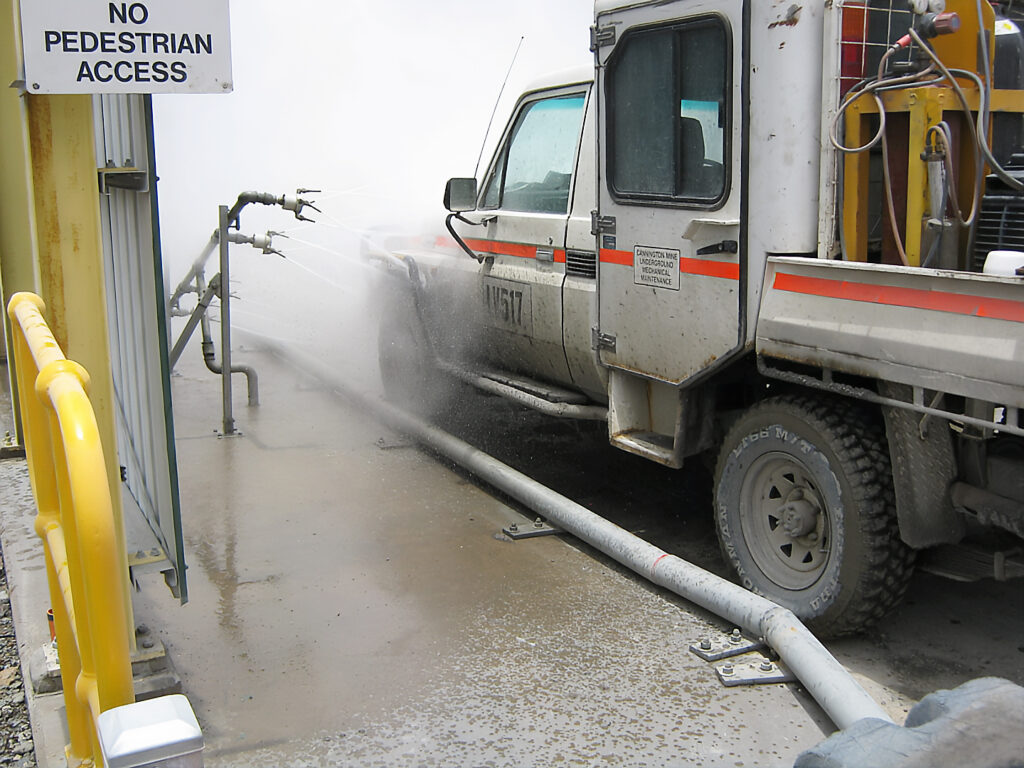

|

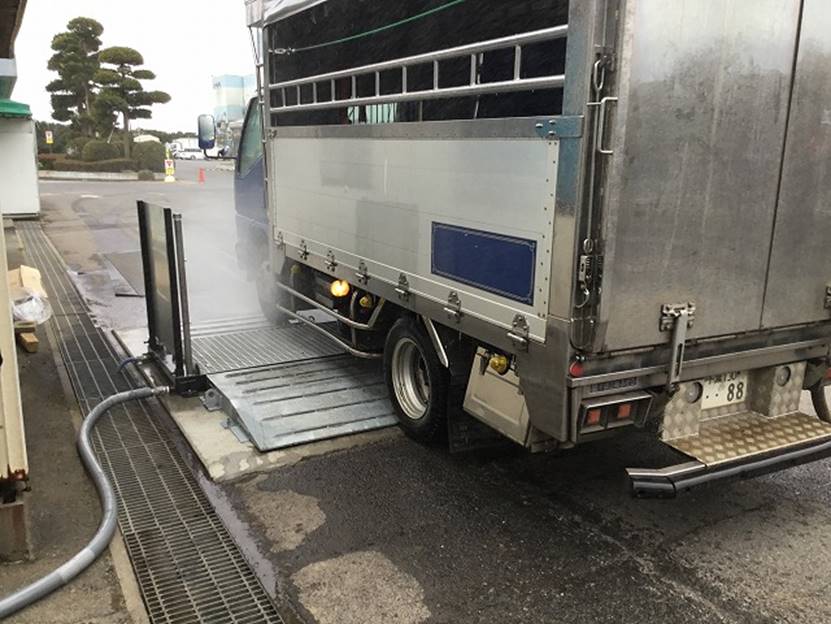
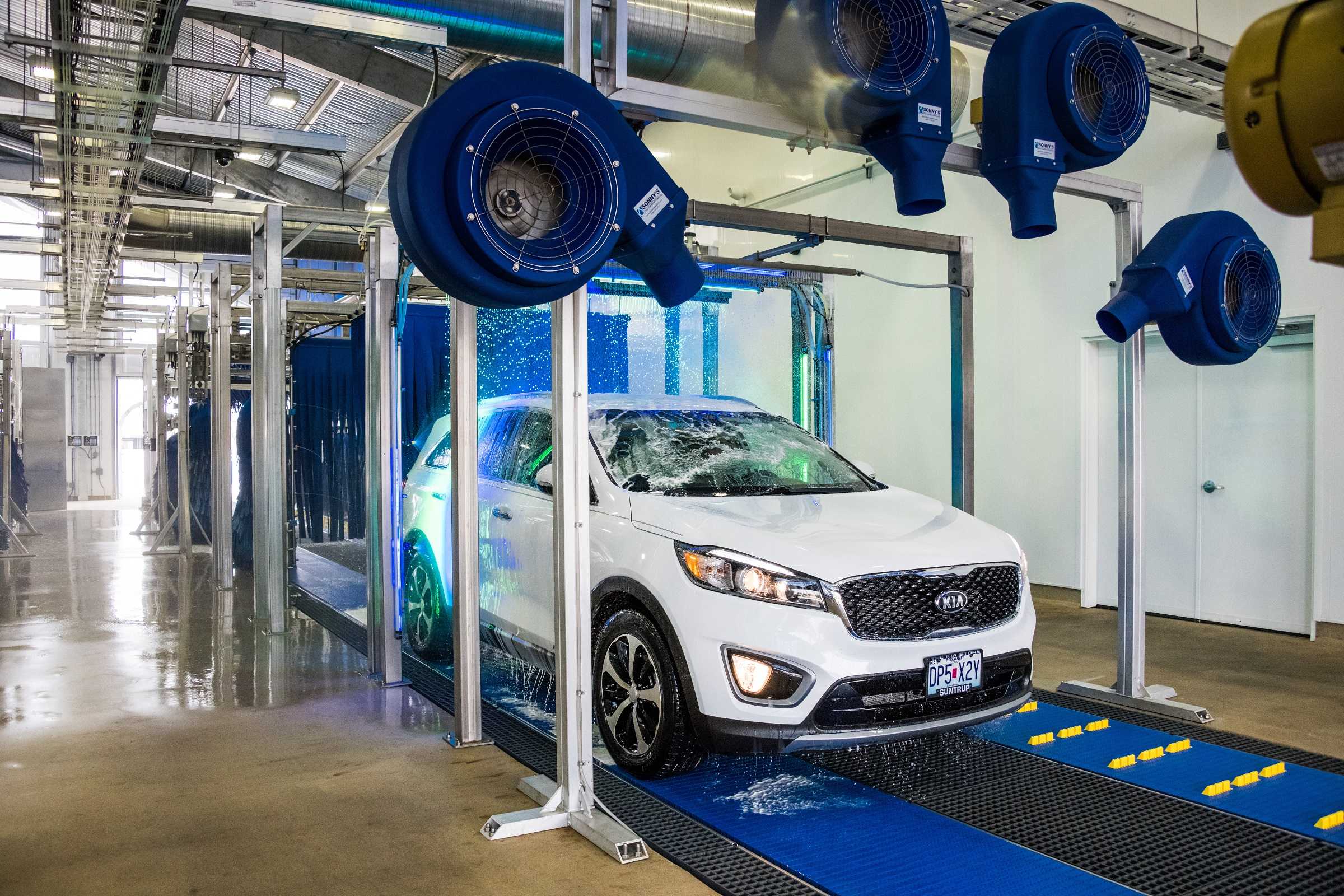

Comments & Inquiries
Leave your questions or requirements below. We will reply as soon as possible.