| Product Name |
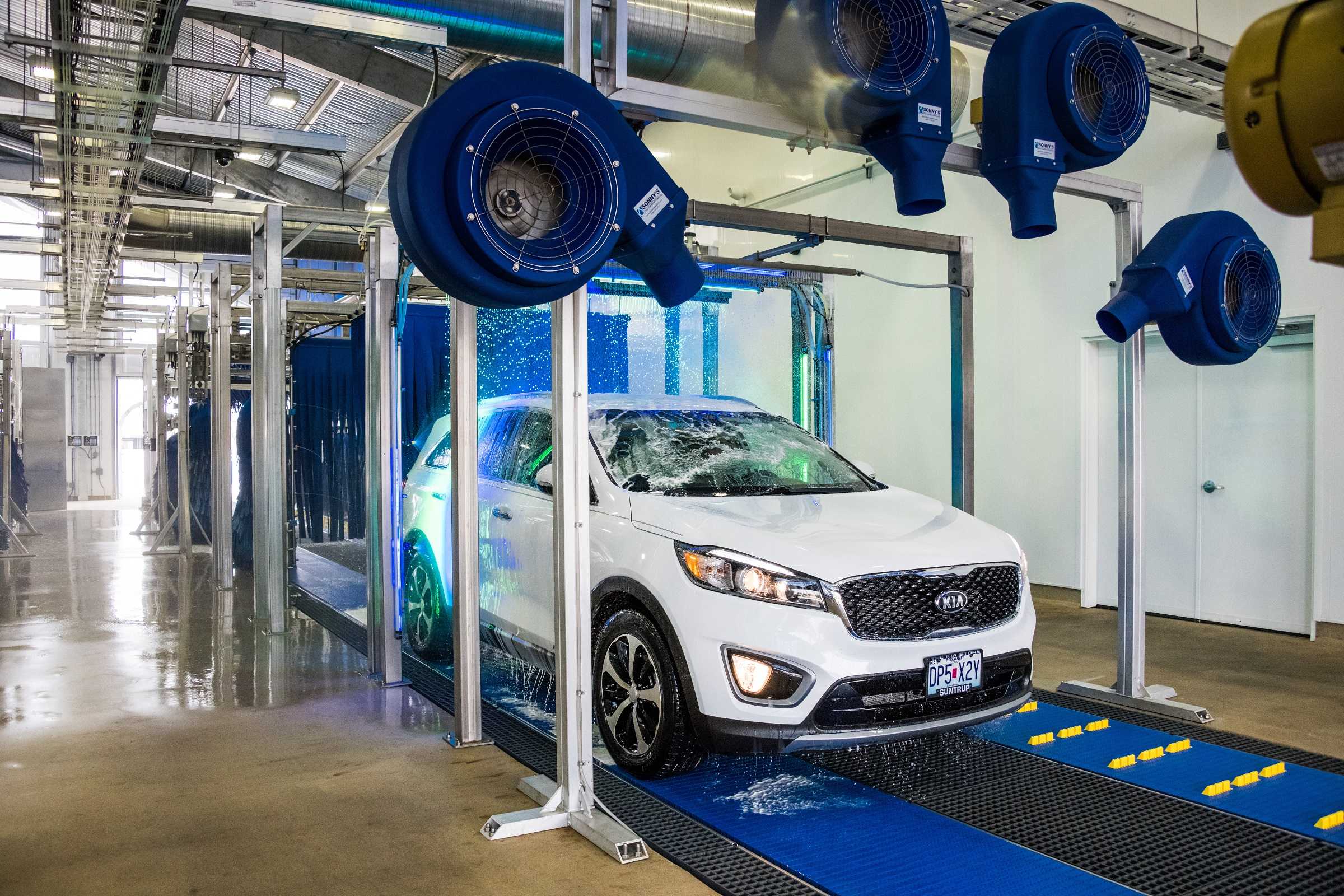
Mobile Vehicle Dryer |
| Product Image |
 |
| Product Overview |
The Mobile Vehicle Dryer is a movable air-drying solution developed for commercial agricultural vehicles, livestock transporters, feed trucks, trailers and farm service vehicles following washing or disinfection.
The unit uses high-volume directed airflow to displace residual water from accessible exterior surfaces without direct mechanical contact. Its mobile configuration allows the drying equipment to be positioned at different wash bays, sanitation areas or vehicle processing points.
It is suitable for livestock farms, agricultural fleets, feed mills, vehicle sanitation facilities and farm engineering projects where flexible equipment deployment is preferred over a fixed drying tunnel.
|
| Key Features |
- Mobile Configuration: Designed for flexible positioning around vehicle wash and sanitation areas.
- High-Volume Airflow: Provides directed airflow to help remove residual water from vehicle surfaces.
- Non-Contact Drying: Reduces surface moisture without brushes, wiping cloths or mechanical contact.
- Flexible Deployment: Suitable for multiple wash bays, seasonal facilities and retrofit projects.
- Farm Vehicle Compatibility: Suitable for livestock trailers, feed trucks, tankers and agricultural service vehicles.
- Heavy-Duty Construction: The frame and major components can be engineered for demanding agricultural environments.
- Adjustable Airflow: Air outlet direction and operating position can be configured according to vehicle geometry.
- Manual or Automated Operation: Control functions can be selected according to project requirements.
- Easy Integration: Can be deployed downstream of vehicle washing, rinsing, wheel cleaning or disinfection systems.
- Low Infrastructure Requirement: The mobile format can reduce the structural work associated with permanent drying tunnels.
InterClean identifies high-powered blowers as a vehicle-wash option for removing excess water at the end of a wash cycle, while its wash equipment can be engineered around different vehicle and site requirements. :contentReference[oaicite:0]{index=0}
|
| Structural Components |
- High-Speed Blower Assembly: Generates the primary drying airflow.
- Air Outlet or Duct: Directs airflow toward the vehicle exterior.
- Mobile Support Frame: Provides a stable structure for the blower and air-delivery assembly.
- Wheels or Casters: Facilitate movement and positioning where included in the selected configuration.
- Protective Guards: Help protect rotating components and improve operational safety.
- Control Panel: Provides local control of blower operation and related functions.
- Electrical Connection Assembly: Configured according to local power supply and project requirements.
- Adjustable Airflow Assembly: Available for applications requiring directional airflow adjustment.
|
| Working Principle / Structural Principle |
After the vehicle completes washing, rinsing or disinfection, the mobile dryer is moved to the designated drying position. The blower generates a high-volume air stream and directs it toward the vehicle body.
The airflow displaces residual water from accessible surfaces and helps reduce water accumulation before the vehicle enters the next stage of the farm or fleet workflow.
The operator can adjust the equipment position, airflow direction and operating time according to vehicle size, body configuration, environmental conditions and project requirements. Multiple units can be deployed when additional drying coverage is required.
|
| Technical Specifications |
| Product Type |
Mobile vehicle air-drying unit |
| Drying Method |
Directed high-volume airflow |
| Suitable Vehicles |
Livestock transporters, feed trucks, trailers, tankers and agricultural service vehicles |
| Blower Configuration |
Customizable |
| Airflow Capacity |
According to project requirements |
| Motor Power |
According to selected blower configuration and local power supply |
| Air Outlet Direction |
Adjustable or project-specific |
| Mobility |
Mobile frame configuration according to project design |
| Control Mode |
Manual or automatic, according to project requirements |
| Vehicle Detection |
Available upon request |
| Frame Material |
Galvanized steel, stainless steel or project-specified material |
| Electrical Specification |
According to local voltage, frequency and project requirements |
| Installation |
Standalone mobile deployment or integration with an existing wash area |
| Customization |
Available upon request |
Final blower performance, motor power, dimensions, airflow arrangement and electrical specifications should be confirmed through project engineering.
|
| Applications |
- Commercial Pig Farms: Drying livestock transporters after vehicle cleaning and sanitation.
- Poultry Farms: Supporting controlled vehicle hygiene processes at farm access points.
- Dairy Farms: Suitable for milk tankers, feed trucks and agricultural service vehicles.
- Cattle Operations: Drying livestock trailers and farm transport vehicles.
- Feed Mills: Supporting cleaning workflows for delivery and logistics fleets.
- Livestock Transport Facilities: Providing flexible drying equipment for repeat vehicle processing.
- Vehicle Wash Bays: Suitable where a permanent blower arch or drying tunnel is not required.
- Biosecurity Facilities: Can be positioned after vehicle washing and disinfection stages.
- Agricultural Engineering Projects: Suitable for new construction and selected retrofit applications.
InterClean's biosecurity wash systems are designed for agricultural vehicles including livestock trailers, feed delivery vehicles, tankers and service vehicles, with configurations adapted to site layout and vehicle requirements. :contentReference[oaicite:1]{index=1}
|
| Customization Options |
- Blower Selection: Customizable according to required airflow and vehicle dimensions.
- Airflow Direction: Adjustable according to vehicle body configuration and drying position.
- Mobile Frame: Frame dimensions, wheel arrangement and handling configuration can be designed according to project requirements.
- Power Configuration: According to local voltage, frequency and available site power.
- Control System: Manual controls, timers, sensors or PLC-based operation available upon request.
- Material Selection: Designed according to local climate, humidity and corrosion exposure.
- Wash System Integration: Can be coordinated with vehicle wash, chassis wash, wheel wash and disinfection equipment.
- Fleet-Specific Design: Drying configuration can be developed around vehicle dimensions and operating patterns.
- OEM/ODM: Available upon request.
Project-specific vehicle wash systems can be configured around vehicle specifications, site constraints and operating requirements rather than relying on one universal arrangement. :contentReference[oaicite:2]{index=2}
|
| Installation & Maintenance |
The mobile design minimizes permanent structural work and allows the unit to be positioned on a suitable level operating surface near the vehicle wash or disinfection area. Sufficient clearance should be maintained for vehicle movement, airflow and operator access.
- Confirm vehicle dimensions and the intended drying position.
- Place the mobile dryer on a stable, level operating surface.
- Verify the electrical supply and safe cable routing.
- Adjust the air outlet direction and operating distance.
- Test airflow coverage and drying performance.
- Establish a routine inspection and cleaning schedule.
Maintenance:
- Keep blower inlets and air outlets free from dust, mud and organic debris.
- Inspect blower housings, impellers and protective guards regularly.
- Check motor mounting points, bearings and electrical connections according to the selected equipment manufacturer's recommendations.
- Inspect wheels, casters, frame joints and fasteners on mobile configurations.
- Check switches, sensors and cables for damage or abnormal operation.
- Keep the operating area clean and free from standing water and obstructions.
|
| Project Cases |
Livestock Farm Wash Area: A mobile dryer can be positioned after vehicle washing and disinfection to reduce residual water before livestock transporters leave the controlled processing area.
Feed Delivery Fleet: The unit can be deployed at a dedicated wash bay to support repeat drying of feed trucks operating between agricultural facilities.
Multi-Bay Farm Facility: A mobile configuration allows the same drying equipment to be moved between wash bays according to traffic volume and operational requirements.
Farm Engineering Retrofit: A mobile dryer can add a dedicated drying stage where an existing vehicle sanitation facility has insufficient space for a permanent drying arch.
These are representative engineering applications. Final equipment configuration should be developed according to the customer's site, vehicle fleet and operating process.
|
| Product FAQ |
Q: What is a Mobile Vehicle Dryer?
A: It is a movable air-drying unit designed to remove residual water from vehicle surfaces after washing or disinfection.
Q: Which vehicles can be dried?
A: The system can be configured for livestock transporters, feed trucks, trailers, tankers, agricultural service vehicles and other commercial farm vehicles.
Q: Can the dryer be used after vehicle disinfection?
A: Yes. It can be positioned downstream of washing, rinsing or disinfection equipment as a final moisture-removal stage.
Q: What is the advantage of a mobile configuration?
A: The unit can be repositioned between different wash bays or operating areas, providing flexible drying without requiring a permanent drying tunnel.
Q: Can the airflow direction be adjusted?
A: Yes. Air outlet direction and equipment positioning can be customized according to vehicle geometry and project requirements.
Q: Can it support livestock farm biosecurity?
A: Yes. It can support a vehicle hygiene workflow after appropriate cleaning and disinfection. Drying itself does not replace cleaning or disinfection.
Q: Can the unit be integrated with an automated wash system?
A: Yes. Automatic start/stop controls, vehicle detection and other interfaces are available upon request.
Q: Can it be customized for different climates?
A: Yes. The equipment can be designed according to local climate, farm conditions, vehicle dimensions and available power supply.
Q: Is a permanent foundation required?
A: Not necessarily. The mobile configuration is intended for flexible placement on a suitable operating surface, while project-specific structural requirements should be confirmed before installation.
|
| Product Gallery |
 |




Comments & Inquiries
Leave your questions or requirements below. We will reply as soon as possible.