| Product Name |
Wheel and Chassis Disinfection System |
| Product Image |
 |
| Product Overview |
The Wheel and Chassis Disinfection System is a modular vehicle biosecurity solution designed for commercial pig farms, poultry farms, cattle operations, livestock transport facilities and other controlled agricultural sites. It focuses on areas that are difficult to treat effectively with conventional manual spraying, particularly vehicle wheels, tyres, underbody areas and chassis components.
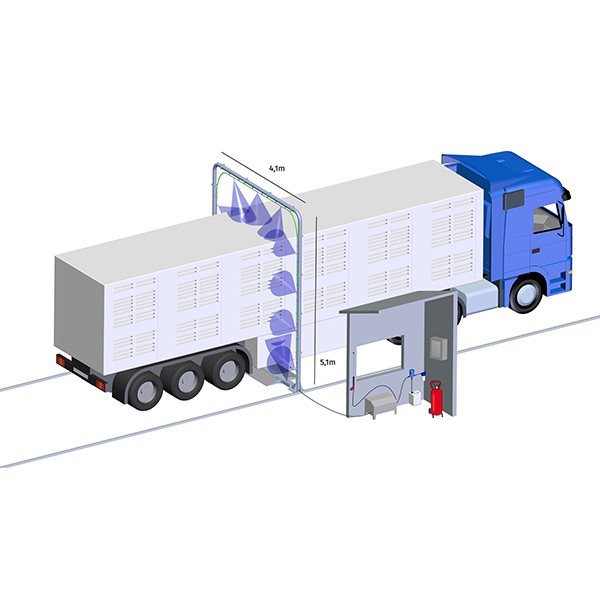
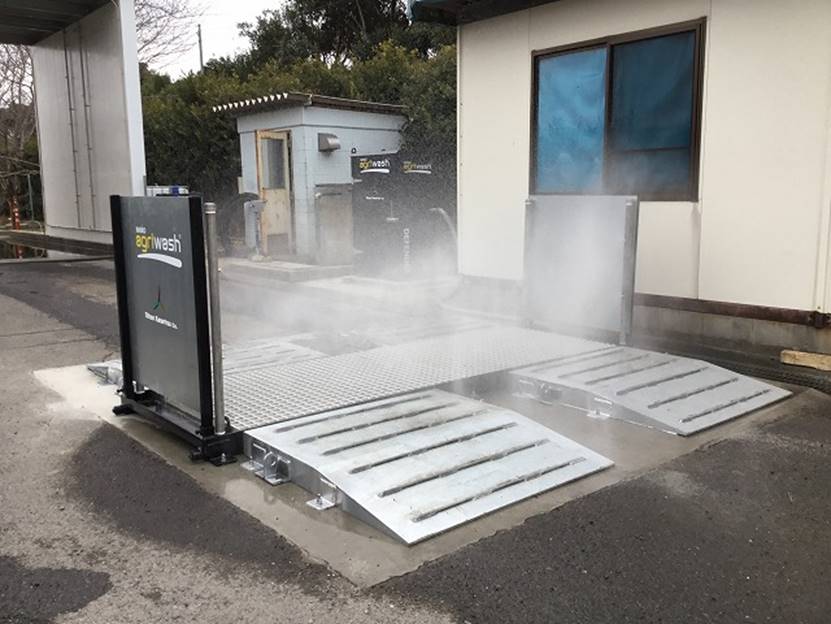
The system uses dedicated lower-level spray lines and strategically positioned nozzles to distribute a prepared disinfectant solution around the vehicle wheel and chassis area as the vehicle passes through the treatment zone. A modular structure allows the system to be integrated into a farm entrance, vehicle sanitation station or larger drive-through disinfection installation.
The reference architecture combines a high-pressure pump module, disinfectant filtering and dosing equipment, galvanized steel wheel and chassis support frames, flexible spray lines, fog nozzles and optional access platforms. Automatic photocell activation can be used to start the spray cycle when a vehicle enters the treatment area.
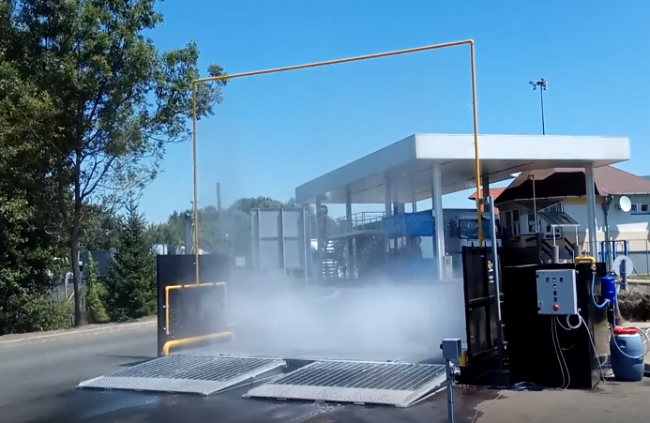
The system can be supplied as a wheel and chassis module or integrated with an overhead disinfection arch for broader vehicle-surface treatment. Structural dimensions, spray arrangement, vehicle clearance, electrical configuration and installation method can be designed according to project requirements. |
| Key Features |
- Dedicated Wheel and Chassis Treatment: Spray lines are positioned at lower levels to target tyres, wheels, underbody and chassis areas.
- Modular Construction: Pump, dosing, spray, frame and platform modules can be combined according to the farm entrance design.
- Automatic Operation: Photocell-based vehicle detection can activate the configured spraying cycle automatically.
- Controlled Disinfectant Application: Filtering and dosing components support controlled delivery of compatible disinfectant solutions.
- Multi-Nozzle Coverage: Multiple flexible hoses and nozzles can be arranged around the wheel and chassis treatment zone.
- Heavy-Duty Frame: Galvanized steel components provide a durable structural base for regular agricultural use.
- Corrosion-Resistant Piping: AISI 304 stainless steel connection piping is available in the reference configuration.
- Simple Assembly: Bolted structural components allow practical installation and replacement of individual modules.
- Manual Override: Manual ON/OFF operation can be incorporated alongside automatic control.
- Optional Vehicle Washing: A separate high-pressure washing kit can be incorporated where cleaning is required before disinfection.
- Project Integration: The system can be coordinated with farm roads, drainage, electrical supply and other biosecurity equipment.
- Customizable Layout: Vehicle clearance, spray positions, platform dimensions and system configuration can be designed according to local farm conditions.
|
| Structural Components |
- Wheel and Chassis Frame: Galvanized steel support structure forms the lower vehicle treatment zone.
- Base Frames: Modular galvanized steel base sections provide a stable foundation for the wheel-disinfection assembly.
- Spray Line Kit: Flexible hoses, fog nozzles and connecting fittings distribute disinfectant around the vehicle wheels and chassis.
- High-Pressure Pump Module: Electric motor, camshaft pump, control valve, safety valve and pressure gauge form the main liquid-delivery assembly.
- Disinfectant Filtering and Dosing Module: Filters and dosing components prepare and control the disinfectant solution before spraying.
- AISI 304 Connection Pipes: Stainless steel piping connects the pump module with the spray assemblies in the reference configuration.
- Photocell Sensors: Vehicle detection sensors provide automatic activation for the treatment cycle.
- Control System: Automatic control and manual ON/OFF operation can be incorporated according to the selected configuration.
- Access Platforms: Galvanized steel platform sections can be attached to the wheel-treatment frame with bolted connections.
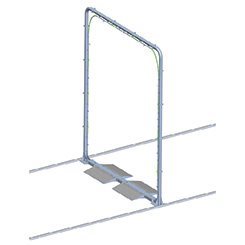
- Optional Disinfection Arch: Galvanized steel columns, beams, hoses and additional nozzles can be integrated for wider vehicle coverage.
- Optional Washing Equipment: A separate high-pressure washing assembly can be supplied for pre-cleaning compatible vehicle surfaces.
|
| Working Principle / Structural Principle |
When a vehicle enters the designated treatment area, the photocell detects the vehicle and sends a signal to the control system. The pump module then supplies the prepared disinfectant solution to the lower spray lines.
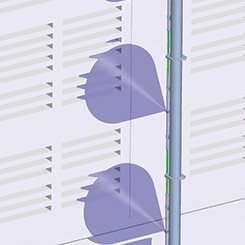
The disinfectant passes through the filtering and dosing assembly before being distributed through flexible hoses and dedicated spray nozzles. The nozzles are positioned around the wheel and chassis treatment zone to direct the spray toward tyres, wheels, underbody and accessible chassis surfaces.
The treatment cycle can be controlled automatically according to the selected system configuration. Manual ON/OFF control can also be provided where operator intervention is required.
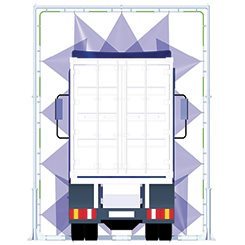
For larger vehicle biosecurity stations, the wheel and chassis module can be combined with an overhead disinfection arch. This creates a coordinated system for treating lower vehicle areas together with side and upper vehicle surfaces.
Where vehicle washing is required, a separate high-pressure washing stage can be incorporated. Cleaning and disinfection should be managed according to the farm biosecurity SOP and the selected disinfectant manufacturer's approved concentration and contact-time requirements. |
| Technical Specifications |
| Product Type |
Modular Wheel and Chassis Vehicle Disinfection System |
| Primary Application |
Vehicle wheels, tyres, underbody and chassis disinfection |
| Reference Operating Pressure |
100 bar |
| Reference Pump Flow |
21 L/min |
| Reference Pump Maximum Pressure |
150 bar |
| Pump Type |
Camshaft pump with three ceramic pistons and brass head, reference configuration |
| Reference Motor |
Electric motor, 3-phase, 400 V, 1450 rpm |
| Wheel / Chassis Spray Nozzles |
16 fog nozzles in the reference modular configuration |
| Optional Arch Nozzles |
7 fog nozzles in the reference arch configuration |
| Connection Piping |
AISI 304 stainless steel reference configuration |
| Main Frame |
Galvanized steel |
| Automatic Activation |
Photocell-controlled reference configuration |
| Manual Control |
ON/OFF manual control available in the reference configuration |
| Vehicle Clearance |
Customizable according to vehicle dimensions and project requirements |
| Installation |
Surface-mounted or integrated into a prepared vehicle disinfection station according to project design |
| System Configuration |
Designed according to farm layout, traffic conditions, vehicle fleet and local electrical standards |
Reference technical data are based on a comparable modular commercial vehicle disinfection configuration. Final pressure, flow rate, nozzle quantity, vehicle clearance, electrical specification and structural dimensions should be confirmed according to the selected system and project requirements.
|
| Applications |
- Commercial Pig Farms: Vehicle biosecurity at farm entrances, loading zones and controlled clean-zone access points.
- Poultry Farms: Wheel and chassis treatment for feed trucks, poultry transport vehicles, service vehicles and authorized traffic.
- Cattle and Dairy Farms: Vehicle sanitation for livestock transport, feed delivery and farm service operations.
- Breeding Facilities: Controlled vehicle treatment between different biosecurity zones.
- Livestock Transport Facilities: Dedicated wheel and underbody treatment for livestock transporters and trailers.
- Feed Mills: Vehicle sanitation at controlled access points serving livestock production sites.
- Quarantine Areas: Vehicle treatment at transition points between clean and controlled areas.
- New Pig Farm Construction: Integration with farm roads, vehicle circulation, drainage, electrical infrastructure and entrance biosecurity.
- Existing Farm Upgrades: Modular installation can be incorporated into an existing vehicle sanitation area.
- Agricultural Engineering Projects: Suitable for EPC contractors, livestock equipment integrators, distributors and farm infrastructure projects.
|
| Customization Options |
The system can be engineered according to vehicle dimensions, farm traffic volume, site layout and local biosecurity requirements.
- Vehicle Clearance: Spray-frame dimensions can be designed according to the largest vehicle using the treatment area.
- Nozzle Arrangement: Nozzle quantity, spacing, position and spray direction can be selected according to wheel and chassis geometry.
- Pump Performance: Pump pressure and flow can be selected according to the spray configuration and project requirements.
- Chemical Dosing: Filtering and dosing equipment can be configured for the selected compatible disinfectant.
- Automatic Control: Photocell activation, manual control and other project-specific control arrangements are available.
- Arch Integration: An overhead disinfection arch can be added where broader vehicle coverage is required.
- Platform Design: Access platforms and base-frame dimensions can be adapted to the vehicle entrance layout.
- Electrical Configuration: Motor and control components can be selected according to local electrical standards.
- Structural Materials: Galvanized steel and stainless steel components can be selected according to local climate and chemical exposure.
- Vehicle Washing Module: A separate high-pressure washing kit can be incorporated for cleaning before disinfection.
- Drainage: Collection and drainage arrangements can be designed according to the site's wastewater management system.
- OEM / Project Engineering: Documentation, spare parts, packaging, branding and project-specific engineering are available upon request.
|
| Installation & Maintenance |
Installation: The modular structure is designed for practical assembly using bolted connections. For a permanent livestock farm project, the wheel and chassis treatment system should be coordinated with the prepared foundation, vehicle circulation, water supply, electrical system and drainage layout.
- Confirm vehicle width, wheelbase, ground clearance and maximum axle load before final installation.
- Prepare a stable and level installation base according to the approved project drawing.
- Assemble the galvanized steel frame and platform modules using the specified bolted connections.
- Install spray lines and position the nozzles according to the approved spray layout.
- Connect the pump module, stainless steel piping, filtering and dosing system.
- Position photocells where reliable vehicle detection can be achieved.
- Connect the electrical supply according to the local electrical standard and approved wiring design.
- Test pump pressure, liquid flow, nozzle operation and automatic activation before commissioning.
- Set the chemical dosing and spray cycle according to the farm biosecurity SOP and disinfectant manufacturer's instructions.
- Clean spray nozzles and filters regularly to prevent blockage and unstable spray performance.
- Inspect hoses, fittings, valves, pump seals and stainless steel connections for leakage or wear.
- Keep the wheel and chassis spray area free from excessive mud, manure and other accumulated organic material.
- Inspect galvanized structural components and fasteners periodically.
- Flush the liquid circuit when required after chemical use or extended periods of shutdown.
- Where freezing conditions occur, protect or drain water and liquid-handling components according to local climate requirements.
|
| Project Cases |
Commercial Pig Farm Entrance: The system can be installed at the controlled entrance of a commercial pig farm to treat tyres, wheels and chassis before vehicles enter production areas.
Poultry Farm Biosecurity Station: A dedicated lower spray module can be integrated into the vehicle sanitation point used by feed trucks, service vehicles and poultry transport vehicles.
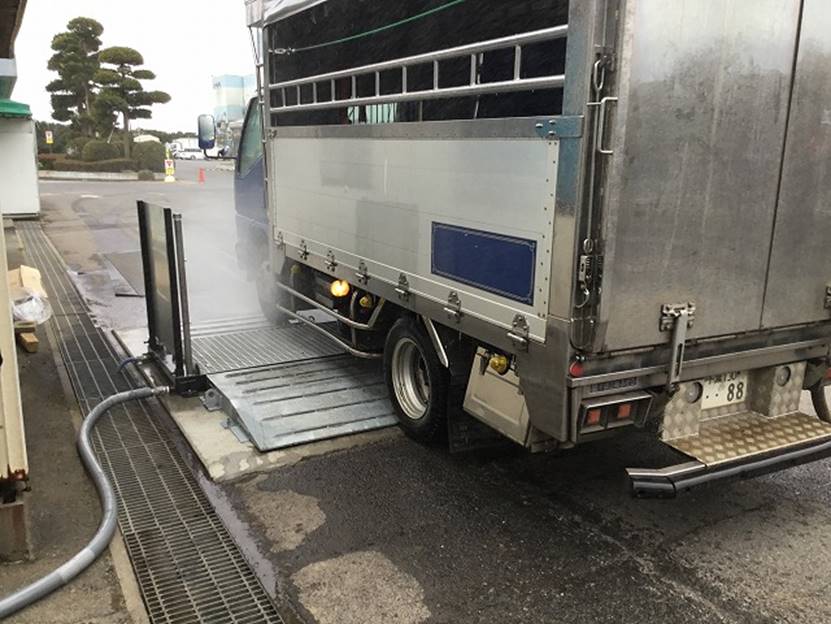
Livestock Transport Facility: The modular frame and spray-line arrangement can be designed for heavy livestock transporters and other agricultural vehicles according to vehicle dimensions.
New Farm Construction Project: During pig farm construction or poultry farm construction, the wheel and chassis system can be incorporated into the overall vehicle circulation, drainage, electrical and biosecurity layout.
Existing Farm Upgrade: The modular structure can be added to an existing vehicle disinfection area and combined with an overhead arch where more comprehensive vehicle treatment is required.
Engineering and Distribution Projects: The modular product architecture is suitable for livestock equipment distributors, agricultural engineering companies and project contractors requiring configurable vehicle biosecurity equipment. |
| Product FAQ |
Q: What is a Wheel and Chassis Disinfection System?
A: It is a modular vehicle biosecurity system designed to apply compatible disinfectant to tyres, wheels, underbody and chassis areas that can be difficult to reach with conventional manual spraying.
Q: Is it suitable for commercial pig farms?
A: Yes. The system is suitable for commercial pig farms, poultry farms, cattle operations, breeding facilities, livestock transport sites and other controlled agricultural facilities.
Q: How does automatic operation work?
A: A photocell detects the vehicle and activates the configured spray cycle. Manual ON/OFF control can also be incorporated according to the selected configuration.
Q: Which parts of the vehicle are treated?
A: The dedicated lower spray system targets tyres, wheels, underbody and chassis areas. An optional overhead arch can be added for broader treatment of vehicle side and upper surfaces.
Q: What are the reference pump specifications?
A: The reference modular configuration uses a pump with approximately 100 bar operating pressure and 21 L/min flow, with a pump maximum pressure of approximately 150 bar.
Q: How many nozzles are included?
A: The reference wheel and chassis line uses 16 fog nozzles. An optional reference disinfection arch uses 7 fog nozzles. Final nozzle quantity and arrangement are customizable.
Q: What materials are used?
A: The reference configuration uses galvanized steel for the structural frame and AISI 304 stainless steel for connection piping.
Q: Can the system be integrated into a new pig farm construction project?
A: Yes. Vehicle clearance, platform dimensions, spray arrangement, drainage, electrical supply and access layout can be coordinated with the farm's civil and MEP design.
Q: Can vehicle washing be included?
A: Yes. A separate high-pressure washing module can be incorporated where cleaning is required before the disinfection stage.
Q: Can the system be customized for different vehicle types?
A: Yes. The frame, vehicle clearance, nozzle arrangement, pump performance, dosing system, platform, control system and optional arch can be designed according to the vehicle fleet and project requirements.
Q: What maintenance is required?
A: Routine maintenance includes cleaning nozzles and filters, checking hoses and fittings, inspecting the pump and valves, testing photocells and controls, and keeping the spray and drainage areas free from accumulated organic material.
|
| Product Gallery |
|

Comments & Inquiries
Leave your questions or requirements below. We will reply as soon as possible.