

| Product Showcase | Content | ||||||||||||||||||||||||||
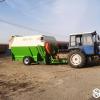
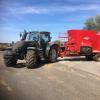
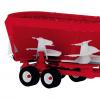
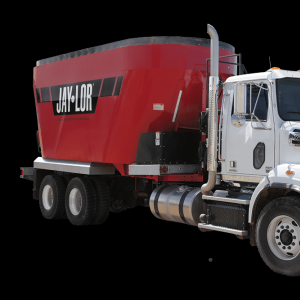
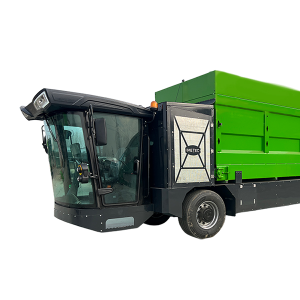
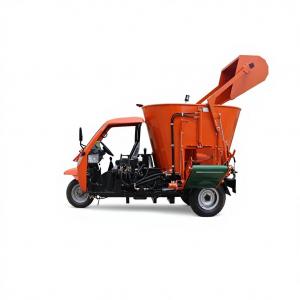
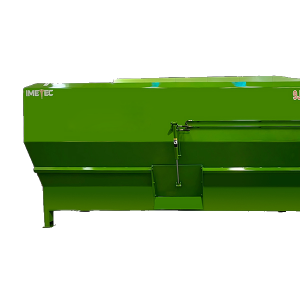
| Product Name | Triple-Auger Large-Capacity TMR Mixer Wagon | ||||||||||||||||||||||||||
| Product Image | 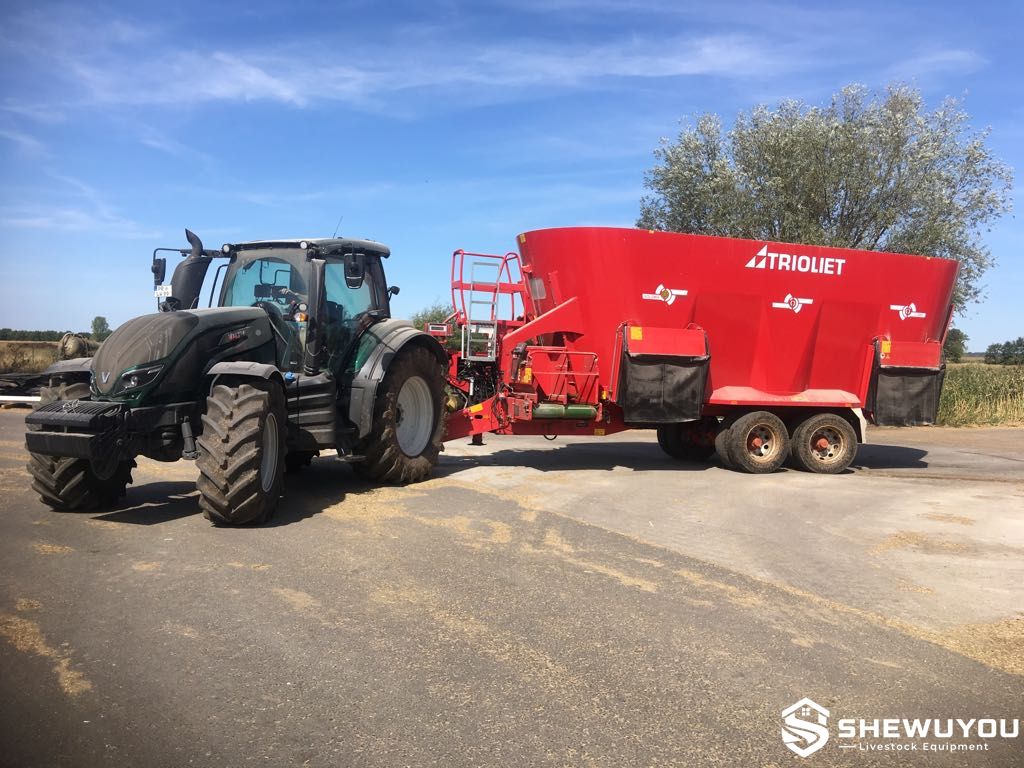 |
||||||||||||||||||||||||||
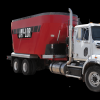
| Product Overview | The Triple-Auger Large-Capacity TMR Mixer Wagon is designed for commercial dairy farms, beef cattle operations and large livestock feeding projects requiring high daily ration throughput. Three vertical mixing augers continuously lift, cut and circulate silage, hay, straw, concentrates, minerals and other ration ingredients to produce a homogeneous Total Mixed Ration. The large mixing chamber provides efficient processing of bulk feed while helping maintain consistent ration structure. Multiple front-discharge configurations, electronic weighing options and heavy-duty running gear allow the mixer wagon to be adapted to different barn layouts, herd sizes and feeding-management systems. |
||||||||||||||||||||||||||
| Key Features |
|
||||||||||||||||||||||||||
| Structural Components |
|
||||||||||||||||||||||||||
| Working Principle | Ingredient Loading: Silage, hay, straw, concentrates, minerals and other ration ingredients are loaded into the mixing chamber according to the required feeding formula. Weight Control: When equipped with electronic weighing, load cells monitor ingredient quantities during the loading process. Triple-Auger Mixing: Three vertical augers lift material upward while the mixing-tub geometry redirects feed horizontally and downward, creating continuous circulation throughout the chamber. Fiber Cutting: Auger knives and restrictor blades process long-fiber materials to achieve the required ration structure. Feed Distribution: After mixing, the ration is discharged through the front opening onto a belt or chain conveyor and delivered along the cattle feed passage. |
||||||||||||||||||||||||||
| Technical Specifications |
|
||||||||||||||||||||||||||
| Applications |
|
||||||||||||||||||||||||||
| Customization Options |
|
||||||||||||||||||||||||||
| Installation & Maintenance | Select a tractor with suitable PTO power, hydraulic capacity, braking capability and towing capacity for the selected mixer configuration. Confirm that barn entrances, feed passages, turning areas and overhead clearance are compatible with the wagon dimensions before operation. Regular maintenance should include inspection of auger knives, restrictor blades, gearbox, PTO shaft, hydraulic hoses, conveyor system, axle, tyres, brakes and weighing components. Feed residues should be removed regularly, and high-wear areas of the mixing tub and augers should be inspected for abrasion. Gearbox lubrication, bearing servicing and knife replacement should follow the recommended maintenance schedule. |
||||||||||||||||||||||||||
| Project Cases | Triple-auger TMR mixer wagons are suitable for large dairy and beef farms where substantial quantities of ration must be prepared within a limited feeding window. Project configuration should consider herd size, number of feeding groups, ration density, daily loads, feed-passage dimensions and available tractor power. | ||||||||||||||||||||||||||
| Product FAQ | Q: What is the main advantage of a triple-auger TMR mixer? A: Three augers provide high mixing capacity and rapid feed circulation, making the machine suitable for large cattle herds and high daily feeding volumes. Q: What ingredients can be mixed? A: Typical ingredients include grass or corn silage, hay, straw, concentrates, minerals and other suitable livestock ration components. Q: Can the mixer process long-fiber forage? A: Yes. Auger knives and restrictor blades can process long forage and suitable bale materials according to the selected configuration. Q: Can the mixer discharge feed to both sides? A: Yes. Belt and chain conveyor configurations can support left- and right-side feeding according to barn requirements. Q: Is an electronic weighing system available? A: Yes. Electronic weighing and feed-management options are available according to project requirements. Q: How should the correct mixer capacity be selected? A: Capacity should be selected according to herd size, ration density, feeding frequency, number of feeding groups and available tractor power. |
||||||||||||||||||||||||||
| Product Gallery | |
- Home
-
Products
- Pig Farming Equipment
- Cattle Farming Equipment
- Sheep & Goat Farming Equipment
- Poultry Farming Equipment
- Feeding & Drinking Systems
- Veterinary & Breeding Equipment
- Testing & Diagnostic Equipment
- Cleaning & Biosecurity Equipment
- Climate Control Equipment
- Livestock Weighing Equipment
- Manure & Waste Management
- Farm Transport & Handling
-
Solutions
- Pig Farm Solutions
- Dairy Farm Solutions
- Beef Cattle Farm Solutions
- Sheep & Goat Farm Solutions
- Layer Farm Solutions
- Broiler Farm Solutions
- Feeding & Drinking System Solutions
- Climate Control Solutions
- Biosecurity & Disinfection Solutions
- Manure & Waste Management
- Smart Farming Solutions
- Farm Renovation and Upgrade Solutions
- Partners
- Projects
- Resources
- News
- About Us
- Contact
Comments & Inquiries
Leave your questions or requirements below. We will reply as soon as possible.