Global Livestock Equipment Manufacturer & Supplier
SHEWUYOU · Livestock Equipment
Integrated Equipment Solutions for Pig, Cattle & Poultry Farms

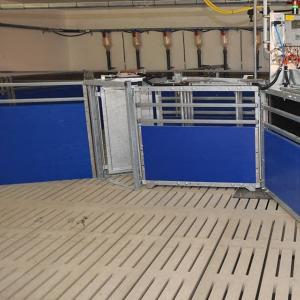
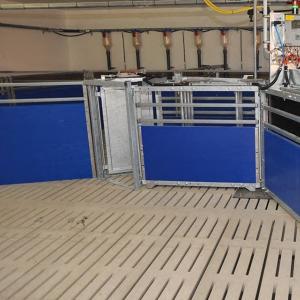
RFID Sow Gestation Feeding Station

Product Showcase Content
Product Name RFID Sow Gestation Feeding Station
Product Image  
Product Overview

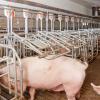
The RFID Sow Gestation Feeding Station is an automated individual feeding solution for pregnant sows housed in groups. Each sow is identified electronically when entering the station, allowing the feeding controller to determine whether the animal is entitled to feed and how much ration should be delivered according to its programmed feeding curve.

The station combines RFID animal identification, controlled dry-feed dosing and a protected feeding compartment. Once a sow enters, the mechanical entrance system helps prevent other animals from pushing into the feeding space, allowing the identified sow to consume its ration with reduced competition.

Individual feed allocation can be adjusted according to body condition, gestation stage, parity, management group or farm feeding strategy. Feeding records can also be used to identify animals that have not consumed their expected ration and support more precise herd management.

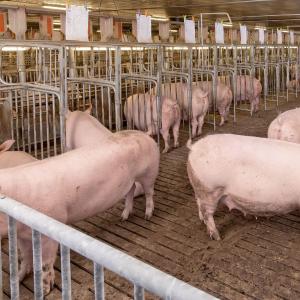
The system is designed for commercial sow farms using loose housing or group gestation systems and can be integrated with dry feed delivery lines, RFID ear tags, central control software, optional water supply and additional sow-management functions according to project requirements.

Key Features
  • RFID individual identification: The station identifies each sow through an electronic ear tag or compatible RFID transponder before feed is allocated.
  • Individual feed rationing: Feed allowance can be managed according to each sow's programmed feeding curve, body condition and gestation stage.
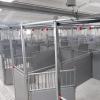
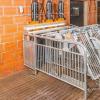
  • Protected feeding space: Side panels and entrance-control components help separate the feeding sow from other animals in the group.
  • Controlled portion delivery: Dry feed can be dispensed in repeated small portions to match sow eating behavior and reduce unnecessary feed residues.
  • Automated feeding records: Individual feed intake and station activity can be recorded for management review and exception monitoring.
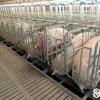
  • Group-housing compatibility: Designed for loose-housed pregnant sows where individual feeding must be maintained within a group environment.
  • Mechanical entrance protection: Simple mechanical closing concepts can reduce dependence on complicated pneumatic equipment.
  • Durable construction: Stainless steel and galvanized steel components can be used in high-contact and high-moisture areas.
  • Hygienic feeding area: Stainless-steel troughs and smooth protective panels simplify routine cleaning and sanitation.
  • Optional water addition: Water supply can be incorporated where controlled water addition to dry feed is required.
  • Expandable smart functions: Heat detection, color marking, animal sorting or other management functions can be integrated according to the selected control platform.
  • Scalable commercial system: Multiple feeding stations can be installed for larger sow groups according to stocking capacity and project design.
Structural Components
  • RFID antenna: Reads the identification transponder of the sow inside the feeding station.
  • Feed storage hopper: Provides temporary feed storage above the individual dosing equipment.
  • Feed dosing unit: Delivers controlled portions according to the ration authorized by the feeding controller.
  • Feed outlet: Transfers dosed feed from the dispensing mechanism into the sow trough.
  • Stainless-steel trough: Provides a durable, hygienic feeding surface for individual sow feeding.
  • Protective side panels: Help prevent disturbance and feed competition from neighboring sows.
  • Entrance and locking mechanism: Controls station occupancy and helps ensure that only one sow uses the feeding space at a time.
  • Anti-lying components: Can be incorporated to discourage animals from remaining unnecessarily inside the station.
  • Structural frame: Galvanized or stainless-steel construction provides stability for continuous commercial use.
  • Central control unit: Stores sow identification, feeding curves, feed entitlement and feeding records.
  • Optional water line: Allows controlled addition of water to the ration where required.
  • Optional identification and management devices: Color marker, heat-detection equipment or other smart-farm modules can be added according to project requirements.
Working Principle / Structural Principle

1. Sow Entry: A gestating sow enters the feeding station from the group-housing area.

2. RFID Identification: The antenna reads the sow's electronic ear tag and sends its identification number to the feeding controller.

3. Feed Entitlement Check: The control system checks the sow's programmed daily ration, previous feed intake and remaining feed allowance.

4. Protected Feeding: The station entrance closes or mechanically restricts access after the sow enters, preventing another sow from occupying the same feeding position.

5. Controlled Feed Delivery: If the sow is entitled to feed, the dosing mechanism releases the programmed quantity in controlled portions into the trough.

6. Feed Recording: The system records the ration delivered to the individual animal for later monitoring and herd-management analysis.

7. Sow Exit: After feeding, the sow exits the station and returns to the group area, allowing the next sow to enter.

This approach combines the freedom of group gestation housing with controlled individual feeding, allowing farms to manage feed intake without permanently confining each sow in a conventional gestation stall.

Technical Specifications
  • Product Type: RFID electronic sow feeding station
  • Application: Individual feeding of group-housed gestating sows
  • Animal Identification: RFID electronic ear tag / compatible transponder
  • Feeding Method: Individual controlled dry-feed dosing
  • Feed Allocation: According to individual feeding curve or programmed daily ration
  • Dosing Method: Automatic portion dosing; configuration according to project requirements
  • Reference Group Capacity: Comparable commercial systems may serve approximately 20 sows per feeding station; final capacity depends on feeding strategy and project design
  • Station Quantity: Expandable for larger groups according to stocking capacity
  • Frame Material: Galvanized steel, stainless steel or customized corrosion-resistant construction
  • Trough Material: Stainless steel or equivalent livestock-grade material
  • Side Panels: Stainless-steel or project-specified protective panels
  • Entrance System: Mechanical or automated protective entry mechanism according to configuration
  • Water Addition: Optional
  • Heat Detection: Optional
  • Color Marking: Optional
  • Feed Intake Recording: Available with compatible management controller
  • Remote Monitoring: Available upon request with compatible farm-management software
  • Installation: New-build or retrofit gestation-house application
  • Final Configuration: Designed according to herd size, group structure, feeding program and farm conditions
Applications
  • Group-housed gestating sow barns
  • Loose-housing sow gestation systems
  • Commercial breeding farms
  • Large-scale sow production complexes
  • Electronic sow feeding systems
  • Precision sow nutrition programs
  • Individual body-condition feeding strategies
  • RFID livestock-management projects
  • Smart pig farm projects
  • New steel structure gestation houses
  • Existing sow barn modernization
  • Turnkey commercial pig farm projects
Customization Options

The RFID Sow Gestation Feeding Station can be configured according to herd size, gestation-house layout and farm-management requirements. Available customization options may include:

  • Number of sows per station
  • Number of stations per group
  • Station dimensions according to sow size and project layout
  • RFID ear-tag identification system
  • Feed hopper capacity
  • Dry-feed dosing configuration
  • Individual feeding curves
  • Multiple feed strategies according to gestation stage
  • Optional water addition
  • Color marking system
  • Heat-detection integration
  • Sow sorting or separation functions
  • Central control computer
  • Remote farm-management access
  • Feed-intake reporting and exception alerts
  • Integration with existing dry-feed delivery lines
  • Integration with group gestation pen layouts
  • Retrofit configuration for existing sow barns
  • Complete system designed according to local climate and farm conditions
Installation & Maintenance

Installation:

  • Confirm sow group size, station quantity, feeding strategy and gestation-house layout before installation.
  • Position feeding stations to support smooth sow movement and avoid unnecessary congestion around entrances and exits.
  • Verify floor condition, structural anchoring points and required clearances.
  • Secure the structural frame and feeding station to the designated floor area according to project drawings.
  • Install the feed hopper, dosing mechanism, feed outlet and trough.
  • Connect the station to the main dry-feed delivery line.
  • Install the RFID antenna and associated control wiring in protected positions.
  • Connect optional water, marking and heat-detection equipment where specified.
  • Configure sow identification data, feeding curves and daily feed allowances in the management system.
  • Test identification, entry protection, feed dosing and animal exit before commissioning.
  • Introduce and train sows according to the selected management procedure before full automatic operation.

Maintenance:

  • Clean the trough and feed-contact surfaces regularly to prevent feed accumulation.
  • Inspect the RFID antenna and ear-tag identification performance during routine operation.
  • Check the feed doser for blockage, abnormal wear or dosing inconsistency.
  • Inspect entrance, rocker, gate or locking components for smooth mechanical operation.
  • Check structural anchors, protective side panels and anti-lying components.
  • Inspect water connections and valves where optional water addition is installed.
  • Review daily exception reports for sows that have not consumed their expected ration.
  • Back up feeding and animal-management data according to the control-system maintenance procedure.
  • Protect control units, antennas and electrical components from unsuitable high-pressure washing.
  • Replace worn or damaged components before they affect animal access, identification or feeding accuracy.
Product FAQ

Q: What is an RFID sow gestation feeding station?
A: It is an electronic feeding station that identifies individual pregnant sows through RFID ear tags and automatically delivers the programmed feed allowance for each animal.

Q: Is the system designed for group-housed sows?
A: Yes. The primary application is individual feeding within loose-housed or group gestation systems.

Q: How does the station know how much feed to provide?
A: After RFID identification, the controller checks the sow's individual feeding curve, daily allowance and previously recorded feed intake before authorizing additional feed.

Q: Can different sows receive different feed quantities?
A: Yes. Individual rationing is one of the main advantages of electronic sow feeding and can be adjusted according to condition, parity, gestation stage and farm strategy.

Q: How is the sow protected while eating?
A: The station uses protective side panels and an entrance-control mechanism so that another sow cannot easily enter the feeding space while it is occupied.

Q: How many sows can use one feeding station?
A: Comparable commercial systems commonly use approximately 20 sows per station. The correct number depends on feed delivery speed, feeding schedule, herd behavior and project design.

Q: Can water be added to the dry feed?
A: Yes. Optional controlled water addition can be integrated according to the selected system configuration.

Q: Can heat detection or marking functions be added?
A: Yes. Compatible heat-detection, color-marking and animal-management functions can be incorporated according to project requirements.

Q: Can individual feed intake be recorded?
A: Yes. A compatible central controller can record daily feed delivery for individual RFID-identified animals and generate management information.

Q: Can the feeding station be retrofitted into an existing sow barn?
A: Yes. Retrofit installation is possible when the existing floor, feed line, electrical supply, group layout and available space are suitable.

Q: Is the station suitable for large commercial sow farms?
A: Yes. Multiple stations can be installed and centrally managed to serve larger sow groups and commercial gestation units.

Q: What information is required for a quotation?
A: Recommended information includes total sow inventory, group size, number of gestating sows, existing pen layout, feeding system, RFID requirements, required smart functions, building drawings and project location.

Product Gallery


Comments & Inquiries

Leave your questions or requirements below. We will reply as soon as possible.