| Product Name |
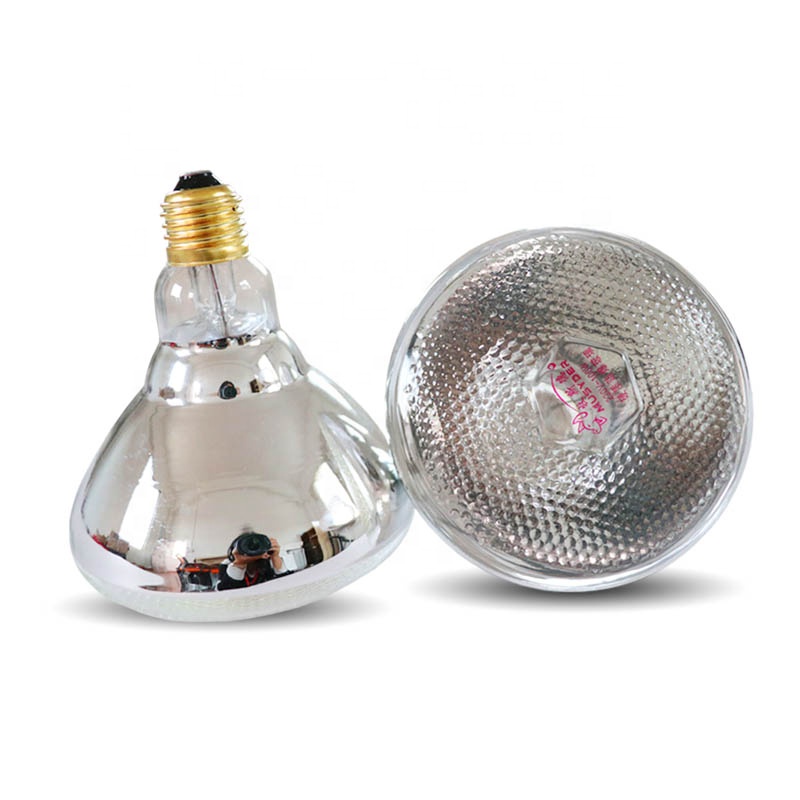
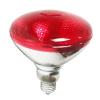
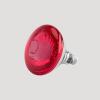
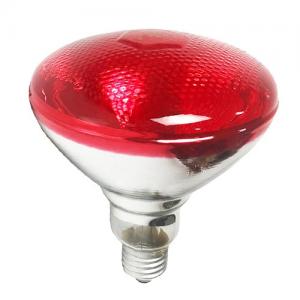
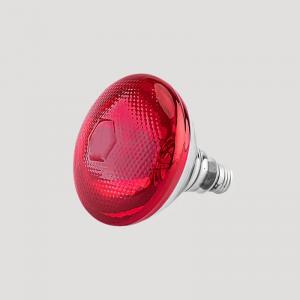
Explosion-Proof Infrared Heat Lamp for Livestock |
| Product Image |
 |
| Product Overview |
The Explosion-Proof Infrared Heat Lamp for Livestock is designed to provide focused radiant warmth for young animals and localized livestock heating areas. Infrared energy is directed toward animals, floors and resting zones, creating a warm microclimate without requiring the entire livestock building to be heated to the same temperature.
Typical applications include piglet creep areas, farrowing pens, chick brooding zones, poultry houses, lambing areas, calf pens and other locations where young animals require additional heat. The lamp can be installed individually or incorporated into a larger livestock equipment package together with reflectors, protective guards, suspension systems and temperature controls.
For commercial pig farm construction and poultry projects, infrared heat lamps can be coordinated with the livestock ventilation system to provide localized heating while the building continues to maintain the required fresh-air exchange. Lamp quantity, mounting height and operating strategy should be designed according to animal age, ambient temperature, house insulation and local climate.
SHEWUYOU can provide red or clear heating configurations, different electrical specifications and suitable heat-resistant fixtures according to project requirements. The compact suspended arrangement is also convenient for installation in existing livestock houses and new steel structure building projects.
Important Safety Definition: In agricultural heat-lamp terminology, "explosion-proof" may refer to reinforced, hardened or shatter-resistant lamp construction intended to reduce glass breakage under normal farm operating conditions. It should not be interpreted as certification for hazardous explosive atmospheres unless the specific supplied model has the required ATEX, IECEx, UL, CSA or other applicable hazardous-location certification.
|
| Key Features |
- Focused Infrared Heating: Directs radiant heat toward livestock and resting surfaces instead of relying only on heating the surrounding air.
- Reinforced Lamp Construction: Suitable configurations use hardened or impact-resistant glass to improve durability in demanding farm environments.
- Localized Microclimate: Helps create dedicated warm zones for piglets, chicks and other young animals while allowing surrounding areas to remain cooler.
- Fast Heat Response: Infrared radiation begins providing useful localized heat shortly after the lamp is energized.
- Red or Clear Options: Lamp color and radiant configuration can be selected according to farm management and project requirements.
- Compact Suspended Installation: Keeps heating equipment above animal areas and helps preserve usable pen and floor space.
- Livestock Fixture Compatibility: Can be combined with heat-resistant lamp holders, metal reflectors, protective guards and suspension chains.
- Flexible Electrical Configuration: Wattage, voltage and lamp base can be supplied according to project requirements and destination market.
- Simple Maintenance: Individual lamps can be inspected and replaced without complicated heating-system disassembly.
- B2B Project Supply: Suitable for livestock farms, pig farms, poultry farms, agricultural engineering companies, distributors, agents and project buyers.
|
| Structural Components |
- Infrared Heating Bulb: Generates infrared radiant energy for direct warming of animals and nearby surfaces.
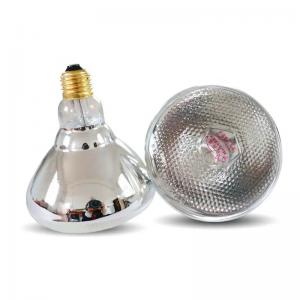
- Reinforced Glass Envelope: Hardened or specially manufactured glass can be selected to improve resistance to mechanical and thermal stress.
- Internal Reflective Layer: Directs a greater proportion of radiant energy toward the front of the lamp and the target heating area.
- Heat-Resistant Lamp Base: Electrical connection configuration selected according to lamp type and destination market requirements.
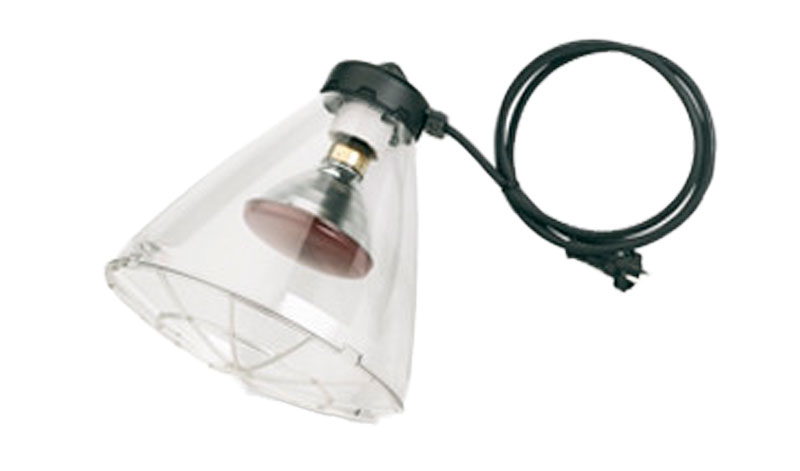
- Heat-Resistant Lamp Holder: Suitable ceramic or other high-temperature fixture can be supplied according to project configuration.
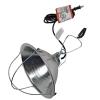
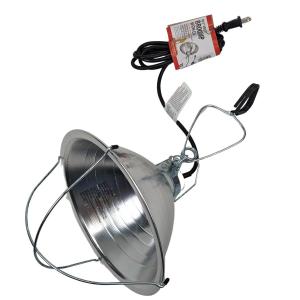
- Reflector Shade: Metal reflector option helps direct radiation toward the required livestock resting zone.
- Protective Guard: Wire guard can help reduce accidental contact between animals, workers and the hot lamp surface.
- Suspension Assembly: Chain, hook or project-specific mounting arrangement positions the lamp above the target heating area.
|
| Working Principle / Structural Principle |
When electrical current passes through the lamp heating element, electrical energy is converted into heat and infrared radiation. The internal reflector and shaped glass envelope direct a significant portion of this radiant energy toward the area below the lamp.
Unlike a conventional space-heating system that primarily raises air temperature throughout the building, an infrared heat lamp warms animals and surfaces within its radiation zone. This makes it suitable for creating localized creep or brooding areas.
The required heating effect depends on lamp output, mounting height, ambient temperature, air movement, reflector design and the size of the target area. In commercial livestock facilities, heat-lamp operation should be coordinated with ventilation and environmental control rather than used to replace the required livestock ventilation system.
|
| Technical Specifications |
- Product Type: Infrared livestock heating lamp
- Heating Method: Infrared radiant heating
- Lamp Construction: Reinforced / hardened glass configuration available
- Rated Power: Customizable
- Rated Voltage: According to project requirements
- Frequency: According to destination market requirements
- Lamp Color: Red, clear or according to project requirements
- Lamp Shape: Reflector-type configuration according to selected model
- Lamp Base: According to project requirements
- Reflector Shade: Available upon request
- Protective Guard: Available upon request
- Suspension System: Chain, hook or customized mounting arrangement
- Temperature Control: Manual, thermostat or centralized control according to project requirements
- Moisture Resistance: According to selected lamp and fixture configuration
- Hazardous-Location Certification: Available only where specifically stated for the selected certified model
- Dimensions: Available upon request
- Operating Environment: Designed according to local climate and farm conditions
- OEM / ODM Service: Available upon request
|
| Applications |
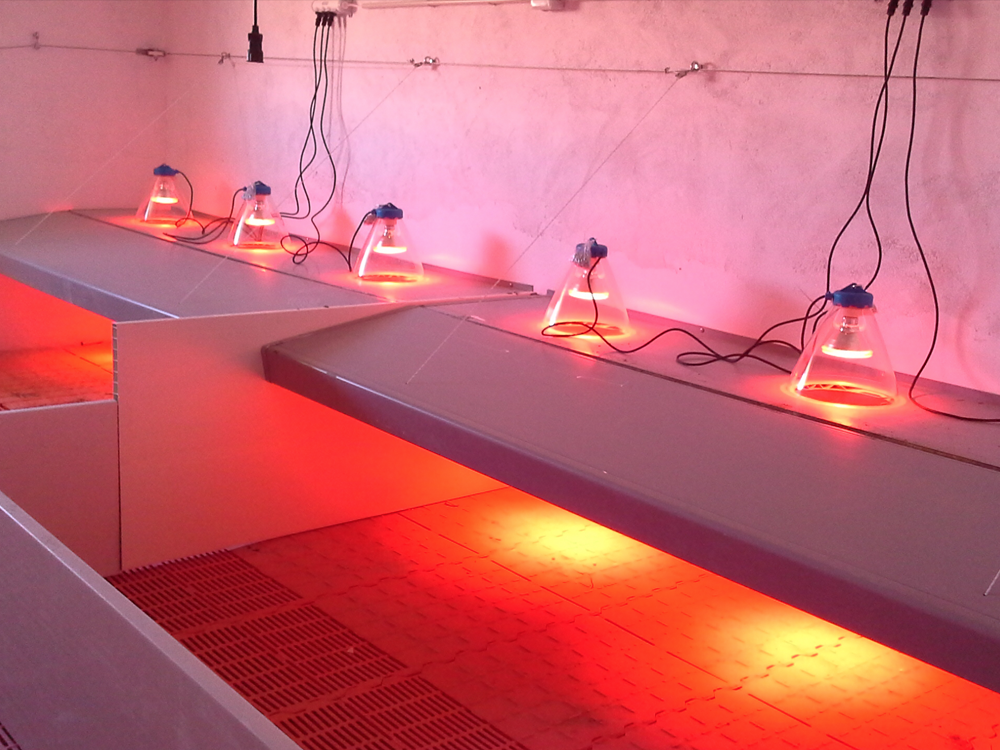
- Piglet Creep Areas: Localized warmth beside the sow in commercial farrowing pens.
- Farrowing Houses: Supplemental heating for newborn piglets during the most temperature-sensitive production stage.
- Pig Nurseries: Additional heat for young pigs during cold-weather operation or specific production periods.
- Chick Brooding: Focused radiant heating for designated brooding zones in poultry houses.
- Layer and Breeder Farms: Supplemental heating for suitable young-bird areas and specialized management zones.
- Duck and Turkey Production: Localized brooding heat according to species and production requirements.
- Lambing and Kidding Areas: Additional localized warmth for newborn lambs and kids where required.
- Calf Pens: Supplemental radiant heating for selected young-animal areas in cold conditions.
- Farm Veterinary Areas: Temporary localized heat for suitable animal care and recovery applications.
- Integrated Agricultural Projects: Heating component for livestock equipment packages, farm renovation and new steel structure building projects.
|
| Customization Options |
- Heating Output: Lamp wattage can be selected according to project requirements.
- Electrical Supply: Voltage and frequency can be matched to the destination country's electrical system.
- Lamp Color: Red or clear configuration according to farm management requirements.
- Lamp Base: Selected according to fixture type and regional electrical configuration.
- Reflector Assembly: Different reflector diameters and materials available upon request.
- Protective Guard: Guard design can be selected according to installation and livestock safety requirements.
- Control System: Individual switching, thermostat control or centralized heating control available according to project requirements.
- OEM Supply: Packaging, labeling and documentation can be customized for distributors, agents and agricultural project buyers.
|
| Installation & Maintenance |
Installation Planning
Determine lamp quantity and placement according to animal type, age, target temperature, house insulation, outdoor climate and the dimensions of the required heated zone. Infrared lamps should be used to establish a controlled warm area rather than automatically heating the entire livestock house.
Mounting Position
Suspend the lamp securely above the livestock area using a suitable chain, bracket or structural support. Mounting height should be established according to lamp output, fixture instructions, animal accessibility and required floor temperature. The lamp must not be positioned where animals can touch or damage the hot bulb.
Fixture and Guard
Use a heat-resistant lamp holder rated for the selected lamp. A suitable reflector and protective guard are recommended for livestock environments. All suspension components should be independently secured so accidental cable movement cannot cause the hot lamp to fall onto animals, bedding or combustible materials.
Electrical Installation
Electrical connections, grounding, circuit protection and control equipment should comply with local electrical regulations. Cables and connectors should be selected for the temperature, humidity and operating conditions of the livestock building. Installation should be completed by qualified personnel.
Ventilation Coordination
In pig and poultry buildings, localized heating must be coordinated with the livestock ventilation system. Minimum fresh-air requirements should not be eliminated merely to maintain temperature. Heater positioning should also avoid excessive direct cooling from air inlets or high-velocity drafts.
Routine Maintenance
- Disconnect electrical power before inspection, cleaning or lamp replacement.
- Inspect the glass envelope regularly for cracks, impact marks or other damage.
- Replace damaged lamps immediately rather than continuing operation.
- Check ceramic holders, electrical terminals, cords and plugs for overheating or deterioration.
- Remove accumulated dust from reflectors and guards to maintain effective radiant performance.
- Check suspension chains, hooks and safety attachments regularly.
- Keep bedding, feed, dust accumulation and other combustible materials away from hot lamp surfaces.
- Inspect temperature controls before each major brooding or farrowing cycle.
|
| Project Cases |
Representative Project Scenario 1 – Commercial Pig Farrowing House:
An intensive pig farm requires individual heated creep areas for newborn piglets. Infrared lamps are suspended above designated resting zones beside each farrowing pen. Lamp output and installation height are selected according to local winter conditions, building insulation and the required piglet microclimate.
Representative Project Scenario 2 – Broiler Farm:
A poultry farm uses multiple infrared lamps during early brooding to establish distributed warm zones. Lamp positioning is coordinated with feeding lines, drinking systems and ventilation inlets so brooding heat does not interfere with normal flock movement or the livestock ventilation system.
Representative Project Scenario 3 – Farm Renovation:
An existing pig house is upgraded with new reflectors, protective guards and infrared heating lamps. The suspended system allows installation above the existing pens without occupying production-floor space, while individual heating points can be serviced separately.
Representative Project Scenario 4 – Integrated Agricultural Project:
A new steel structure building for livestock production requires heating, feeding, drinking and environmental-control equipment from a coordinated supplier. Infrared heat lamps are included as part of the livestock equipment package, with electrical distribution and suspension points planned during the building design stage.
|
| Product FAQ |
Q1: What does "explosion-proof" mean for this livestock infrared heat lamp?
A: For agricultural heat lamps, the term may describe reinforced or hardened lamp construction intended to reduce breakage under normal farm conditions. It does not automatically mean the lamp is certified for classified explosive atmospheres. If hazardous-location certification is required, please specify the applicable standard during inquiry.
Q2: Is the lamp suitable for newborn piglets?
A: Yes. Infrared heat lamps are commonly used to create localized warm zones in farrowing and piglet creep areas. Correct output and mounting height should be selected according to farm conditions.
Q3: Can it be used for chicks and poultry brooding?
A: Suitable infrared lamps can be used for poultry brooding. The selected lamp and any protective coating must be confirmed as suitable for the intended bird application.
Q4: What wattage should we select?
A: Required output depends on animal type, age, ambient temperature, mounting height, insulation, reflector design and the size of the heated zone. SHEWUYOU can recommend a configuration according to project requirements.
Q5: Can you provide different voltages?
A: Yes. Electrical specifications can be selected according to the destination country and project requirements.
Q6: Can the lamp be supplied with a reflector and protective guard?
A: Yes. Complete livestock heat-lamp assemblies with suitable reflector, lamp holder, guard and suspension components are available upon request.
Q7: Can infrared lamps work with an automatic temperature controller?
A: Yes. Thermostat or centralized control options can be configured according to electrical load, farm design and project requirements.
Q8: Is the lamp waterproof?
A: Moisture resistance depends on the selected bulb, lamp holder and complete fixture configuration. The required protection level should be specified during project selection rather than assumed from the bulb alone.
Q9: What information is required for a quotation?
A: Please provide animal type, application area, required quantity, preferred wattage, available voltage, lamp color, fixture requirements, control requirements and destination country. Building or pen drawings are helpful for larger projects.
Q10: Can SHEWUYOU supply infrared lamps together with other livestock equipment?
A: Yes. Heat lamps can be supplied with pig farming equipment, poultry equipment, feeding and drinking systems, ventilation equipment, environmental controls and other products required for an integrated agricultural project.
|
| Product Gallery |
 |


Comments & Inquiries
Leave your questions or requirements below. We will reply as soon as possible.