| Product Name |
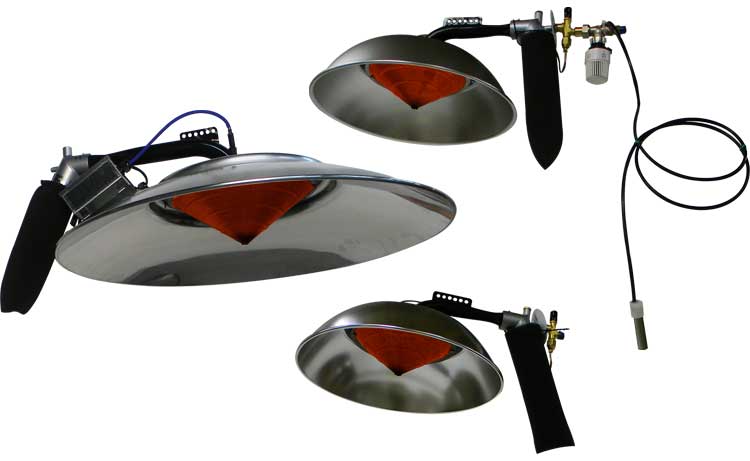
High Pressure Gas Radiant Brooder |
| Product Image |
 |
| Product Overview |
The High Pressure Gas Radiant Brooder is a localized heating solution designed for commercial poultry houses, chick brooding areas and other livestock production facilities requiring concentrated floor-level warmth. The burner generates radiant energy that is directed downward through a reflector, creating a defined warm zone around the birds rather than heating the entire building uniformly.
This heating method is especially suitable for broiler, breeder, layer and pullet production where newly placed birds require higher local temperatures during the early growth stage. The brooder can be suspended above the production floor and positioned according to stocking density, house dimensions and the required radiant coverage.
High-pressure gas operation supports stable fuel delivery to multiple brooders in large poultry houses. Depending on the project configuration, propane or natural gas systems, manual ignition, automatic ignition, individual control or zone control can be specified. Commercial high-pressure radiant brooders are commonly designed for integration with poultry-house environmental controllers.
In a complete livestock ventilation system, radiant brooders operate together with minimum ventilation, air inlets, exhaust fans and environmental controls. This allows localized chick-level heating while the ventilation system continues to manage fresh air, humidity and indoor air quality.
SHEWUYOU supplies brooding heaters for poultry farm construction, livestock equipment packages, steel structure building projects and international agricultural project requirements. Heating capacity, gas type, ignition method, control configuration, suspension system and installation accessories can be selected according to project requirements.
|
| Key Features |
- Localized Radiant Heating: Directs thermal energy toward the bird and floor zone instead of relying only on whole-house air heating.
- High Pressure Gas Supply: Suitable for centralized gas distribution systems used in commercial poultry production buildings.
- Wide Heat Coverage: Reflector design helps distribute radiant energy over the required brooding area.
- Flexible Gas Options: Propane or natural gas configurations are available according to project requirements.
- Multiple Ignition Options: Manual or automatic spark ignition can be configured according to the required operating system.
- Zone or Individual Control: Brooders can be arranged for individual operation or grouped heating-zone control.
- Environmental Controller Integration: Suitable configurations can interface with poultry-house climate-control systems.
- Adjustable Suspension: Brooder height can be adjusted according to bird age, required floor temperature and heat pattern.
- Agricultural-Duty Construction: Components can be selected for dusty, humid and demanding poultry-house conditions.
- Project-Oriented Supply: Suitable for poultry farms, livestock groups, engineering contractors, distributors, agents and agricultural project buyers.
|
| Structural Components |
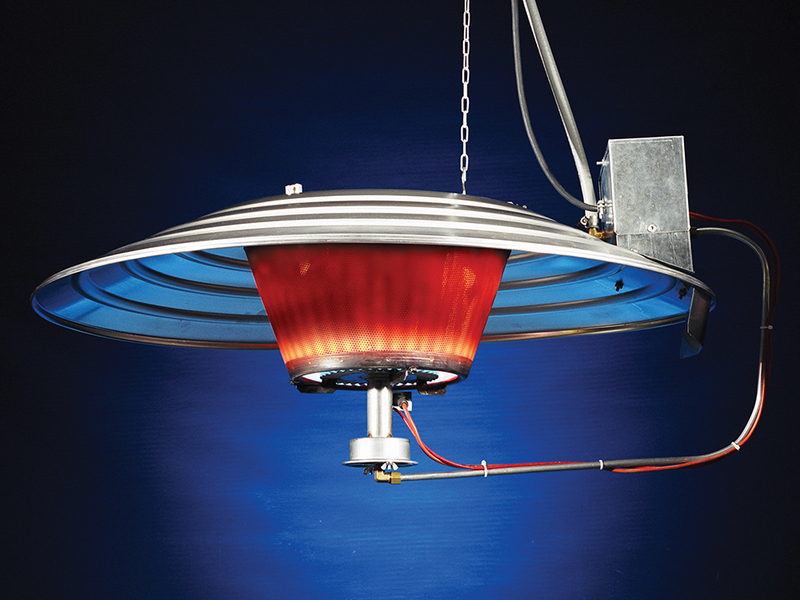
- Radiant Burner Assembly: Converts gas energy into radiant heat for localized poultry brooding.
- Radiant Emitter: Heated emitter surface distributes infrared energy toward the floor and bird zone.
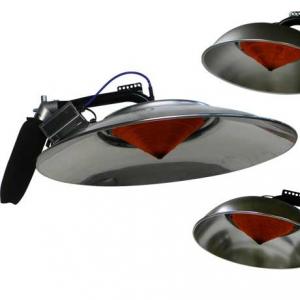
- Reflector Canopy: Directs heat downward and helps establish the required radiant footprint.
- Gas Regulating Components: Control gas delivery from the high-pressure supply system to the burner.
- Ignition Assembly: Manual or spark-ignition configuration according to the selected model.
- Flame Monitoring / Safety Components: Available according to brooder design and control requirements.
- Suspension Bracket and Hanging System: Supports installation above the poultry floor and enables height adjustment.
- Control Connection: Allows individual, zone or environmental-controller operation according to project configuration.
|
| Working Principle / Structural Principle |
Gas is supplied through the high-pressure distribution system and regulated before entering the brooder burner. After ignition, combustion heats the radiant emitter, which produces infrared energy.
The reflector directs radiant energy downward toward the poultry floor. Birds and floor surfaces within the heating zone absorb the radiation and become warmer, helping create a localized microclimate suitable for brooding.
Heating intensity can be managed through brooder output, gas control, operating zones and suspension height. In automated poultry houses, the heating system can be coordinated with environmental controls so brooders respond to temperature demand while the livestock ventilation system maintains the required fresh-air exchange.
|
| Technical Specifications |
- Product Type: High pressure gas radiant poultry brooder
- Heating Method: Gas-fired infrared radiant heating
- Heating Capacity: Customizable
- Gas Type: Propane or natural gas configuration available upon request
- Gas Supply Pressure: According to selected model and project requirements
- Ignition Method: Manual or automatic ignition according to configuration
- Control Method: Individual, zone or centralized environmental control
- Heating Coverage: According to brooder output, mounting height and project conditions
- Reflector Diameter: Available upon request
- Installation Height: According to product configuration, bird age and farm conditions
- Suspension Method: Chain or customized hanging arrangement
- Electrical Supply: According to ignition and control configuration
- Safety Protection: According to product configuration and applicable project requirements
- Housing / Component Finish: Designed for agricultural operating environments
- Dimensions: Available upon request
- Control Interface: Available upon request
- Operating Environment: Designed according to local climate and farm conditions
- OEM / Project Configuration: Available upon request
|
| Applications |
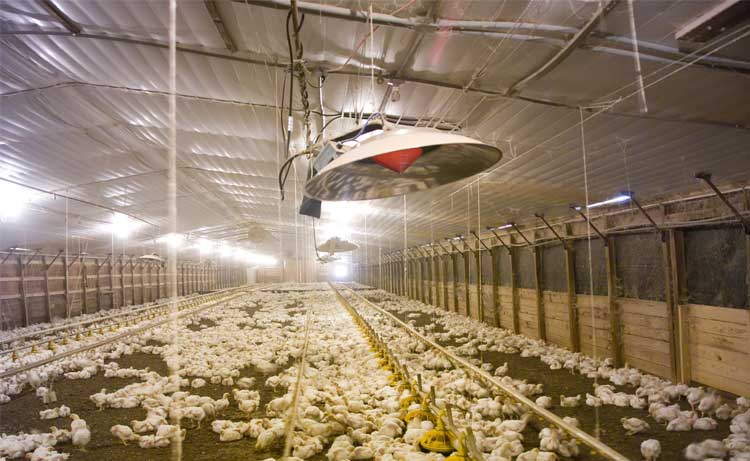
- Broiler Houses: Localized floor heating for newly placed broiler chicks and early production stages.
- Breeder Farms: Supplemental radiant heat for breeder chick and pullet production.
- Layer Farms: Brooding heat for young layer birds during early growth.
- Pullet Houses: Controlled warm zones for replacement pullet production.
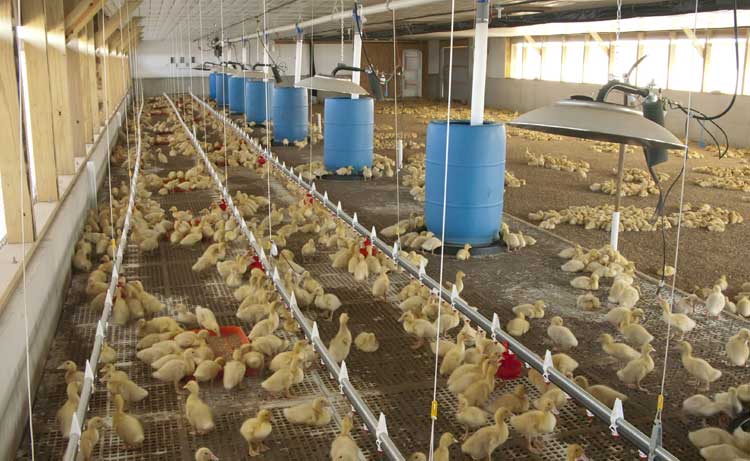
- Duck Farms: Radiant heating for suitable duck brooding facilities.
- Turkey Farms: Local heating applications for young turkey production where appropriate.
- Multi-House Poultry Complexes: Centralized high-pressure gas systems supplying multiple brooders and production zones.
- Steel Structure Poultry Buildings: Suspended heating systems integrated with modern poultry-house structural layouts.
- Poultry Farm Renovations: Replacement or upgrade of existing localized brooding systems.
- Integrated Agricultural Projects: Brooder heating supplied together with ventilation, feeding, drinking and environmental-control equipment.
|
| Customization Options |
- Heating Capacity: Selected according to poultry-house dimensions, bird type and climate conditions.
- Gas Configuration: Propane or natural gas according to available farm fuel supply.
- Ignition System: Manual or automatic ignition available according to project requirements.
- Control Configuration: Individual control, zone control or environmental-controller integration.
- Reflector and Heat Pattern: Selected according to the required brooding coverage.
- Suspension System: Chain length, mounting points and installation height according to building design.
- Gas Distribution Accessories: Regulators, hoses, fittings and related components can be configured according to project requirements.
- OEM Supply: Packaging, labeling and project documentation available for distributors, agents and engineering contractors.
|
| Installation & Maintenance |
Heating Layout
Brooder quantity and placement should be determined according to poultry-house dimensions, bird density, brooding area, building insulation, local climate and required floor-level heat distribution. Units should be positioned to create suitable overlapping or separated heating zones according to the production plan.
Suspension Installation
Suspend each brooder from a secure structural member using approved hanging hardware. The brooder should remain level and stable during operation. Mounting height must follow the selected heater configuration and should maintain required clearance from litter, birds, combustible materials, building membranes and livestock equipment.
Gas Supply Installation
Gas piping, regulators, shut-off valves and flexible connections must be properly sized for the total system demand. Installation and leak testing should be performed by qualified personnel according to applicable gas codes, the approved project design and the final equipment instructions.
Ventilation Coordination
Gas-fired brooding equipment must be coordinated with the poultry-house ventilation strategy. Minimum ventilation should be maintained according to animal and building requirements so combustion products, moisture and indoor air quality are managed appropriately.
Commissioning
Before flock placement, check ignition, flame condition, gas pressure, controller operation and heat distribution. Observe the floor-level heat pattern and adjust suspension height or control settings according to the selected equipment instructions and actual house conditions.
Routine Maintenance
- Shut off gas and electrical power before servicing the brooder.
- Inspect burners, emitters and reflectors regularly for dust and litter accumulation.
- Clean burner openings and air passages according to the equipment maintenance procedure.
- Inspect gas hoses, regulators, fittings and valves for wear, damage or leakage.
- Check suspension chains, brackets and structural mounting points.
- Inspect ignition and flame-safety components before each production cycle.
- Keep reflector surfaces clean to maintain effective radiant heat distribution.
- Verify zone controls, thermostats and environmental-controller signals during scheduled maintenance.
- Replace damaged gas or safety components before returning equipment to service.
|
| Project Cases |
Representative Project Scenario 1 – Commercial Broiler House:
A modern broiler farm installs multiple high-pressure gas radiant brooders above the chick production floor. Brooders are arranged in heating zones and coordinated with the environmental controller, minimum ventilation fans, air inlets and feeding lines. Output and suspension height are adjusted according to flock age and house conditions.
Representative Project Scenario 2 – Multi-House Poultry Farm:
A large agricultural project uses a centralized gas supply serving several poultry buildings. High-pressure brooders provide localized heating in each house, while zone controls enable the farm operator to manage temperature requirements in different production areas.
Representative Project Scenario 3 – Steel Structure Poultry Building:
A new steel structure building integrates brooder suspension points into the roof structure during construction. Brooder locations are coordinated with feed lines, drinker lines, lighting and ventilation equipment to maintain clear service access and effective floor coverage.
Representative Project Scenario 4 – Poultry Farm Renovation:
An existing poultry facility upgrades its brooding system to high-pressure radiant heating. Gas distribution, control zones and brooder positions are redesigned according to the existing house layout and local operating conditions.
|
| Product FAQ |
Q1: What is a high pressure gas radiant brooder?
A: It is a gas-fired heating unit designed to produce localized radiant heat above a poultry brooding area. It warms birds and floor surfaces within the heating zone rather than relying only on whole-house air heating.
Q2: What poultry applications are suitable for this brooder?
A: It can be configured for broiler, breeder, layer, pullet, duck and other suitable poultry production systems requiring localized brooding heat.
Q3: Can propane and natural gas both be used?
A: Propane and natural gas configurations are available according to model selection and project requirements.
Q4: Can multiple brooders be controlled together?
A: Yes. Brooders can be configured for zone control or individual control depending on the poultry-house design.
Q5: Can the brooder connect to a poultry environmental controller?
A: Suitable control configurations can be integrated with centralized poultry-house climate-control systems according to project requirements.
Q6: How should the required number of brooders be determined?
A: Selection should consider poultry-house dimensions, bird density, required brooding area, building insulation, local climate, heater capacity and target floor-level heat distribution.
Q7: Can the brooder height be adjusted?
A: Yes. Suspended installations generally allow height adjustment according to flock age, heating requirements and equipment operating instructions.
Q8: What information is required for a quotation?
A: Please provide poultry type, house dimensions, local minimum temperature, gas type, required quantity, preferred ignition method, controller requirements and project location.
Q9: Can SHEWUYOU supply gas accessories and controls?
A: Gas regulators, connection components, zone-control equipment and related accessories can be configured according to the complete project requirements.
Q10: Can the brooder be supplied with other poultry farm equipment?
A: Yes. The heating system can be coordinated with feeding systems, drinking systems, ventilation fans, air inlets, cooling equipment and environmental controllers for complete poultry and agricultural project supply.
|
| Product Gallery |
 |


Comments & Inquiries
Leave your questions or requirements below. We will reply as soon as possible.