| Product Name |
Commercial Gas Radiant Brooder |
| Product Image |
|
| Product Overview |
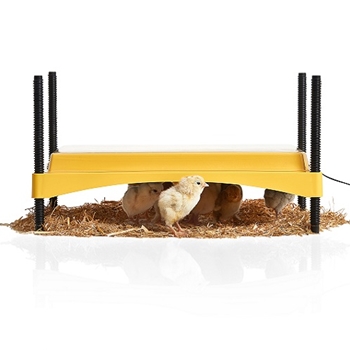
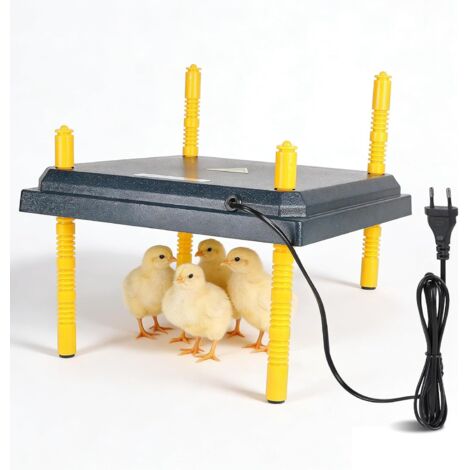
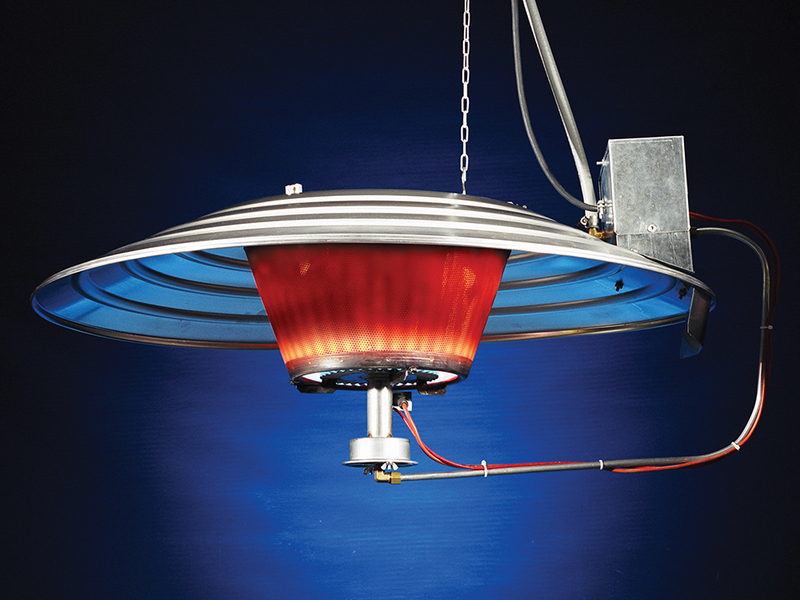
The Commercial Gas Radiant Brooder provides localized infrared heating for commercial poultry production and appropriately specified livestock buildings. A gas burner heats a radiant emitter beneath a reflector canopy, directing thermal energy toward animals, litter and floor surfaces within the brooding zone.
Unlike equipment that primarily distributes heated air, a radiant brooder establishes a warmer occupied zone beneath the heater. Brooder quantity, spacing and operating settings can be planned around animal age, production stage, building heat loss and the required temperature distribution.
Suspended installation keeps the equipment above normal floor operations and allows heater positions to be coordinated with feeders, drinkers and pen layouts. Heating controls should operate alongside the livestock ventilation system, maintaining the fresh-air exchange needed for animal management and safe combustion.
SHEWUYOU welcomes equipment-selection and OEM enquiries from livestock farms, pig farms, poultry farms, agricultural engineering companies, distributors, agents and project buyers. Fuel configuration, ignition system, control interface and installation accessories should be confirmed against the selected model and destination-market requirements before ordering.
|
| Key Features |
- Animal-Level Radiant Heating: Delivers warmth directly toward the occupied brooding zone rather than relying exclusively on whole-room air heating.
- Reflector Canopy: Helps direct radiant energy toward the intended floor area and shapes the heating pattern beneath the unit.
- Suspended Installation: Preserves usable floor space and allows coordination with feeding lines, drinking systems and routine farm access.
- Project-Matched Fuel Selection: Propane-vapor or natural-gas configurations can be considered according to the approved model and local supply.
- Automatic Ignition Options: Direct-spark configurations can respond to a compatible thermostat or environmental controller without routine manual lighting.
- Flame-Supervised Operation: The specified safety system must interrupt gas flow when a flame is not established or is lost.
- Individual or Zoned Control: Compatible control arrangements allow separate brooding areas to respond to their own heating demand.
- Agricultural Material Selection: Emitter, canopy and control-enclosure materials are selected with heat exposure, humidity and the farm atmosphere in mind.
- Accessible Service Components: An accessible burner and emitter arrangement supports inspection, cleaning and replacement of approved parts.
- Scalable Project Planning: Multiple units can be incorporated into an engineered heating layout, with gas capacity, controls and ventilation assessed together.
Features and included components depend on the quoted configuration. Fuel savings, heating coverage and animal capacity are not fixed guarantees.
|
| Structural Components |
A typical suspended gas radiant brooder incorporates the following assemblies. Exact construction varies with the selected model.
- Reflector Canopy: A formed metal canopy positioned above the emitter to direct useful radiant heat downward.
- Radiant Emitter: A heat-resistant emitting surface that transfers part of the combustion energy as infrared radiation.
- Burner and Air-Mixing Section: Introduces the specified fuel and combustion air into the burner assembly.
- Gas Orifice and Manifold: Gas-specific components matched to the approved fuel, operating pressure and rated input.
- Gas Control Valve: Regulates fuel admission as part of the heater's operating and safety sequence.
- Ignition and Flame-Sensing Assembly: Establishes ignition and supervises flame presence in the selected automatic configuration.
- Control Enclosure and Connections: Houses electrical connections and ignition components, with environmental protection appropriate to the installation.
- Suspension Bracket and Hardware: Connects the brooder to an engineered support arrangement while maintaining the specified operating orientation.
|
| Working Principle / Structural Principle |
Gas enters through a correctly specified supply and control arrangement. The burner combines fuel with combustion air and heats the radiant emitter. The reflector canopy redirects part of the emitted energy toward the brooding area.
Animals and exposed surfaces absorb the infrared energy. The resulting temperature pattern depends on heater input, emitter design, mounting height, surrounding conditions and obstructions. Layout design should provide usable warm areas without creating excessive local heat.
In a direct-spark configuration, a compatible temperature controller initiates the ignition sequence when heat is required. Flame supervision and the gas valve operate together to interrupt fuel delivery if the required flame condition is not maintained.
An unvented brooder releases combustion products into the building. Combustion produces water vapor and carbon dioxide, while improper combustion can produce dangerous carbon monoxide. Radiant heating therefore does not eliminate the need for adequate combustion air, ventilation and suitable farm monitoring.
|
| Technical Specifications |
- Product Type: Suspended commercial gas radiant brooder
- Heating Principle: Gas-fired infrared radiant heating
- Rated Heat Input: According to project requirements; confirmed for the selected model
- Fuel Configuration: Propane vapor or natural gas, subject to model approval
- Gas Inlet Pressure: Available upon request for the selected fuel and model
- Burner Manifold Pressure: According to the approved heater specification
- Fuel Consumption: Available upon request
- Ignition System: According to project requirements and approved configuration
- Temperature Control: Individual thermostat or compatible zone-control arrangement
- Electrical Supply: According to the selected ignition and control system
- Emitter Material: According to the confirmed product configuration
- Canopy Material and Dimensions: Available upon request
- Mounting Arrangement: Suspended installation using approved non-combustible hardware
- Heating Layout: Designed according to local climate and farm conditions
- Installation Height and Spacing: According to the selected model's installation instructions and project layout
- Clearance to Combustibles: As specified in the approved model documentation; not an adjustable commercial option
- Combustion-Air and Ventilation Requirements: Model-specific requirements to be incorporated into the building design
- Safety Provisions: Approved flame supervision and gas shut-off arrangement
- Weight and Packing Dimensions: Available upon request
- Regulators, Hoses and Control Accessories: Included items to be confirmed in the quotation
- Certification and Market Approvals: Documentation to be verified for the exact model and destination
These entries describe selection requirements rather than a certified model datasheet. Reference manufacturers' ratings and approvals do not automatically apply to a SHEWUYOU quotation. Final specifications require model-specific confirmation.
|
| Applications |
- Broiler Starter Areas: Localized heating during early-stage chick placement and brooding.
- Pullet Brooding Buildings: Temperature support in designated young-bird rearing zones.
- Breeder Rearing Houses: Radiant heating within an engineered early-growth environmental plan.
- Turkey Brooding Areas: Heating layouts matched to poult management and the selected brooder's approval.
- Partial-House Brooding: Zoned heating for a defined occupied section of a larger poultry building.
- Pig Nursery Buildings: Supplemental heating where the selected model is approved for swine accommodation.
- Wean-to-Finish Facilities: Project-specific radiant heating for suitable young-pig production areas.
- Multi-House Farm Complexes: Coordinated heater selection and control zoning across separate production buildings.
- Farm Renovation Projects: Replacement or additional heating after checking existing gas supply, clearances and controls.
- Integrated Agricultural Construction: Heating packages coordinated with livestock equipment, building insulation and ventilation design.
Application suitability must be confirmed for the exact heater. A poultry-house brooder should not automatically be specified for a low-ceiling creep area, residential space or hazardous atmosphere.
|
| Customization Options |
Project and OEM enquiries may include the following requirements. Availability is subject to technical review and confirmation of an approved configuration.
- Capacity Selection: Heater model and quantity matched to heat loss, brooding coverage and operating conditions.
- Fuel Specification: Gas-specific configuration selected for the available propane or natural-gas supply.
- Ignition Arrangement: Compatible ignition options according to site utilities and operating preferences.
- Control Interface: Individual or zoned operation coordinated with the proposed farm controller.
- Suspension Package: Mounting hardware and support arrangement matched to the building layout.
- Gas Accessories: Suitable regulators, approved connectors and isolation components specified with the gas-system designer.
- Materials and Environmental Protection: Configuration review for humidity, corrosion exposure and cleaning practices.
- OEM and Project Packaging: Labeling, packing identification and documentation requirements for distributors, agents and agricultural project buyers.
Customization must not bypass safety devices, alter certified operating limits or substitute unapproved gas components.
|
| Installation & Maintenance |
Engineering and Site Preparation
Installation and commissioning must be completed by qualified personnel. Confirm the approved heater model, gas type, rated input, site power supply and applicable local requirements. Determine heater quantity from both building heat demand and the required radiant coverage; floor area alone is insufficient.
Suspension and Safe Clearances
For a steel structure building, verify the supporting members and attachment points before hanging the units. Use approved non-combustible suspension hardware and any required independent safety retention. Maintain the prescribed orientation and clearances from litter, curtains, insulation, cables, equipment and animals. Gas hoses and electrical cables must never support the heater.
Gas Supply and Commissioning
Have the gas-system designer assess pipe sizing, pressure regulation and simultaneous demand from all connected equipment. Use fuel-compatible fittings and connectors. Before operation, a qualified technician must check gas tightness, operating pressure, ignition and safety shutdown. Never use an open flame to check for leaks or change an orifice without approved conversion instructions.
Ventilation and Environmental Control
Provide the model-specific combustion-air requirement together with ventilation needed for animals, moisture and air quality. Do not close ventilation openings simply to retain heat. Coordinate heating with the farm's ventilation and alarm strategy. Unvented gas brooders must not operate in unventilated areas.
Control Setup and Operating Checks
Confirm electrical ratings and controller compatibility before connection. Position sensors according to the control-system instructions. During commissioning, assess floor conditions, ambient temperature and animal distribution together. Adjust the approved settings and layout without reducing mandatory safety clearances.
Routine Cleaning and Maintenance
- Follow the model-specific shutdown procedure, isolate gas and electrical supplies, and allow the heater to cool before servicing.
- Remove accumulated dust and debris using the approved cleaning method. Do not assume the brooder is washable; some models prohibit water or liquid cleaners.
- Inspect the emitter, burner openings, canopy, suspension hardware, hoses and wiring for contamination, damage or deterioration.
- Have qualified personnel inspect regulators, gas connections, ignition components and safety functions at the prescribed intervals.
- Never enlarge gas orifices with drills, wire or other tools. Use only approved replacement components.
- Investigate soot, abnormal combustion or repeated ignition failure before returning the heater to service.
- Complete inspection and operational checks before restocking and before seasonal heating demand increases.
Gas-Leak Precaution: If gas is suspected, do not ignite equipment or operate electrical switches. Leave the affected area and contact the gas supplier or emergency service from a safe location.
|
| Project Cases |
The following are illustrative overseas engineering scenarios, not verified SHEWUYOU installations or performance results.
Scenario 1: Southeast Asian Broiler Farm
A poultry project requires localized brooding heat during chick placement and cooler nights. Suspended brooders could be arranged around the starter area, with control zones coordinated with feeding lines and minimum ventilation. Gas availability, humidity and maintenance access would guide equipment selection.
Scenario 2: Central European Poultry-House Renovation
An existing insulated house requires a heating upgrade. The engineering team would assess winter heat loss, existing gas infrastructure, controller compatibility and structural suspension points before selecting replacement units. Final placement would be checked against the new equipment's clearance and ventilation requirements.
Scenario 3: Latin American Pig Nursery
A pig farm construction project includes supplementary radiant heating for a nursery building. A model approved for swine use would be selected, with heater positions evaluated against pen materials, animal access and the ventilation layout. A poultry brooder would not be substituted without an application review.
Scenario 4: Middle Eastern Multi-House Agricultural Project
An agricultural engineering contractor requires coordinated heating across several poultry buildings. The project could use separate control zones, standardized spare-parts requirements and building-specific layouts. Fuel supply, electrical connections and local approvals would be confirmed before procurement.
|
| Product FAQ |
Q1: How are heater capacity and quantity selected?
A: Selection considers building heat loss, local climate, animal species and age, brooding-area dimensions, ventilation and radiant coverage. Provide drawings and operating requirements rather than relying on a universal birds-per-heater or floor-area rating.
Q2: Can the same brooder use propane and natural gas?
A: Only when the exact model permits an approved conversion. Fuel type, orifice, pressure and other gas components must match its documentation. Conversion is a qualified service procedure, not simply a change of hose or supply.
Q3: Does a gas radiant brooder need electricity?
A: Direct-spark ignition and electronic controls require a compatible power supply. Some other brooder designs use non-electric controls, but this must be confirmed for the selected model. Gas-fired operation alone does not mean power-free operation.
Q4: How does radiant heating differ from forced-air heating?
A: A radiant brooder directs infrared energy toward animals and surfaces beneath it. A forced-air heater primarily distributes warmed air. The appropriate choice depends on the required temperature pattern and building design; neither guarantees a fixed fuel saving in every project.
Q5: Can the brooder connect to an existing farm controller?
A: Compatibility must be checked against the heater's control voltage, switching requirements and safety sequence. Individual or zoned operation may be possible, but an existing controller should not be assumed compatible without reviewing its interface.
Q6: Is it suitable for both poultry and pig farms?
A: Gas radiant heating is used in both sectors, but suitability is model-specific. Select equipment approved for the intended animal-confinement application and verify clearances, materials, ventilation and animal access.
Q7: Does an unvented brooder eliminate ventilation requirements?
A: No. Unvented means combustion products enter the building rather than a dedicated flue. Adequate combustion air and ventilation remain essential. Improper combustion or inadequate fresh air can create a serious carbon monoxide hazard.
Q8: What mounting height and spacing should be used?
A: Use the selected model's installation instructions and an engineered heating layout. Recommended coverage height and minimum clearance to combustibles are different considerations. Do not lower a heater below its safety limits to increase local warmth.
Q9: Can the brooder be pressure-washed during farm cleaning?
A: Do not assume pressure washing is permitted. Cleaning methods vary, and some models prohibit water entirely. Follow the exact manual and protect gas and ignition components from unauthorized cleaning methods and chemicals.
Q10: What should buyers provide and confirm before ordering?
A: Provide building drawings, animal type, climate, gas type and pressure, electrical supply, quantity and destination. Confirm the model datasheet, applicable approvals, included accessories, controller compatibility, spare parts, warranty, packing and delivery terms in the quotation.
|
| Product Gallery |
|

Comments & Inquiries
Leave your questions or requirements below. We will reply as soon as possible.