

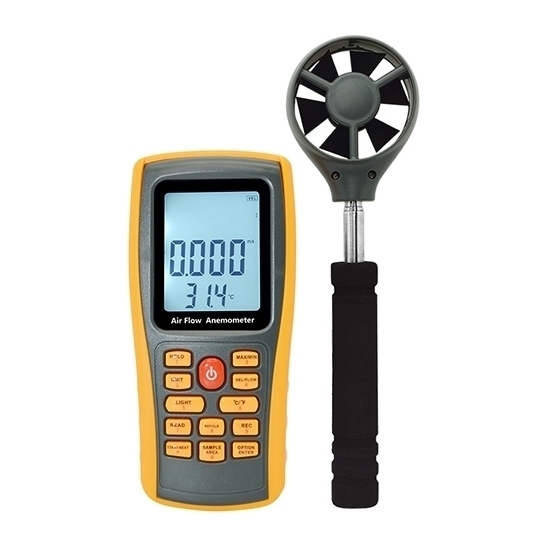
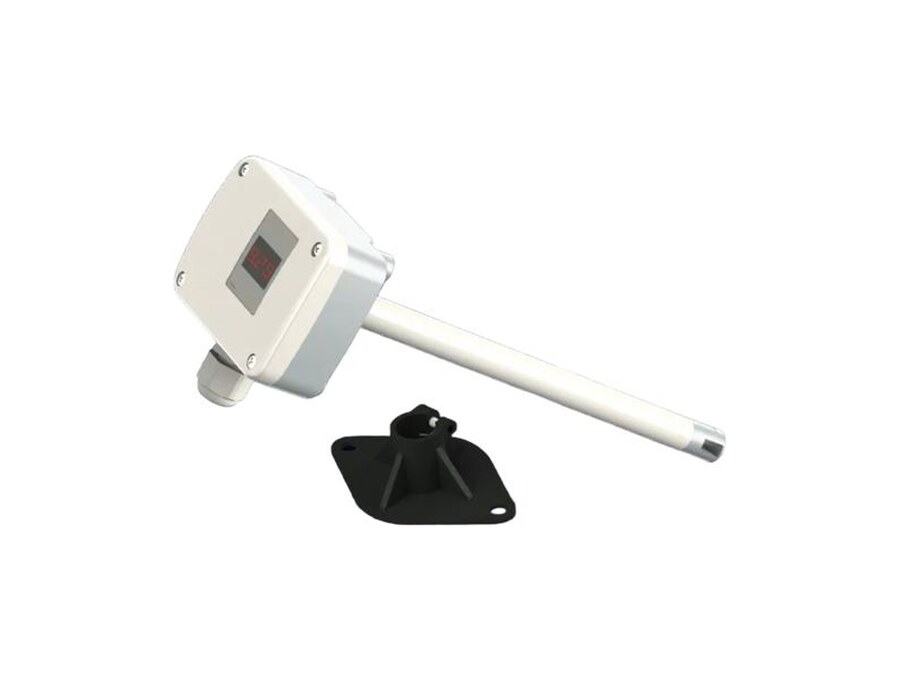
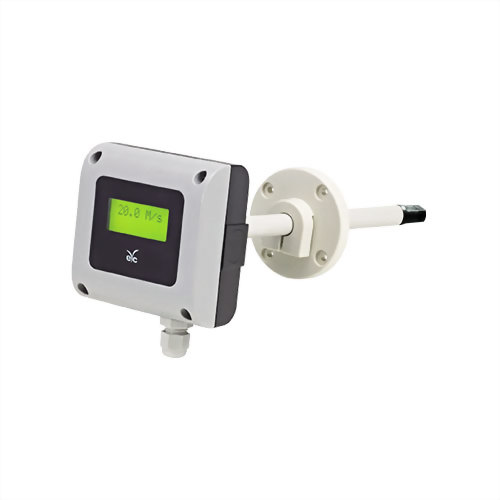
| Product Name | Duct Air Velocity Transmitter for Livestock Ventilation |
| Product Image |  |
| Product Overview | The Duct Air Velocity Transmitter for Livestock Ventilation is designed for continuous measurement of airflow velocity in poultry houses, pig farms, cattle buildings and other mechanically ventilated agricultural facilities. The system combines a duct-mounted stainless steel sensing probe with an electronic transmitter to provide real-time airflow data for livestock house climate controllers, PLC systems, environmental monitoring platforms and farm automation networks. Installed in ventilation ducts or representative airflow channels, the transmitter helps farm operators monitor ventilation performance, identify airflow changes and support automatic fan or air inlet management. It is suitable for commercial livestock projects where stable environmental control is required throughout different seasons and production stages. |
| Key Features | Continuous Air Velocity Monitoring: Provides real-time airflow measurements for livestock ventilation and climate control systems. Stainless Steel Sensor Probe: Durable sensing probe offers good corrosion resistance for demanding agricultural and industrial ventilation environments. Streamlined Probe Structure: The airflow-oriented probe design minimizes unnecessary disturbance around the sensing point and supports stable measurement response. Duct-Mounted Installation: Flange-type mounting allows convenient installation in ventilation ducts, exhaust channels and air supply systems. Digital Communication: RS485 Modbus RTU communication supports integration with PLCs, controllers, data loggers, gateways and central farm management systems. Remote Monitoring Options: Wireless communication configurations can be supplied for selected projects requiring remote environmental monitoring. Livestock Automation Integration: Suitable for connecting airflow information with ventilation fans, air inlets and environmental control systems. Weather and Farm Adaptability: Configuration can be selected according to local climate, livestock species, building layout and ventilation strategy. |
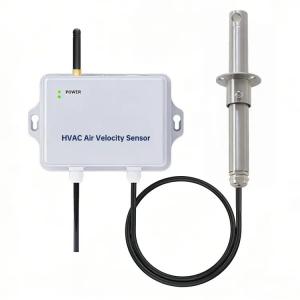
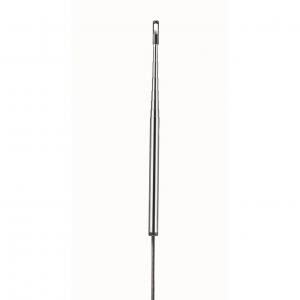
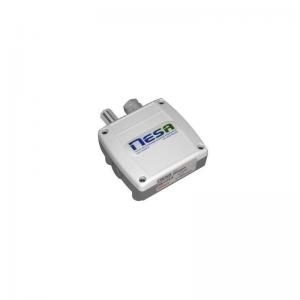
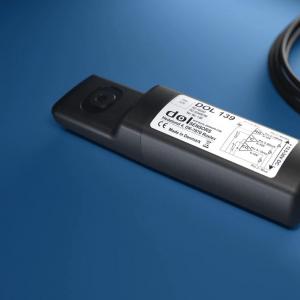
| Structural Components | Air Velocity Sensor Probe: Stainless steel probe inserted into the ventilation duct to detect airflow velocity. Mounting Flange: Secures the probe to duct walls and provides a stable measurement position. Transmitter Housing: Protects signal conditioning, communication and electronic components. Signal Processing Module: Converts sensor measurements into standardized digital or optional remote communication signals. Communication Interface: Enables connection with ventilation controllers, PLC systems, SCADA platforms, IoT gateways or farm environmental monitoring systems. Connection Cable: Provides electrical and signal connection between the probe, transmitter and control system. Mounting Points: Allow secure installation of the transmitter housing on a wall, equipment frame or ventilation structure. |
| Working Principle / Structural Principle | The sensing probe is positioned directly in the moving air stream inside the ventilation duct. Air passing around the sensor creates a measurable response that is processed by the transmitter electronics and converted into a real-time air velocity value. The measured value can then be transmitted through RS485 Modbus RTU or other selected communication methods to a livestock house controller, PLC, data acquisition system or cloud monitoring platform. In automated livestock ventilation systems, air velocity information can be used together with temperature, humidity, carbon dioxide, ammonia and static pressure measurements to evaluate overall ventilation performance and support environmental control decisions. For accurate monitoring, the probe should be installed at a representative position with sufficient straight airflow and away from severe turbulence whenever possible. |
| Technical Specifications | Product Type: Duct-mounted air velocity transmitter Primary Measurement: Air velocity Typical Measurement Range: 0 to 30 m/s Resolution: 0.1 m/s Typical Accuracy: ±3% Starting Air Velocity: 0.1 m/s Standard Communication: RS485 Modbus RTU Optional Communication: LoRaWAN, WiFi or 4G depending on configuration Operating Voltage: DC 10 to 30 V Standard Supply: 24 V DC configuration available Default Sampling Rate: Once per second Warm-Up Time: Approximately 2 minutes for the reference configuration Probe Material: Stainless steel Housing Material: Flame-retardant ABS enclosure Protection Rating: IP67 for the reference transmitter configuration Operating Temperature: -30°C to 80°C for the reference configuration Operating Humidity: 0 to 99% RH, non-condensing Mounting Method: Duct flange, pipe or wall mounting according to configuration Custom Measurement Range: Available upon request OEM / ODM Configuration: According to project requirements |
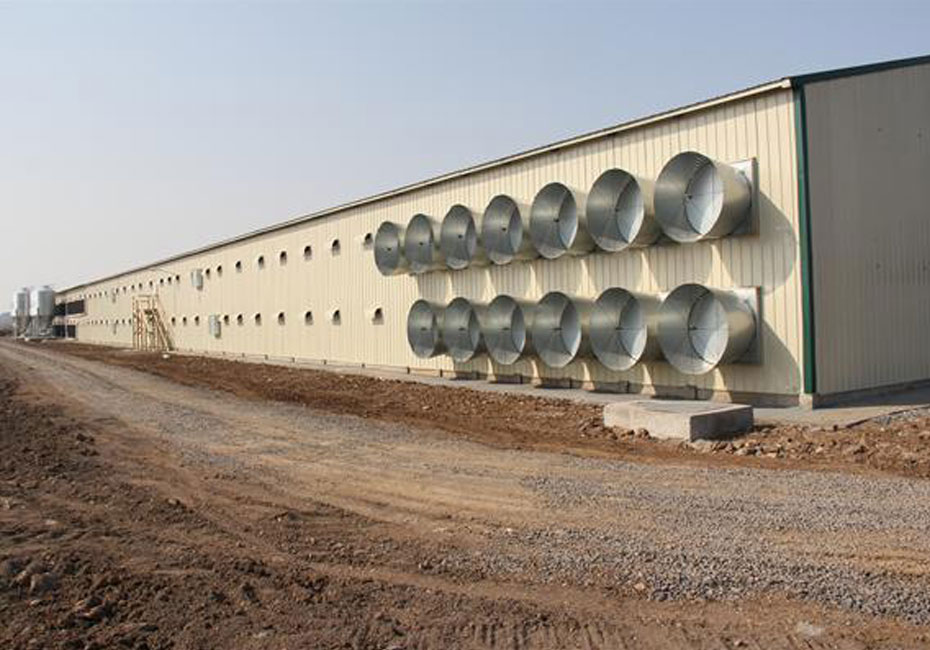
| Applications | Broiler Houses: Continuous monitoring of tunnel ventilation and mechanical airflow systems. Layer and Breeder Houses: Air velocity monitoring for environmental control and ventilation management. Pig Houses: Suitable for nursery, farrowing, gestation and finishing building ventilation systems. Cattle Buildings: Air movement monitoring in mechanically ventilated dairy, calf and beef cattle facilities. Ventilation Ducts: Permanent monitoring of supply air, exhaust air and circulation air velocity. Fan Systems: Supports operational monitoring of exhaust and supply ventilation equipment. Livestock Climate Control: Provides airflow data to integrated environmental controllers and farm automation systems. Steel Structure Livestock Buildings: Suitable for ventilation commissioning and long-term environmental monitoring in large agricultural buildings. Agricultural Project Engineering: Suitable for livestock groups, farm construction contractors, equipment integrators and environmental control projects. |
| Customization Options | Measurement Range: Customizable according to ventilation system requirements. Communication Interface: RS485 Modbus RTU and selected wireless communication options available. Probe Configuration: Probe dimensions and mounting arrangements can be selected according to duct size and installation requirements. Cable Length: Available according to project requirements. Control System Integration: Communication parameters can be matched with livestock controllers, PLC systems and IoT gateways. Mounting Accessories: Flanges, brackets and installation components available upon request. Environmental Configuration: Designed according to local climate and farm conditions. OEM / ODM Service: Housing, communication, labeling and system integration options can be discussed for distributor and engineering projects. |
| Installation & Maintenance | Select a representative duct section with relatively stable airflow. Whenever possible, avoid installation immediately beside sharp elbows, dampers, fan blades or other structures that may produce strong turbulence. Drill or prepare the required mounting opening according to the selected flange dimensions. Insert the stainless steel probe into the duct and securely fasten the flange to prevent movement during operation. Confirm that the sensing opening is correctly oriented to the airflow according to the installation instructions supplied with the selected sensor configuration. Mount the transmitter housing in an accessible position and complete the power and communication wiring according to the electrical diagram. Configure the RS485 address, baud rate and Modbus communication parameters when connecting to a centralized control system. After installation, verify the displayed or transmitted airflow value under known ventilation operating conditions. Periodically inspect the probe for dust, feathers, grease or other contamination. Clean carefully without damaging the sensing structure. Wiring terminals, mounting screws and communication connections should also be checked during routine livestock house maintenance. |
| Project Cases | Commercial Poultry Tunnel Ventilation: Air velocity transmitters can be installed at representative ventilation points to provide continuous airflow information to the poultry house climate controller. Pig Farm Environmental Control: Permanent airflow sensors can work together with temperature, humidity, carbon dioxide and ammonia transmitters for integrated environmental monitoring. Livestock Ventilation Upgrade: Existing fan and air inlet systems can be equipped with air velocity transmitters when farms upgrade from manual inspection to centralized environmental monitoring. Remote Farm Monitoring: Wireless communication configurations can support livestock projects where ventilation data must be transmitted to remote management platforms. Large Farm Engineering Projects: Multiple transmitters can be deployed across separate buildings or ventilation zones for centralized environmental supervision. |
| Product FAQ | Q: What is the main purpose of a duct air velocity transmitter in a livestock house? A: It continuously measures airflow velocity and sends the measurement to a ventilation controller, PLC or environmental monitoring system for ventilation management and analysis. Q: Can it be used in poultry houses? A: Yes. It is suitable for broiler, layer and breeder houses using mechanical, tunnel or duct-based ventilation systems. Q: Is RS485 Modbus supported? A: Yes. RS485 Modbus RTU is available as a standard communication method for the reference configuration. Q: Can the sensor connect to a farm climate controller? A: Yes. It can be integrated with compatible controllers, PLCs, SCADA systems, gateways and farm environmental management platforms. Q: Is wireless monitoring available? A: Selected configurations can support LoRaWAN, WiFi or 4G communication according to project requirements. Q: Can it be installed directly in an air duct? A: Yes. The stainless steel probe is designed for insertion into ventilation ducts and can be secured with a mounting flange. Q: Can the measurement range be customized? A: Customized measurement and communication configurations are available according to project requirements. Q: Does the probe require regular cleaning? A: Yes. Livestock environments may contain dust, feathers and other airborne contaminants, so periodic inspection and careful cleaning are recommended. |
| Product Gallery |     |
- Home
-
Products
- Pig Farming Equipment
- Cattle Farming Equipment
- Sheep & Goat Farming Equipment
- Poultry Farming Equipment
- Feeding & Drinking Systems
- Veterinary & Breeding Equipment
- Testing & Diagnostic Equipment
- Cleaning & Biosecurity Equipment
- Climate Control Equipment
- Livestock Weighing Equipment
- Manure & Waste Management
- Farm Transport & Handling
-
Solutions
- Pig Farm Solutions
- Dairy Farm Solutions
- Beef Cattle Farm Solutions
- Sheep & Goat Farm Solutions
- Layer Farm Solutions
- Broiler Farm Solutions
- Feeding & Drinking System Solutions
- Climate Control Solutions
- Biosecurity & Disinfection Solutions
- Manure & Waste Management
- Smart Farming Solutions
- Farm Renovation and Upgrade Solutions
- Partners
- Projects
- Resources
- News
- About Us
- Contact
Comments & Inquiries
Leave your questions or requirements below. We will reply as soon as possible.