
| Product Name | Fixed Livestock House Air Velocity Sensor | ||||||||||||||||||||||||||||||||||||
| Product Image | 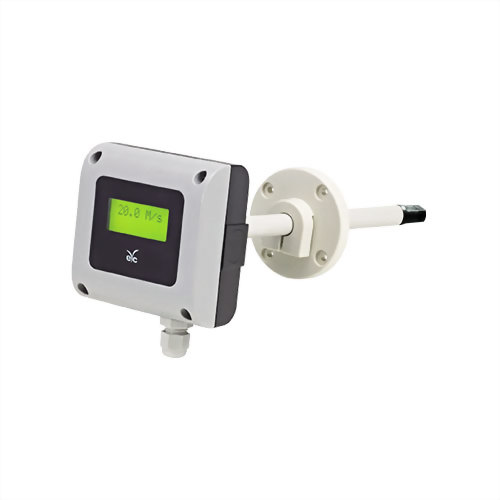 |
||||||||||||||||||||||||||||||||||||
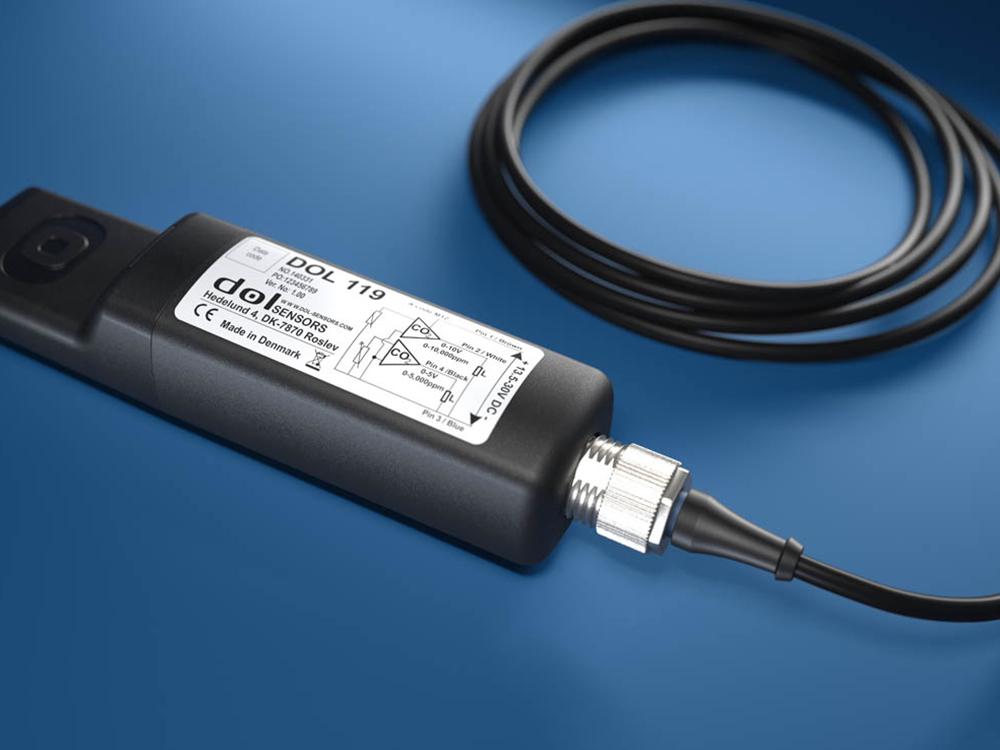
| Product Overview | The Fixed Livestock House Air Velocity Sensor is designed for continuous airflow monitoring in pig houses, poultry houses, cattle barns, ventilation ducts, air inlets, exhaust systems, and other agricultural buildings. It provides real-time air velocity data for evaluating ventilation performance and supporting livestock environmental control. The reference YF500 platform uses a streamlined stainless steel sensing probe designed to reduce airflow disturbance and provide stable measurement. The sensor measures air velocity from 0 to 30 m/s with 0.1 m/s resolution and reference accuracy of ±3%. Standard RS485 Modbus RTU communication enables connection to livestock environmental controllers, PLC systems, SCADA platforms, data loggers, and IoT gateways. LoRaWAN, WiFi, and 4G configurations are also available for wireless or remote farm monitoring applications. |
||||||||||||||||||||||||||||||||||||
| Key Features |
|
||||||||||||||||||||||||||||||||||||
| Structural Components | The typical system consists of a stainless steel air velocity probe, streamlined sensing head, probe shaft, installation flange, transmitter housing, signal-processing electronics, power and communication terminals, cable connection, and mounting components. The sensing probe is positioned directly in the airflow path while the transmitter electronics process the measurement and provide a digital communication signal. The corrosion-resistant stainless steel probe and flame-retardant ABS transmitter enclosure are designed for long-term fixed installation. |
||||||||||||||||||||||||||||||||||||
| Working Principle / Structural Principle | The sensing probe continuously detects air movement passing across the measurement element. The resulting signal is processed electronically and converted into a real-time air velocity value. When installed in a livestock ventilation duct, air inlet, exhaust passage, or representative animal-zone monitoring point, the sensor provides continuous airflow data that can be transmitted to an environmental controller or monitoring platform. The airflow information can be used to evaluate ventilation performance, identify abnormal airflow conditions, compare different livestock-house zones, and support automatic environmental management. |
||||||||||||||||||||||||||||||||||||
| Technical Specifications |
|
||||||||||||||||||||||||||||||||||||
| Applications |
|
||||||||||||||||||||||||||||||||||||
| Customization Options | SHEWUYOU can configure fixed air velocity monitoring solutions according to livestock species, house dimensions, ventilation mode, air inlet arrangement, fan configuration, monitoring zones, and farm automation architecture. Available configurations include RS485 Modbus RTU, LoRaWAN, WiFi, and 4G communication. Probe installation arrangements, cable configuration, mounting accessories, IoT gateways, data loggers, and environmental controllers can be supplied according to project requirements. Special measurement ranges and system configurations are available upon request and can be designed according to local climate and farm conditions. |
||||||||||||||||||||||||||||||||||||
| Installation & Maintenance | Install the sensing probe at a representative airflow monitoring point and align it correctly with the direction of air movement. Flange mounting can be used for ventilation ducts and fixed airflow passages, while wall or pipe mounting can be selected according to the project layout. Avoid locations immediately beside structural obstructions, sharp duct bends, fan blades, or other components that may create highly turbulent and unrepresentative airflow unless the purpose is to monitor that specific location. For livestock houses, periodically inspect the probe for dust, feathers, feed particles, and other contamination that could affect measurement. Clean the probe carefully without damaging the sensing element and inspect the enclosure, cable, mounting hardware, and communication connection during routine farm maintenance. |
||||||||||||||||||||||||||||||||||||
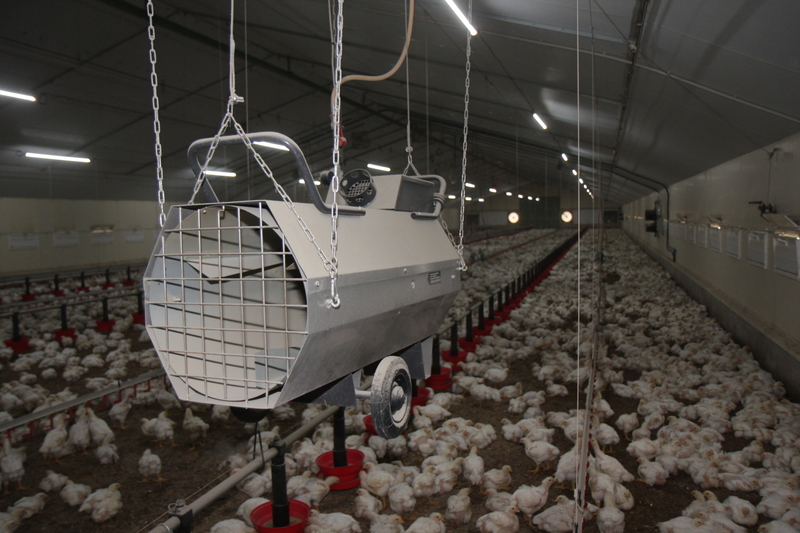
| Project Cases | The Fixed Livestock House Air Velocity Sensor can be integrated into complete pig farm, poultry house, cattle barn, and agricultural ventilation projects. Typical systems combine fixed air velocity sensors with temperature and humidity sensors, CO2 transmitters, ammonia detectors, differential pressure sensors, environmental controllers, variable-speed fans, air inlets, cooling pads, and centralized farm monitoring platforms. For large commercial livestock projects, multiple sensors can be positioned at representative air inlets, animal zones, ventilation ducts, or exhaust sections to evaluate airflow distribution and support ventilation system commissioning and long-term environmental management. |
||||||||||||||||||||||||||||||||||||
| Product FAQ | Q: What air velocity range can the sensor measure? A: The reference YF500 configuration measures air velocity from 0 to 30 m/s. Q: Is it suitable for pig and poultry houses? A: Yes. The manufacturer identifies livestock facilities among the intended agricultural applications for the YF500 air velocity transmitter. Q: Can the sensor be installed in a ventilation duct? A: Yes. The stainless steel probe and flange mounting arrangement are designed for fixed installation in ventilation ducts and airflow systems. Q: What communication interface is standard? A: RS485 Modbus RTU is the standard interface for connection to PLCs, controllers, SCADA systems, data loggers, and IoT gateways. Q: Are wireless communication options available? A: Yes. LoRaWAN, WiFi, and 4G configurations are available for remote or wireless monitoring projects. Q: Can several sensors be installed in one livestock house? A: Yes. Multiple sensors can be installed at representative monitoring points according to house dimensions, ventilation layout, and project requirements. Q: Can it be integrated into a complete livestock environmental control system? A: Yes. The sensor can work with compatible environmental controllers, gateways, PLC systems, and cloud monitoring platforms. |
||||||||||||||||||||||||||||||||||||
| Product Gallery |  |
- Home
-
Products
- Pig Farming Equipment
- Cattle Farming Equipment
- Sheep & Goat Farming Equipment
- Poultry Farming Equipment
- Feeding & Drinking Systems
- Veterinary & Breeding Equipment
- Testing & Diagnostic Equipment
- Cleaning & Biosecurity Equipment
- Climate Control Equipment
- Livestock Weighing Equipment
- Manure & Waste Management
- Farm Transport & Handling
-
Solutions
- Pig Farm Solutions
- Dairy Farm Solutions
- Beef Cattle Farm Solutions
- Sheep & Goat Farm Solutions
- Layer Farm Solutions
- Broiler Farm Solutions
- Feeding & Drinking System Solutions
- Climate Control Solutions
- Biosecurity & Disinfection Solutions
- Manure & Waste Management
- Smart Farming Solutions
- Farm Renovation and Upgrade Solutions
- Partners
- Projects
- Resources
- News
- About Us
- Contact
Comments & Inquiries
Leave your questions or requirements below. We will reply as soon as possible.