
| Product Showcase | Content | ||||||||||||||||||||||||
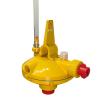
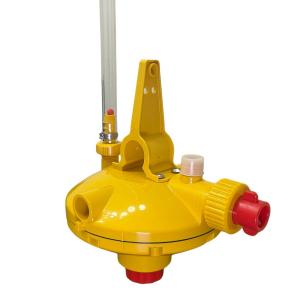
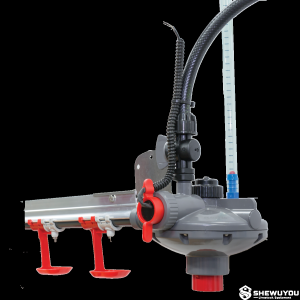
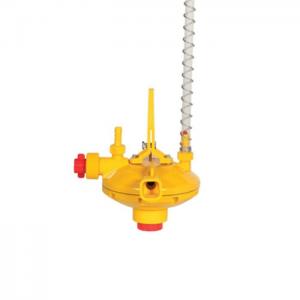
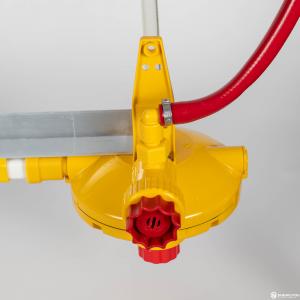
| Product Name | Automatic Flushing Pressure Regulator | ||||||||||||||||||||||||
| Product Image | 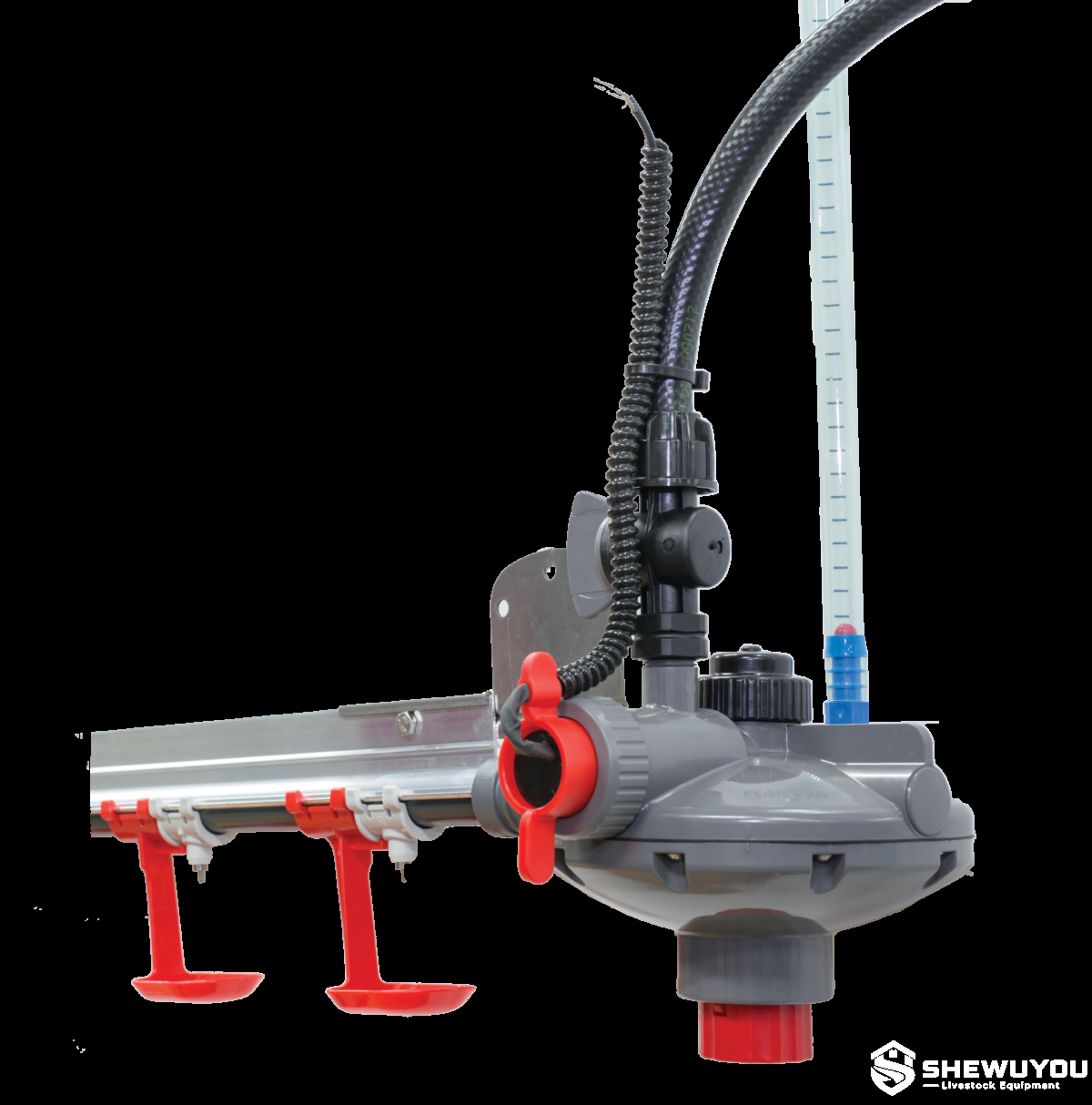 |
||||||||||||||||||||||||
| Product Overview |
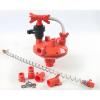
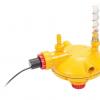
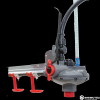
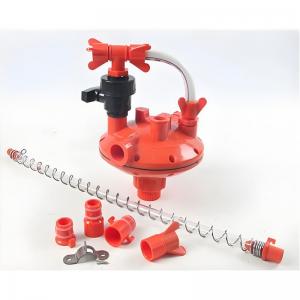
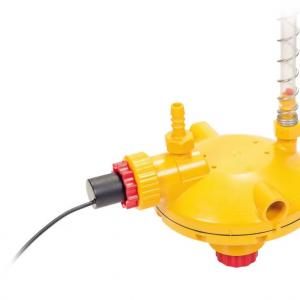
The Automatic Flushing Pressure Regulator is designed for poultry nipple drinking lines where stable operating pressure and routine line sanitation are both required. During normal operation, the regulator maintains an appropriate water column for nipple drinkers. When a flushing cycle is activated, the system switches to a high-flow condition to replace stagnant water and remove suspended deposits from the drinking line. The regulator can be integrated with a solenoid valve and compatible farm controller for scheduled or condition-based automatic flushing. This reduces manual labor and supports more consistent drinking-water management in commercial broiler, breeder, pullet and turkey houses. |
||||||||||||||||||||||||
| Key Features |
|
||||||||||||||||||||||||
| Structural Components |
|
||||||||||||||||||||||||
| Working Principle |
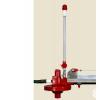
During normal drinking operation, incoming water passes through the pressure regulator, where the internal pressure-control mechanism reduces and stabilizes the supply pressure to the level required by the nipple drinking line. The standpipe provides a visible indication of the water column so operators can check system pressure quickly. During an automatic flushing cycle, a solenoid or actuator changes the water path so a higher flow rate passes through the drinking line. The increased water velocity helps carry away sediments and refresh the water inside the pipe. The flushing sequence can be controlled automatically by a compatible production or climate controller. In larger poultry houses, individual lines can be flushed sequentially to maintain adequate supply pressure throughout the system. |
||||||||||||||||||||||||
| Technical Specifications |
|
||||||||||||||||||||||||
| Applications |
|
||||||||||||||||||||||||
| Customization Options |
|
||||||||||||||||||||||||
| Installation & Maintenance |
Install the regulator at the inlet or designated supply point of the nipple drinking line. The regulator should be mounted securely and aligned so that the standpipe remains vertical and can be read easily by farm personnel. Connect the inlet water supply, drinker-line outlet, standpipe and automatic flushing actuator according to the selected configuration. For automatic operation, connect the solenoid or actuator to the compatible controller and configure the required flushing schedule. A suitable flushing outlet or automatic breather unit should be installed at the opposite end of the drinking line so flushed water and suspended debris can leave the system effectively. Routine maintenance should include checking the diaphragm, seals, standpipe, float indicator, solenoid, electrical connections and pipe fittings. Drinking lines should also be inspected for leaks, mineral deposits and biofilm as part of the farm's water sanitation program. |
||||||||||||||||||||||||
| Product FAQ |
Q: What is the difference between a standard pressure regulator and an automatic flushing regulator? A: A standard regulator controls normal drinking-line pressure, while an automatic flushing model can also switch the line into a high-flow flushing mode when connected to an actuator or control system. Q: Why is automatic flushing useful in poultry houses? A: Regular flushing replaces stagnant or warm water and helps remove suspended deposits from the drinking line, particularly during periods of low water consumption. Q: Can flushing be scheduled automatically? A: Yes. When connected to a compatible controller, flushing can be initiated according to programmed times or other project-specific control parameters. Q: Can the regulator be retrofitted to an existing poultry drinking line? A: Retrofit configurations are available depending on the existing pipe dimensions, pressure regulator arrangement and line-end flushing components. Q: Does the system still allow manual flushing? A: Many configurations retain manual flushing capability in addition to automatic operation. The exact function depends on the selected regulator and actuator design. Q: Can several drinking lines be controlled automatically? A: Yes. Multi-line systems can be configured so individual lines are flushed sequentially. Controller capacity depends on the selected automation platform. Q: Can the regulator be supplied as part of a complete poultry water system? A: Yes. Pressure regulators, nipple pipes, flushing breathers, water connection units, filters, medicators, water meters and suspension components can be supplied according to project requirements. |
||||||||||||||||||||||||
| Product Gallery |  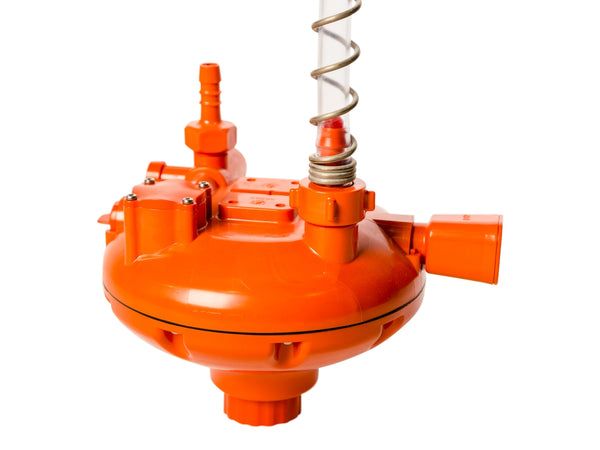 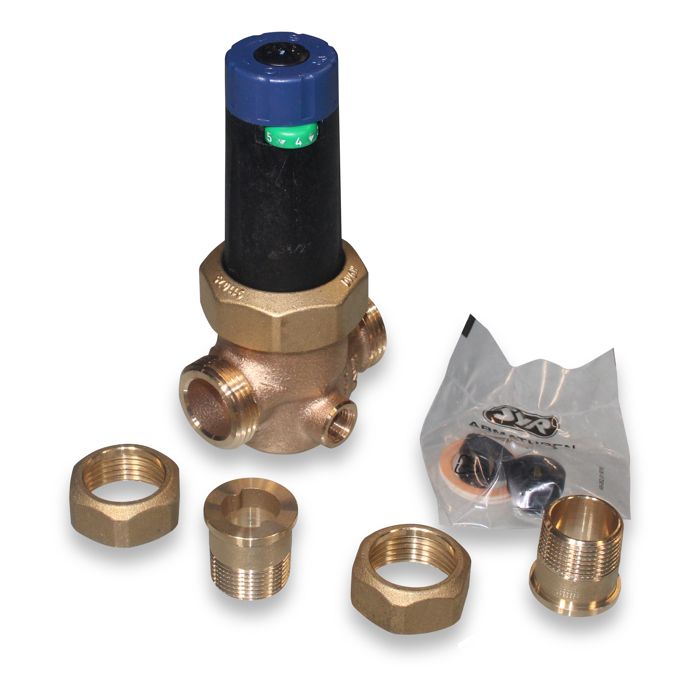 |
- Home
-
Products
- Pig Farming Equipment
- Cattle Farming Equipment
- Sheep & Goat Farming Equipment
- Poultry Farming Equipment
- Feeding & Drinking Systems
- Veterinary & Breeding Equipment
- Testing & Diagnostic Equipment
- Cleaning & Biosecurity Equipment
- Climate Control Equipment
- Livestock Weighing Equipment
- Manure & Waste Management
- Farm Transport & Handling
-
Solutions
- Pig Farm Solutions
- Dairy Farm Solutions
- Beef Cattle Farm Solutions
- Sheep & Goat Farm Solutions
- Layer Farm Solutions
- Broiler Farm Solutions
- Feeding & Drinking System Solutions
- Climate Control Solutions
- Biosecurity & Disinfection Solutions
- Manure & Waste Management
- Smart Farming Solutions
- Farm Renovation and Upgrade Solutions
- Partners
- Projects
- Resources
- News
- About Us
- Contact
Comments & Inquiries
Leave your questions or requirements below. We will reply as soon as possible.