
| Product Showcase | Content | ||||||||||||||||||||||||
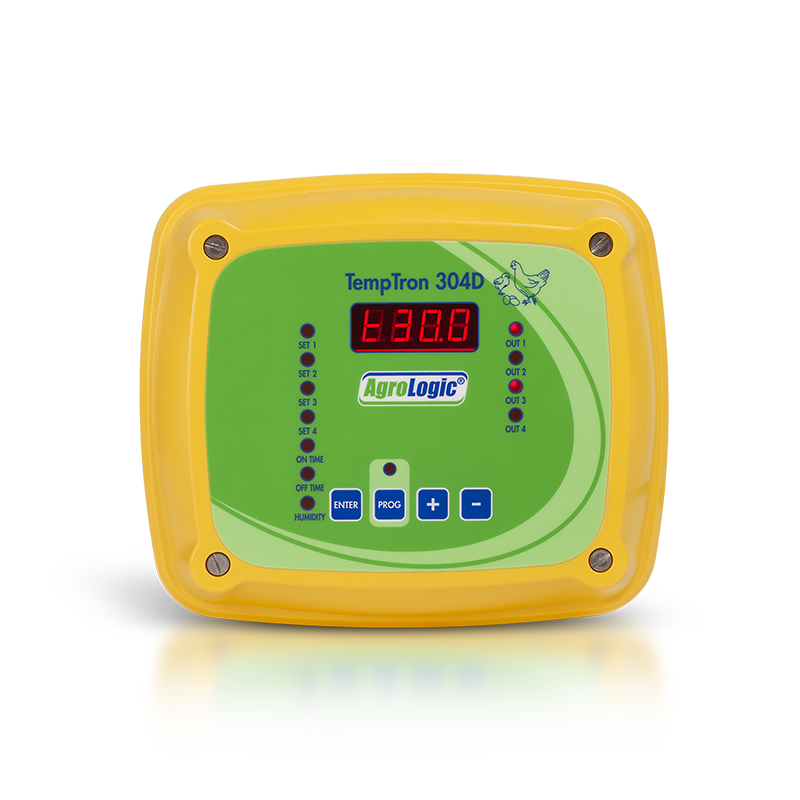
| Product Name | 16-Stage Poultry House Temperature and Humidity Controller | ||||||||||||||||||||||||
| Product Image | 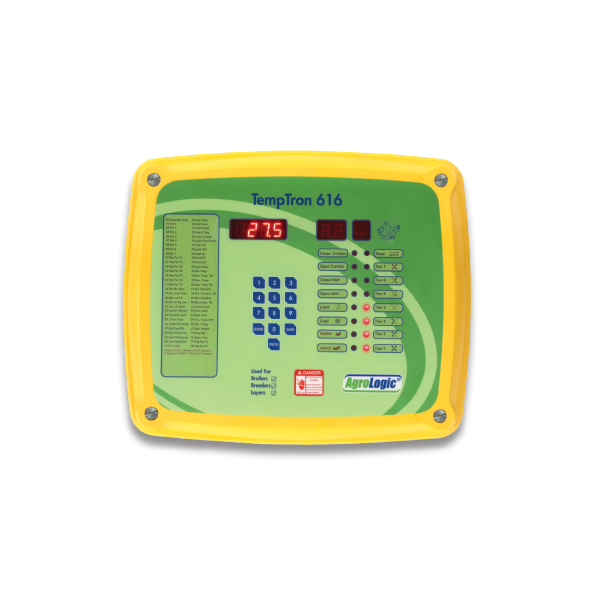 |
||||||||||||||||||||||||
| Product Overview | The 16-Stage Poultry House Temperature and Humidity Controller is designed for environmental management in commercial poultry buildings using multi-stage ventilation, heating and evaporative cooling systems. It can be integrated into tunnel-ventilated and mechanically ventilated poultry houses to coordinate fans, air inlets, cooling equipment, heaters and environmental sensors. The controller is suitable for broiler houses, breeder houses, layer houses and other intensive livestock buildings where stable indoor temperature, humidity and air exchange are essential. Its staged control concept allows the ventilation system to respond progressively as indoor conditions change, helping maintain a more consistent house climate throughout the production cycle. |
||||||||||||||||||||||||
| Key Features |
|
||||||||||||||||||||||||
| Structural Components |
|
||||||||||||||||||||||||
| Working Principle / Structural Principle | Temperature and humidity sensors continuously transmit environmental data to the controller. The measured values are compared with programmed set points and ventilation stages. During low ventilation demand, the system can operate minimum ventilation using timed or speed-controlled fan operation. As house temperature rises, additional fan stages can be activated progressively. In tunnel-ventilated poultry houses, the controller can coordinate tunnel inlets, cooling pads and exhaust fans as ventilation demand increases. Heating equipment can be activated when indoor temperature falls below the programmed heating set point. Cooling equipment can be enabled when temperature and humidity conditions permit. This staged control principle helps match ventilation capacity to bird age, heat load, outside climate and production requirements. |
||||||||||||||||||||||||
| Technical Specifications |
|
||||||||||||||||||||||||
| Applications |
|
||||||||||||||||||||||||
| Customization Options |
|
||||||||||||||||||||||||
| Installation & Maintenance | The controller should be installed in a dry, accessible position protected from direct water spray, excessive dust and accidental mechanical impact. For livestock house applications, installation inside a dedicated electrical cabinet or service room is recommended where practical. Temperature and humidity sensors should be positioned in representative areas of the poultry house and kept away from direct heater radiation, cooling pad water, strong drafts and other local influences that could distort readings. Fan contactors, motor protection devices and suitable electrical isolation should be selected according to the connected loads. All wiring and commissioning work should be performed according to the electrical drawings and local safety regulations. Routine maintenance includes checking sensor condition, cable connections, relay operation, alarm functions, actuator movement and ventilation stage sequencing. Sensors should be cleaned and calibrated according to the farm maintenance schedule and environmental conditions. |
||||||||||||||||||||||||
| Project Cases | Typical projects include commercial broiler houses equipped with staged exhaust fans, sidewall air inlets, tunnel doors, evaporative cooling pads, poultry heaters and environmental sensors. For new steel structure poultry buildings, the controller can be integrated into the complete livestock equipment package together with ventilation fans, cooling systems, heating systems, feeding lines, drinking lines and electrical control cabinets. For renovation projects, the control configuration can also be adapted to existing fan groups and ventilation equipment after verification of electrical loads, actuator types and sensor interfaces. |
||||||||||||||||||||||||
| Product FAQ | Q1: Is this controller suitable for tunnel-ventilated broiler houses? Yes. It is suitable for multi-stage ventilation systems and can be configured for minimum, transition and tunnel ventilation operation. Q2: Can it control both temperature and humidity? Yes. Temperature is the primary climate-control parameter, while humidity monitoring and humidity-related control can be integrated with a compatible humidity sensor. Q3: Can it control fans, cooling pads and heaters together? Yes. The controller can be integrated with fan stages, heating equipment, cooling systems, inlet actuators and related climate-control equipment according to the electrical design. Q4: Can the controller work with a static pressure sensor? Static pressure control can be incorporated when the controller is connected to compatible pressure sensing and inlet-control equipment. Q5: Can the system be customized for different poultry house sizes? Yes. Sensor quantity, control stages, fan grouping and auxiliary functions can be configured according to poultry house dimensions, stocking density, local climate and ventilation calculations. Q6: Is remote monitoring available? Remote communication and centralized monitoring options are available upon request, depending on the selected controller configuration and farm management system. |
||||||||||||||||||||||||
| Product Gallery |    |
- Home
-
Products
- Pig Farming Equipment
- Cattle Farming Equipment
- Sheep & Goat Farming Equipment
- Poultry Farming Equipment
- Feeding & Drinking Systems
- Veterinary & Breeding Equipment
- Testing & Diagnostic Equipment
- Cleaning & Biosecurity Equipment
- Climate Control Equipment
- Livestock Weighing Equipment
- Manure & Waste Management
- Farm Transport & Handling
-
Solutions
- Pig Farm Solutions
- Dairy Farm Solutions
- Beef Cattle Farm Solutions
- Sheep & Goat Farm Solutions
- Layer Farm Solutions
- Broiler Farm Solutions
- Feeding & Drinking System Solutions
- Climate Control Solutions
- Biosecurity & Disinfection Solutions
- Manure & Waste Management
- Smart Farming Solutions
- Farm Renovation and Upgrade Solutions
- Partners
- Projects
- Resources
- News
- About Us
- Contact

Comments & Inquiries
Leave your questions or requirements below. We will reply as soon as possible.