
| Product Showcase | Content | ||||||||||||||||||||||||||||||||||
|---|---|---|---|---|---|---|---|---|---|---|---|---|---|---|---|---|---|---|---|---|---|---|---|---|---|---|---|---|---|---|---|---|---|---|---|
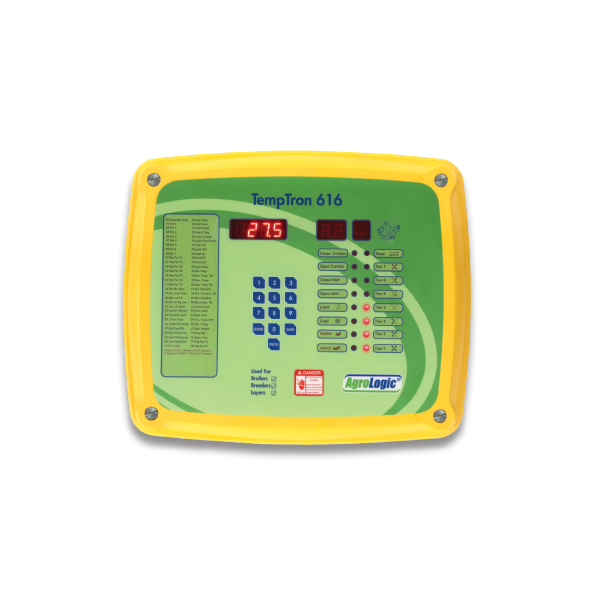
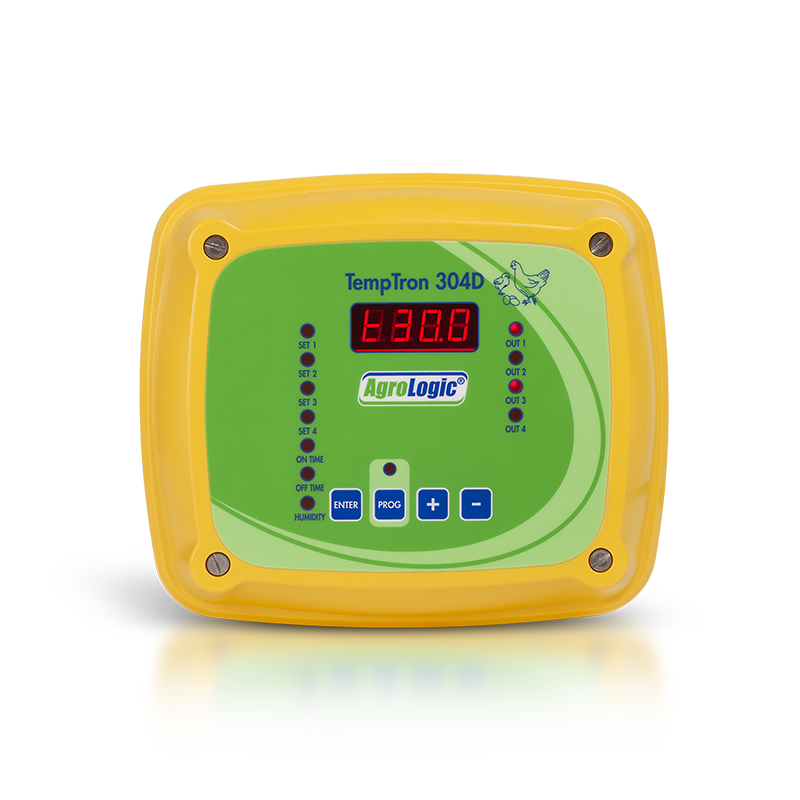
| Product Name | 8-Stage Livestock House Temperature and Humidity Controller | ||||||||||||||||||||||||||||||||||
| Product Image |  |
||||||||||||||||||||||||||||||||||
| Product Overview | The 8-Stage Livestock House Temperature and Humidity Controller is a microprocessor-based environmental controller designed for commercial poultry houses, pig houses and other mechanically or naturally ventilated livestock buildings. It combines multi-point temperature monitoring, optional humidity sensing and automatic control of ventilation, heating, cooling, air inlets, curtains and alarm equipment. The controller is suitable for tunnel ventilation, power fan ventilation and natural ventilation applications. Its flexible control architecture allows livestock equipment suppliers, farm contractors and project integrators to configure environmental control functions according to building design, animal production stage and local climate conditions. |
||||||||||||||||||||||||||||||||||
| Key Features |
|
||||||||||||||||||||||||||||||||||
| Structural Components |
|
||||||||||||||||||||||||||||||||||
| Working Principle | Temperature sensors installed at representative positions inside the livestock house continuously transmit environmental data to the controller. The controller can display individual sensor readings as well as the calculated average house temperature. An optional humidity sensor can provide additional relative humidity data for environmental management. The controller compares measured conditions with programmed set points and automatically switches ventilation fans, heaters, cooling equipment, inlets or curtains according to the selected operating program. In tunnel ventilation applications, fan groups can be activated progressively as indoor temperature increases. The first ventilation group can operate through a cycle timer for minimum ventilation. Heating is activated when indoor temperature falls below the programmed heating threshold. Cooling equipment can operate through programmable on/off cycles, while compatible humidity-based logic can help prevent unnecessary cooling under high-humidity conditions. |
||||||||||||||||||||||||||||||||||
| Technical Specifications |
|
||||||||||||||||||||||||||||||||||
| Applications |
|
||||||||||||||||||||||||||||||||||
| Customization Options | The controller can be supplied in standard configurations or integrated into an OEM livestock climate-control solution. Control functions can be arranged according to livestock species, house dimensions, ventilation strategy, connected equipment and local environmental conditions. Customizable options may include temperature sensor quantity, humidity monitoring, relay allocation, fan stages, minimum ventilation programs, heating control, cooling control, inlet or curtain operation, alarm configuration, variable-speed outputs and communication equipment. Final configuration can be designed according to local climate and farm conditions and should be confirmed before production or project installation. |
||||||||||||||||||||||||||||||||||
| Installation & Maintenance | Install the controller in an accessible location protected from direct water spray, excessive dust accumulation and unnecessary heat sources. Temperature and humidity sensors should be positioned where they can measure representative conditions within the animal occupied zone and should not be installed directly beside heaters, cooling pads, air inlets or exhaust fans. Fans, heaters, pumps and other high-power livestock equipment should be connected through properly rated contactors, circuit protection devices or electrical control panels where required. Low-voltage sensor wiring should be routed separately from high-power cables to reduce electrical interference. Routine maintenance should include checking sensor readings, electrical terminals, relay operation, ventilation stages, heating and cooling sequences, alarm functions and enclosure condition. Installation and electrical servicing should be performed by qualified technicians according to the project wiring diagram and local electrical regulations. |
||||||||||||||||||||||||||||||||||
| Project Cases | A typical tunnel-ventilated poultry house can use the controller to coordinate multiple fan groups, minimum ventilation, heating, evaporative cooling and high/low temperature alarms. As temperature rises, additional fan groups are activated according to programmed temperature offsets, while cooling equipment can operate through timed cycles. In pig farm projects, the controller can be integrated with exhaust fans, air inlets, heaters, cooling equipment and environmental sensors to provide automatic climate management for nursery, growing or finishing buildings. For complete steel structure livestock buildings, the controller can form part of an integrated package including ventilation fans, cooling pads, air inlet systems, heating equipment, sensors, alarm systems and electrical control cabinets. |
||||||||||||||||||||||||||||||||||
| Product FAQ | Q: Is this controller suitable for both poultry and pig houses? A: Yes. The controller platform is designed for poultry and swine environments and can be configured for different ventilation systems and production stages. Q: How many temperature sensors can be connected? A: The referenced configuration supports up to four analog temperature sensors and can display both individual readings and average house temperature. Q: Can the controller monitor humidity? A: Yes. An optional 0-10V humidity sensor can be connected for humidity monitoring and compatible control functions. Q: How many control relays are provided? A: The referenced configuration provides eight built-in dry-contact relays for fans, heaters, inlets, curtains, alarms and other compatible equipment. Q: Can it control variable-speed ventilation? A: Yes. Two 0-10V outputs are available for compatible variable-speed fans, heating equipment or lighting systems. Q: Does it support minimum ventilation? A: Yes. Supported ventilation programs allow the first fan group to operate by cycle timer for minimum ventilation. Q: Can the system be remotely monitored? A: Remote central management is available when the controller is used with compatible communication and management equipment. Q: Can the control program be customized? A: Yes. Standard versions and OEM-customized configurations are available according to project requirements. |
||||||||||||||||||||||||||||||||||
| Product Gallery |  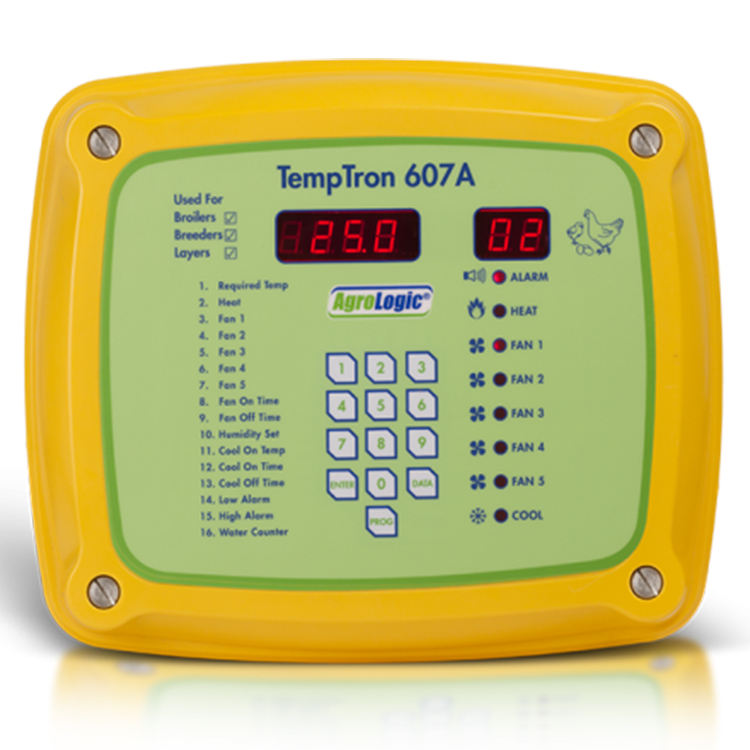 |
- Home
-
Products
- Pig Farming Equipment
- Cattle Farming Equipment
- Sheep & Goat Farming Equipment
- Poultry Farming Equipment
- Feeding & Drinking Systems
- Veterinary & Breeding Equipment
- Testing & Diagnostic Equipment
- Cleaning & Biosecurity Equipment
- Climate Control Equipment
- Livestock Weighing Equipment
- Manure & Waste Management
- Farm Transport & Handling
-
Solutions
- Pig Farm Solutions
- Dairy Farm Solutions
- Beef Cattle Farm Solutions
- Sheep & Goat Farm Solutions
- Layer Farm Solutions
- Broiler Farm Solutions
- Feeding & Drinking System Solutions
- Climate Control Solutions
- Biosecurity & Disinfection Solutions
- Manure & Waste Management
- Smart Farming Solutions
- Farm Renovation and Upgrade Solutions
- Partners
- Projects
- Resources
- News
- About Us
- Contact

Comments & Inquiries
Leave your questions or requirements below. We will reply as soon as possible.