


| Product Showcase | Content | ||||||||||||||||||||||||||||||||
|---|---|---|---|---|---|---|---|---|---|---|---|---|---|---|---|---|---|---|---|---|---|---|---|---|---|---|---|---|---|---|---|---|---|
| Product Name | Livestock Heating Thermostat Temperature Controller | ||||||||||||||||||||||||||||||||
| Product Image | 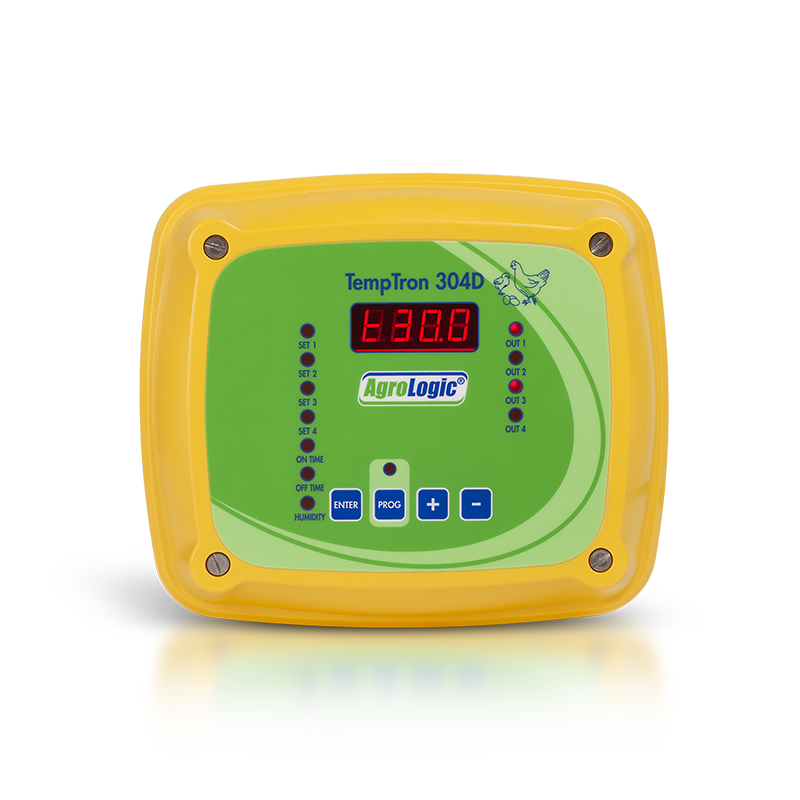 |
||||||||||||||||||||||||||||||||
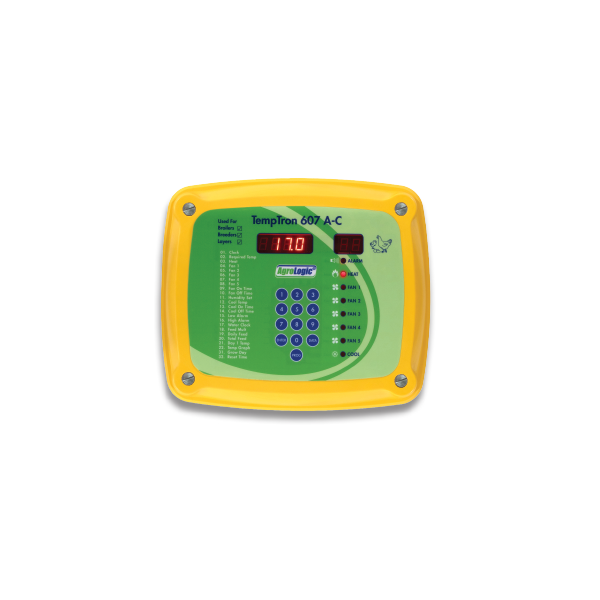
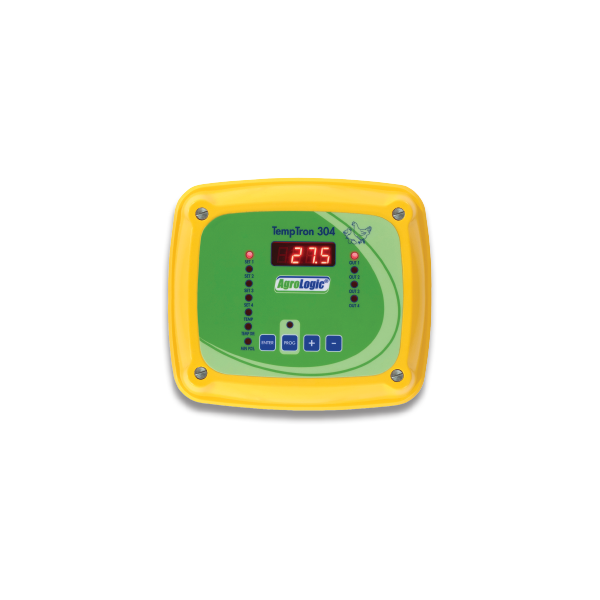
| Product Overview | The Livestock Heating Thermostat Temperature Controller is a compact environmental control unit designed for poultry houses, pig farms and other commercial livestock buildings. It provides automatic temperature-based control for staged ventilation and cooling equipment, helping farm operators maintain a more stable indoor environment with less manual adjustment. The reference control architecture uses four programmable output stages. Three stages can be assigned to ventilation fan groups, while one stage can operate a cooling system. The first ventilation stage can operate in minimum-ventilation timer mode, making the controller suitable for livestock houses that require regular air exchange even when heating demand remains high. A temperature sensor is used as the primary environmental input, while an optional humidity sensor can provide additional humidity-based control. The controller can be integrated into livestock equipment packages, pig farm construction projects and steel-structure poultry-house ventilation systems. |
||||||||||||||||||||||||||||||||
| Key Features |
|
||||||||||||||||||||||||||||||||
| Structural Components |
|
||||||||||||||||||||||||||||||||
| Working Principle / Structural Principle | The controller continuously receives temperature information from the remote sensor installed inside the livestock house. The measured value is compared with the programmed set points, and the corresponding relay outputs are activated or deactivated automatically. In a typical configuration, the first output controls a minimum-ventilation fan group using an adjustable on/off timer. The second and third outputs activate additional ventilation stages as indoor temperature increases. The fourth output can control an evaporative cooling pump or other cooling equipment using an independent timer. When an optional humidity sensor is connected, the controller can monitor relative humidity and prevent cooling operation when humidity rises above the selected limit. This helps avoid excessive moisture accumulation during evaporative cooling. For high-current fans, heaters, pumps or other electrical loads, the controller should operate correctly sized external contactors rather than switching the equipment directly. |
||||||||||||||||||||||||||||||||
| Technical Specifications |
|
||||||||||||||||||||||||||||||||
| Applications |
|
||||||||||||||||||||||||||||||||
| Customization Options | Control-system configuration can be adapted according to the livestock building and electrical design. Available project options may include:
|
||||||||||||||||||||||||||||||||
| Installation & Maintenance | Install the controller in an accessible service position protected from direct water spray, excessive condensation and mechanical impact. The temperature sensor should be located in a representative livestock-occupied zone and away from direct heater radiation, fan discharge, cooling pads, doors and other sources that could produce inaccurate readings. The reference temperature sensor can be installed remotely from the controller. Sensor wiring should be routed separately from high-voltage motor cables where practical to reduce electrical interference. The minimum-ventilation fan group is normally connected to the first control stage, while additional fan groups are assigned to subsequent stages. Cooling equipment is connected to the designated cooling output. External contactors should be used whenever connected load requirements exceed the controller relay capacity. Routine maintenance should include sensor inspection, terminal tightening, ventilation-stage testing, cooling-system testing, enclosure cleaning and verification of programmed set points before each production cycle. |
||||||||||||||||||||||||||||||||
| Project Cases | Broiler House Ventilation: The first fan group can provide timer-based minimum ventilation during cool weather or early flock stages. Additional fan groups start progressively as indoor temperature increases, while the final output controls evaporative cooling. Piglet Nursery: The controller can be incorporated into a nursery ventilation system where temperature-sensitive animals require controlled air exchange. External heating equipment and ventilation components can be coordinated through the project control panel according to farm requirements. Existing Farm Renovation: The compact controller can be incorporated into older livestock buildings when upgrading basic manual ventilation to automatic staged temperature control. Final electrical design depends on fan motor ratings, cooling equipment and existing farm wiring. |
||||||||||||||||||||||||||||||||
| Product FAQ | Q1: Can this controller operate several ventilation fans? Yes. The reference configuration provides three stages for ventilation fan groups. Multiple fans may be operated through correctly sized external contactors according to the electrical design. Q2: Does it support minimum ventilation? Yes. The first ventilation stage includes an adjustable on/off timer for minimum ventilation. Q3: Can it control an evaporative cooling pad system? Yes. One output stage can be used for cooling equipment, with an adjustable on/off timer. Q4: Can a humidity sensor be connected? Yes. A compatible 0-10V humidity sensor can be connected as an optional environmental input. Q5: What happens if humidity becomes too high during cooling? When humidity control is configured, cooling operation can be stopped when the measured humidity exceeds the programmed limit. Q6: Can it be used for pig farms as well as poultry houses? Yes. The control principle is suitable for livestock buildings using staged fans and temperature-based environmental control. The final system design should be matched to the ventilation and heating requirements of the specific animal house. Q7: Can high-power exhaust fans be connected directly? High-current equipment should normally be operated through appropriately rated contactors and electrical protection devices rather than being connected directly to the controller relays. Q8: Can the settings be customized? Yes. Set points, ventilation timing, cooling operation and external control-panel configuration can be designed according to local climate and farm conditions. |
||||||||||||||||||||||||||||||||
| Product Gallery |    |
- Home
-
Products
- Pig Farming Equipment
- Cattle Farming Equipment
- Sheep & Goat Farming Equipment
- Poultry Farming Equipment
- Feeding & Drinking Systems
- Veterinary & Breeding Equipment
- Testing & Diagnostic Equipment
- Cleaning & Biosecurity Equipment
- Climate Control Equipment
- Livestock Weighing Equipment
- Manure & Waste Management
- Farm Transport & Handling
-
Solutions
- Pig Farm Solutions
- Dairy Farm Solutions
- Beef Cattle Farm Solutions
- Sheep & Goat Farm Solutions
- Layer Farm Solutions
- Broiler Farm Solutions
- Feeding & Drinking System Solutions
- Climate Control Solutions
- Biosecurity & Disinfection Solutions
- Manure & Waste Management
- Smart Farming Solutions
- Farm Renovation and Upgrade Solutions
- Partners
- Projects
- Resources
- News
- About Us
- Contact
Comments & Inquiries
Leave your questions or requirements below. We will reply as soon as possible.