


| Product Showcase | Content | ||||||||||||||||||||||||||||
| Product Name | 8-Stage Livestock House Temperature Controller | ||||||||||||||||||||||||||||
| Product Image | 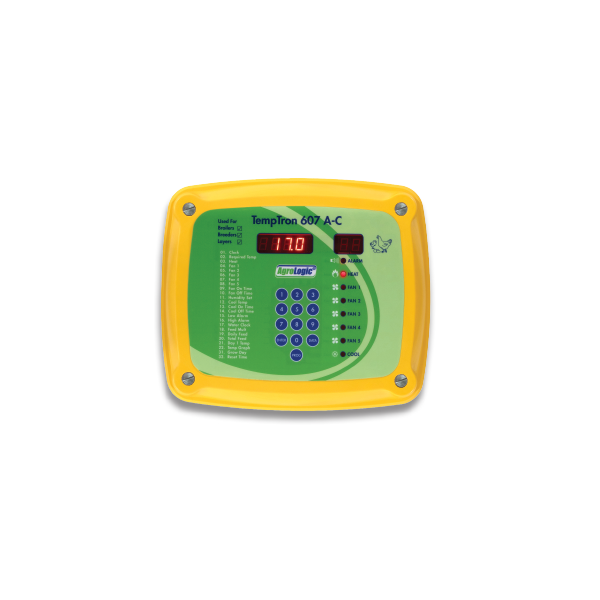 |
||||||||||||||||||||||||||||
| Product Overview | The 8-Stage Livestock House Temperature Controller is designed for coordinated environmental management in commercial poultry houses, pig houses and other intensive livestock buildings. It can integrate multiple temperature inputs with staged control of ventilation fans, heating equipment, cooling systems, air inlets, curtains and alarm functions. The controller is suitable for tunnel ventilation, mechanical fan ventilation and selected natural ventilation configurations. By comparing measured house temperature with programmed set points, the system automatically activates different control stages as environmental conditions change. This helps farm operators maintain a more stable indoor climate while reducing the need for continuous manual equipment switching. For livestock projects with different building layouts, ventilation capacities or local climate conditions, control logic, sensor configuration and peripheral equipment interfaces can be selected according to project requirements. |
||||||||||||||||||||||||||||
| Key Features |
|
||||||||||||||||||||||||||||
| Structural Components |
|
||||||||||||||||||||||||||||
| Working Principle / Structural Principle | Temperature sensors continuously transmit livestock house temperature data to the controller. The microprocessor compares the measured temperature with the programmed target temperature and individual stage differentials. When the house temperature rises, ventilation stages can be activated sequentially. Additional fan groups or cooling equipment are switched on as temperature demand increases. When the temperature falls below the heating threshold, the heating output can be activated. In minimum ventilation mode, selected fan groups can operate according to programmable on/off cycles instead of running continuously. Depending on system configuration, the controller can also coordinate air inlets, curtains or variable-speed equipment to maintain appropriate airflow and ventilation balance. This staged operating principle allows commercial livestock buildings to respond progressively to changing environmental loads instead of relying on a single on/off ventilation level. |
||||||||||||||||||||||||||||
| Technical Specifications |
|
||||||||||||||||||||||||||||
| Applications |
|
||||||||||||||||||||||||||||
| Customization Options | The controller and related electrical control package can be configured according to livestock species, building dimensions, ventilation design and local environmental conditions.
|
||||||||||||||||||||||||||||
| Installation & Maintenance | Installation:
|
||||||||||||||||||||||||||||
| Project Cases | Commercial Pig House Climate Control: The controller can be integrated with exhaust fans, heating equipment and air inlet actuators to provide staged temperature and ventilation management in nursery, growing or finishing houses. Poultry Tunnel Ventilation Project: Multiple fan groups can be arranged as sequential ventilation stages, with minimum ventilation cycling for cool-weather operation and additional cooling control during high-temperature periods. Livestock House Retrofit: Existing fans, heaters and cooling equipment can be incorporated into a centralized control strategy after electrical load, sensor positions and ventilation logic have been reviewed. |
||||||||||||||||||||||||||||
| Product FAQ | Q1: What does an 8-stage temperature controller mean? An 8-stage controller provides multiple programmable outputs that can be assigned to equipment such as fan groups, heating, cooling, inlets or alarm functions. The exact assignment depends on the selected control program. Q2: Can this controller be used in pig houses? Yes. This controller type is suitable for commercial pig and poultry environments when the control program and peripheral equipment are configured according to the farm ventilation design. Q3: Can several temperature sensors be connected? Yes. The referenced configuration supports multiple temperature sensors and can use the readings to monitor individual locations and calculate representative house temperature. Q4: Can it control both heating and ventilation fans? Yes. Heating and staged fan control are typical functions. Cooling, air inlet, curtain or alarm control can also be integrated depending on the selected configuration. Q5: Can it operate minimum ventilation? Yes. A selected ventilation stage can be programmed for timed on/off cycling to maintain minimum fresh-air exchange when full ventilation capacity is not required. Q6: Is humidity control available? Optional humidity sensing and humidity-related control functions are available according to project requirements. Q7: Can the system be customized for different climates? Yes. Fan capacity, stage settings, sensor arrangement, cooling strategy and heating logic can be designed according to local climate and farm conditions. Q8: Can it be connected to a remote farm management system? Remote communication and centralized monitoring can be provided with compatible communication equipment. The final solution depends on the project communication architecture. |
||||||||||||||||||||||||||||
| Product Gallery |   |
- Home
-
Products
- Pig Farming Equipment
- Cattle Farming Equipment
- Sheep & Goat Farming Equipment
- Poultry Farming Equipment
- Feeding & Drinking Systems
- Veterinary & Breeding Equipment
- Testing & Diagnostic Equipment
- Cleaning & Biosecurity Equipment
- Climate Control Equipment
- Livestock Weighing Equipment
- Manure & Waste Management
- Farm Transport & Handling
-
Solutions
- Pig Farm Solutions
- Dairy Farm Solutions
- Beef Cattle Farm Solutions
- Sheep & Goat Farm Solutions
- Layer Farm Solutions
- Broiler Farm Solutions
- Feeding & Drinking System Solutions
- Climate Control Solutions
- Biosecurity & Disinfection Solutions
- Manure & Waste Management
- Smart Farming Solutions
- Farm Renovation and Upgrade Solutions
- Partners
- Projects
- Resources
- News
- About Us
- Contact
Comments & Inquiries
Leave your questions or requirements below. We will reply as soon as possible.