
| Product Showcase | Content | ||||||||||||||||||||||||||||
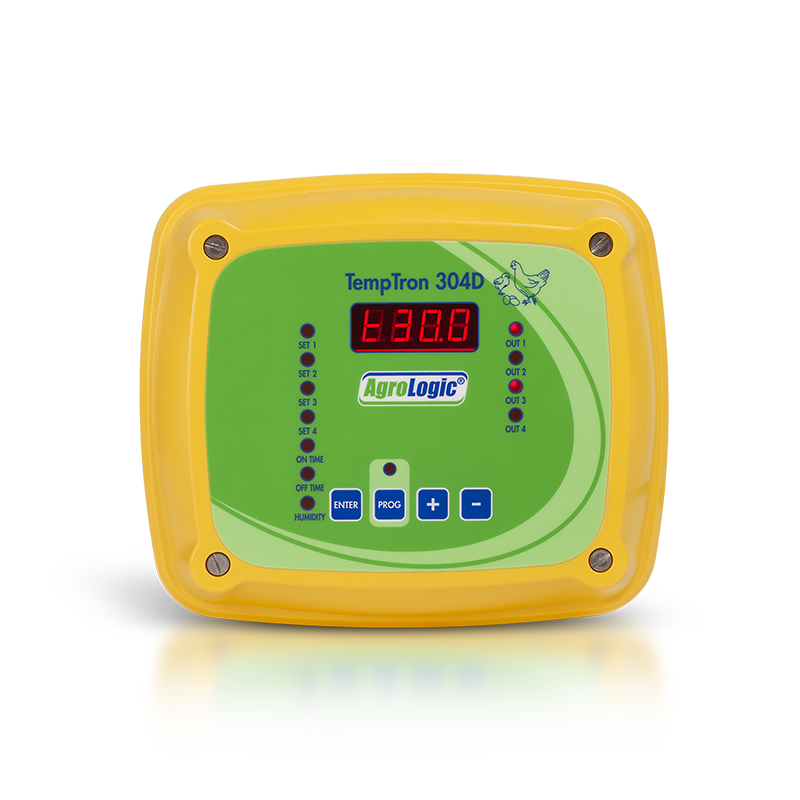
| Product Name | Touchscreen Temperature and Humidity Climate Controller for Livestock Farms | ||||||||||||||||||||||||||||
| Product Image | 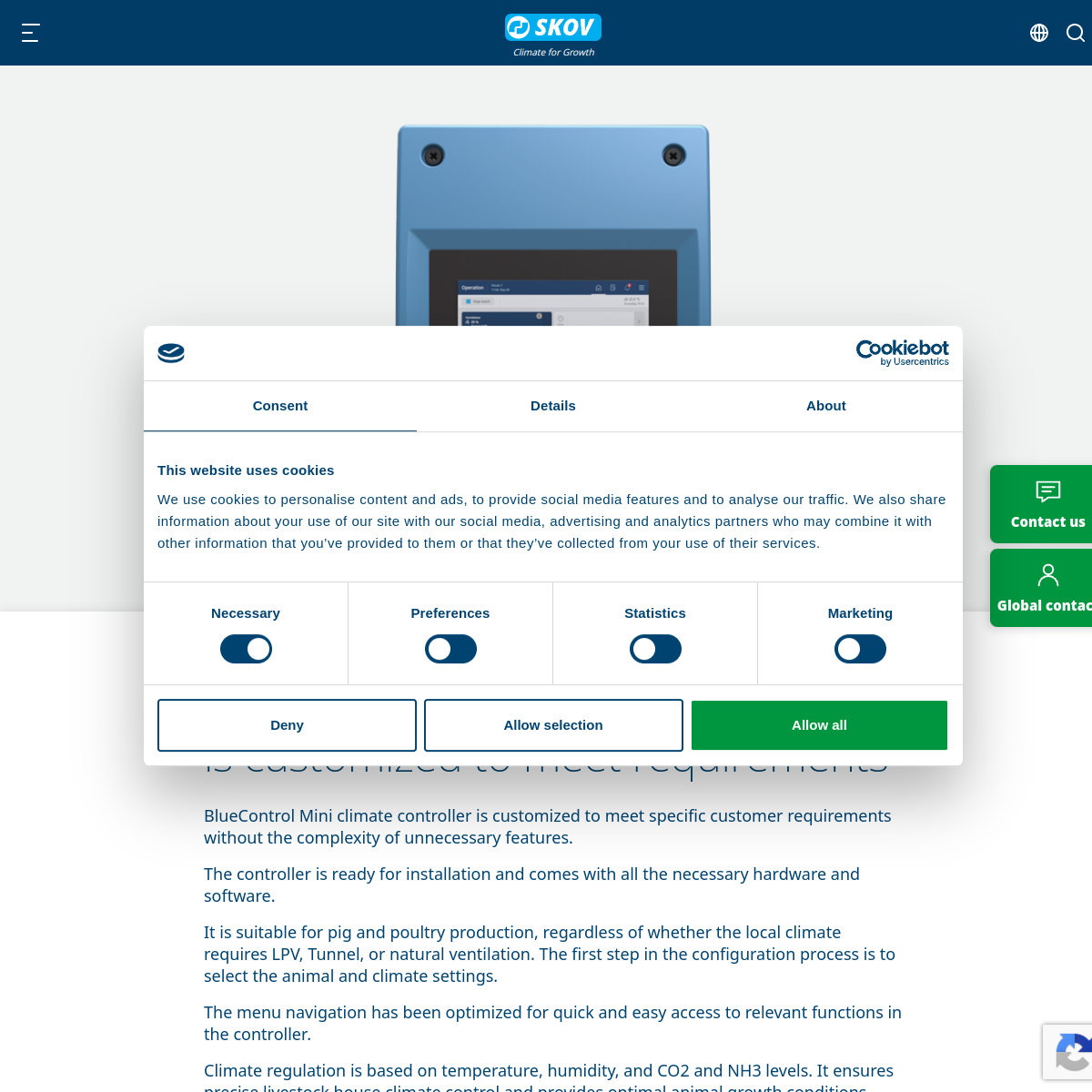 |
||||||||||||||||||||||||||||
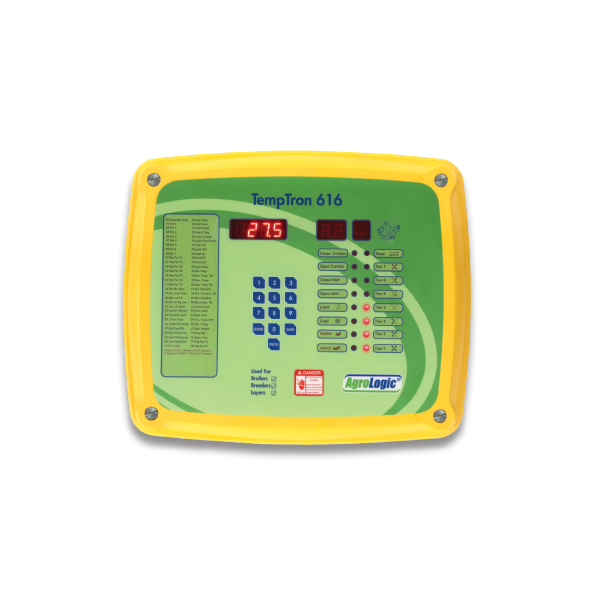
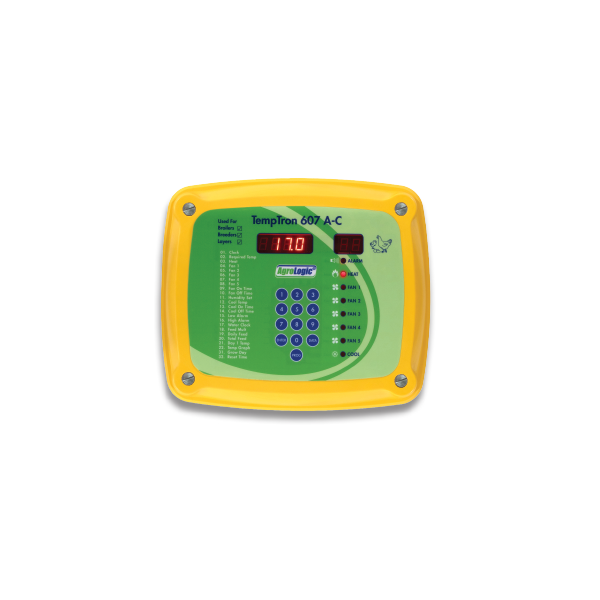
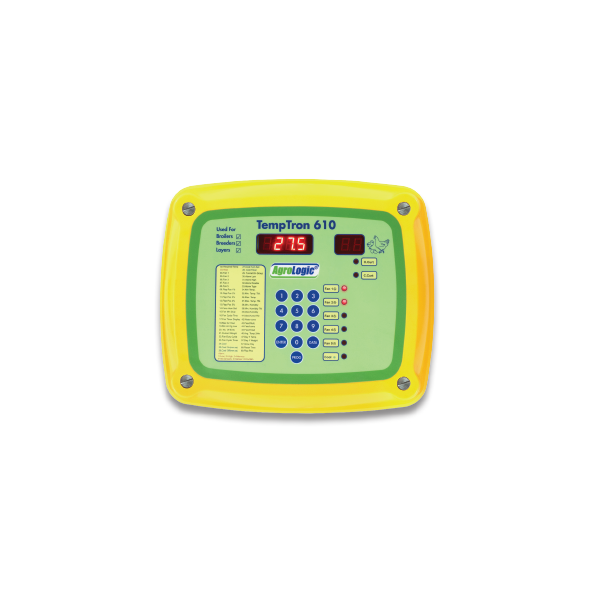
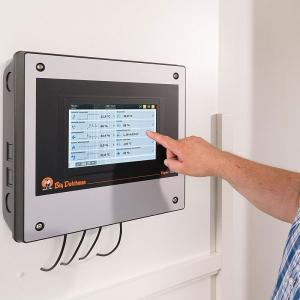
| Product Overview | The Touchscreen Temperature and Humidity Climate Controller for Livestock Farms is a configurable environmental control platform designed for commercial pig houses, poultry houses and integrated livestock farm projects. It combines an intuitive touchscreen interface with automatic climate management to simplify everyday operation of ventilation, heating, cooling and related environmental equipment. The controller can be configured according to animal type, house design and local climate conditions. It is suitable for livestock buildings using low-pressure ventilation, tunnel ventilation or natural ventilation concepts and can form part of a complete climate-control solution for new pig farm construction, poultry projects and steel structure livestock buildings. Climate regulation can be based on temperature and relative humidity, with additional air-quality parameters such as CO2 and NH3 available when compatible sensors and functions are specified. |
||||||||||||||||||||||||||||
| Key Features |
|
||||||||||||||||||||||||||||
| Structural Components |
|
||||||||||||||||||||||||||||
| Working Principle / Structural Principle | Environmental sensors continuously measure conditions inside the livestock house. Temperature and humidity values are compared with programmed target settings, while compatible CO2 or NH3 sensors can provide additional air-quality information. When climate conditions move away from the target range, the controller automatically adjusts connected equipment. Ventilation capacity can be increased or reduced, heating can be activated during low-temperature conditions, and cooling equipment can operate when additional heat removal is required. Air inlet or curtain operation can also be coordinated with the ventilation system where included in the project. The required control strategy is selected according to the livestock species, ventilation concept, building layout and local climate. This allows the same control platform to be adapted to different commercial farm applications without adding functions that are unnecessary for the individual project. |
||||||||||||||||||||||||||||
| Technical Specifications |
|
||||||||||||||||||||||||||||
| Applications |
|
||||||||||||||||||||||||||||
| Customization Options | The climate-control system can be configured according to livestock species, farm size, house dimensions, ventilation concept and local environmental conditions. Customization options may include temperature and humidity sensor quantity, CO2 or NH3 monitoring, fan-stage control, variable ventilation control, heating zones, cooling equipment, motorized air inlets, tunnel curtains, alarm interfaces and remote management functions. Electrical interfaces, control outputs and system logic can be designed according to project requirements. Final configuration should be confirmed based on the livestock-house layout, installed equipment and local climate conditions. |
||||||||||||||||||||||||||||
| Installation & Maintenance | The controller is intended for convenient wall-mounted installation in an accessible service area, control room or suitable location within the livestock-house equipment system. The installation position should allow farm personnel to view the touchscreen and perform routine operation without entering restricted electrical areas. Temperature and humidity sensors should be installed in representative animal-occupied zones and protected from direct heater radiation, cooling-pad discharge, sunlight and concentrated airflow. CO2 and NH3 sensor locations should be selected according to the relevant air-quality monitoring requirements. High-voltage motor circuits should normally be switched through appropriately rated contactors or motor-control equipment. Sensor and communication cables should be routed separately from high-power cables wherever practical to reduce electrical interference. Routine maintenance includes checking sensors, wiring terminals, fan and actuator response, heating and cooling functions, alarm signals and communication status. Periodic cleaning of the controller exterior and inspection of the electrical cabinet help maintain reliable operation in demanding livestock environments. |
||||||||||||||||||||||||||||
| Project Cases | Commercial Pig House Climate Control: In mechanically ventilated pig houses, the controller can receive temperature and humidity data and regulate exhaust fans, air inlets, heaters and cooling equipment to maintain the required environment throughout different production stages. Tunnel-Ventilated Poultry House: For hot-climate poultry projects, the controller can coordinate ventilation capacity, tunnel inlets and cooling equipment according to indoor climate requirements and the selected ventilation strategy. Steel Structure Livestock Building: In new-build livestock farm projects, the controller can be integrated into the electrical and environmental-control package together with sensors, ventilation equipment, heating equipment, cooling systems and alarm devices. The final solution is designed according to local climate and farm conditions. |
||||||||||||||||||||||||||||
| Product FAQ | Q: Is this controller suitable for both pig and poultry farms? A: Yes. The control platform can be configured for pig and poultry production according to the required animal and climate settings. Q: Can it control both temperature and humidity? A: Yes. Temperature and humidity are core climate parameters and can be used to regulate the livestock-house environment when compatible sensors are installed. Q: Can CO2 and ammonia be monitored? A: Yes. CO2 and NH3 monitoring can be included when compatible sensors, inputs and software functions are specified. Q: Can it control ventilation fans? A: Yes. Ventilation control can be configured for the required fan system, inlet system and ventilation concept. The exact output arrangement depends on the project design. Q: Is it suitable for tunnel ventilation? A: Yes. The controller can be configured for tunnel ventilation as well as low-pressure and natural ventilation applications. Q: Can heating and cooling equipment be connected? A: Yes. Heating and cooling functions are available according to project requirements and the selected system configuration. Q: Can we remotely monitor the livestock house? A: Remote access and farm-management integration are available upon request when compatible communication equipment and software are included. Q: Can the controller be customized for our farm project? A: Yes. Sensor quantity, controlled equipment, ventilation strategy, electrical interfaces and climate functions can be customized according to project requirements. |
||||||||||||||||||||||||||||
| Product Gallery | 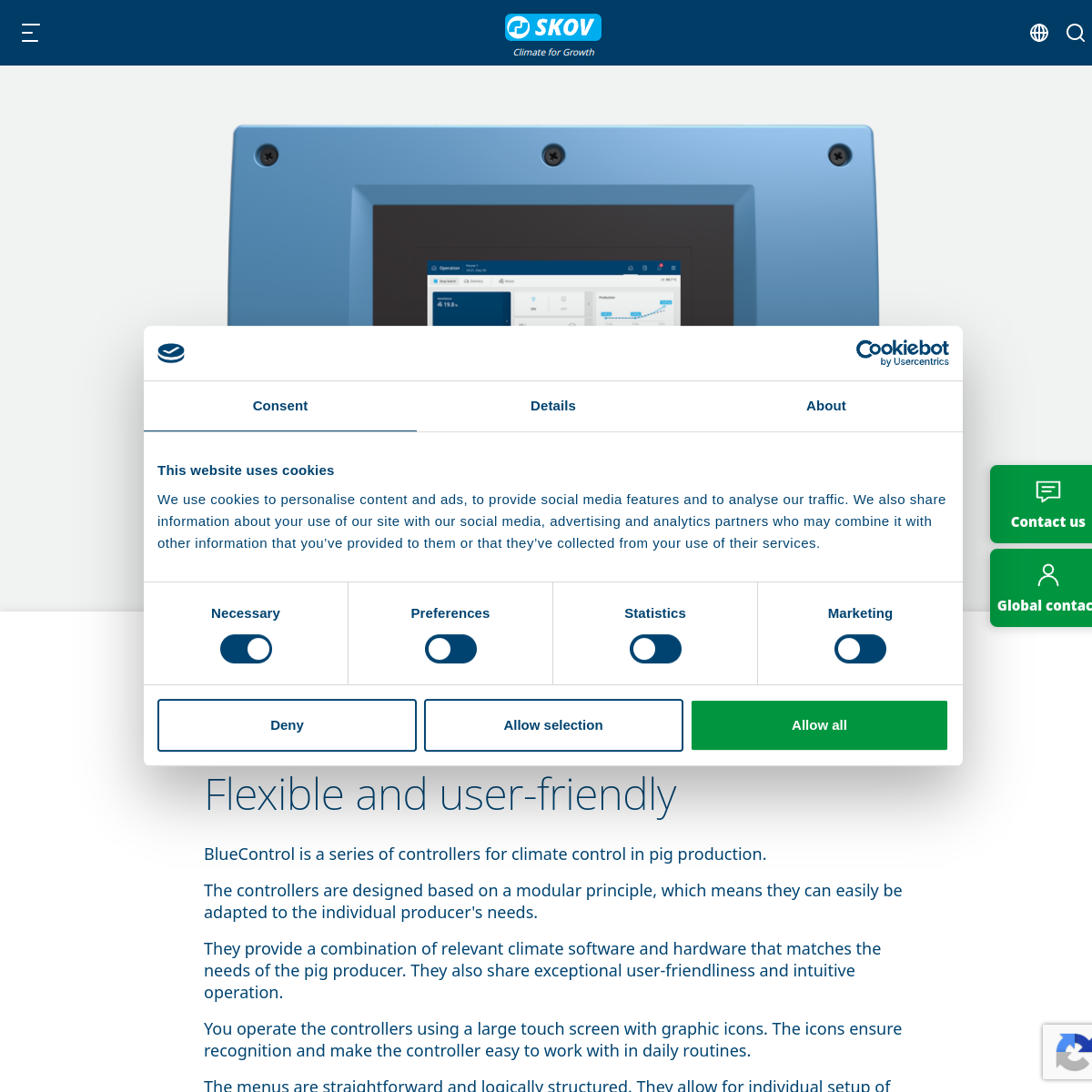 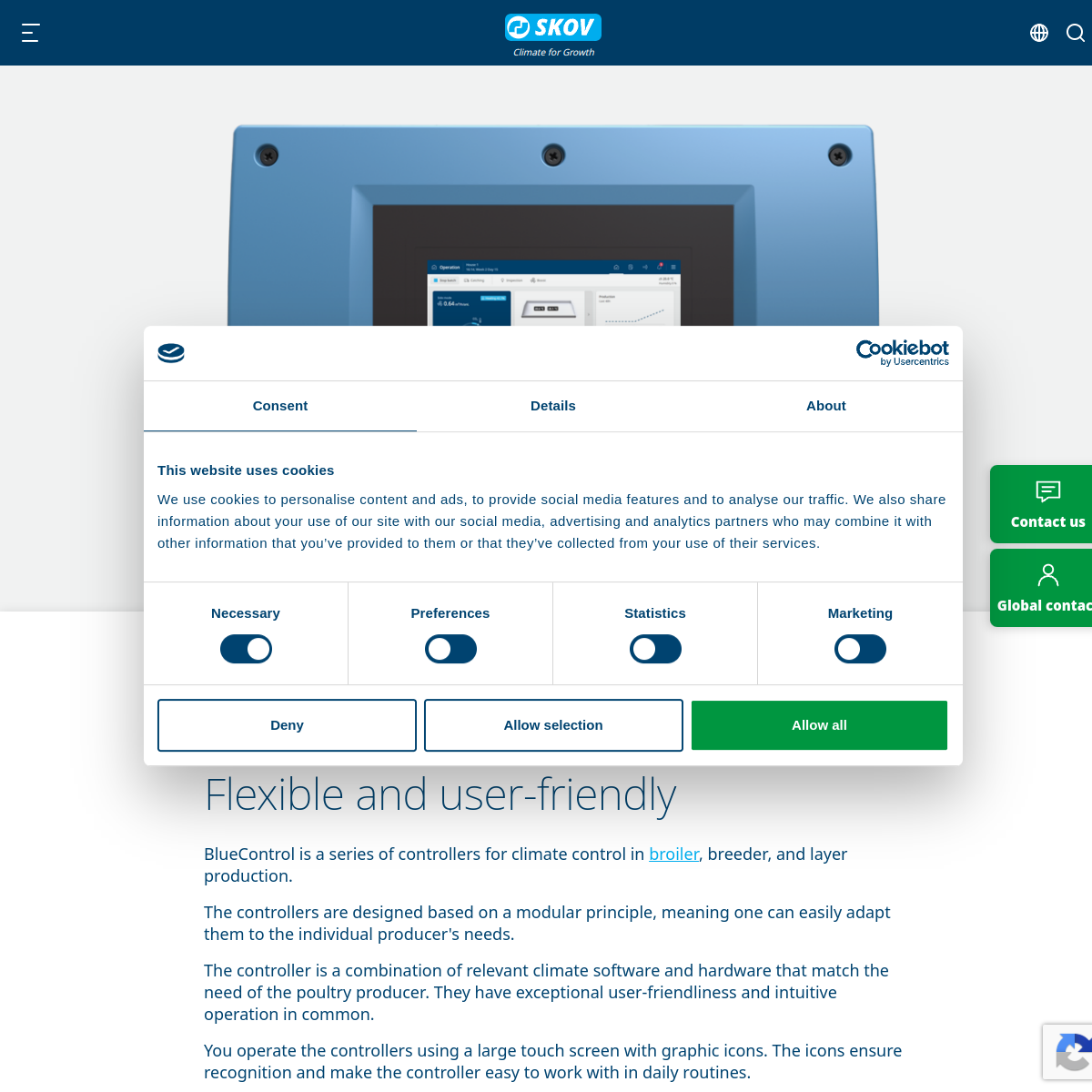  |
- Home
-
Products
- Pig Farming Equipment
- Cattle Farming Equipment
- Sheep & Goat Farming Equipment
- Poultry Farming Equipment
- Feeding & Drinking Systems
- Veterinary & Breeding Equipment
- Testing & Diagnostic Equipment
- Cleaning & Biosecurity Equipment
- Climate Control Equipment
- Livestock Weighing Equipment
- Manure & Waste Management
- Farm Transport & Handling
-
Solutions
- Pig Farm Solutions
- Dairy Farm Solutions
- Beef Cattle Farm Solutions
- Sheep & Goat Farm Solutions
- Layer Farm Solutions
- Broiler Farm Solutions
- Feeding & Drinking System Solutions
- Climate Control Solutions
- Biosecurity & Disinfection Solutions
- Manure & Waste Management
- Smart Farming Solutions
- Farm Renovation and Upgrade Solutions
- Partners
- Projects
- Resources
- News
- About Us
- Contact

Comments & Inquiries
Leave your questions or requirements below. We will reply as soon as possible.