


| Product Showcase | Content | ||||||||||||||||||||||||||
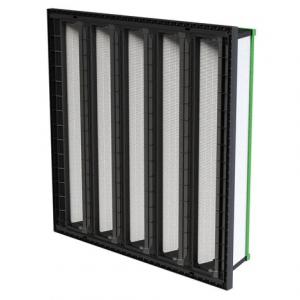
| Product Name | Low-Resistance F9 Air Filter for Pig House Ventilation | ||||||||||||||||||||||||||
| Product Image | 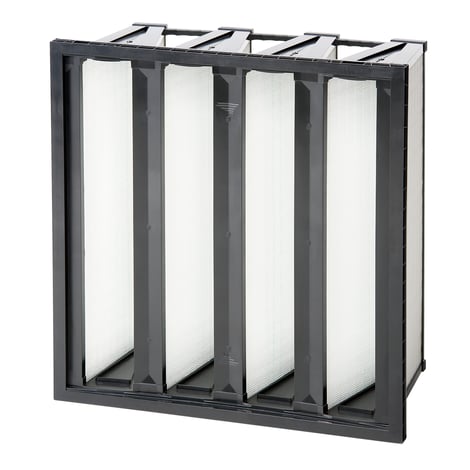 |
||||||||||||||||||||||||||
| Product Overview |
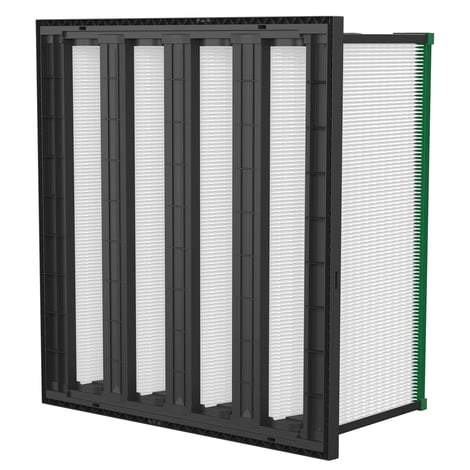
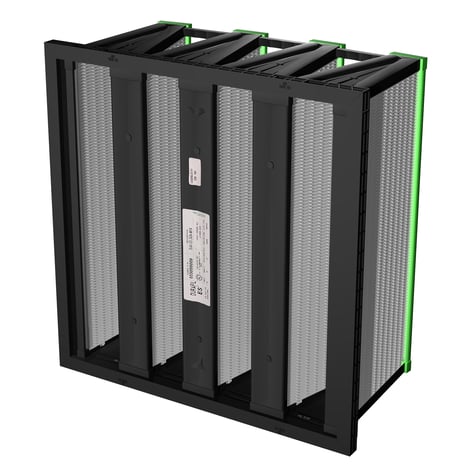
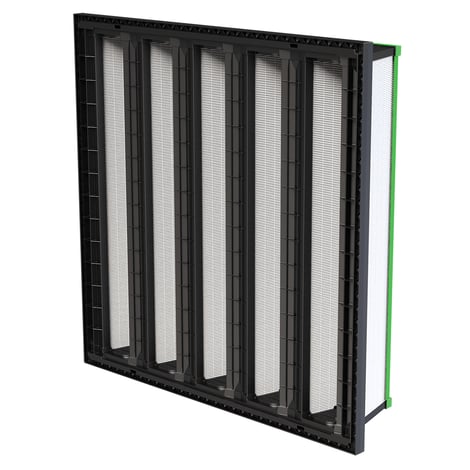
The Low-Resistance F9 Air Filter for Pig House Ventilation is a compact high-efficiency filtration solution developed for mechanically ventilated pig houses, breeding farms, sow units, nursery buildings and other intensive livestock facilities. Its V-bank configuration provides a large effective filtration area within a compact installation depth, helping achieve fine-particle removal while controlling airflow resistance. This is particularly important in pig farm ventilation systems where fans must continuously move large volumes of fresh air through the filtration system. The filter can be integrated into fresh-air inlet walls, centralized filter chambers, air-handling units and modular ventilation systems for new pig farm construction or existing livestock building upgrades. |
||||||||||||||||||||||||||
| Key Features |
|
||||||||||||||||||||||||||
| Structural Components |
V-Bank Filter Packs: Multiple mini-pleated filter sections are arranged in a V-shaped configuration to maximize filtration area while maintaining a compact overall depth. High-Efficiency Filter Media: Fine glass-fiber or equivalent filtration media is used for high-efficiency particulate capture. Rigid Frame: A molded engineered-plastic or ABS-type frame provides structural stability and resistance to deformation during airflow operation. Hot-Melt Separators: Pleat spacing can be maintained by hot-melt separation technology to support stable airflow distribution through the media. Sealing System: Polyurethane or equivalent sealing material helps secure the filter media inside the frame, while optional perimeter gaskets can reduce air bypass at the installation interface. |
||||||||||||||||||||||||||
| Working Principle / Structural Principle |
Outdoor air is drawn through the filter by the pig house ventilation fans. Fine particulate matter is captured by the high-efficiency filter media before the treated air enters the animal production area. The V-bank geometry increases the total media surface exposed to the airflow. By distributing the required air volume over a larger filtration area, the filter can operate at a lower media face velocity than a flat filter with a similar frontal size, helping control pressure drop and ventilation energy consumption. For commercial pig farms, the F9 filter is normally installed downstream of a coarse or medium-efficiency pre-filter. The pre-filter captures larger dust particles first, reducing the particulate load reaching the final high-efficiency stage and helping extend filter service life. |
||||||||||||||||||||||||||
| Technical Specifications |
|
||||||||||||||||||||||||||
| Applications |
|
||||||||||||||||||||||||||
| Customization Options |
|
||||||||||||||||||||||||||
| Installation & Maintenance |
The filter should be installed in a correctly sized holding frame or filter housing with the airflow direction properly aligned. The perimeter sealing surface should fit evenly against the housing to minimize unfiltered-air bypass. For pig houses with high dust loading, an upstream pre-filter is recommended. Multi-stage filtration reduces loading on the F9 final filter and can improve overall filtration economics. Differential pressure should be monitored where practical. A rising pressure drop indicates increasing particulate loading and provides a useful basis for maintenance planning. Replace filters when the specified final resistance is reached, when the media or frame is damaged, or according to the farm's preventive maintenance program. Actual service intervals depend on outdoor particle concentration, ventilation airflow, pre-filter efficiency, operating hours and local farm conditions. |
||||||||||||||||||||||||||
| Project Cases |
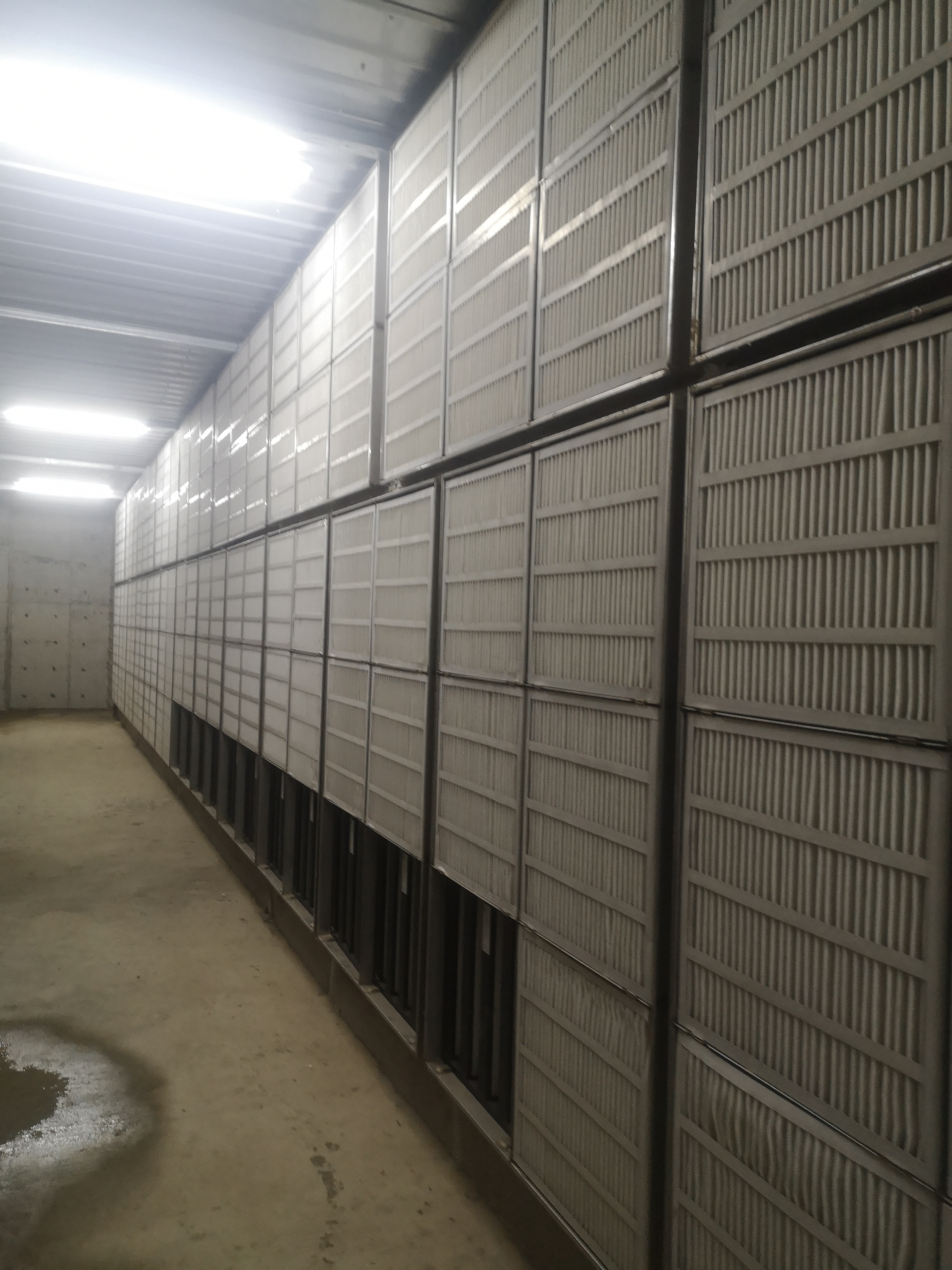
Typical project configurations include complete filtered-air walls for commercial pig houses, modular inlet filter boxes for sow farms, and centralized filtration sections installed upstream of mechanical ventilation equipment. For livestock engineering projects, the required filter area and quantity can be calculated according to maximum ventilation airflow, acceptable pressure resistance, house dimensions, stocking density, climate conditions and selected pre-filtration stages. Project-specific configurations are available upon request. |
||||||||||||||||||||||||||
| Product FAQ |
Q: Why is low resistance important for a pig house air filter? Q: What does F9 filtration mean? Q: Is this filter suitable for commercial pig farms? Q: Should an F9 filter be used alone? Q: Can the filter size be customized? Q: How is the correct quantity of filters determined? |
||||||||||||||||||||||||||
| Product Gallery |
|
- Home
-
Products
- Pig Farming Equipment
- Cattle Farming Equipment
- Sheep & Goat Farming Equipment
- Poultry Farming Equipment
- Feeding & Drinking Systems
- Veterinary & Breeding Equipment
- Testing & Diagnostic Equipment
- Cleaning & Biosecurity Equipment
- Climate Control Equipment
- Livestock Weighing Equipment
- Manure & Waste Management
- Farm Transport & Handling
-
Solutions
- Pig Farm Solutions
- Dairy Farm Solutions
- Beef Cattle Farm Solutions
- Sheep & Goat Farm Solutions
- Layer Farm Solutions
- Broiler Farm Solutions
- Feeding & Drinking System Solutions
- Climate Control Solutions
- Biosecurity & Disinfection Solutions
- Manure & Waste Management
- Smart Farming Solutions
- Farm Renovation and Upgrade Solutions
- Partners
- Projects
- Resources
- News
- About Us
- Contact

Comments & Inquiries
Leave your questions or requirements below. We will reply as soon as possible.