
| Product Name | Livestock Feed Day Bin | ||||||||||||||||||||||||
| Product Image |  |
||||||||||||||||||||||||
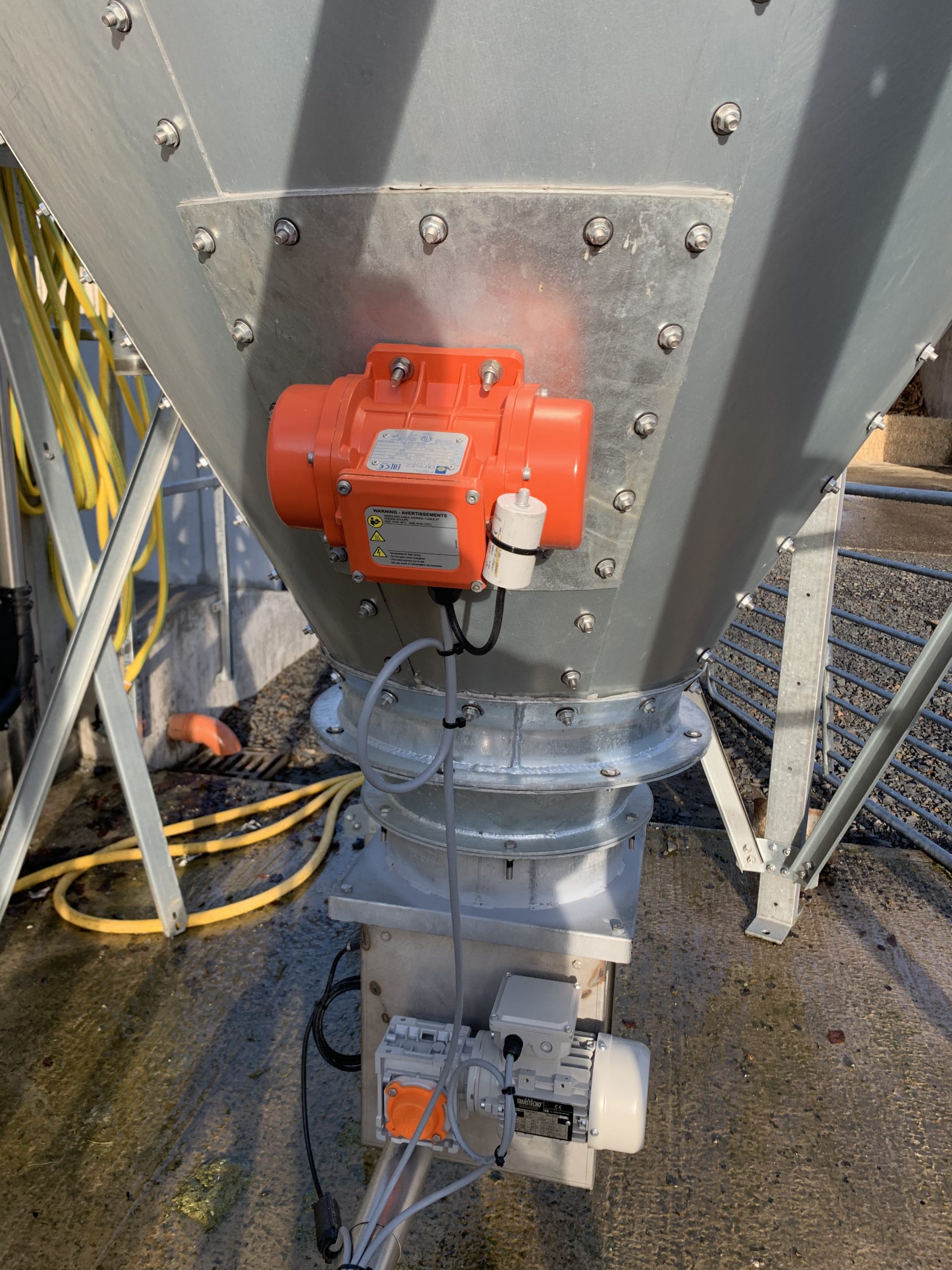
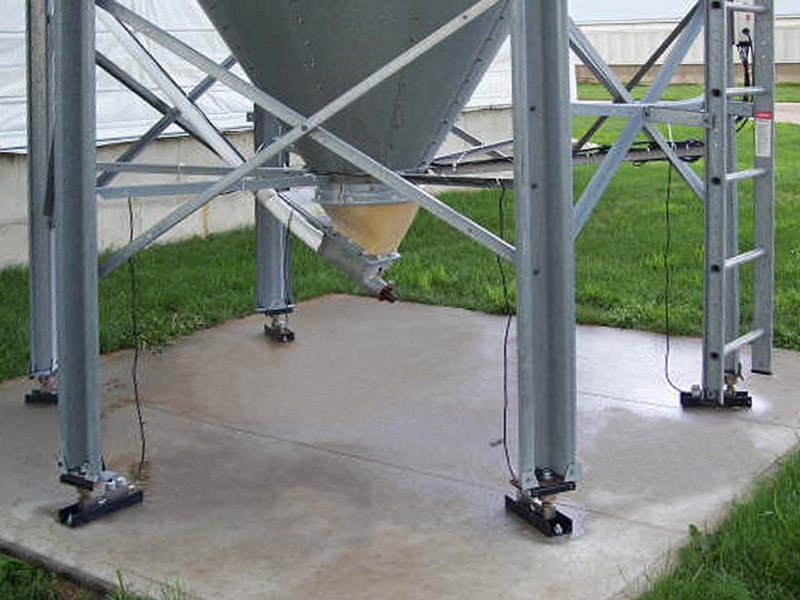
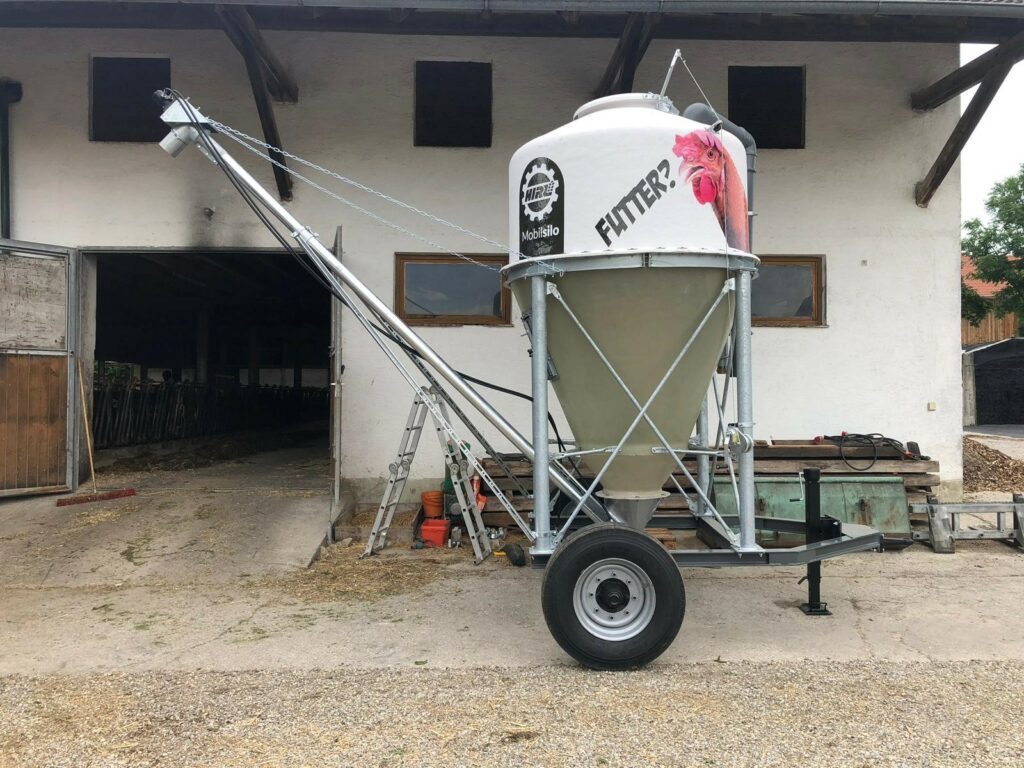
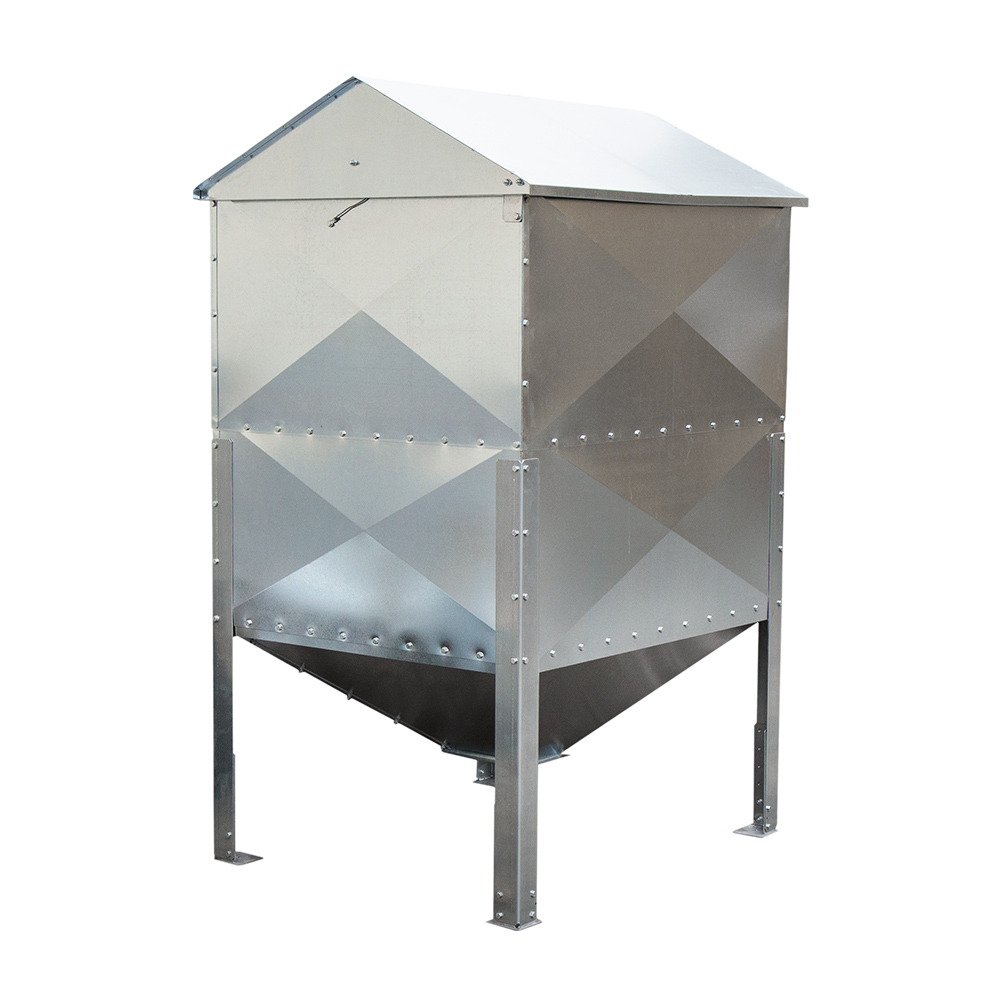
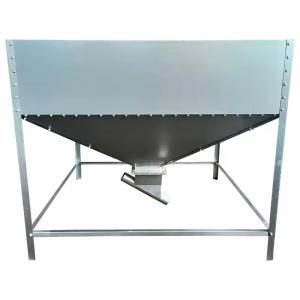
| Product Overview | The Livestock Feed Day Bin is a compact intermediate feed storage unit designed to hold a controlled quantity of dry feed close to the livestock house or feeding line. It provides a practical buffer between the main bulk storage silo, feed weighing equipment and downstream feeding systems. Feed can be transferred from a central silo into the day bin and subsequently discharged to auger, spiral or conveyor systems serving poultry, pig or other livestock production areas. This arrangement supports controlled feed distribution while reducing the need to install a large bulk silo beside every livestock building. The day bin is suitable for commercial livestock farms, poultry houses, breeder facilities, pig production buildings and integrated steel structure farm projects where reliable short-term feed storage and automatic feed transport are required. |
||||||||||||||||||||||||
| Key Features |
|
||||||||||||||||||||||||
| Structural Components |
|
||||||||||||||||||||||||
| Working Principle | Feed is transported from a main storage silo or feed preparation system into the day bin. The bin temporarily stores the quantity required for the next feeding period or production cycle. During feeding, dry feed flows toward the conical bottom and enters the connected auger, spiral or conveyor system. The transport equipment then delivers feed to house hoppers, feeding circuits or individual feeding lines. When combined with feed weighing and automatic control equipment, the day bin can form part of a controlled feeding system in which measured quantities are transferred, stored and distributed according to programmed feeding schedules. |
||||||||||||||||||||||||
| Technical Specifications |
|
||||||||||||||||||||||||
| Feed System Integration | A day bin is commonly installed downstream of the main bulk feed storage system. Feed may first pass through a feed weigher or batching system before entering the day bin. The stored feed can then be distributed to one or more feeding lines. For large livestock buildings, several discharge outlets can supply separate feed circuits according to the project layout. The required day-bin capacity should be selected according to livestock population, daily feed consumption, feeding schedule and the conveying capacity of upstream and downstream equipment. |
||||||||||||||||||||||||
| Applications |
|
||||||||||||||||||||||||
| Customization Options | The Livestock Feed Day Bin can be configured according to animal type, daily feed requirement, feed form, building dimensions and feeding-system layout. Customization options may include storage volume, overall dimensions, hopper angle, support height, inlet position, outlet quantity, discharge diameter, level sensors, weighing components and feed conveyor interfaces. The complete configuration can be designed according to local climate and farm conditions and coordinated with poultry houses, pig buildings, steel structure buildings and centralized farm feed systems. |
||||||||||||||||||||||||
| Installation & Maintenance | Before installation, confirm the required storage quantity, support height, feed inlet direction, discharge position and connection with the downstream conveyor or feeding line. The support frame should be installed on a stable foundation and correctly aligned with the feed transport equipment. When load cells are used, installation must allow unrestricted weighing movement and accurate calibration. Routine maintenance includes checking structural fasteners, hopper joints, discharge gates, sensors and conveying connections. Feed accumulation should be removed regularly, and the bin should be kept dry to help maintain feed quality and reduce bridging or caking. |
||||||||||||||||||||||||
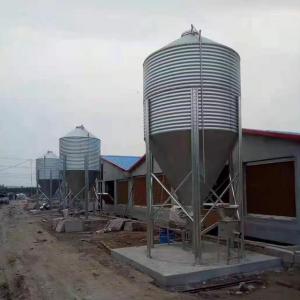
| Project Cases | In large poultry or pig farm complexes, feed can be delivered to central main silos and transported to smaller day bins positioned near individual livestock houses. This arrangement can reduce the need for a full-size bulk storage silo at every building. In breeder feeding projects, a feed weigher can meter the required ration into the day bin before feed is distributed to separate feeding circuits. Multiple outlets may be configured where several feed lines are supplied from one day bin. For new steel structure livestock buildings, the day bin, feed conveyor routing and service access can be coordinated during the farm engineering stage. |
||||||||||||||||||||||||
| Product FAQ | Q: What is a livestock feed day bin? A: It is an intermediate storage hopper that holds a limited quantity of feed close to the livestock house before the feed is distributed to the feeding lines. Q: How should the day-bin capacity be selected? A: Capacity should be based on daily feed consumption, feeding frequency, livestock population and the capacity of the connected feed transport system. Q: Can the day bin connect directly to an auger? A: Yes. The discharge can be configured for spiral, auger or other compatible dry-feed conveyor systems. Q: Can one day bin supply several feed lines? A: Yes. Multiple discharge outlets can be provided according to the required feeding-system layout. Q: Can the feed quantity be weighed? A: Yes. The day bin can be integrated with load cells or upstream feed weighing equipment for controlled ration management. Q: Can feed-level sensors be installed? A: Yes. High-level, low-level or automatic filling sensors are available upon request. Q: Is the system suitable for poultry and pig farms? A: Yes. The configuration can be adapted to commercial poultry, pig and other livestock feeding projects. Q: What information is required for quotation? A: Recommended information includes animal type, livestock quantity, daily feed consumption, feed type, required storage capacity, outlet quantity, building layout and the type of connected feed transport system. |
||||||||||||||||||||||||
| Product Gallery |  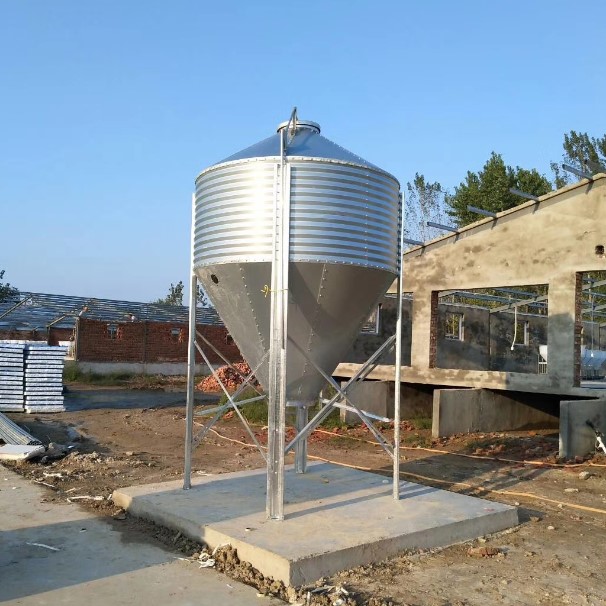 |
- Home
-
Products
- Pig Farming Equipment
- Cattle Farming Equipment
- Sheep & Goat Farming Equipment
- Poultry Farming Equipment
- Feeding & Drinking Systems
- Veterinary & Breeding Equipment
- Testing & Diagnostic Equipment
- Cleaning & Biosecurity Equipment
- Climate Control Equipment
- Livestock Weighing Equipment
- Manure & Waste Management
- Farm Transport & Handling
-
Solutions
- Pig Farm Solutions
- Dairy Farm Solutions
- Beef Cattle Farm Solutions
- Sheep & Goat Farm Solutions
- Layer Farm Solutions
- Broiler Farm Solutions
- Feeding & Drinking System Solutions
- Climate Control Solutions
- Biosecurity & Disinfection Solutions
- Manure & Waste Management
- Smart Farming Solutions
- Farm Renovation and Upgrade Solutions
- Partners
- Projects
- Resources
- News
- About Us
- Contact
Comments & Inquiries
Leave your questions or requirements below. We will reply as soon as possible.