
| Product Name | Small Bulk Feed Bin | ||||||||||||||||||||||||
| Product Image | 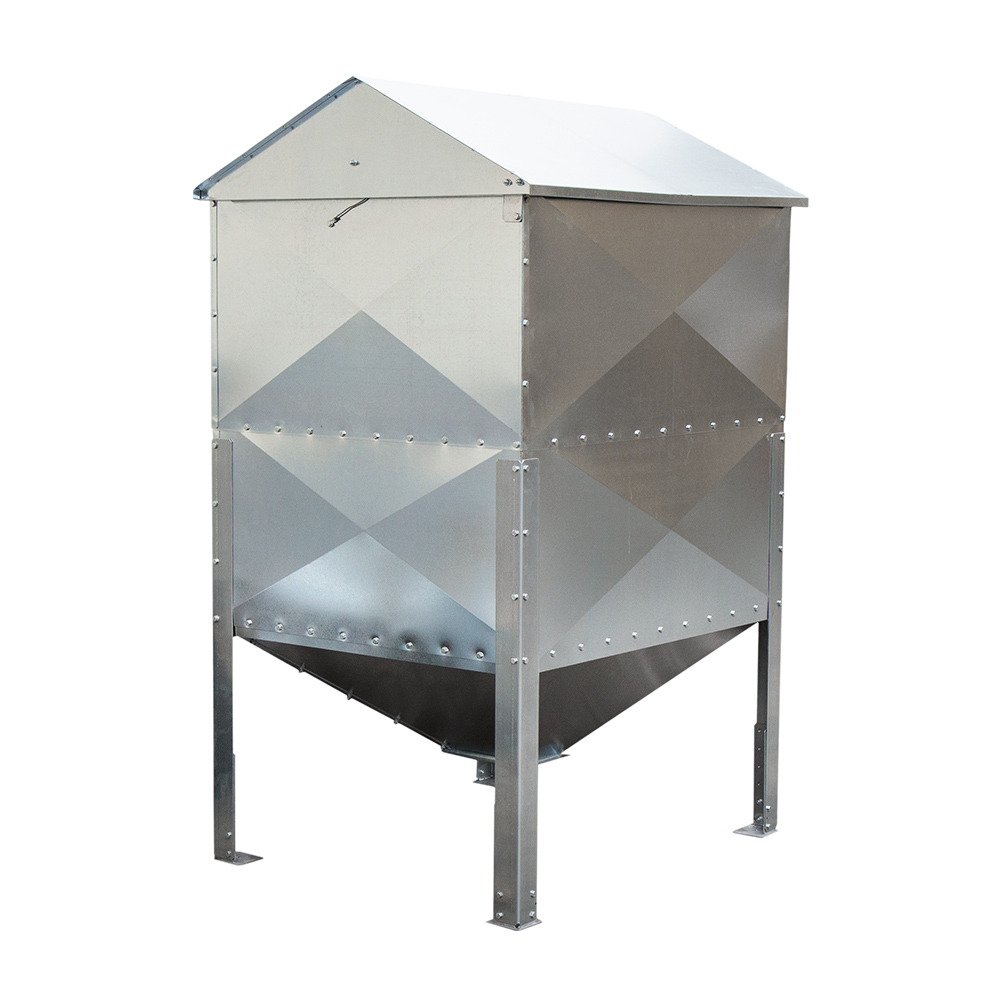 |
||||||||||||||||||||||||
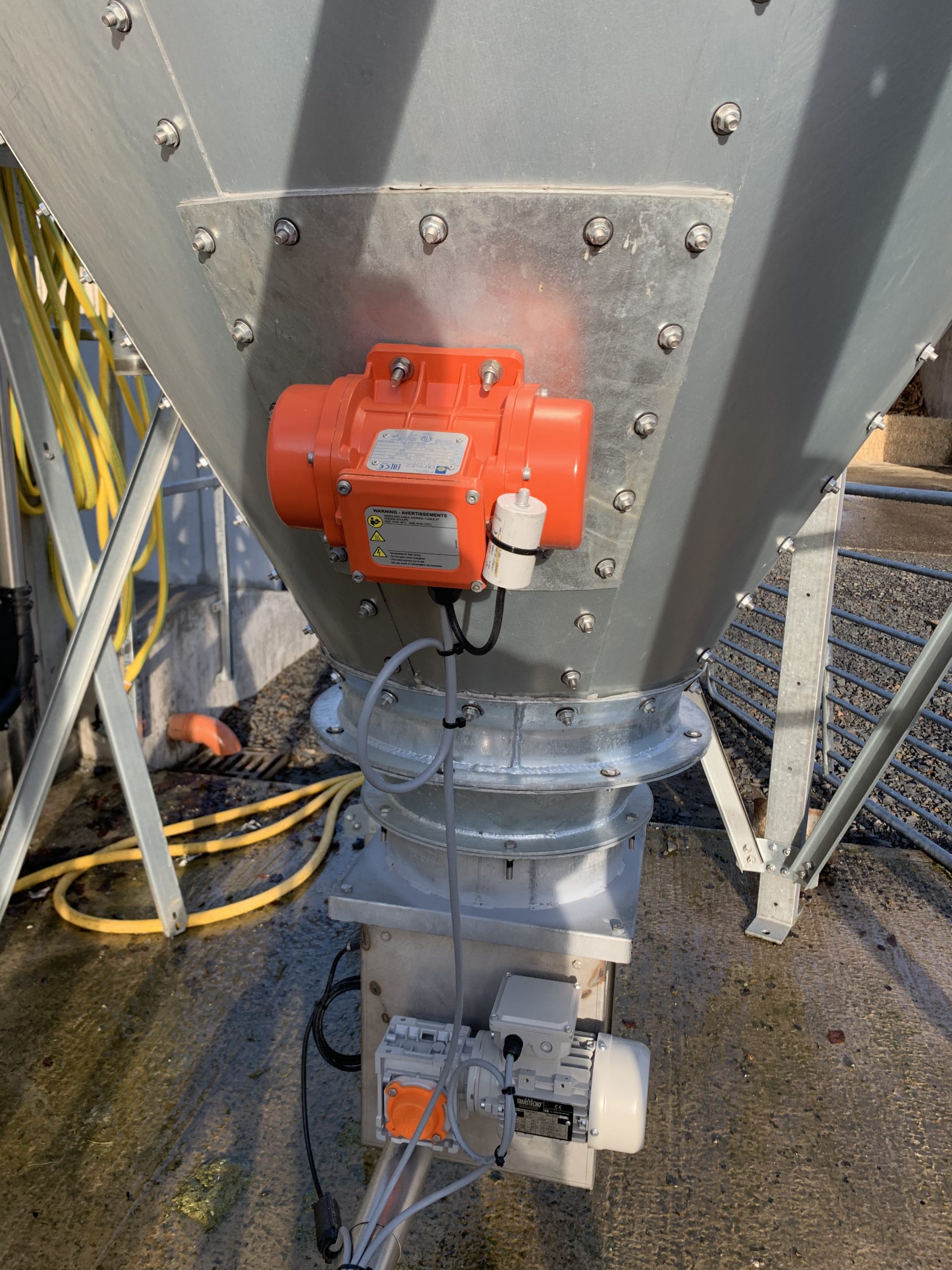
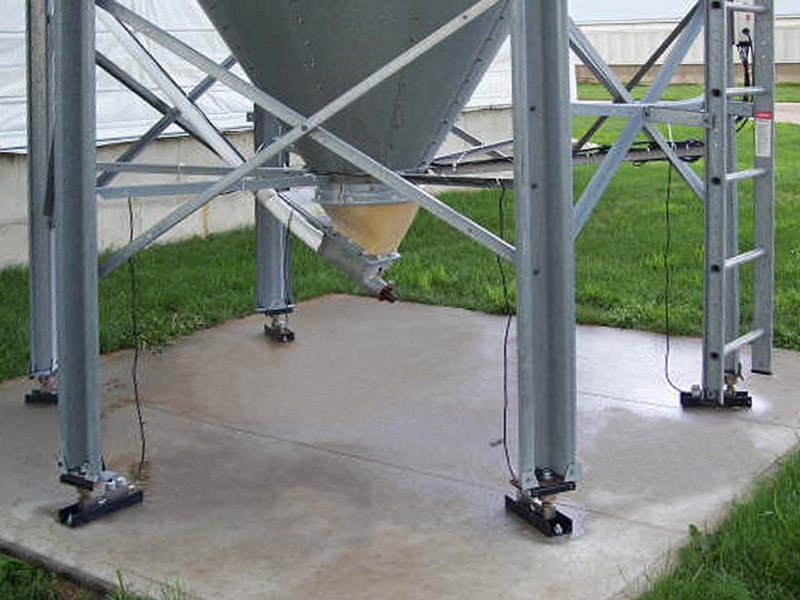
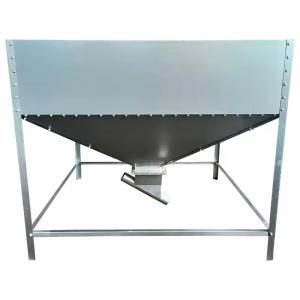
| Product Overview | The Small Bulk Feed Bin is a compact livestock feed storage solution designed for poultry houses, pig farms, calf facilities, goat-farming-equipment/" target="_blank" class="keylink">sheep and goat farms, breeder units and other commercial agricultural applications requiring protected storage of dry feed. The bin combines a weather-resistant storage body with a hopper-bottom structure that directs feed toward a central discharge point. Feed can be released into a bucket, cart, auger line or automatic feeding system according to the farm layout. Compared with large farm silos, the compact footprint makes this feed bin particularly suitable for smaller production units, feed preparation areas, individual livestock buildings, test farms and projects where several feed formulas must be stored separately. |
||||||||||||||||||||||||
| Key Features |
|
||||||||||||||||||||||||
| Structural Components |
|
||||||||||||||||||||||||
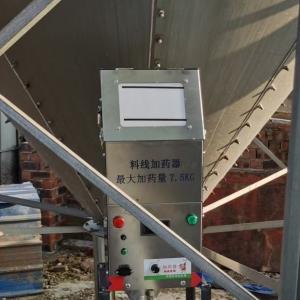
| Working Principle | Dry feed is loaded into the upper section of the bin and stored inside the enclosed body. The hopper-shaped lower section uses gravity to direct the feed toward the central outlet. When connected to an automatic feeding system, feed passes through the outlet boot into a flexible or rigid auger line and is transported toward feeders inside the livestock building. For manual applications, an optional slide valve or discharge opening can release smaller quantities of feed into buckets, carts or other containers. Hopper angle and outlet configuration should be selected according to feed characteristics and project requirements to support reliable material flow. |
||||||||||||||||||||||||
| Technical Specifications |
|
||||||||||||||||||||||||
| Feed Storage & Discharge | Feed bins used in commercial livestock production should protect dry feed while allowing predictable discharge into downstream feeding equipment. A hopper-bottom configuration concentrates feed toward the outlet and reduces the amount of material remaining in the storage body. For automated feeding projects, the bottom outlet can be matched with auger boots and transitions. Commercial feed-bin systems commonly use dedicated transition components between the hopper opening and the feed delivery auger to encourage smooth feed flow. Where operators need occasional small quantities of feed, a manual hopper valve can also be incorporated to discharge directly into a bucket or wheelbarrow without operating the main auger system. |
||||||||||||||||||||||||
| Applications | |||||||||||||||||||||||||
| Customization Options | The Small Bulk Feed Bin can be configured according to livestock species, daily feed consumption, delivery frequency, available installation area and feeding-system layout. Customization options may include storage capacity, bin height, body diameter, hopper geometry, discharge opening, auger boot, manual valve, filling pipe, access ladder, inspection opening and support structure. Surface treatment and structural configuration can be designed according to local climate and farm conditions. Integration with poultry houses, pig farm construction and steel structure livestock buildings is available according to project requirements. |
||||||||||||||||||||||||
| Installation & Maintenance | Install the feed bin on a stable engineered foundation capable of supporting the fully loaded structure. Anchor positions, wind conditions, bin height and surrounding vehicle access should be considered during foundation design. The feed-truck filling point and auger discharge direction should be confirmed before installation so that the bin integrates correctly with the livestock building and feeding line. Routine inspection should include the roof and lid, wall panels, fasteners, support legs, bracing, hopper, discharge valve and auger connection. Feed residues should be removed periodically, particularly when changing feed formulas or during farm sanitation programs. The bin should be kept dry and sealed against rain penetration to help preserve feed quality and reduce the risk of bridging, caking or microbial deterioration. |
||||||||||||||||||||||||
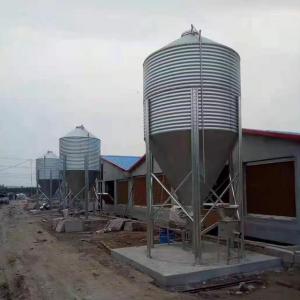
| Project Cases | In poultry and pig farm projects, small bulk feed bins are commonly positioned beside individual livestock houses and connected directly to automatic feeding lines. This arrangement allows feed to be delivered in bulk while minimizing manual bag handling. Smaller bins can also be used where different feed formulas must remain separated, such as breeder facilities, nursery units, trial farms or multi-phase feeding programs. For new steel structure livestock buildings, bin foundations, vehicle routes, feed delivery pipes and auger entry points can be coordinated during project design to simplify installation and future maintenance. |
||||||||||||||||||||||||
| Product FAQ | Q: What is a small bulk feed bin used for? A: It stores dry livestock or poultry feed in bulk and supplies feed manually or through an automatic feeding system. Q: Can the capacity be customized? A: Yes. Storage capacity can be selected according to daily feed consumption, delivery frequency and available installation space. Q: Can it connect to an automatic auger feeding system? A: Yes. The hopper outlet can be equipped with a compatible boot or transition for flexible or rigid auger feed delivery systems. Q: Can small quantities of feed be discharged manually? A: Yes. An optional hand-operated hopper valve can be supplied for filling buckets, carts or other containers. Q: Is the bin suitable for outdoor installation? A: Galvanized outdoor configurations are available. Final structural and weather-protection requirements should be selected according to local climate and farm conditions. Q: What feed can be stored? A: The bin is intended primarily for dry livestock and poultry feed. Feed density, particle size and flow characteristics should be considered when selecting hopper and outlet configuration. Q: What information is needed for quotation? A: Recommended information includes livestock species, required storage capacity, feed type, daily feed consumption, filling method, feeding-system type, installation location and local project conditions. |
||||||||||||||||||||||||
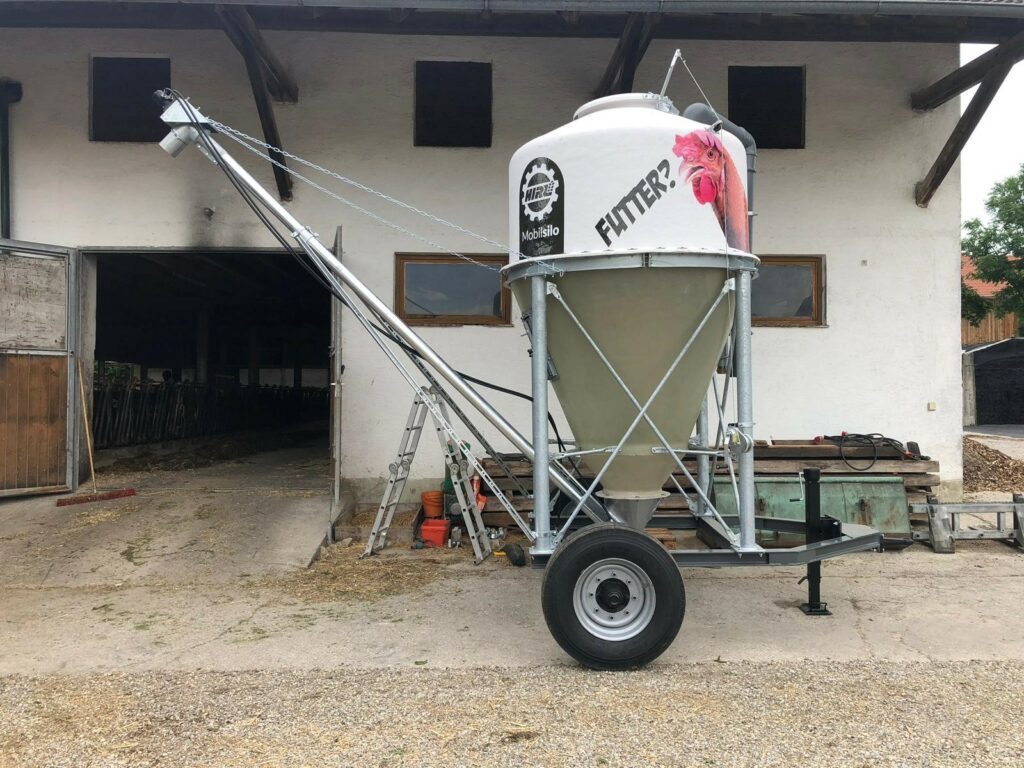
| Product Gallery | 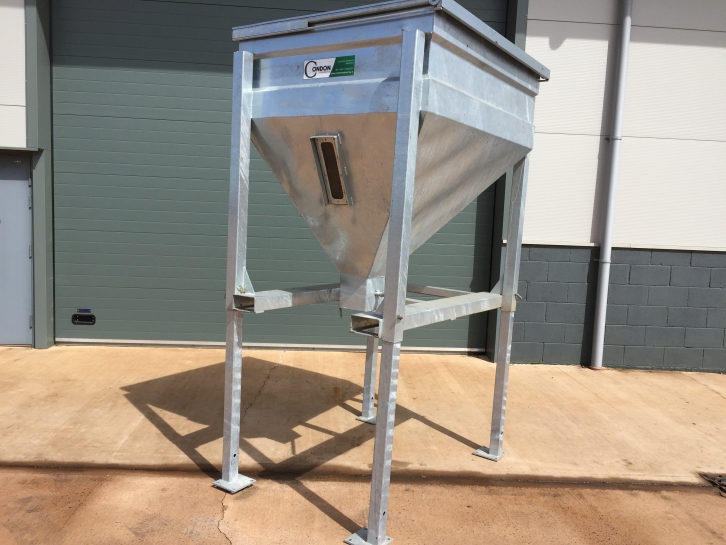  |
- Home
-
Products
- Pig Farming Equipment
- Cattle Farming Equipment
- Sheep & Goat Farming Equipment
- Poultry Farming Equipment
- Feeding & Drinking Systems
- Veterinary & Breeding Equipment
- Testing & Diagnostic Equipment
- Cleaning & Biosecurity Equipment
- Climate Control Equipment
- Livestock Weighing Equipment
- Manure & Waste Management
- Farm Transport & Handling
-
Solutions
- Pig Farm Solutions
- Dairy Farm Solutions
- Beef Cattle Farm Solutions
- Sheep & Goat Farm Solutions
- Layer Farm Solutions
- Broiler Farm Solutions
- Feeding & Drinking System Solutions
- Climate Control Solutions
- Biosecurity & Disinfection Solutions
- Manure & Waste Management
- Smart Farming Solutions
- Farm Renovation and Upgrade Solutions
- Partners
- Projects
- Resources
- News
- About Us
- Contact
Comments & Inquiries
Leave your questions or requirements below. We will reply as soon as possible.