
| Product Showcase | Content | ||||||||||||||||||||||||||||||||||
| Product Name | Multi-Hole Energy-Free Cattle Waterer | ||||||||||||||||||||||||||||||||||
| Product Image |  |
||||||||||||||||||||||||||||||||||
| Product Overview |
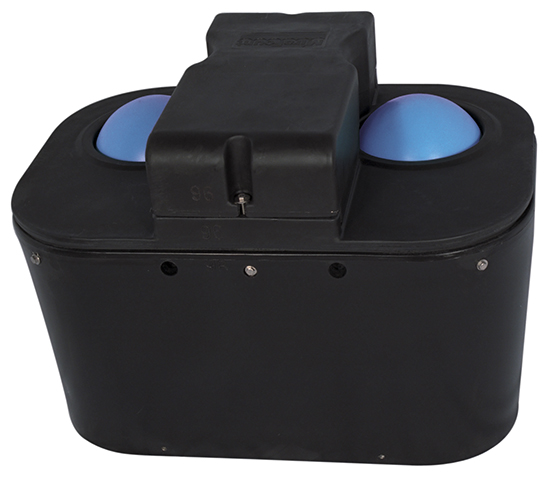
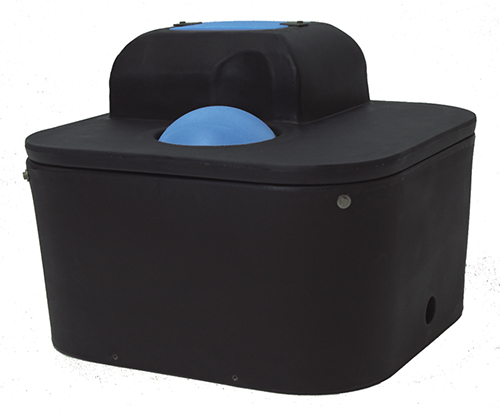
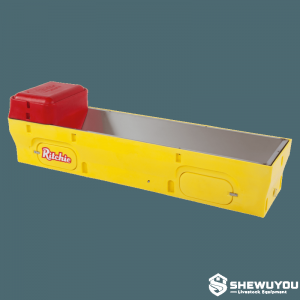
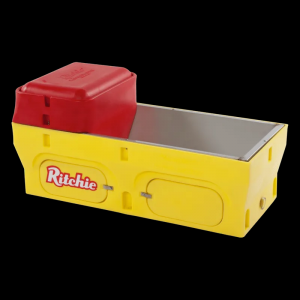
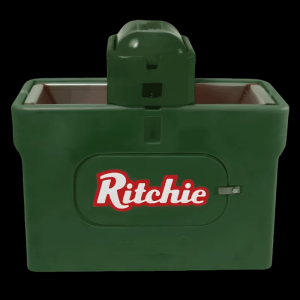
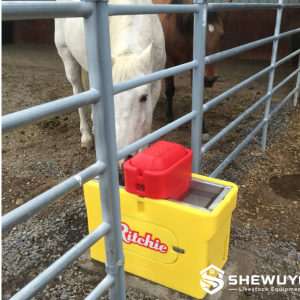
The Multi-Hole Energy-Free Cattle Waterer is a large-capacity insulated livestock watering system designed for beef cattle, dairy cattle and cow-calf operations. Multiple drinking openings allow several animals to access water from one central unit, making the system suitable for high-traffic livestock areas and large commercial cattle facilities. The waterer operates without conventional electric heating in its standard energy-free configuration. A highly insulated body, insulated closures and a properly installed underground heat well use the relatively stable ground temperature to help protect the water supply during cold weather. Automatic valves replenish the reservoir as animals drink, while floating ball closures cover unused drinking openings to reduce heat loss and protect the stored water. The design is suitable for pasture systems, outdoor cattle yards, feed areas and steel structure livestock projects requiring dependable year-round watering. |
||||||||||||||||||||||||||||||||||
| Key Features |
|
||||||||||||||||||||||||||||||||||
| Structural Components |
|
||||||||||||||||||||||||||||||||||
| Working Principle / Structural Principle |
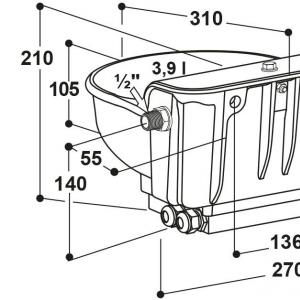
The waterer is installed over an insulated underground heat well connected to a frost-protected water line. Heat from below the frost line helps moderate the temperature inside the insulated reservoir. Each drinking opening is normally covered by a floating ball. When cattle push the ball downward with their muzzle, they gain access to the water. After drinking, the ball returns to its normal position and helps close the opening, reducing heat loss and exposure to outside air. As the water level falls, the automatic valve system opens and replenishes the reservoir. Comparable professional multi-hole configurations use two valves to increase recovery speed during periods of heavy cattle water demand. Performance depends on correct foundation design, heat-well installation, water usage, ground temperature, frost depth and local climate conditions. |
||||||||||||||||||||||||||||||||||
| Technical Specifications |
|
||||||||||||||||||||||||||||||||||
| Applications |
The multi-hole configuration is suitable for livestock areas where several animals may drink at the same time. A centralized waterer can reduce the number of individual drinkers required while maintaining good access for larger cattle groups. For new livestock construction projects, the waterer can be coordinated with concrete pads, underground water lines, cattle fencing, feed alleys and drainage systems during the design stage. |
||||||||||||||||||||||||||||||||||
| Customization Options |
Reservoir size, insulation, valve capacity and underground heat-well design can be selected according to livestock numbers, local frost depth, water pressure and project requirements. |
||||||||||||||||||||||||||||||||||
| Installation & Maintenance |
Prepare the Foundation: Construct a level reinforced concrete pad sized for the waterer and surrounding livestock traffic. Install the Heat Well: Position the insulated underground heat tube according to local frost depth and manufacturer-style installation principles. Protect the Water Line: Route the supply line below frost depth and protect all exposed components against freezing. Anchor the Waterer: Secure the unit to the concrete foundation using corrosion-resistant anchor bolts. Connect the Water Supply: Install the automatic valves and provide an accessible shut-off point for servicing. Check Water Level: Adjust the float mechanism so the reservoir maintains the correct operating level without overflow. Introduce Livestock: Removable access panels can be used temporarily to help unfamiliar cattle learn to use the ball closures. Routine Cleaning: Drain and flush the reservoir regularly. Sloped internal surfaces help move sediment toward the cleaning area. Seasonal Inspection: Before winter, inspect the insulation, ball closures, valve operation, underground heat well and water-line protection. |
||||||||||||||||||||||||||||||||||
| Project Cases |
Multi-hole energy-free waterers are suitable for large beef cattle paddocks where one centralized unit must provide simultaneous drinking access to multiple animals without relying on electric heating. In dairy and cow-calf projects, the unit can be installed between adjacent livestock areas or near high-traffic feeding zones. Multiple drinking openings and dual-valve recovery help accommodate concentrated water demand. For cold-region projects, foundation insulation, heat-well dimensions and frost-protected pipeline depth should be determined according to local soil and climate conditions before installation. |
||||||||||||||||||||||||||||||||||
| Product FAQ |
Q1: What does energy-free cattle waterer mean? Q2: How do cattle access the water? Q3: Why are ball closures used? Q4: How many drinking openings are available? Q5: What is the reference capacity? Q6: How many cattle can the reference model serve? Q7: Does the waterer need electricity in winter? Q8: Why is an underground heat tube important? Q9: Is the unit easy to maintain? Q10: Can the system be customized? |
||||||||||||||||||||||||||||||||||
| Product Gallery |
|
- Home
-
Products
- Pig Farming Equipment
- Cattle Farming Equipment
- Sheep & Goat Farming Equipment
- Poultry Farming Equipment
- Feeding & Drinking Systems
- Veterinary & Breeding Equipment
- Testing & Diagnostic Equipment
- Cleaning & Biosecurity Equipment
- Climate Control Equipment
- Livestock Weighing Equipment
- Manure & Waste Management
- Farm Transport & Handling
-
Solutions
- Pig Farm Solutions
- Dairy Farm Solutions
- Beef Cattle Farm Solutions
- Sheep & Goat Farm Solutions
- Layer Farm Solutions
- Broiler Farm Solutions
- Feeding & Drinking System Solutions
- Climate Control Solutions
- Biosecurity & Disinfection Solutions
- Manure & Waste Management
- Smart Farming Solutions
- Farm Renovation and Upgrade Solutions
- Partners
- Projects
- Resources
- News
- About Us
- Contact
Comments & Inquiries
Leave your questions or requirements below. We will reply as soon as possible.