
| Product Showcase | Content | ||||||||||||||||||||||||||||||
|---|---|---|---|---|---|---|---|---|---|---|---|---|---|---|---|---|---|---|---|---|---|---|---|---|---|---|---|---|---|---|---|
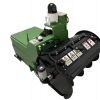
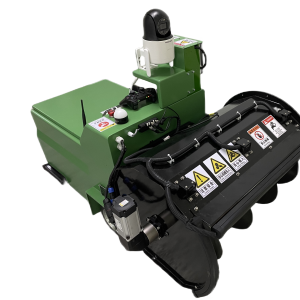
| Product Name | Feed Remixing & Pushing Robot | ||||||||||||||||||||||||||||||
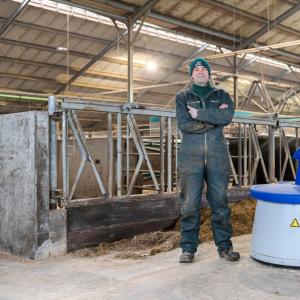
| Product Image |  |
||||||||||||||||||||||||||||||
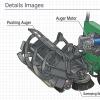
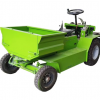
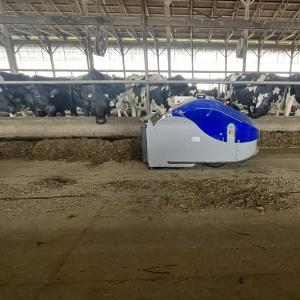
| Product Overview | The Feed Remixing & Pushing Robot is an autonomous livestock feeding-support machine designed to do more than simply move forage back toward the feed fence. Its rotating auger lifts, loosens and remixes TMR before repositioning it within reach of the animals. This action helps reduce feed compaction and sorting while maintaining a more consistent ration structure along the feed table. Scheduled operation allows the robot to work throughout the day and night, reducing repetitive manual feed-pushing labor and supporting continuous feed accessibility in commercial dairy and beef cattle facilities. |
||||||||||||||||||||||||||||||
| Key Features |
|
||||||||||||||||||||||||||||||
| Structural Components |
|
||||||||||||||||||||||||||||||
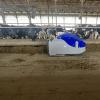
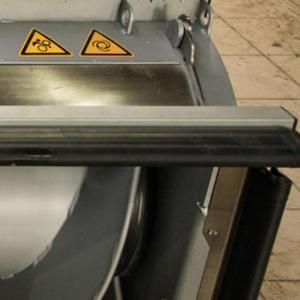
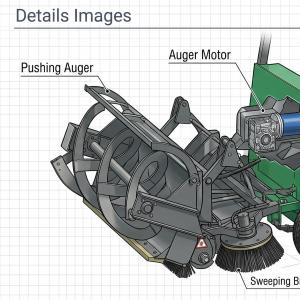
| Working Principle | The robot follows a programmed route beside the cattle feeding fence according to a preset daily schedule. As it travels, the lower scraping system collects feed that has been pushed away from the animals. Instead of simply compressing the ration against the feed fence, the rotating auger lifts and remixes the material before repositioning it. The spiral action helps fill gaps along the feed table and redistributes separated ration components while maintaining the physical structure of the forage. Navigation and safety sensors continuously monitor the robot's operating path. When an obstruction is detected, the machine stops and can resume operation after the path is clear. After completing its scheduled route, the robot returns to the charging station. |
||||||||||||||||||||||||||||||
| Technical Specifications |
|
||||||||||||||||||||||||||||||
| Applications |
|
||||||||||||||||||||||||||||||
| Customization Options | Feed-pushing routes and operating schedules can be configured according to feed-table length, barn layout, animal groups and daily feeding strategy. Available project options may include concentrate dispensing, alternative charging-station placement, gate coordination, multi-building routing and farm-management integration. Navigation configuration, charging arrangement, feed-handling settings and system interfaces are customizable according to project requirements. |
||||||||||||||||||||||||||||||
| Installation & Maintenance |
|
||||||||||||||||||||||||||||||
| Product FAQ | Q: How is a remixing robot different from a conventional feed pusher? A: A conventional pusher mainly moves feed toward the fence, while an auger-type remixing robot loosens and redistributes the ration before repositioning it. Q: What types of feed can the robot handle? A: Suitable applications include Total Mixed Rations, silage-based diets, hay, straw, grass and other common cattle rations, subject to the selected configuration. Q: Does remixing help reduce feed sorting? A: Regular remixing helps redistribute ration components that separate along the feed table and can maintain a more consistent ration within reach of the cattle. Q: Can the robot operate throughout the night? A: Yes. Automatic schedules allow repeated operation during both daytime and nighttime periods. Q: What happens if a cow or person blocks the robot? A: Safety sensors are designed to stop the machine when an obstruction is detected. Operation can resume after the path becomes clear. Q: Does the robot return to charge automatically? A: Yes. The system is designed to return to its charging station between scheduled operating periods. Q: Can concentrate be dispensed during feed pushing? A: An optional concentrate-distribution system can be integrated on compatible configurations. Q: Can it be installed in an existing cattle barn? A: Yes. Feed-table dimensions, corridor width, slopes, navigation routes and charging-station location should be evaluated during project planning. |
||||||||||||||||||||||||||||||
| Product Gallery |   |
- Home
-
Products
- Pig Farming Equipment
- Cattle Farming Equipment
- Sheep & Goat Farming Equipment
- Poultry Farming Equipment
- Feeding & Drinking Systems
- Veterinary & Breeding Equipment
- Testing & Diagnostic Equipment
- Cleaning & Biosecurity Equipment
- Climate Control Equipment
- Livestock Weighing Equipment
- Manure & Waste Management
- Farm Transport & Handling
-
Solutions
- Pig Farm Solutions
- Dairy Farm Solutions
- Beef Cattle Farm Solutions
- Sheep & Goat Farm Solutions
- Layer Farm Solutions
- Broiler Farm Solutions
- Feeding & Drinking System Solutions
- Climate Control Solutions
- Biosecurity & Disinfection Solutions
- Manure & Waste Management
- Smart Farming Solutions
- Farm Renovation and Upgrade Solutions
- Partners
- Projects
- Resources
- News
- About Us
- Contact

Comments & Inquiries
Leave your questions or requirements below. We will reply as soon as possible.